
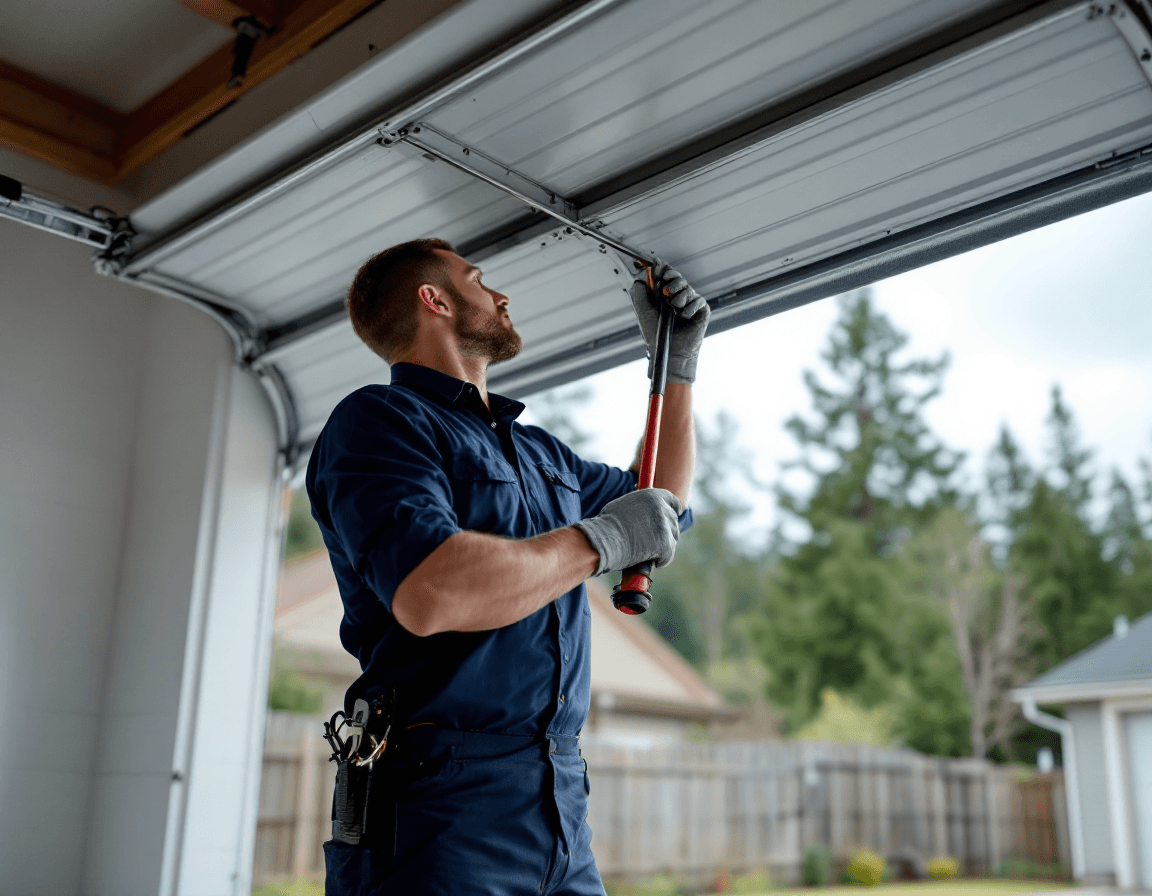
Garage Door Spring Replacement in Lake Forest Park, WA is one of the most common repairs we handle for homeowners along Ballinger Way and the quiet streets tucked between Lake Forest Park Towne Centre and the lake. The springs above your garage door carry most of its weight, so when one fails, the door usually stops working altogether. Because springs store large amounts of tension, a failure can be sudden and noisy, and the repair needs careful handling from start to finish.
This page explains what a failing spring sounds and looks like, how torsion and extension springs differ, why our area's damp winters and temperature swings put extra strain on hardware, and what the work involves. We also cover pricing, high-cycle replacement options, door balancing, and why spring work should always go to a licensed, insured technician. Our goal is to help you understand your options so you can make a clear decision.
If your door is stuck, crooked, or making an alarming noise right now, you do not need to diagnose everything before you call. Keep people and pets away from the door, avoid pulling on the springs or the cables, and read the sections below to get oriented. The rest of this page will help you know what to expect when a technician arrives.
Why Garage Doors Here Lose Their Springs Sooner
Lake Forest Park sits in a part of King County where wet, mild winters can stretch for months, and the moisture doesn't always stay outside. Humidity works into the steel coils of a torsion spring and speeds up surface rust, which weakens the metal over time. Many homes in the area also have garages that are not fully insulated, so the door experiences sharp temperature changes between a cold November morning and a warm afternoon in late summer. Metal expands and contracts with those changes, and that repeated movement adds fatigue to every coil.
Daily use matters just as much as weather. A garage that serves as the main entry for a family with two cars and a commuter schedule may cycle the door several times a day, often without anyone thinking about it. Each open and close cycle loads the springs. Over years, a spring that was perfectly balanced when installed can lose its tension and fail after thousands of cycles. The door keeps working, but the spring is quietly approaching the end of its life.
Older homes in the surrounding neighborhoods can also carry hardware from an earlier era. A door that was original to the house may have heavier panels, a worn bottom seal, or track alignment issues that force the spring to work harder than it should. When we see a spring failure in an older garage, we almost always check the rollers, hinges, and track for wear at the same visit, because a spring rarely fails in isolation.
Warning Signs That a Spring Is Near the End
Springs rarely announce themselves perfectly, but they usually give a few hints before they break. Paying attention to these early signals can save you from a midnight surprise and help you schedule service on your own terms. Many homeowners notice the problem only after the door has stopped working, so a little awareness goes a long way.
Watch for these common signs that a spring is weakening or close to failure:
- The door feels noticeably heavier when lifted by hand, or it lifts unevenly from one side to the other.
- You see a gap or stretched section in a torsion spring coil, or the coils look loose and separated.
- The door rises a few inches and then stops, or it slams down faster than it used to.
- The opener motor hums, strains, or runs for several seconds while the door barely moves.
- Rust-colored flakes or a fine orange dust appears on the floor beneath the spring assembly.
Any one of these symptoms deserves attention, and several together usually mean the spring is already compromised. Do not try to tighten or adjust the spring yourself to compensate. Springs under tension can release with enough force to cause serious injury, and a technician has the proper winding bars, safety cables, and experience to handle them. Trying to work through a weak spring also places extra load on the opener, which can shorten the life of that expensive component.
The Loud Bang and What It Means for Your Garage
Homeowners often describe a spring failure as one of the most startling sounds in the house. It typically arrives as a sharp crack or a loud bang from the garage, sometimes followed by a rattle as loose parts settle. The noise can make you think something has crashed into the door or that a tool fell from a shelf, which is why many people walk out to the garage and find the door sagging or sitting at an odd angle.
When a torsion spring breaks, the tension that was holding the door in balance is suddenly released. The door will usually stay closed, since the opener and the track still hold it, but it may feel heavy or refuse to lift at all. An extension spring failure can look different, with one side of the door dropping lower than the other or a section of cable hanging loose. In both cases, the door is no longer balanced and should not be operated until a technician inspects it.
If you hear a bang and the door will not move, leave it alone and keep the area clear. Do not attempt to open the door by hand or by using the opener, because forcing a damaged system can bend the track, strip the drum, or tear the cables further. We recommend unplugging the opener only if you know how to safely use the emergency release, and otherwise waiting for a technician. Once the door is secured, the repair itself is usually straightforward for a trained crew, but the safety margin is narrow, which is why this work belongs in professional hands.
Telling Torsion Springs From Extension Springs
Before any repair, a technician needs to confirm which type of spring your door uses, because the replacement process and the expected lifespan differ. Torsion springs are mounted on a steel shaft above the door opening, and they twist to store energy as the door closes. Extension springs run parallel to the horizontal tracks on each side and stretch as the door moves. Both designs are common in Lake Forest Park homes, and both can be sized for a range of door weights.
Identifying your system is easier than many homeowners expect. A torsion setup has one long spring or a pair of springs wrapped around a central bar, usually directly above the closed door. An extension setup has springs on both sides of the door, often with a safety cable running through the center of each spring. Knowing which system you have helps you describe the problem accurately when you call, and it lets us bring the correct parts on the first visit.
- Torsion springs are generally considered the safer, longer-lasting option when installed and maintained properly.
- Extension springs are often found on older or lighter doors and typically include safety cables that must be inspected at every service.
- Mixed or replaced hardware sometimes appears in homes that have had previous repairs, so a visual check by a technician is worth the time.
Whichever type you have, the springs should always be sized to match the door's weight, height, and components. A mismatched spring can cause the door to close too fast, lift unevenly, or put unnecessary strain on the opener.
High-Cycle Springs for Busy Lake Forest Park Households
Standard springs are designed for a typical number of cycles, but many households in our area use their garage far more than that. A family that leaves for work and school every morning, runs errands at the Towne Centre, and returns in the evening may place a heavier demand on the door than the original builder anticipated. For these homes, high-cycle springs are a practical upgrade worth discussing during the replacement.
High-cycle springs are manufactured with heavier wire or specialized heat treatment designed to extend service life under frequent use. They cost more upfront than standard springs, but they can reduce how often you need to schedule a replacement. Not every door needs them, and a good technician will explain the difference based on how you actually use the garage rather than pushing an upgrade by default. Our pricing for most spring replacements falls between $180 and $450, and high-cycle options will sit toward the higher end of that range depending on door size and hardware.
It is also worth thinking about how the rest of the system ages together. If your opener, rollers, and hinges are already worn, installing premium springs on a tired door may not deliver the lifespan you expect. We typically recommend looking at the whole assembly during a spring visit so you can decide whether a complete tune-up makes sense.
Balancing the Door After the New Spring Goes In
A new spring is only half of the job. The door must be balanced so that it stays put when partly open and lifts smoothly without the opener doing all the work. A properly balanced door should rise and hold position at about the halfway mark when you release it by hand, with the opener's motor doing the lifting rather than fighting the weight. When balance is off, the opener strains, the door drifts, and the springs wear unevenly.
Balancing involves adjusting the spring tension to match the door's weight, which requires precise winding and careful measurement. Technicians check the door's height, panel count, insulation, hardware, and any added accessories such as windows or decorative trim. Because Lake Forest Park homes vary widely, from compact garages to larger two-car doors with added weight, we do not rely on a single formula. Each door is checked and tested before the crew leaves.
Balance also affects the way the door closes. A door that slams down or closes crookedly may have uneven tension between the two sides or a spring that was wound incorrectly. Correcting these issues usually requires the same careful attention that the spring installation demands. Homeowners sometimes notice that a door seems fine for a few weeks and then drifts again, which is often a sign that the balance was never fully set or that another component is contributing to the problem.
Cables, Drums, and Damage a Spring Break Can Leave Behind
When a torsion spring snaps, the broken pieces can cause collateral damage. The cables that run from the bottom brackets up to the drums can come loose or fray, and the drums themselves can crack or slip off their shafts. A cable that has come off its drum is a serious safety concern, since it can whip or slip further under tension. These components must be inspected and often replaced before the new spring is installed.
Extension springs can cause similar problems. If the safety cable inside an extension spring has been stretched or broken, it may no longer restrain the spring properly, and the replacement should include a new cable. Bottom brackets can bend, and the lift cables may stretch slightly over time. Each of these parts is inexpensive compared with the cost of a door that drops unexpectedly, so a thorough technician will check them carefully.
We also look for signs of wear on the shaft, bearings, and center bracket. A shaft that has been bent or a bearing that has seized can make a new spring feel rough or noisy. Taking the time to inspect these parts protects the investment you are making in the new spring and helps the door run quietly for years afterward.
Why Licensed, Insured Technicians Should Handle Spring Work
Garage door springs store enough energy to cause serious injury, and mistakes during replacement can be dangerous. Winding bars can slip, cables can snap, and a spring can release if the tension is not controlled correctly. This is why spring and cable work should always be performed by a licensed, bonded, and insured professional. Homeowners should not attempt DIY spring replacement, no matter how many online videos they have watched.
A qualified technician brings the right tools, including proper winding bars, safety clamps, and cable restraints, and knows how to secure the door before disassembly. The crew checks the system for hidden damage, measures the door, and selects the correct replacement parts. They also document the work and test the system afterward so you know the door is safe to operate. Insurance and bonding protect your home if something unexpected happens during the job.
When you hire a professional, ask clear questions about the process. A reputable company will explain what they found, what they replaced, what the balance test showed, and what maintenance you should expect. If anyone suggests that you can save money by replacing a spring yourself, it is a sign to look elsewhere. Your safety and your household's safety are worth far more than a short-term savings.
Planning a Spring Visit Near Towne Centre and Sheridan Beach
Most spring replacements can be scheduled with reasonable lead time, although urgent situations such as a door stuck closed in a driveway or a garage that is needed for daily access may receive priority. If you live near Lake Forest Park Towne Centre, Sheridan Beach, or along the main roads that connect the city to Bothell and Shoreline, your technician will plan the route and arrive ready with common spring sizes. Having your door's make, height, and width ready when you call can speed up the visit.
Before the appointment, clear the area around the door and move vehicles and stored items away from the track. Note any symptoms you have observed, such as the sound, the direction the door sagged, or whether the opener was running when it stopped. Take a photo of the spring if it is safe to do so from a distance, and keep children and pets out of the garage until the technician arrives. These small steps help the crew diagnose the problem faster.
After the work is finished, expect a short walkthrough. Your technician should show you how the door is balanced, explain any high-cycle options that were installed, and provide tips for keeping the system healthy. Simple habits such as checking the door monthly, keeping the track clean, and calling early when you notice a change in sound or motion can prevent future emergencies.
Replacing a broken or weakened garage door spring is not a task to postpone or handle alone. If your door is stuck, noisy, or showing any of the symptoms described on this page, call Seattle Garage Door Fix at (888) 799-3819 to schedule a licensed technician for your Lake Forest Park home. We will inspect the springs, cables, and balance, explain your options clearly, and get your door moving safely again.