
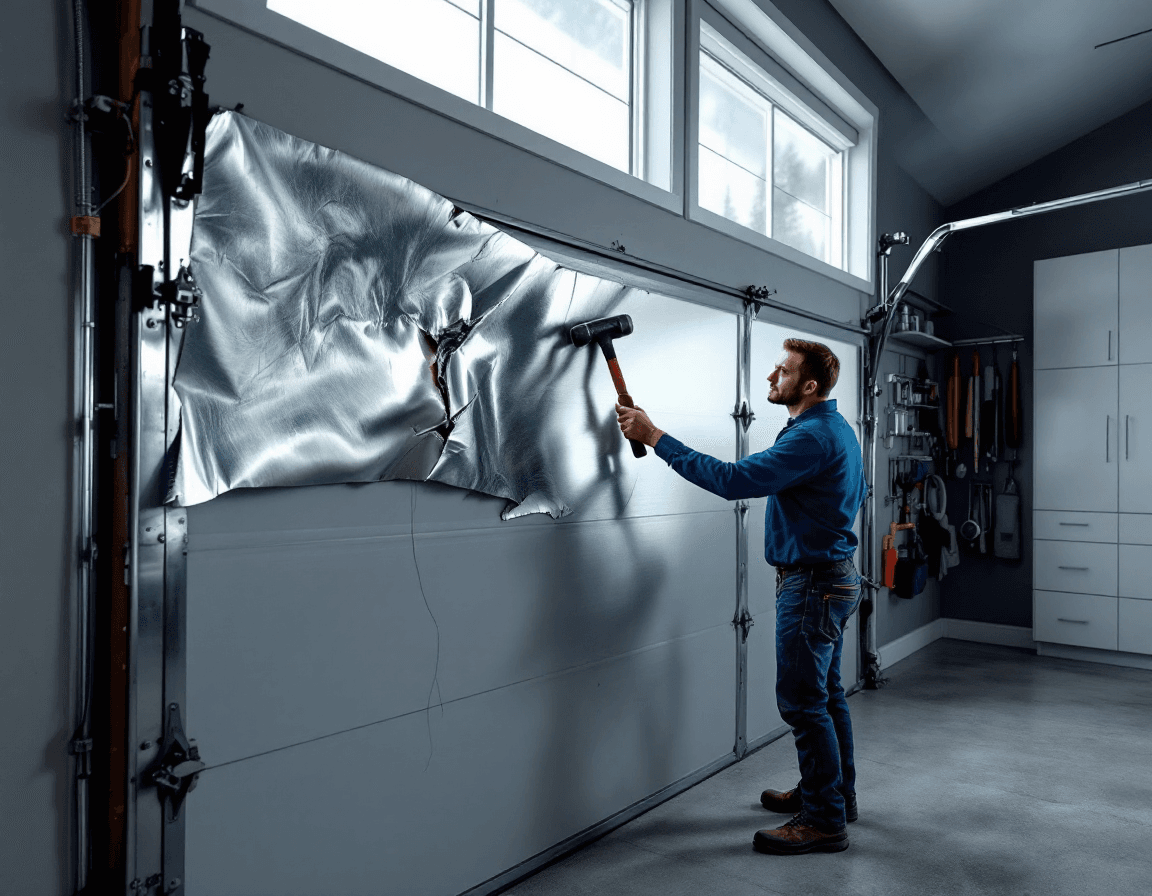
Garage door panel replacement in Bellevue, WA is often the most practical fix for a door that still runs smoothly but looks worn, dented, or patched after a rough season. Many homeowners on the Eastside assume that a damaged panel means buying a whole new door, but that is rarely necessary. Individual sections can usually be swapped out, provided the replacement matches the original closely enough to look right and fit properly. Seattle Garage Door Fix works on these repairs throughout the Bellevue area, and this page explains what to expect, what affects the cost, and how to decide between repairing and replacing.
Bellevue homes present a particular set of conditions. Many houses sit on hillside lots in Lake Hills and Somerset, where driveways slope and garage doors take extra abuse from wind-driven debris and wet leaves. Downtown and Crossroads have a mix of older single-family homes and newer townhomes, some with narrow driveways where a car backing out can easily clip a door edge. Across Factoria and the surrounding neighborhoods, the combination of long, damp winters and occasional heavy storms means that bottom sections and seams take on water more often than people realize. Each of these settings produces its own pattern of damage, and recognizing that pattern helps you describe the problem accurately when you call.
The good news is that a panel problem is usually contained. When the springs, tracks, rollers, and opener are working correctly, a damaged section is a cosmetic and weatherproofing issue rather than an emergency. That gives you time to compare options, check your door's model information, and schedule a visit at a convenient time. The rest of this guide walks through the typical causes of panel damage, how matching works, what drives the price, and when a licensed technician should take over.
Reading the Damage on Your Bellevue Door Before You Call
Start by looking at the door closely in daylight, ideally with the door closed and then partly open. Dents on steel panels often show up as a shadow or a faint ripple when light hits the surface at an angle. Cracks in insulated panels, particularly the vinyl or polystyrene foam cores found in many modern doors, can appear as hairline splits along the edge or as a soft, flexing spot when you press gently near the seam. Take photos from a few distances so you can show a technician exactly where the damage sits and how far it extends.
Pay attention to the panel's position within the door, because that tells you a lot about the cause. A single panel in the middle of the door that is dented straight in usually points to impact from a vehicle, a lawn tool, or a thrown object. A bottom section that is bowed, split, or lifting away from the one above it often points to water, ground moisture, or a worn bottom seal combined with repeated bumping during opening. Rust that starts at the bottom edge and climbs upward usually means water has been sitting in the lower channel for a long time.
Check whether the damage affects the door's operation. Rub a hand along the seam between panels and listen for scraping or rattling as the door moves. A panel that has pushed out of its track groove or caught on a roller will cause noise and uneven motion even if the panel itself looks only mildly dented. If you notice that, note it, because a technician will need to check the rollers and track alignment at the same visit. Describing the sound and location (for example, "grinding at the left bottom corner when opening") helps the technician prepare the right tools.
Why Eastside Weather Works Against Steel and Wood Panels
The Pacific Northwest climate is gentle compared with the desert or the snowbelt, but it is hard on garage doors in its own way. Bellevue winters bring extended stretches of drizzle, fog, and high humidity, which keep surfaces damp for days at a time. Moisture gets into the seams and the lower edge of a door, and it sits there. Over several years, that trapped water works its way into the paint layer and begins the slow process of rust on steel doors or swelling and rot on wood doors.
Steel panels are the most common type on Eastside homes, and they are durable when the factory coating stays intact. The trouble begins when a small chip, a scrape from a bicycle, or a dent cracks the finish and exposes bare metal. Once the protective layer is broken, humidity does the rest. Aluminum panels resist rust well but can still dent and crack, and they tend to fade or chalk over time when exposed to sun and rain. Wood doors, which remain popular with some Bellevue homeowners for their appearance, require regular sealing and are most vulnerable at the bottom rail and the joints between panels.
Insulated steel and composite doors perform well in this climate, but their panels have a different failure pattern. The foam core can absorb water if the outer skin is punctured, and that moisture can cause the panel to feel spongy or develop a bulge that does not spring back. If you suspect that has happened, do not assume the rest of the door is sound. A technician can check whether the water has spread to adjacent sections, which affects both the repair plan and the price.
Matching a Panel When the Original Model Has Changed
Matching is the most common source of frustration in panel replacement, and it is the reason many homeowners assume they need a new door. The starting point is the door's manufacturer, model series, and the year it was installed, which are usually printed on a label or a metal plate near the track or on the inside edge of a panel. Manufacturers often sell replacement sections by model number, and those sections are designed to fit the existing track, hinges, and window positions. When the label is faded or missing, a technician can often identify the door from its panel profile, its groove pattern, and its hardware.
Color and finish are harder to match than dimensions. A door that has been in place for ten or fifteen years has faded at varying rates depending on how much sun and rain each section received. A brand-new panel in the original color may look noticeably different next to the old ones, particularly on the south- or west-facing portions of a house. Sometimes the best result comes from repainting the existing sections so everything blends, and sometimes the new panel is close enough that the difference fades within a season. A technician who has worked on many doors in the area can usually tell you which approach is likely to look better before you commit.
Discontinued models create the biggest challenge. Some door lines from earlier decades are no longer produced, and an exact replacement may be unavailable. In that situation, the realistic options are a close-match panel with a different texture or embossing, a repainted set of panels to create a consistent look, or a full door replacement if the damage is widespread. Being honest about these trade-offs at the start saves time and avoids disappointment after the work is finished.
Bottom Sections, Water Lines, and Sill Damage
The bottom section of a garage door takes the most punishment in a Bellevue winter. It sits closest to the driveway, where water pools, road spray collects, and leaves and grit accumulate in the lower channel. When the bottom seal wears out or the threshold has a gap, water runs under the door and soaks the bottom panel from the inside as well as the outside. Over time, that bottom section can warp, delaminate, or rust through, and the damage often extends a few inches above the visible waterline.
Look for a dark band along the lower edge of the door, a white or crusty residue on the metal (which indicates moisture and mineral deposits), or bubbling paint near the bottom rail. On wood doors, check for soft spots, splitting, or a musty smell when the door is closed. Inside the garage, look at the floor beneath the door for staining or a ridge of debris that suggests water has been coming in regularly. Those clues help determine whether you need only a bottom panel swap, a new seal and threshold, or a broader repair to protect the rest of the door.
Replacing a bottom section is often straightforward when the rest of the door is in good shape. The technician will check the bottom seal and the threshold at the same time, since a new panel installed over a leaking seal will fail again within a short period. If the water has damaged the bottom roller brackets or the lowest track section, those components should be addressed during the same visit. Taking care of the whole lower assembly prevents the repeated cycle of replacing the same panel every few years.
When a Backing Accident Leaves One Panel Behind
A single damaged panel after a backing accident is one of the most common service calls for homeowners in dense neighborhoods, especially where driveways are narrow or where a second car is parked close to the garage. The usual pattern is a dent or crack on one panel, often near the edge where the vehicle's bumper or mirror made contact. The rest of the door may look fine, but the impact can also bend the track or knock a roller out of its groove, which is why a careful inspection matters even when the damage looks minor.
If an accident has occurred, it helps to document the situation before any repairs. Take photos of the door, the vehicle's position, and any scuffs or paint transfer you find. If you are working with an insurance claim, these records support the process. A reputable technician can note the damage in writing, identify which components need attention, and provide a clear estimate that your insurer can review. Ask for that written breakdown rather than relying on a verbal summary.
After a collision, do not try to force a damaged door open or closed. A bent track or a panel pressing against the rollers can strain the springs and the opener, and the door may fall or shift unexpectedly if the balance is off. If the door is stuck, disconnect the opener only if you know how to do so safely, and then call for service. Spring work and cable repairs should always be handled by a licensed professional, and an accident-damaged door is a situation where that rule matters even more.
Repair or Replace: A Practical Decision Path
Deciding whether to replace a single section or the entire door depends on how many panels are affected, how old the door is, and whether the damage is structural or cosmetic. In many Bellevue homes, one or two panels can be replaced without much trouble, while a door with widespread rust or multiple cracked sections may cost less to replace than to repair piece by piece. Use the questions below as a starting point, then ask a technician to confirm your assessment with an inspection.
- One or two panels damaged, the rest structurally sound, and the model is still available: section replacement is usually the most economical choice.
- Three or more panels damaged, or rust spreading across several sections: compare the cumulative cost of individual panels against a full door.
- Door older than about fifteen years with fading across all panels: a full replacement may give a more uniform appearance than matching individual sections.
- Water damage that has reached the bottom rail and the lower brackets: repair the water source and the hardware first, then decide on panels.
- Discontinued model with no close match: weigh a repainted-panel approach against a new door in a current style.
- Insulated panels that feel soft or spongy: check for moisture spread before committing to a single-section repair.
Remember that a door can look worse than it is, and sometimes a panel that appears badly dented still functions perfectly well. If the door operates smoothly, seals adequately, and the damaged panel does not compromise security or weather protection, a cosmetic plan may be enough for now. What matters most is an honest assessment from someone who will look at the springs, rollers, track, and opener along with the panels themselves.
What a Section Replacement Typically Involves
A typical panel replacement begins with the door being safely secured and the springs left untouched unless the technician has confirmed the tension system is involved in the repair. The technician will remove the hinges and roller connections that attach the damaged section to its neighbors, slide the old panel out of the track path, and install the new section in the same position. The fit is checked carefully, including alignment of the edges, seals, and any window inserts, before the door is cycled several times to confirm smooth movement.
Where the old panel is badly corroded or cracked, the removal can take longer than expected. Rusted hinge bolts often need to be loosened with penetrating oil or replaced entirely, and an old seal may tear as it comes away. Those are routine problems for an experienced technician, but they add time and sometimes a small parts charge. Mention any unusual noises or stiffness when you describe the problem, since those signs often indicate a hinge or roller that should be replaced at the same time.
Afterward, the technician should walk you through the finished work. Ask about the sealing around the new panel, how it will weather against the existing finish, and whether the door needs a touch-up coat or a light cleaning to protect the surface. A good installation should leave the door operating as quietly as before, with no gaps at the seams and no new scrape marks on the track. If anything seems off, raise it before the technician leaves.
Pricing Between $250 and $800 Per Section
Panel replacement is priced per section, and the typical range runs from about $250 to $800 depending on the door. Several factors move a job toward either end of that range. The door material and insulation level matter: a basic steel panel costs less than a foam-insulated composite section with a decorative window or a specialty texture. Model availability matters as well, since a panel that must be specially ordered or matched from an older line can carry a higher parts cost. The amount of prep involved, such as removing rusted hardware or addressing a water-damaged bottom rail, also affects the final figure.
Labor and access play a role too. A section in the middle of a tall door may require more handling than a bottom panel that is easily reached. Doors with multiple windows or decorative trim take longer to fit correctly. If the repair uncovers a related problem, such as a worn roller or a bent track segment, that work is quoted separately so you can decide whether to proceed. A clear written estimate should list the panel, the labor, and any additional parts before work begins.
When comparing quotes, be cautious of prices that look far below the range without explanation. A very low figure may reflect a panel that does not truly match the original, or it may leave out the hardware and seal work needed to make the repair last. Ask what is included, whether the panel carries a warranty, and whether the quote covers the cleanup and final testing. A well-matched, properly sealed section is worth more over the long run than a cheap substitute that looks wrong and begins to fail within a few seasons.
Neighborhood Notes: Downtown, Crossroads, Factoria, Somerset, Lake Hills
Each part of Bellevue presents slightly different conditions for garage doors, and knowing them helps when describing the problem. Downtown Bellevue and the Crossroads area include a higher share of townhomes and multi-unit buildings, where garage doors are often shared or located along tight alleys and shared drives. Panels in these settings tend to take impacts from parking maneuvers and delivery vehicles, and access for repairs can be limited. Scheduling early in the day or confirming parking access ahead of time keeps the visit moving smoothly.
Factoria and the areas near the I-405 corridor have a mix of older ranch-style homes and newer construction. Older doors in these neighborhoods may be discontinued models, which makes matching more involved, but they also tend to have sturdy steel construction that repaints well. Homes closer to the commercial stretches sometimes see more road grime and salt-laden spray in winter, which accelerates rust along the bottom panels. A thorough cleaning and sealing of lower sections often pays off in these areas.
Somerset and Lake Hills include many hillside lots, split-level homes, and sloped driveways. Doors on sloped properties sometimes show uneven wear because the door is not perfectly level with the floor, and water can run toward one corner more than the other. Wind-blown leaves and debris from the surrounding wooded slopes can collect in the bottom channel and hold moisture against the panel. Some neighborhoods in these areas also have HOA architectural guidelines covering exterior finishes, so it is worth checking those rules before choosing a replacement color or style.
Seattle Garage Door Fix provides panel replacement and related service across the Bellevue area, including the 98004, 98005, 98006, 98007, and 98008 ZIP codes, as well as the many nearby communities we serve across Western Washington. Local knowledge of how doors age in these specific neighborhoods makes it easier to recommend the right approach for your home.
Keeping Panels Sound Through Bellevue's Wet Seasons
Prevention is inexpensive compared with repeated panel replacement, and a few habits go a long way in a wet climate. Wash the exterior of the door a few times a year with a mild soap and water, paying special attention to the bottom edge and the seams where grit and moisture collect. Rinsing away road salt and debris in late fall and again in early spring helps keep corrosion from starting in the first place. Avoid pressure washers aimed directly at seals or hinges, since high-pressure spray can force water past the weatherstripping.
Inspect the bottom seal and threshold each autumn before the rainy season settles in. Look for flattened, cracked, or torn rubber, and check for daylight visible under the door when it is closed. Replacing a worn seal is a modest expense that protects the bottom panel from constant moisture. Touch up small paint chips promptly with a matching exterior-grade paint, sealing the spot before water can work its way underneath.
Keep the area in front of the door clear of standing water and leaves. Improving drainage at the driveway edge, or trimming overhanging branches that drop debris onto the door, reduces the amount of moisture the bottom section must endure. A quick check after storms can catch a dent or loose seal before it becomes a larger problem. These small steps extend the life of every panel and make any future repair simpler and less costly.
Why Springs and Cables Stay With a Licensed Technician
Many homeowners who are comfortable replacing a panel wonder whether they can handle related parts of the job, such as adjusting the springs or replacing a cable. This is where a firm line must be drawn. Garage door springs store a large amount of mechanical energy, and a torsion or extension spring that releases unexpectedly can cause serious injury. Cables carry that tension and can snap under load, causing the door to drop or the drum to spin violently. These components should only be serviced by a licensed, bonded, and insured professional who has the proper tools and training.
Panel replacement itself is a common task for a qualified technician, but it can reveal spring or cable wear that needs attention. If you notice a frayed cable, a gap in the spring coils, or a door that seems heavy or unbalanced when lifted by hand, stop operating it and call for service. Do not attempt to wind springs, loosen spring anchors, or remove tension on your own. A professional can perform the panel work and address the tension system safely in the same visit if needed.
When you call Seattle Garage Door Fix at (888) 799-3819, describe the damaged section, the door's age and brand if known, and any noises, sticking, or imbalance you have noticed. We will help you sort out whether a single panel is the right fix, whether the bottom seal or hardware should be addressed alongside it, and what a fair estimate looks like for your door. Our licensed technicians serve Bellevue and the surrounding communities, and we are happy to schedule an inspection at a time that works for your household.