
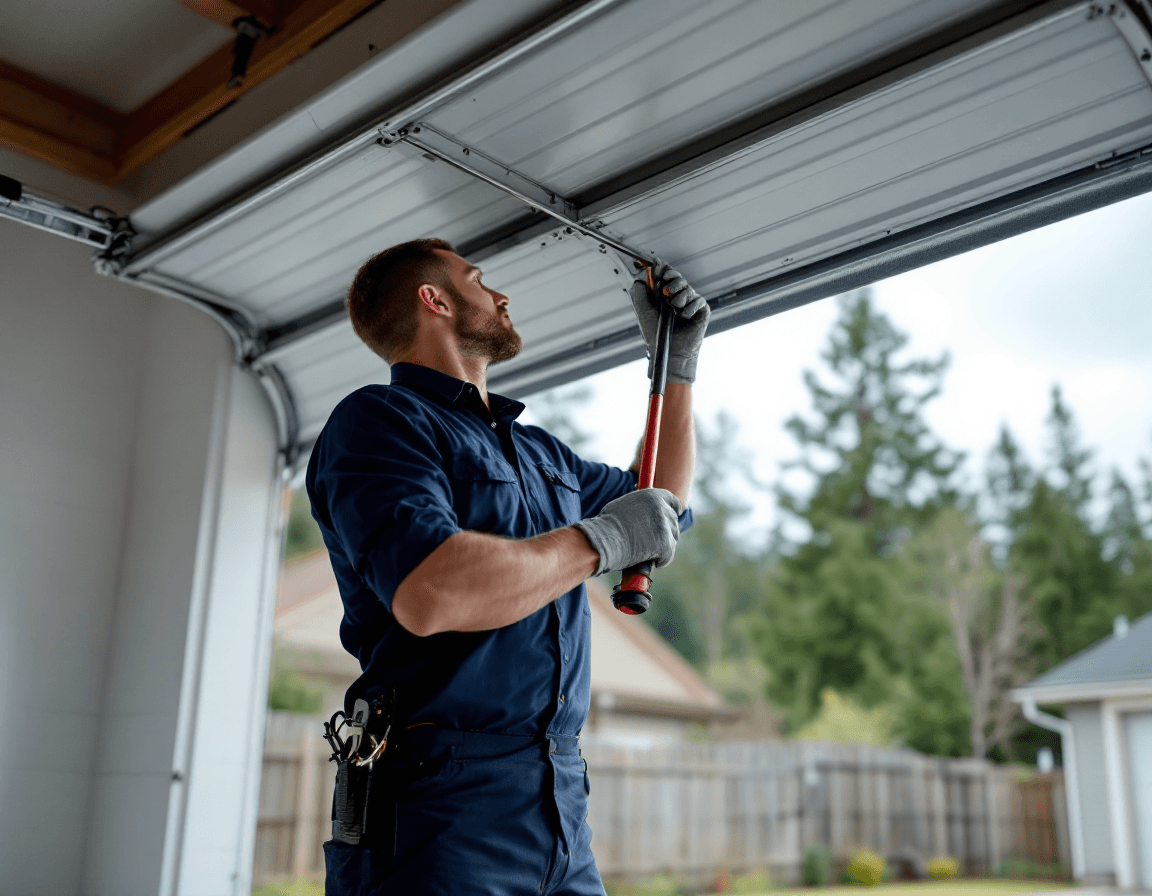
Garage door spring replacement in Seattle, WA is a repair most homeowners put off until the decision is made for them, usually with a sharp bang from the garage at six in the morning. The spring is the component doing the real work of lifting your door. Springs store enough tension to counterbalance a door that can weigh several hundred pounds, so when one fails, the door becomes a dead weight that your opener was never designed to lift alone. Understanding what a broken spring feels like, and why it happens so often in our region, helps you act quickly and safely.
Western Washington's weather is hard on steel. We get long stretches of drizzle, a damp marine air that settles into garages with poor ventilation, and cold snaps that can make metal stiffen and crack more readily. Homes near Puget Sound, from the bluffs of Magnolia and Alki in West Seattle to the waterfront edges of Ballard, can see extra salt exposure that speeds corrosion on hardware and cable. A spring rated for a certain number of cycles will reach that limit eventually no matter where you live, but the local climate can bring the failure forward. Our technicians see the effects every week across King County.
This page explains how spring failures show up, how the two main spring systems differ, what a professional replacement involves, and how pricing is set for most jobs. You will also find notes on high-cycle springs, door balancing, and the neighborhood details that shape our work from Green Lake to Rainier Valley. Throughout, we emphasize the one message that matters most: spring work is dangerous, and it belongs with a licensed, bonded, and insured technician.
Why Seattle Garage Springs Wear Out Faster Than the Brochures Suggest
Manufacturers rate springs in cycles, and a cycle means one full open and close of the door. A household that uses its garage daily for commuting, hauling bikes, or running kids to practice will reach a standard spring's rating far sooner than a household that uses the door once a week. Seattle homes also tend to have garages that get opened in short, frequent bursts, especially in dense neighborhoods like Capitol Hill, Fremont, and Queen Anne where residents park on the street and walk in and out multiple times a day. That repetitive stress accumulates quietly until one winter morning the spring gives way.
Moisture is the second factor. Our wet season keeps springs damp for months, and where the protective coating has chipped or where a door has been exposed to road spray and wind-driven rain, rust starts working into the coil. Rust creates tiny pits that become stress points, and a spring weakened this way may break under a load it would have handled easily when new. Garages in older Seattle housing stock, including many in Green Lake, Wallingford, and the Central District, often lack insulation or consistent ventilation, which means condensation forms on the metal during temperature swings.
Temperature swings matter too. Steel tension changes slightly as the air warms and cools, and a spring already near the end of its life is more likely to snap during a sudden cold morning. Many of the calls we answer in the colder months are for springs that were already worn and simply reached their limit when the weather changed. Routine inspection and early replacement are far cheaper than waiting for the break and dealing with the collateral damage that follows.
Reading the Warning Signs: Sound, Sight, and Feel
A snapped spring is hard to miss. Homeowners frequently describe a loud bang, similar to a gunshot or a heavy metal pipe dropped on concrete, followed by the door suddenly sagging or refusing to move. The noise often comes from the garage or the driveway side of the house, and it may wake people sleeping in nearby bedrooms. If you hear that sound, avoid opening the door manually and keep children and pets away from the garage until a technician has evaluated it.
Not every failure is so dramatic. Some springs give out slowly, and the first clues are subtle. You may notice that the door seems to rise unevenly, that it stops a few inches off the ground, or that the opener strains and hums without lifting the door much at all. Other homeowners find that the door feels extremely heavy when they lift it by hand, or that it closes too quickly and slams against the floor. A visible gap in the coil of a torsion spring, where the metal has separated, is one of the clearest signs that the spring has failed and should not be ignored.
- A loud bang from the garage, often described as a gunshot or heavy metal impact
- The door opening a few inches and then stopping, or refusing to rise at all
- The opener humming or straining while the door barely moves
- A visible gap or separation in the torsion spring coil above the door
- Cables hanging loose, slack, or pulled off the drum after a break
- The door closing too fast, slamming down, or sitting crooked in its track
If you notice any of these signs, stop using the door and call a professional. Continued use can damage the opener, twist the door panels, and place uneven stress on the remaining hardware. Taking a photo or video of the spring and cable setup, without touching anything, can help a technician plan the visit and provide an accurate estimate.
Torsion or Extension: Knowing Which System Hangs Over Your Head
Most residential doors in the Seattle area use one of two spring systems. A torsion system mounts a long spring or pair of springs on a steel shaft directly above the closed door, and it winds and unwinds as the door moves. An extension system uses a pair of springs that stretch along the horizontal tracks on each side, usually found on older doors or in garages where headroom is limited. Each system works differently, and each has its own failure pattern, so identifying which one you have matters before anyone attempts a repair.
Torsion springs are generally considered the safer and more durable of the two for heavy doors, and they are common on newer installations across Ballard, West Seattle, and Magnolia. They carry their load through rotational tension, which means the stored energy is concentrated in the winding and the shaft. Extension springs are found on many older Capitol Hill and Rainier Valley garages, and they store energy along their length, which can make them more hazardous when they release. A single extension spring that snaps can whip violently along the track, so these systems demand extra caution.
Because the two systems require different tools and techniques, a technician should confirm the type during the first visit. Mixing up the components or replacing a torsion spring with an extension spring, or vice versa, can leave the door unbalanced and unsafe. A good technician will also check the drums, cables, and bearings on both sides, since a spring failure rarely happens in isolation.
What a Professional Spring Replacement Really Involves
A proper spring replacement begins with a thorough inspection, not a quick swap. The technician checks the door weight, the condition of the tracks, the rollers, the hinges, the cables, and the drums, and then determines whether the existing springs match the door's size and load. Replacing a spring with the wrong wire gauge, inside diameter, or length is one of the most common mistakes made by unlicensed workers, and it leads to a door that either will not lift properly or fails again within months.
The actual work involves releasing the tension in a controlled manner, removing the broken spring and its hardware, installing the new spring with correct winding, and securing the cones and bearing plates. On torsion systems, the technician uses specialized winding bars and follows a precise sequence so that no one is struck by stored energy. On extension systems, the work includes safely disconnecting the lift cables and reinstalling the springs with the right safety cables in place. Any cables that frayed, slipped, or pulled off their drums during the break are inspected and replaced as needed.
After installation, the technician tests the door through several full cycles. They watch for smooth travel, check that the door stays in place when halfway open, and confirm that the opener is no longer overworked. Many Seattle homeowners are surprised that the job takes a focused hour or two for a typical single-door setup, though complex or multi-door installations take longer. The goal is not just to get the door moving again but to restore it to safe, balanced operation.
High-Cycle Springs and Why Heavy Use Changes the Math
Standard springs are a reasonable choice for households that use their garage occasionally. For busy families, home businesses that run vehicles in and out, or properties where the garage door is a primary entrance, high-cycle springs offer a meaningful upgrade. These springs are manufactured from wire and heat-treatment processes designed to tolerate more repeated loading before fatigue sets in. Compared with a standard spring, a high-cycle option is rated to last considerably longer under the same routine, which can reduce how often you face a sudden failure.
Choosing a high-cycle spring is not automatically the right move for every door. The added durability generally comes with a higher upfront cost, and it matters most when the door is used heavily or when the existing door hardware is in good shape. If your rollers, hinges, and track are worn or misaligned, a premium spring will still be subjected to uneven stress and may not perform as expected. A technician should look at the entire system before recommending an upgrade, so you pay for the components that will actually add value.
When we discuss options with homeowners, we explain the tradeoff plainly. A standard spring is a dependable, budget-conscious repair for a lightly used door. A high-cycle spring is worth discussing for heavy daily traffic, for homes where a failure would leave a family stranded, or for doors that have already broken more than once. The right answer depends on your household, your door, and your tolerance for the inconvenience of another breakdown.
Balancing the Door So the Opener Can Do Its Job
Door balance is the quiet center of a good spring repair. A balanced door stays put when you release it partway open, rises smoothly, and closes without slamming. An unbalanced door places extra load on the opener, wears the gears prematurely, and can cause the door to drift or crash. Even a brand-new spring can produce poor performance if the tension is not set correctly for the door's exact weight, which is why balancing is a required step rather than an optional adjustment.
To check balance, a technician disconnects the opener and manually lifts the door to about waist height. A properly balanced door should hold in place without sliding up or down. If it drifts upward, the springs may be too strong for the door; if it drops, the springs may be too weak. Adjustments are made by changing the tension on the springs in small increments, always using the proper winding equipment and always with safety measures in place. Seattle's humidity can shift tension slightly over time, so periodic balance checks are part of a sound maintenance plan.
Balancing also matters for door alignment. Crooked closing, a door that rubs one side of the track, or a gap at the bottom on one corner can all point to uneven spring tension or worn cables. Addressing these issues during the spring replacement helps prevent premature wear on the rollers and panels. A door that is balanced and aligned will operate quietly and last longer, which is exactly what homeowners want from a repair.
Realistic Pricing for Spring Work in King County
Most garage door spring replacements in our service area fall between $180 and $450, depending on the specific conditions of the job. The lower end generally covers a standard single spring replacement on a typical residential door when the surrounding hardware is in good condition. The upper end usually reflects heavier doors, double-door setups, high-cycle springs, extension systems that require additional safety components, or jobs where cables, drums, or bearings also need replacement. The final number is always based on what the technician finds during the inspection.
Several factors shape the total. The door's size, material, and weight determine the spring specification. Access matters too; a garage in a tight Capitol Hill alley setting or a steep Queen Anne driveway may require more setup time. If the break caused collateral damage such as bent tracks, a torn cable, or a damaged opener drive, those repairs add to the scope. Homeowners who choose high-cycle springs or want a full balance check and lubrication service should expect pricing to reflect the added labor and parts.
- Standard versus high-cycle spring selection
- Torsion or extension system type and the number of springs needed
- Door weight, size, and whether it is a single or double door
- Condition of cables, drums, bearings, and rollers discovered during inspection
- Access challenges such as tight alleys, steep driveways, or limited headroom
- Additional repairs needed after the spring failure, including track or opener damage
Be cautious of any quote that seems dramatically low or that will not explain what is included. A reliable estimate describes the spring type, the safety steps, the balance testing, and any optional upgrades in plain language before work begins.
Cables, Drums, and the Damage a Broken Spring Leaves Behind
When a spring breaks, the energy it held does not disappear; it transfers to the cables and drums. The cables can snap, unwind, or jump off the drum, and the drum itself may be cracked or shifted on the shaft. Some homeowners discover these problems only after the spring has been replaced and the door refuses to operate. For that reason, a responsible technician checks the entire lift system during any spring visit rather than focusing on the spring alone.
Cable damage is especially common after a torsion spring break. Frayed strands, kinked sections, or cables that have stretched unevenly can all lead to a door that hangs crooked or fails to lift evenly. A cable that has come loose may also indicate that the drum is damaged, which could cause a second failure soon after the first. Replacing these components at the same time as the spring is usually more efficient than returning for another visit a few months later.
Rollers and hinges deserve attention too. A door that has been operating under uneven tension for some time may have worn rollers that bind in the track, or hinges that have loosened from the panels. These parts are inexpensive compared with the cost of a damaged door section, and checking them during the spring work protects your investment. A thorough inspection ensures that the replacement spring is not asked to compensate for problems that could have been caught earlier.
Neighborhood Notes: From Ballard and Queen Anne to West Seattle and Rainier Valley
Seattle is not one uniform garage landscape, and the details shift from neighborhood to neighborhood. In Ballard and Crown Hill, many homes have detached garages that face alleys, and the tight clearances can make extension spring work more involved. In Queen Anne and the slopes above Lake Union, steep driveways and retaining walls can affect how the door is mounted and how the opener loads the system. Our technicians are familiar with these conditions, which helps them plan the right tools and approach before arriving.
West Seattle and Magnolia bring the marine influence into sharper focus. Homes near Alki, Fauntleroy, and the Magnolia bluffs often experience salt air and heavier wind, which can accelerate corrosion on hardware and make the bottom seal and tracks more prone to damage. In Rainier Valley and the Mount Baker and Beacon Hill edges of 98144 and 98118, many garages are older and may have been converted or modified over the years, so the springs and track assemblies sometimes need custom attention. Fremont and Green Lake residents, in ZIPs 98103 and 98115 among others, frequently deal with aging garages that were built before modern door standards, and the spring systems on those doors can be long past their intended service life.
Our service area also reaches the Lake City and Bitter Lake corridor in 98125 and 98133, as well as University District and Roosevelt households in 98105, and the downtown and South Lake Union condos in 98101 and 98109. Each setting brings its own mix of door age, access, and usage patterns. Whether you live near Capitol Hill's busy streets or in a quieter pocket of 98136 or 98199, the same principles apply: inspect the whole system, use the right spring for the job, and balance the door carefully.
Why Spring Work Belongs in Licensed, Insured Hands
Garage door springs store a remarkable amount of energy, and that energy can cause severe injuries when released without control. Winding bars can slip, cables can whip, and a spring under tension can strike with enough force to break bones or cause permanent harm. This is why the industry treats spring work as specialized, and why homeowners should never attempt a spring replacement with household tools, online tutorials, or guesswork. Even experienced handypeople can be seriously hurt by a mistake that takes a fraction of a second.
Licensing, bonding, and insurance exist to protect you. A licensed technician has demonstrated training in these systems, and bonding and insurance help cover your property and the crew in the event something goes wrong during the job. Seattle Garage Door Fix operates as a licensed, bonded, and insured company, and our technicians perform spring work using proper safety equipment and established procedures. When you hire a professional, you are paying for the expertise to do the job correctly, not simply for the replacement part.
- Attempting to wind or unwind a spring with improvised tools or household bars
- Standing directly in line with the spring, cables, or drum during any adjustment
- Replacing a spring with one of the wrong length, diameter, or wire gauge
- Leaving a broken door in a partly raised position where it can fall unexpectedly
- Ignoring cable damage or loose drums after a break and continuing to operate the door
- Using the opener to force a damaged door open, which can strip gears and worsen the damage
If your spring has broken, keep everyone clear of the door, disconnect the opener if you can do so safely from the wall control, and call a licensed technician. Do not climb on the door or attempt to lift it by hand. Taking these simple precautions protects your family while the professional team gets the door back to safe, balanced operation.
Garage door spring replacement is not a task to delay when the signs appear, and it is not a job to tackle alone. If your door is making a loud bang, refusing to lift, hanging crooked, or sitting partly open, call Seattle Garage Door Fix at (888) 799-3819 for licensed, bonded, and insured spring service across Seattle and King County. Our team can inspect your torsion or extension system, recommend a standard or high-cycle spring that fits your household, balance the door for smooth operation, and explain the work before we begin. Reach out today and let a professional restore your garage door safely.