
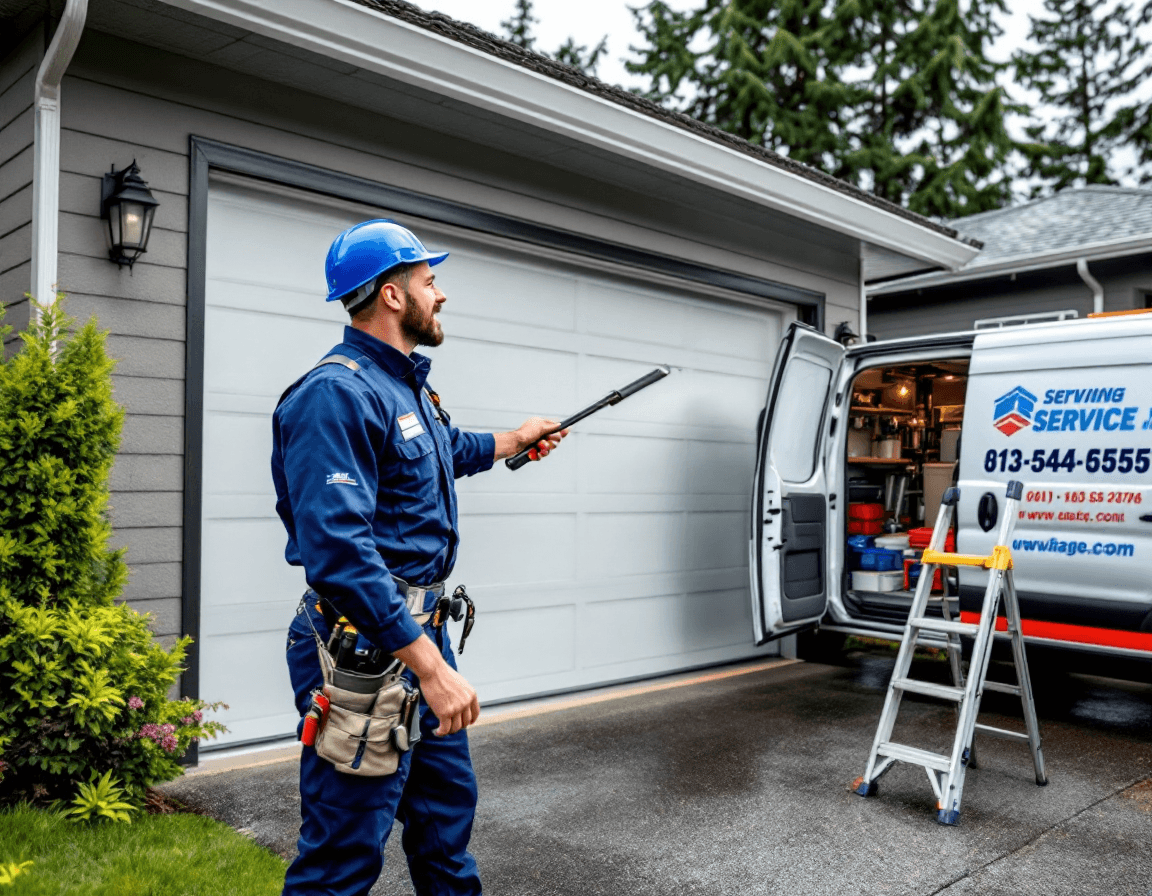
Garage door repair in Maple Valley, WA is a common need for homeowners across this part of King County, where a door that stops working can quickly disrupt a morning commute or leave a family stuck inside. Maple Valley sits at the edge of the foothills southeast of Renton, and its garages take on a particular kind of wear: long wet stretches in fall and winter, cool damp air that settles into metal and wiring, and the occasional hard freeze that stiffens lubricants overnight. Our technicians serve homes throughout the area, including neighborhoods near the Four Corners business district and the homes that circle Lake Wilderness, so we see the full range of door types and problems that come with local construction.
Most calls we take start with a simple observation. The door did something it never used to do, whether that was a hesitation, a grinding sound, or a remote that suddenly ignored you. Many of these problems look dramatic but trace back to a handful of causes that are straightforward to identify once someone has the right tools and a little experience with local weather. This page walks through the most common symptoms we hear about, explains what they usually mean, and describes when it makes sense to call a licensed technician rather than trying to troubleshoot on your own. Standard residential repairs in our service area typically fall between $95 and $450, depending on the part involved and how much labor the job requires.
Read through the sections below for a practical guide. If your door is currently stuck open, closed on a vehicle, or hanging crooked, skip ahead to the safety guidance and then call us directly at (888) 799-3819.
Why Maple Valley Garages Take a Beating Between Rain and Frost
Western Washington winters are not especially cold by national standards, but they are long, damp, and persistent, and that combination is hard on garage doors. Moisture works its way into hinges, roller bearings, and the steel track, where it causes surface rust and drives away the grease that keeps moving parts quiet. Many Maple Valley garages are attached to the house and share a slab with a driveway that drains toward the street, so water and road grime can track in every time a vehicle pulls in. Over several seasons, that buildup changes how the door rolls and how the sensors see the floor.
Temperature swings matter just as much as rain. On cool autumn mornings and during the occasional cold snap, lubricants thicken and metal contracts slightly, which can make a door that moved smoothly in August feel sluggish in January. Vinyl weather seals stiffen and lose flexibility, and wood panels can swell and shrink, altering the clearance between panel edges and the track. Because a garage door is a large moving assembly with tight tolerances, even small changes in friction or alignment can turn into a noticeable symptom.
Homeowners often ask whether local weather really explains their problem or whether something is simply broken. The honest answer is that it is usually both. Environmental wear sets the stage, and a worn roller, weak spring, or misaligned track is what finally makes the symptom show up. A technician who knows how the Pacific Northwest climate affects these systems can often spot the difference between a seasonal slowdown and a component that needs replacing.
Doors That Refuse to Open or Close: Reading the Clues
When a door will not open or close at all, the first question is whether the opener is receiving power and a command. Look for the indicator light on the opener motor unit and listen for a click when you press the wall button. If the motor hums but the door does not move, the problem is usually mechanical, such as a disconnected trolley, a broken drive gear, or a jammed track. If nothing happens at all, the issue is more likely electrical, involving the outlet, the circuit breaker, the wall control, or a tripped safety circuit.
Doors that seem to refuse only at certain times often have a sensor or obstruction issue. A stray broom, a bag of recycling, or a shifted bicycle can block the photo-eye beam at the bottom of the track, which tells the opener the path is unsafe. In a Maple Valley garage where storage tends to creep toward the door opening, this is a more frequent culprit than people expect. Inspect the floor and the area just inside the tracks before assuming the opener has failed.
Some doors refuse to close because the opener has reached a force limit. This can happen when the track has bent, when rollers are binding, or when debris sits in the path of the panels. Repeated attempts to force a door closed can damage the opener gears and stress the cables, so it is wise to stop after one or two tries and investigate. If the door will not move in either direction and you can hear the motor straining, disconnect the opener from power before doing anything else and call a technician.
The Reversing Door Problem and Those Safety Sensors Near Your Slab
A door that starts to close and then reverses before it reaches the floor is one of the most common symptoms we see, and it is also a safety feature doing its job. Modern openers are required to reverse when they detect an obstruction, and the photo-eye sensors mounted near the bottom of the track are designed to stop and reverse the door if the beam is interrupted. If those sensors are misaligned, dirty, or receiving too little light, the opener believes something is in the way and reverses automatically.
Start with the basics. Check that both sensor lenses are free of cobwebs, dust, and road film, which build up quickly in garages that see heavy traffic. Look at the small indicator lights on each sensor. Typically, one light is steady when the sensors are aligned and the other flickers or stays off when the beam is broken. If the lights do not match what the manual describes for your model, the sensors may need realignment or replacement. Wiring damage from a pinched cable or a rodent visit can also interrupt the signal, which is common in homes with crawl spaces or wooded edges.
Door reversal can also come from a force setting that is too sensitive after a change in the door's balance. If the door has grown heavier from water-soaked panels or has lost some spring tension, the opener may interpret normal resistance as an obstruction. Adjusting force settings is something a trained technician should handle, because the same adjustments can affect how the door responds to real hazards, including a child or pet standing in the opening.
Noise Diagnostics: What Grinding, Squealing, and Banging Are Telling You
Sound is one of the most useful diagnostic tools you have, and each type of noise tends to point toward a particular component. A high-pitched squeal usually comes from dry rollers or hinges that need lubrication, especially after a damp season. A deep grinding noise often indicates worn gears in the opener or a loose drive chain or belt that is rubbing against its housing. Rhythmic clicking may signal a worn roller or a loose bracket, while a sudden loud bang can mean a panel has come loose from its hinge, a track bolt has backed out, or a spring has failed.
Keep a mental note of when the noise happens. A noise that appears only on cold mornings may be lubricant that has thickened, while a noise that gets worse over several weeks may indicate a bearing that is failing. Listen whether the sound comes from the opener overhead or from the door sections themselves. Sounds that travel through the track or the wall often originate at the rollers, while noises that seem to come from the ceiling are usually the opener drive.
Be cautious with homemade fixes. Adding the wrong lubricant, such as a heavy grease, can attract dirt and create a gummy buildup in the track. Tightening hardware without understanding load can strip a bracket or throw the door out of balance. If a noise is accompanied by a door that drops suddenly, a visible gap at the top section, or a broken spring coil, stop using the door and call for service right away.
Crooked, Uneven, or Jumping Off Track: Alignment Issues on Older Frames
A door that looks crooked, rises unevenly, or pops out of its tracks is signaling a problem with either the balance system or the track geometry. Many Maple Valley homes have garage doors that have been in place for many years, and track bolts can loosen with repeated vibration. When one side of the door climbs faster than the other, the panels can bind against the vertical track and eventually jump free. Left alone, this stresses the rollers and hinges and can bend the track permanently.
Visually check the door from inside the garage with the door partially open. Look at the gap between the top of the door and the header, and compare the height of the bottom seal on each side. Make sure the horizontal track is level and that the vertical track is plumb. A tape measure and a level are enough to spot obvious issues, but only a technician should loosen or adjust brackets that hold tension-loaded components.
Uneven movement can also come from a broken spring or cable. Torsion springs and extension springs store enormous energy, and when one fails the door will often lean or refuse to lift evenly. If you notice a door that sits lower on one side or that has a cable hanging loose near the drum, do not attempt to operate it manually. Keep people and vehicles clear and schedule a repair as soon as possible.
Remote Silent, Wall Button Dead: Tracing the Signal Path
When the remote does nothing, it is tempting to assume the opener has failed, but the cause is often much simpler. Remote batteries, typically small coin cells, are the first thing to check, and replacing them takes less than a minute. Look for a small LED on the remote that lights when you press a button. If it does not light, the battery is the likely problem. If it lights but the door still does not respond, the receiver on the opener may have lost its programming or may be experiencing interference from other devices.
Wall controls have their own failure points. The wire that runs from the wall button to the opener can be pinched, nicked, or disconnected at either end, and older installations sometimes have wiring that has become brittle over time. Dampness near a wall button can corrode the contacts. If the wall button works but the remote does not, or the reverse, the problem is likely isolated to one side of the system.
Interference is less common but worth considering in dense neighborhoods. Other garage door remotes, nearby gates, and some wireless security devices can interfere with the receiver. If the signal worked yesterday and fails today, try resetting the opener's power for a few seconds, then test again. If the problem persists, it may be time to reprogram the remote or upgrade to a unit with a newer code system.
When the Door Stops Halfway and Refuses to Budge
A door that stops partway up or down and will not move in either direction usually indicates that the opener has detected a strong resistance or that the mechanical link between the opener and the door has failed. Common causes include a disconnected trolley that no longer engages the carriage, a broken drive belt or chain, or a jammed roller that has popped out of the track. In some cases, a bent track creates a physical blockage that the opener cannot push through.
Do not attempt to force the door. Forcing a stuck door can damage the opener, twist the track, or cause the panels to separate. If your opener has an emergency release cord, it is designed to disengage the door from the opener so you can move it manually, but this should be done with the door fully closed and with extreme care. Once the door is disconnected, it can drop suddenly if a spring or cable is damaged, so keep clear of the door's path and never place your hands in the track.
If the door is stuck halfway, call a technician and describe where it stopped and what you heard. This information helps us determine whether we need to inspect the trolley, the track, the rollers, or the springs. In most cases, the repair is straightforward once the cause is identified, and the door can be returned to normal operation quickly.
Slamming, Sagging, and Gaps: The Weather-Seal and Balance Question
A door that slams shut too quickly or closes with a heavy thud is often experiencing a balance problem, a worn closing setting on the opener, or a failed damper on certain models. Doors that drop faster than expected can also cause damage to the floor, the stops, and the panels themselves. Over time, repeated hard closings loosen hardware and weaken the seals that keep water and drafts out.
Sagging and visible gaps tend to appear as a door ages and as its components lose their original tension. A door that sags in the middle may have a weak section or a bent panel. A gap at the bottom can allow rain, leaves, and pests into the garage, and it can also let cold air reach the slab, which is a concern in homes where the garage shares a wall with living space. Weather seals should be checked for cracking, flattening, or pulling away from the frame, especially after a winter of heavy rain.
Replacing a bottom seal is one of the more manageable tasks a homeowner can consider, and it is often inexpensive. However, any work that involves changing the door's balance, adjusting springs, or replacing panels should be handled by a licensed professional. Balance adjustments interact with spring tension, and a technician can measure whether the door is holding its position correctly without placing you in danger.
Dealing With Springs and Cables: Why This Stays With a Pro
Torsion springs and extension springs are the heart of a garage door's lifting system, and they are also the most dangerous part to service. A torsion spring mounted above the door carries a significant amount of stored energy, and a failure can release that energy with enough force to cause serious injury. Extension springs, which run along the sides of the track, can also snap and whip with dangerous speed. Cables attached to drums can fray or come off the drum under tension, creating another hazard.
Because of this, spring and cable work should always be performed by a licensed, bonded, and insured technician with the right equipment and training. Attempting to wind, unwind, or replace a torsion spring with household tools is one of the most common ways people get hurt during DIY garage door projects. Even experienced handypeople are advised to leave this work alone. If you suspect a spring has broken, you may notice a loud bang, a door that will not lift, or a gap between coils. Keep the door closed, keep children and pets away, and call for service.
Our technicians follow established safety practices for handling tension and balance, and they will explain what they are doing and why. For homeowners, the best approach is to treat springs and cables as components that require professional attention every time. That approach protects you, your vehicle, and everyone who passes through the garage.
What a Typical Maple Valley Repair Visit Looks Like and What It Costs
A typical repair visit begins with a conversation about what the door is doing and when the problem started. A technician will then inspect the opener, the track, the rollers, the hinges, the springs, the cables, and the sensors. This inspection usually reveals the root cause, and the technician can explain what they found and what options are available. Many repairs can be completed during the same visit if the necessary parts are on the truck.
Pricing for most residential repairs in our service area falls between $95 and $450. Simpler jobs, such as sensor realignment, remote programming, or a replacement roller set, usually fall toward the lower end of that range. More involved repairs, such as replacing a damaged track section, a drive assembly, or a set of springs, may fall higher. Exact pricing depends on the door's size and weight, the components involved, and the time required. We will explain what the repair includes before any work begins so there are no surprises.
To help your visit go smoothly, clear the area around the door and the tracks, and note any sounds or behaviors you have observed. If you have a remote or wall control that is not working, bring it along. Make a note of your door's brand and approximate age if you know it, since that can help the technician bring the right parts. If the door is currently unusable, let the technician know so they can prioritize accordingly.
Keeping Your Door Working Through Puget Sound Seasons
Preventive care makes a real difference in how often a garage door needs repair. Once or twice a year, inspect the door's hardware for loose bolts, check the rollers for wear or cracks, and look at the track for dirt and bends. Wipe down the tracks and sensor lenses, and apply a silicone-based lubricant to the hinges, rollers, and springs. Avoid oil-based products that attract grime and can damage rubber components.
Weather seals deserve regular attention in our climate. Check the bottom seal and side seals for cracks and gaps before the wet season begins, and replace them when they show signs of wear. Keep the area near the door clear of leaves, gravel, and debris, which can work into the track and cause binding. If your garage floor slopes or collects water, consider addressing drainage so moisture does not wick into the door's lower sections.
Finally, test your door's safety features every month. Place a flat object in the path of the closing door and confirm that it reverses. Check that the auto-reverse sensors are working by passing an object through the beam while the door is closing. Keep your opener's manual nearby, and remember that any issue you cannot resolve with simple cleaning or battery replacement should be evaluated by a licensed professional.
If your Maple Valley garage door is stuck, noisy, crooked, or refusing to respond, our licensed and insured technicians are ready to help. Call Seattle Garage Door Fix today at (888) 799-3819 for fast, reliable residential garage door repair throughout the area, from the Four Corners district to the neighborhoods around Lake Wilderness.