
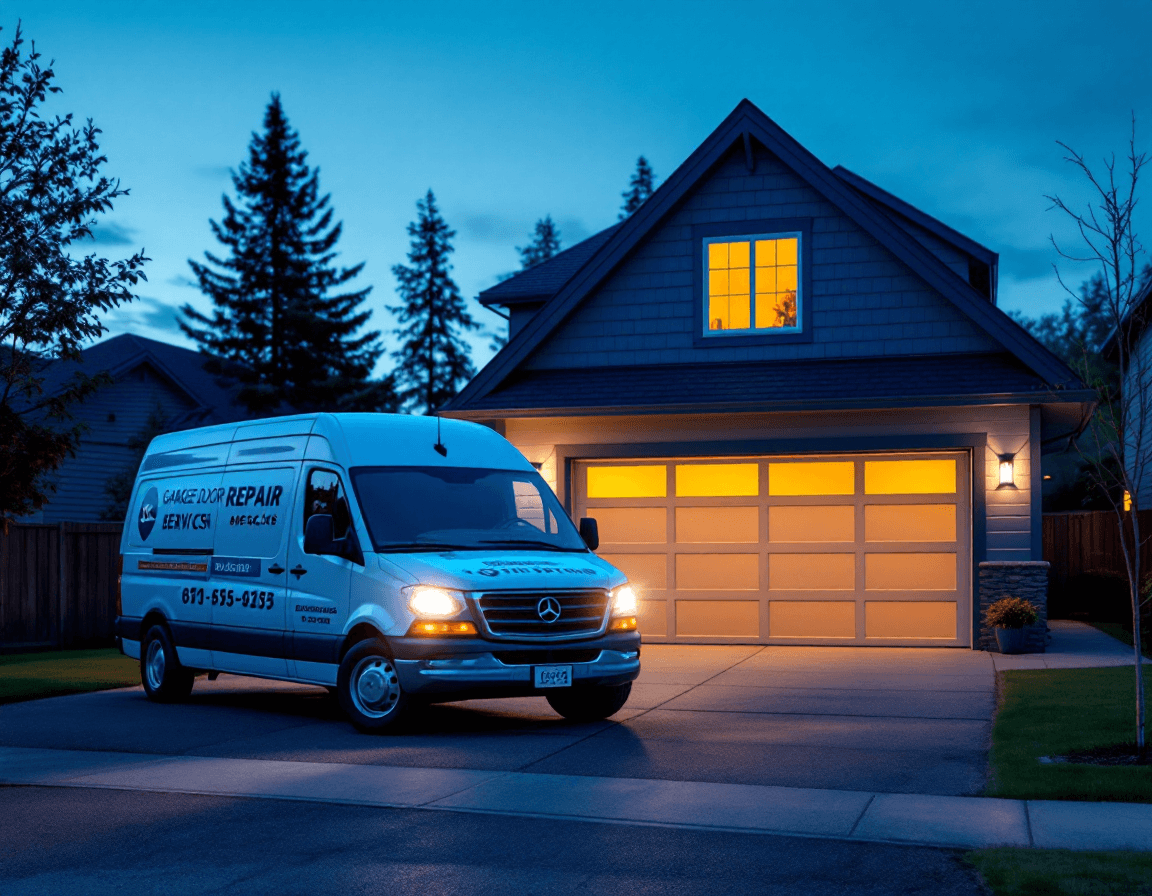
When a garage door jams at 9 p.m. with the car still in the driveway, finding 24 hour garage door repair Puyallup homeowners can count on becomes urgent fast. Most failures do not wait for business hours. A broken torsion spring, a snapped cable, or a dead opener can strand a family on a rainy Tuesday night just as easily as on a sunny weekend. Our crews serve Puyallup and the surrounding Pierce County communities around the clock, and this page explains what after-hours service looks like here, what you can safely do while you wait, and where the line sits between a homeowner task and a job for a licensed professional.
Puyallup sits in the Puyallup River valley with Mount Rainier on the eastern horizon on clear days, and that setting shapes how garage doors behave. Many homes in the city were built across several decades, from older ranch houses near the historic downtown to newer subdivisions on the south and east sides. Each era brings different door sizes, track styles, and opener models, so an after-hours call is rarely just a routine visit. A technician who knows the local housing stock can often identify the likely cause faster and bring the right parts on the first trip.
Whether you live near the Washington State Fairgrounds, out toward Orting, or up on the South Hill, the situation usually follows a familiar pattern. The door stops, makes a noise you have never heard before, or simply refuses to respond to the remote. This guide will help you stay calm, avoid making the damage worse, and understand what a proper emergency visit should include. It also explains why certain repairs should never be attempted by an untrained homeowner, no matter how late it is.
When a Stuck Door at Night Turns Into a Real Emergency
A garage door that fails during the day is an inconvenience, but one that fails after dark can quickly become a security and safety concern. An open or partly open door leaves the garage and any stored items exposed, and it can also create a path into the home if the interior door is unlocked. Families who rely on the garage as their main entry often feel the problem most sharply when they return from work, a late dinner, or a weekend event in town. Recognizing the difference between an annoyance and a true emergency helps you decide how urgently to call.
Some situations clearly qualify as urgent. A door that has come off its tracks, a visibly broken spring, a door hanging at an angle, or a panel that has separated from its frame should all be treated seriously. Even if the door still moves, a damaged system can shift without warning, so it should be kept closed and left alone until a technician arrives. Anyone who sees a door bending or hearing a loud snap should step away from the opening immediately.
Less dramatic problems still deserve prompt attention after hours. A remote that stops working, an opener that clicks without moving the door, or a safety sensor light that keeps blinking can often be diagnosed by phone or resolved on site in a single visit. Calling in the evening rather than waiting until morning gives the technician a better chance to inspect the entire system and make sure your home is secure before you go to bed.
How Western Washington Rain and Damp Air Wear Down Door Hardware
Puyallup's wet winters and long, gray stretches from late autumn into spring place steady stress on residential garage doors. Moisture collects on steel tracks, rollers, and hinges, and it works its way into bearings that were never designed to sit in damp conditions for months at a time. Over time this leads to surface rust, stiff rollers, and uneven movement that can strain the opener and the cables. Homeowners often notice the problem first as a grinding or squealing sound during the morning commute.
Wood and composite doors respond to the same weather in different ways. Wood panels can swell after heavy rain and then contract during dry spells, which can affect alignment between the door and the weatherstripping along the bottom edge. Insulated steel doors are generally more stable, but the perimeter seals and the spacing of the hinges still matter a great deal. When the door no longer sits level, the opener may work harder than designed, and the safety reversal system can become more sensitive.
Cold snaps add another layer of difficulty. Springs lose some efficiency as temperatures drop, and a door that opened smoothly in August may suddenly feel heavy in January. The local pattern of clear, frosty mornings followed by wet afternoons means the hardware is constantly expanding and contracting. A regular inspection each season, especially before the rainy months begin, can catch corrosion and lubrication problems before they turn into an emergency call.
Warning Signs Your Door Is Heading Toward a Breakdown
Most garage door failures give some advance notice. Paying attention to these signals can help you schedule a visit during normal hours instead of waiting for a midnight breakdown. The list below covers the symptoms our technicians hear about most often from Puyallup and Pierce County homeowners:
- A sharp bang or pop from the top of the door, which can indicate a spring or cable issue
- Visible gaps or fraying on the lift cables, particularly near the drum or bottom bracket
- Uneven movement where one side rises faster than the other
- The door reversing or stopping halfway without an obvious obstruction
- Grinding, scraping, or squealing from the rollers during each cycle
- Rust streaks or flaking on tracks, hinges, and the spring anchor brackets
- An opener that runs longer than usual or makes a labored humming sound
Any single sign may have a simple explanation, but several together usually mean the system is nearing its limit. Taking note of when the problem started, whether it happens in certain weather, and which remote or wall button triggered it will help the technician diagnose the issue more quickly. Photos or a short video of the noise can be surprisingly useful when you describe the problem over the phone.
What You Can Safely Do Before the Technician Arrives
While you wait for a repair team, a few careful steps can keep the situation stable. The goal is to protect people, prevent additional damage, and secure the home, not to fix the mechanical system yourself. Keep children and pets away from the door area, and do not allow anyone to walk or drive under a door that is hanging unevenly. If the door is open, consider closing it manually only if the spring system is intact and the door moves freely, and never force it if it resists.
Here are practical actions that homeowners can take safely:
- Keep the opener unplugged or the breaker switched off if you notice smoke, burning smells, or a hot motor
- Use the interior door or a side entrance to get in and out of the house
- Move vehicles, bicycles, and tools away from the door path so nothing is struck if it shifts
- Take clear photos of the tracks, cables, and any visible damage to share with the technician
- Write down the make and model of the opener if you can find the label on the motor housing
- Check whether the power is out in the neighborhood, since a blackout may be the only issue
If the door will not close at all, use a temporary security measure such as a sturdy padlock on the interior side of the door track only if it is safe to do so. Avoid nails, tape, or makeshift braces, which can bend tracks or damage panels. A professional should always handle the final securing and inspection.
The Emergency Release Cord and Why It Needs Respect
Nearly every automatic garage door opener includes a red emergency release cord that disconnects the door from the drive trolley. Pulling it allows you to lift the door by hand from inside the garage, which can be necessary during a power outage or when the opener fails. Homeowners should know where the cord hangs and how it works before they need it, because an emergency is a poor time to learn. Many people in Puyallup use this release during windstorms or when a power outage catches them off guard.
The release is designed for convenience, not for repairing a broken door, and it carries real risk when misused. A door that is already damaged can drop suddenly once it is disconnected, especially if a spring has broken or a cable has come loose. For that reason, the release should only be pulled when the door is fully closed, and you should never stand beneath it while it moves. Once the release is engaged, the door is no longer protected by the opener's motor, so manual handling must be slow and deliberate.
If the door feels unusually heavy, shifts when you lift it, or makes a loud noise as you pull, stop immediately and call for help. Those signs usually point to a spring or cable failure that requires specialized equipment to correct. Our technicians are trained to handle the tension safely and will explain the situation before any work begins.
Springs, Cables, and Other Jobs for Licensed Professionals
Torsion springs and extension springs store enormous amounts of energy, and a broken spring can cause serious injury if it is handled without the proper tools and training. Many homeowners are surprised by how much force is trapped in a single spring, which is why the replacement process must be carried out by someone with the correct winding bars, safety equipment, and experience. Attempting to wind or unwind a spring with improvised tools is one of the most common causes of preventable garage door injuries. Spring and cable work should always be left to a licensed, bonded, and insured professional.
Cable replacement, drum repair, and track realignment also require careful handling. Cables that have slipped off the drum or are wrapped incorrectly can release suddenly, and bent track sections can alter the door's balance in ways that are not obvious at first glance. A professional will inspect the entire system, check the balance, and confirm that the opener and safety sensors work correctly after the repair. That complete check is what keeps the door safe for the next several years of use.
Garage door openers, sensors, and remotes are generally simpler to service, but they still involve wiring and electrical connections that deserve a qualified technician. Replacing a logic board, aligning photo eyes, or reprogramming a remote should be done according to the manufacturer's instructions and local code. Our team handles these tasks as part of a complete evaluation so that no single component is fixed in isolation while another is failing.
Neighborhood Notes Across Puyallup and the Surrounding ZIP Codes
Our after-hours service covers Puyallup and its neighboring communities, including homes within ZIP codes 98371, 98372, 98373, 98374, and 98375. Each area has its own mix of housing ages, lot layouts, and driveway configurations. Some older homes near the downtown core have narrower garages with tight headroom, which can limit the type of track and spring system that will fit. Newer homes on the outer edges often feature wider double doors and insulated panels, which place different demands on the opener and the balance system.
Homes on the South Hill tend to have steeper driveways and sloped approaches, and that grade can make door movement feel uneven if the tracks are not perfectly level. Properties closer to the river valley can hold moisture longer after storms, which accelerates corrosion on lower brackets and rollers. Homes near the fairgrounds and the Daffodil Festival route often see extra traffic on event weekends, which is a reminder that sudden repairs can happen when routines are disrupted. Whatever your part of town, the technician who arrives should ask about your door's history, your opener model, and any recent changes to the system.
Because Puyallup sits between the Tacoma metro area and the rural edges of Pierce County, it is common for homeowners to have several outbuildings or detached garages. Those structures often have older doors, unusual header heights, or hand-built framing that requires custom measurements. Mentioning the location of a detached garage when you call helps the dispatcher prepare the right equipment and expected time on site.
Dispatch, Diagnosis, and What Happens When We Arrive
When you call our after-hours line at (888) 799-3819, the first conversation is about safety and basic details. The dispatcher will ask whether anyone is trapped, whether the door is damaged or hanging, and whether the garage is open to the outside. Describing the sound, the movement, and the remote or button behavior helps the team decide what parts and tools to bring. Having your address, the door width if known, and the opener brand ready will speed things along.
Once a technician arrives, the visit typically begins with a walk-through of the door, the tracks, the springs, the cables, and the opener. The technician will check the balance by disconnecting the opener safely and testing whether the door stays put at mid-height, then will verify the safety reversal and sensor alignment. A clear explanation of the problem, the repair options, and any safety concerns should come before any work is authorized. Ask questions at each step, and expect straightforward answers about what was found and why.
If a part must be ordered, the technician should explain what is needed and how the door will be secured until the repair is complete. Temporary measures should never leave the home exposed or the door in an unsafe state. Keep the paperwork or invoice from the visit, since it documents the parts replaced and the work performed, which can be useful for future maintenance or insurance questions.
Keeping an After-Hours Breakdown from Happening Again
Preventing the next emergency is easier than most homeowners expect. A seasonal check each spring and fall, timed before the heaviest rain and the first hard frost, can catch loose hardware, dry rollers, and early corrosion. Lubricating the hinges, rollers, and tracks with a silicone or lithium-based product designed for garage doors helps the system move quietly through wet months. Avoid heavy grease on tracks, since it can attract dust and grit that slows the rollers.
Look at the weatherstripping along the bottom seal and the side jambs, and replace any section that has cracked or pulled away. Keeping the door fully closed during storms also reduces water intrusion and wind stress on the panels. Test the auto-reverse feature every few months by placing a flat object in the door's path, and confirm the photo eyes are clean and aligned. Those simple checks cost little time and often reveal problems while they are still small.
If your door is more than a decade old or has needed repeated after-hours visits, it may be worth discussing a full system evaluation. A technician can compare repair costs against the expected life of the springs, the condition of the opener, and the efficiency of the insulation. Making that decision during a calm daytime appointment is far better than rushing into a choice at midnight. Our team is ready to help Puyallup homeowners plan for reliable operation through every season, and our after-hours line is available whenever a problem cannot wait. For prompt help with a stuck, damaged, or noisy garage door, call (888) 799-3819 and a licensed technician will walk you through the next steps.