
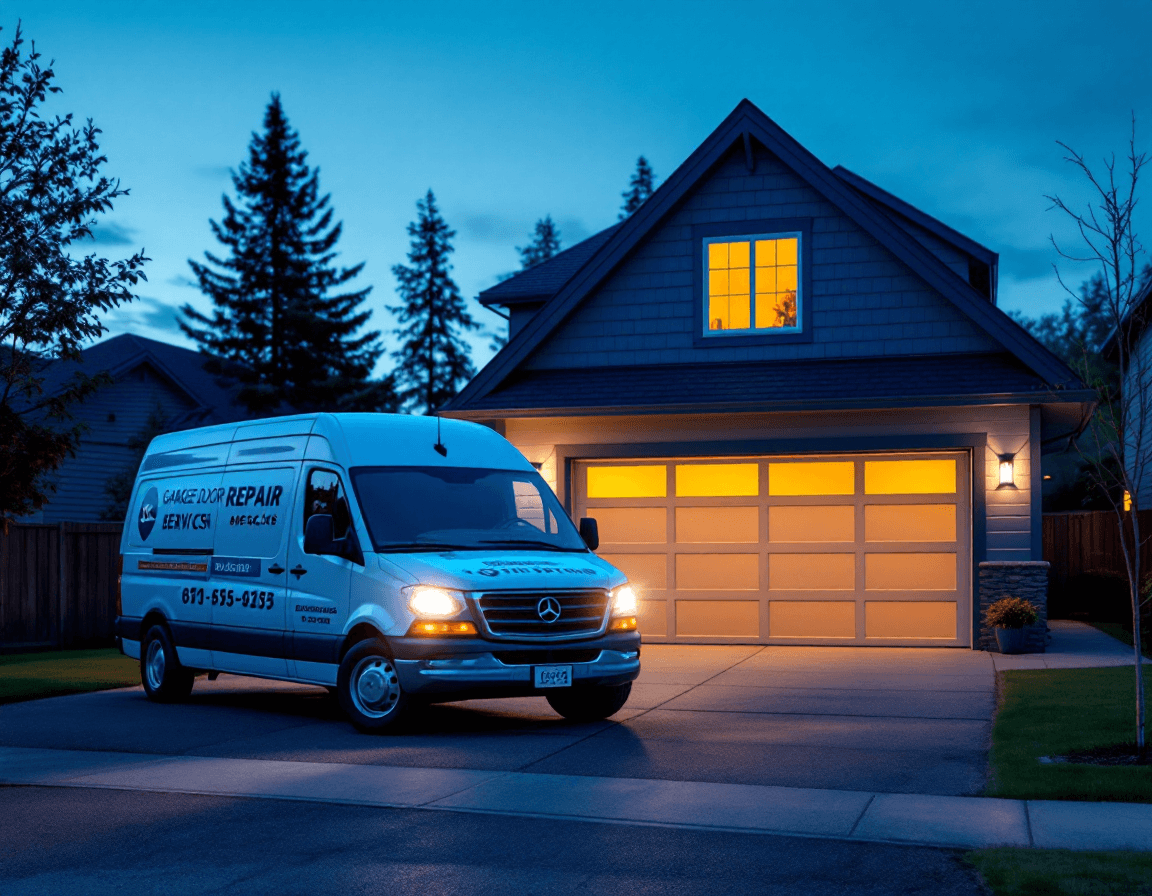
When a garage door stops working at the wrong moment, you need someone who knows the local conditions and can get to the problem quickly. Emergency garage door repair in Algona usually means a door that won't close before a commute, a panel that jammed halfway up with the car still inside, or a spring that snapped while the family was asleep. Our technicians serve Algona and the surrounding King County communities, including the 98001 and 98047 ZIP codes, and we understand how the valley's weather and housing stock affect the equipment in these garages. This page explains what counts as a real emergency, what you can safely check on your own, and when you should stop and call for help.
Algona sits in the lower Green River valley, a flat, low-lying area that gets a lot of moisture from October through April. Many homes here were built over several decades, so you'll find everything from older detached garages with original hardware to newer builds with insulated steel doors and smart openers. That mix means the same problem can have different causes depending on the house. A technician arriving in Algona has to think about drainage, humidity, and the age of the door, not only the part that failed. The more you can tell us about what happened before the failure, the faster we can narrow things down.
Whether you're in a quiet neighborhood near the older commercial corridors or on a street closer to the Auburn city line, the first hour after a garage door failure is usually stressful. You may be worried about security, about getting a car out, or about a door that is sagging, leaning, or hanging crooked. Take a breath and read through the sections below. Several of them include steps you can take safely right away, along with clear guidance on the moments when you should keep your hands off the equipment entirely.
What Actually Qualifies as a Garage Door Emergency
Not every garage door problem needs a same-day visit, but some absolutely do. A true emergency is any situation where the door cannot be secured, where someone could be injured, or where the door is stuck in a position that blocks a vehicle or an exit you need. A door that is closed but noisy is an annoyance. A door that won't close at all, and leaves your garage open overnight in a neighborhood where you can't keep an eye on it, is an emergency. Use common sense: if the situation feels unsafe or unsecured, treat it as urgent.
Broken torsion springs and cables sit at the top of the emergency list. When a torsion spring fractures, the door often drops suddenly or stays partly open with a loud bang that you won't forget. A snapped lift cable can cause one side of the door to sag or tilt, and the door may look uneven even if it still moves. Both situations involve high stored energy, which is why these repairs belong to trained technicians with the right tools. Never try to lift or force a door that has lost tension on one side.
Other situations also count as urgent. A door that has come off its tracks, a panel that has separated, or a damaged section that is pressing against the car should be handled promptly. So should a door that reverses on its own with nothing in the path, because a malfunctioning safety system can fail to protect people and pets. If your opener has stopped responding and you suspect a fault in its power or control circuit, a technician should look at it before the next time the door is operated.
- Door stuck partly open, or sagging unevenly on one side
- Loud snap, bang, or sudden drop followed by a door that won't move
- Panels visibly separated, bent, or pulling away from the track
- Door reverses without an obstruction or fails to stay closed
- Garage cannot be secured overnight, and the door is inoperable
Spotting Trouble Early, Before the Door Quits
Most emergency calls are preceded by warning signs that are easy to miss. Listen for changes in the sound your door makes. Grinding, popping, or a high-pitched squeal often indicates worn rollers, dry hinges, or a bearing that is starting to fail. If the door hesitates, jerks, or pauses at a particular height, the balance may be off or the tracks may be slightly out of alignment. Catching these issues early usually means a simpler and less expensive repair.
Visual checks are just as useful. Look at the lift cables for fraying, and check whether the drum on each side is turning at the same pace. Notice whether the door sits level when closed, with a consistent gap at the bottom and no daylight at the top corners. Check the rollers for cracks or flat spots, and look at the springs for gaps between coils or rust that has begun to eat into the metal. If you see any of these signs, schedule service soon rather than waiting for the door to decide for you.
Keep an eye on the opener as well. A unit that suddenly runs longer than usual, clicks without moving the door, or needs several attempts to start may be struggling with the weight of an aging door. Remote batteries and wall control wiring also cause surprising failures, especially after storms. If the door works fine one day and refuses to respond the next, it's worth checking the power to the opener and the status of the safety sensors before assuming a major component has failed.
Wet Winters and the Rust Problem Along the Valley
The Pacific Northwest climate is hard on garage doors, and Algona's valley location makes moisture a constant factor. Long stretches of damp, cool weather allow condensation to form on metal hardware, and a garage that isn't well ventilated can hold that humidity for days at a time. Steel springs, hinges, and bearings are especially vulnerable. Once surface rust starts, it can creep into the coils of a torsion spring and weaken it long before the spring visibly fails.
Wood doors and wood trim present a different challenge. Timber absorbs moisture, swells during wet months, and shrinks during dry spells, which can throw panels out of alignment and make the door bind in the tracks. Painted surfaces that have cracked or peeled allow water to reach the core of the panel, and that moisture can accelerate rot along the bottom rail. Even some composite and insulated steel doors can develop problems at the weatherstripping, letting water and cold air into the space and stressing the seals.
Practical maintenance helps in this environment. Wipe down springs and tracks with a dry rag after a heavy rain, and keep the garage floor as dry as you can by clearing debris from the threshold. Apply a lightweight garage-door-safe lubricant to hinges, rollers, and the lock mechanism, but avoid spraying grease or oil onto the tracks, because it attracts dirt and grit. If you are unsure which lubricant to use, ask a technician during your next service visit. Doing these things regularly won't make the door immune to the weather, but it will slow the wear that often leads to midnight calls.
Stuck, Crooked, or Off-Track: Safe First Steps
When a door becomes stuck or jumps off track, your first priority is to avoid making the damage worse. Stop using the opener as soon as you notice binding, grinding, or a panel that is out of line. Forcing the door with the opener can bend tracks, strip gears, or wrench a cable off its drum. If the door is partially open, keep people and pets away from the opening and do not allow anyone to duck underneath it.
You can do a few simple checks from a safe position. Make sure nothing is blocking the path of the door, such as a bicycle, a stray tool, or a stored box. Look at the tracks to see whether a roller has popped out of its channel or whether a track has shifted. If the door is closed and the opener has lost power, check the breaker and the outlet before anything else. These checks are quick and often reveal problems that don't require any repair work at all.
Once the door is secured, it's time to stop troubleshooting and call a professional. Do not attempt to adjust cables, tighten spring bolts, or pry the door back onto the track yourself. Those tasks involve tension and leverage that can cause serious injury, even when the door looks like it is only a little out of place. A licensed technician can assess the damage, make the repair safely, and confirm that the door balances correctly before it is used again.
Why Springs and Cables Belong in Licensed Hands
Torsion springs and extension springs hold a tremendous amount of energy, and a spring that is under tension can release that energy with enough force to cause fractures, cuts, or worse. This is the reason we never recommend that homeowners attempt spring replacement or cable work on their own. Even experienced DIY enthusiasts underestimate the force involved, and the consequences of a mistake can be permanent. Working on springs is a job for trained technicians who have the correct winding bars, safety equipment, and experience with the specific door system.
Cables present a different type of risk. A lift cable under tension can whip if it snaps, and a drum that has slipped off its shaft can unwind unpredictably. Replacing cables requires precise measurement, correct routing, and an understanding of how the door balances on its counterweight system. An improperly installed cable can cause the door to fall or to pull unevenly, which creates a second safety hazard and can damage the opener.
When you call for service, make it clear that you suspect a spring or cable problem. A reputable company will treat the call as a safety issue and send the right people with the right tools. You shouldn't feel pressured to make a decision based on guesswork. Ask the technician to explain what they found, what they replaced, and how they tested the balance of the door before leaving.
Power Outages, Wind Storms, and Manual Release
Windstorms that roll through the valley can knock out power for hours, and a garage door without power may be stuck closed or open depending on the opener and the position of the door. Most residential openers have a manual release, usually a red cord hanging from the carriage, which disconnects the door from the drive mechanism. Learning how to use it before you need it can save you from a frustrating situation later.
To use the release safely, make sure the door is fully closed before pulling the cord, because an open door can drop quickly once it is disengaged. Pull the cord firmly and then lift the door by hand slowly and evenly. If the door feels unusually heavy, stops partway, or drops suddenly, stop immediately and keep clear of it. A door that is hard to lift may have a broken spring, and lifting it further can cause injury. In that case, secure the opening and call a technician.
After a storm, restoring power does not always mean the opener will work normally. Check the breaker, reset the opener if it has a built-in reset, and confirm that the safety sensors are aligned and clean. Some openers need to relearn their travel limits after an outage, and the manufacturer's instructions usually describe that process. If the door still won't run normally after these steps, the problem may be in the logic board, the wiring, or the mechanical components, and that is a good time to request a diagnostic visit.
Common Opener and Sensor Faults Worth Checking First
Modern openers are reliable, but they depend on a handful of components that can fail independently. The photo-eye sensors at the bottom of the door track are one of the most common culprits. If their lenses are dirty, misaligned, or blocked by a cobweb or a dangling strap, the opener will refuse to close the door. You can often clean the lenses with a soft dry cloth and check that the indicator lights on both sensors are steady.
Remote controls and wall keypads cause a surprising number of service calls. A remote with weak batteries may still light up but fail to send a strong enough signal, so try replacing the battery before assuming the opener is at fault. If a keypad stops responding, check the wiring at the wall plate and make sure the connections haven't loosened. Interference from other devices can also cause intermittent failures, particularly if a new electronic system was installed nearby.
Gears and drive belts or chains also wear over time. A chain drive that is loose may clatter or skip, while a worn belt may slip and cause the door to stall. Carriage bolts can loosen from vibration, and the door arm may separate from the bracket. These issues can often be spotted by a visual inspection, but any work that involves disassembling the opener, adjusting the travel limits in a complex way, or replacing the motor should be left to a qualified technician.
Scheduling a Same-Day Visit and What to Expect
When you call for emergency service, have a few details ready. Tell the dispatcher your address, a description of what the door is doing, whether any part of the door is damaged, and whether the car is inside the garage. Let them know if you can see a broken spring, a cable hanging loose, or a panel that is out of alignment. If the door is stuck open, mention whether you have secured the space or whether anyone is at risk. This information helps us prioritize the call and send the right technician with the right parts.
Availability depends on the day, the time, and the volume of calls in the area, so we can't promise a specific arrival window in every case. What we can do is be honest about what we see when we arrive and explain the options clearly. A typical visit begins with securing the door, inspecting the springs, cables, rollers, tracks, and opener, and testing the balance once repairs are complete. You should receive a clear explanation of the problem, the proposed repair, and the parts involved before any work proceeds.
Ask questions throughout the process. It is reasonable to want to know why a part failed, whether it can wait, and what maintenance might prevent it from happening again. A good technician will walk you through the reasoning and won't rush you into decisions you don't understand. If a temporary fix is appropriate to keep the garage usable until a full repair can be scheduled, the technician should describe its limits clearly so you know what to expect.
Keeping the Garage Secure Until the Technician Arrives
A garage door that won't close creates a real security concern, especially if the opening faces the street or a shared driveway. While you wait for service, take practical steps to limit access. Move valuable items out of sight, lock the door from the house if possible, and close the interior door between the garage and the living space. If the garage has a side entry, make sure it is locked and that the deadbolt is engaged.
Keep the area around the door clear. Remove tools, bins, and anything else that could interfere with a technician's access or create a tripping hazard. If the door is partially open, consider placing a sturdy barrier to prevent curious children or pets from approaching it. Never allow anyone to stand under a door that is held up only by an unbalanced spring or a broken cable, because the situation can change in seconds.
If your car is trapped inside and you need to leave, do not try to force the door open with the vehicle. Using the car to push or pull the door can cause far more damage than the original problem. Instead, use the side entry if it is usable, or wait for the technician to make the door safe enough to move the vehicle out. A little patience at this stage prevents expensive secondary damage.
Preventing the Next Late-Night Breakdown
The best emergency is the one that never happens. Garage doors respond well to a simple maintenance routine that you can handle between professional visits. Once a month, run the door through a full cycle and listen for unusual sounds. Check that the door reverses when it meets resistance, test the auto-reverse mechanism with a gentle obstruction if your system supports it, and inspect the sensors for alignment. These checks take only a few minutes and can reveal issues early.
Schedule professional service at least once a year, and more often if your door is heavily used or exposed to wet weather. A technician can measure spring tension, inspect cables and drums, adjust the tracks, and replace worn rollers before they fail. Many homeowners discover that a small repair during a planned visit costs far less than an emergency call at an inconvenient hour. Keep a record of service dates and any parts that were replaced so future technicians have a clear history of the door.
Think about upgrades as well. Weatherstripping along the bottom seal and side jambs helps keep moisture and cold air out of the garage, which reduces corrosion and wear. Improved ventilation can lower humidity inside the space, which protects both the door and the items stored there. If your current door is old, unreliable, or difficult to repair, a technician can help you compare the cost of ongoing fixes with the benefits of a newer system. The right decision depends on the condition of the door, how the garage is used, and your budget.
Emergency garage door problems in Algona are stressful, but they are manageable when you know what to check, what to avoid, and who to call. If your door is stuck, sagging, off track, or refusing to close and you need help today, call Seattle Garage Door Fix at (888) 799-3819. Our licensed, bonded, and insured technicians will assess the situation safely, explain your options clearly, and get your garage back to working order as quickly as the situation allows.