
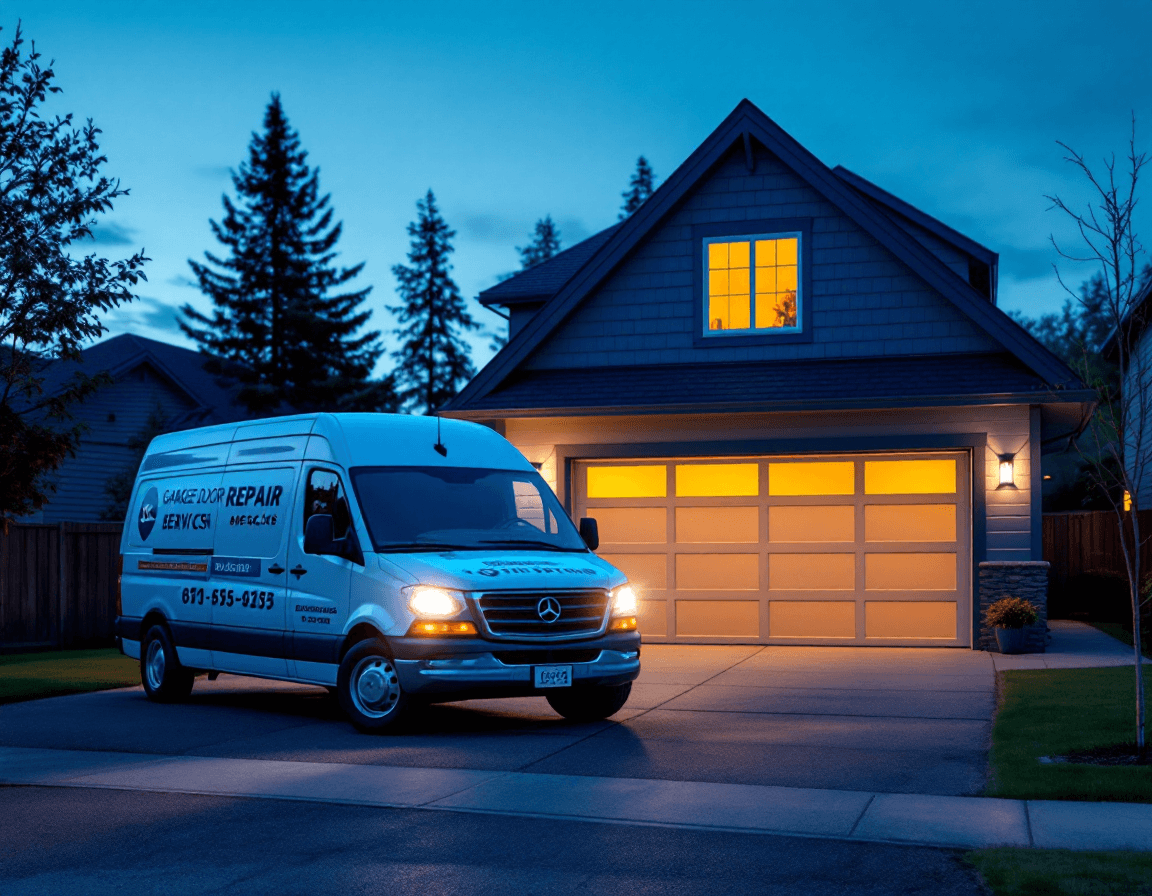
Emergency garage door repair in Fife tends to arrive at the worst possible moment: a Sunday evening when you need the car out for an early shift, a rainy night when the door refuses to close, or a sudden bang from the garage that leaves you wondering what just gave way. Fife sits in the Pierce County industrial belt between Tacoma and Puyallup, with the Port of Tacoma, busy freight routes, and a mix of older single-family homes and newer townhomes. Garage doors here work hard, and when they fail, the failure is often sudden and inconvenient.
Our crews serve Fife homeowners and businesses from the same local base that covers the rest of the Tacoma area, so we understand the rhythm of this community. Many households here rely on a second vehicle parked inside the garage, a workshop, or a storage area that needs to stay secure. A door that is stuck halfway open is not just an annoyance; it is a security gap and a safety hazard, especially with children or pets nearby. Knowing what to check first and when to stop and call a professional can save you time, money, and worry.
This page explains the most common emergency situations we see in and around Fife, what they usually mean, what you can safely do in the moment, and when you should wait for a licensed technician. Garage door springs and cables carry serious stored energy, so some tasks belong only in trained hands. If your door is stuck, noisy, or behaving strangely right now, read through the sections below and then call (888) 799-3819 for dispatch.
Why Fife Garages Take Extra Punishment
Fife's location creates a set of wear patterns that are different from what you might see in drier parts of the state. Winter storms roll in off the Sound and the surrounding hills, bringing long stretches of rain, humidity, and occasional sharp temperature drops. Those swings cause metal components to expand and contract, and they encourage rust on tracks, hinges, and bottom brackets. Wood and composite doors absorb moisture and can warp or swell, which changes how the panels fit inside the tracks.
Many Fife properties also sit close to heavy traffic corridors and industrial zones. Road vibration, dust, and salt-laden air from winter road treatment can settle on door hardware and gradually corrode rollers and pivot points. Doors on homes near busy arterials sometimes show more wear on the lower panels and bottom seals than doors set farther back in residential streets. These factors do not cause emergencies on their own, but they shorten the margin before a small problem becomes a stuck door.
Finally, Fife garages range from original builds to recently constructed homes with larger doors and more advanced openers. A double-wide door with heavy insulated panels puts more load on springs and cables than a single-car door from decades ago. Understanding your specific door type helps explain why a failure happens and why the repair needs to be matched carefully to the hardware you already have.
Recognizing the Warning Signs Before a Full Failure
Almost every emergency begins with a warning that gets ignored for a few weeks. The door may hesitate before lifting, make a grinding noise near the top corners, or jerk slightly when it reaches the halfway point. You might notice a gap at the bottom that wasn't there last season, or an opener that reverses for no obvious reason. Each of these symptoms points to a component that is losing its ability to balance or guide the door.
Pay particular attention to imbalance. Disconnect the opener by pulling the red release cord, then lift the door by hand to about waist height. A properly balanced door should stay roughly in place and not slam down or float upward. If it drops quickly, the springs are likely fatigued. If it rises on its own, the springs may be overly tight or the balance has shifted. Either condition calls for a technician before the door fails completely.
Listen for changes in sound as well. A sharp popping noise from above the door can mean a spring is beginning to crack, while frequent squeaking usually points to dry rollers or bearings. Frayed or kinked lift cables are another early warning, often visible as small strands sticking out near the drum. Logging these observations in a notebook or phone note makes it easier for a technician to diagnose quickly when you call.
When Torsion Springs Give Way in a Damp Climate
Broken torsion springs are among the most common reasons homeowners call for emergency help. A torsion spring sits on a steel shaft above the door opening and carries most of the door's weight. When it breaks, the door may slam shut, refuse to lift, or hang crooked with one side lower than the other. Often you will hear a loud bang that sounds like a gunshot or a car door closing hard inside the garage.
Fife's wet winters do not directly break springs, but moisture accelerates corrosion on the coils and contributes to metal fatigue over time. Springs rated for a set number of cycles will wear out sooner in homes where the door is used multiple times a day. If your household operates the garage several times daily, expect the springs to need replacement on a shorter cycle than a home where the door is used occasionally.
Never attempt to adjust, wind, or remove a torsion spring yourself. The tension stored in these springs can cause severe injury if it releases unexpectedly, and standard household tools are not designed for the job. A licensed technician uses specialized winding bars and safety equipment to handle the spring correctly. If you suspect a broken spring, keep everyone away from the door, avoid operating the opener, and call for service.
Off-Track Doors and Frayed Lift Cables
A door that jumps off its tracks is alarming, but it is often fixable with a careful inspection. Off-track events usually trace back to a bent track section, a loose bracket, a worn roller, or a cable that has slipped from its drum. Debris, a bumped vehicle, or uneven settling of the garage floor can also push tracks out of alignment over time.
Lift cables deserve special caution. They run under heavy tension and can snap or unravel without much warning, especially where they wrap around the drum. A cable failure typically leaves the door sagging on one side and can cause the panels to pull unevenly through the tracks. Do not attempt to re-thread or repair a cable yourself, because a cable under load can recoil with enough force to cause injury.
If your door has come off track but the springs appear intact, the safest step is to stop using the opener and secure the door manually if possible. Place a sturdy object such as a wooden block in the track path only if it can be done without putting hands under the door. Then schedule a technician to re-seat the track, replace damaged rollers, and inspect the cables, drums, and bearings before the door is returned to regular use.
Power Outages, Dead Openers, and Storm Damage
Pacific Northwest windstorms sometimes knock out power for hours, and the garage door opener loses its ability to operate. In that situation, the manual release cord is your primary tool. Pull the cord firmly to disengage the trolley from the rail, then lift the door slowly by hand. Keep your fingers clear of the tracks and springs, and lift only as high as needed to get the vehicle out or secure the space.
A dead opener is not always caused by an outage. Blown circuit breakers, damaged wall control wiring, faulty safety sensors, and worn logic boards can all prevent the door from responding. Check whether the lights on the opener are on, whether the wall button responds, and whether the sensors near the floor are aligned and clean. If the opener still does nothing after you have checked the basics, the problem may require a diagnostic visit.
Storm damage can also bend tracks, dent panels, or pull the header bracket loose from the framing. Wind-driven debris such as fallen branches or patio furniture may strike a door and deform it. Photograph any visible damage before calling for service, because documentation helps with insurance claims. Do not force the door open or closed if the panels look bent or the track is visibly separated from the wall.
Doors That Stick, Swell, or Refuse to Close After Rain
Many Fife callers reach out because the door closes partway and stops, or because it rises stiffly after a long wet spell. Moisture can cause wooden panels to swell, bottom seals to stick, and weather stripping to bond to the frame. Metal doors may show similar issues if the bottom bracket has rusted or if the floor has collected debris along the threshold.
Start with a visual check. Look for leaves, gravel, or mud packed into the track channel. Examine the bottom weather seal for tears or areas where it has pulled free from the panel. Clean the sensor lenses and confirm that nothing is blocking the path of the photo-eyes, since misaligned sensors will cause the opener to reverse the door even when the track is clear.
If the door still binds after cleaning, avoid repeatedly pressing the button, which can strain the opener motor. A technician can check whether the problem lies in the rollers, the hinges, the track alignment, or the opener's force settings. In many cases, a combination of track adjustment, lubrication with a garage-door-appropriate product, and seal replacement restores smooth operation without replacing major parts.
Safety Steps You Can Take Tonight
While you wait for a technician, you can reduce risk without touching the springs or cables. Keep vehicles, children, and pets away from the door area. If the door is partially open, do not allow anyone to crawl underneath it, and do not leave the opener running in a repeated loop. If the door is stuck in a raised position and you cannot secure the garage, consider parking vehicles outside and keeping valuables out of sight.
- Disconnect the opener power at the outlet or breaker only if you are comfortable doing so and the door is not moving.
- Pull the manual release cord to operate the door by hand, and keep your hands clear of the springs and tracks.
- Take photos of the spring, cables, tracks, and any visible damage to help the technician plan the visit.
- Write down the make and model of the opener and door if you know them, along with any recent noises or behaviors.
- Clear the area under the door of tools, toys, and debris so no one trips or gets pinned.
These steps are temporary measures. Their purpose is to keep people safe and buy time until a qualified person can inspect the system. Once the emergency is contained, plan a full inspection so the root cause is identified rather than only the most obvious symptom.
Mistakes to Avoid While You Wait
Homeowners often make the situation worse by trying repairs they are not equipped for. Winding a spring, removing a cable from its drum, or prying a track apart can cause sudden movement and serious injury. Even tightening a bracket without knowing the load path can change how the door behaves and damage the opener or the framing.
Another common mistake is repeatedly pressing the wall button after a failure. Each attempt puts strain on the opener and can drive a stuck door further off balance. If the door has not moved after one or two attempts, stop and inspect the basics before trying again. Repeated cycling can also overheat the motor, which may turn a simple repair into a larger bill.
Finally, avoid buying a replacement spring or cable online and installing it without measuring and confirming the correct specifications. Springs must match the door's weight, height, and cycle expectations, and cables must be sized for the drum and door design. Installing the wrong part can create an unsafe condition that is harder to diagnose than the original issue.
What to Expect From a Licensed Emergency Visit
When you call for emergency garage door repair in Fife, the technician's first priority is safety. They will confirm whether anyone is at risk, check the door's balance, and assess the springs, cables, tracks, and opener before touching any high-tension component. Expect questions about when the problem started, whether there were earlier noises, and whether the opener has been acting differently. These details help narrow down the cause quickly.
Once the cause is identified, the technician will explain the repair options in plain language. Some issues can be resolved on the spot, such as realigning a track, replacing a damaged roller, or resetting a sensor. Others, such as a broken torsion spring or frayed cable, may require parts that must be matched to your door before installation. A good technician will describe what is needed, why it is needed, and what the risks are if the repair is delayed.
We are licensed, bonded, and insured, which means work is performed by trained professionals who carry the appropriate coverage for residential garage systems. Ask for documentation of your service and keep it with your home records. If the door requires a follow-up visit, the technician should explain what happens next and what you can do in the meantime to keep the door safe.
Keeping Fife Garage Doors Reliable Between Emergencies
Preventive maintenance is the most effective way to reduce emergency calls. A seasonal inspection before the wet months can catch worn rollers, loose hardware, and degraded seals before they cause a stuck door. Lubricating moving parts with a product made for garage doors, tightening fasteners that have loosened from vibration, and checking the balance twice a year all help keep the system predictable.
Pay attention to the weather seal along the bottom of the door and the gaps around the perimeter. Fife's rain can seep under poorly sealed doors, pooling along the threshold and encouraging rust on the lower brackets. Replacing worn seals is an affordable step that also helps keep the garage warmer and reduces drafts that can make the space uncomfortable in winter.
Finally, consider the age of your springs and opener. Springs have finite cycles, and openers benefit from periodic checks of their force and limit settings. If your door is more than a decade old or the opener has been repaired several times, a professional assessment can help you decide whether targeted repairs will last or whether an upgrade makes more sense. Planning ahead gives you options, while waiting for a breakdown often means paying for the most urgent fix at the least convenient time.
If your Fife garage door is stuck, noisy, off track, or refusing to respond, do not wait for the problem to get worse. Call Seattle Garage Door Fix at (888) 799-3819 for prompt help from a licensed, bonded, and insured team that understands the local conditions around Fife and 98424.