
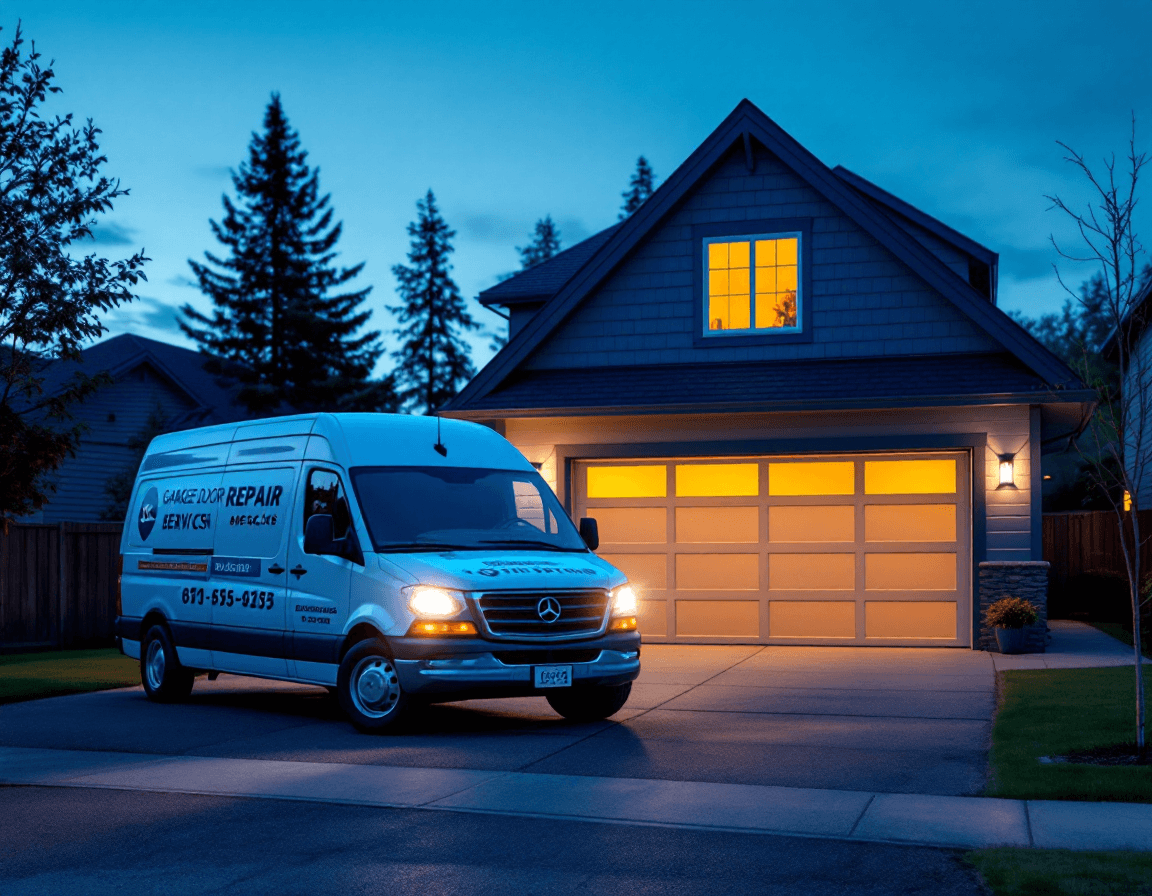
Garage doors rarely fail at a convenient time, and in Tacoma the timing often feels worse. A winter storm rolling off the Narrows, a broken spring on a Monday morning before a commute, or a door that will not close before you leave for a week of travel can all turn an ordinary day into an emergency garage door repair in Tacoma. Homeowners across the city, from the Hilltop and North End to Spanaway and Parkland, call us when the door is stuck open, lurching, or refusing to respond to its remote at the worst possible moment. This page explains what qualifies as an urgent problem, what you can safely do while you wait, and what to expect when a technician arrives.
Our service area covers Tacoma and the surrounding Pierce County neighborhoods that share its ZIP codes, including 98402, 98404, 98405, 98406, 98407, 98408, 98409, 98418, 98421, 98422, 98444, 98445, 98465, 98466, 98467, and others nearby. Each part of the county has its own mix of housing age, driveway layout, and exposure to weather, so a door that works fine in Browns Point may show different wear than one in an older Proctor-area bungalow. We bring that local perspective to every call, and we work with licensed, bonded, and insured technicians who understand the specific pressures our region places on residential garage doors. If you are unsure whether your situation is urgent, call us at (888) 799-3819 and describe what you are seeing.
Our goal here is practical. We want you to make safe decisions in the first few minutes of a problem, avoid making damage worse, and understand why certain repairs must be left to trained professionals. Nothing in this guide replaces a hands-on inspection, but a clear picture of the common failures will help you describe the problem accurately and get the right help faster.
What Actually Counts as an Emergency at a Tacoma Home
Not every garage door complaint needs a same-day visit, but some situations do. A door that is stuck halfway open is both a security problem and a safety hazard, especially if pets or children are nearby. A door that drops quickly or crashes shut suggests a serious mechanical failure, and it should not be used until someone has looked at it. Local homeowners often underestimate how quickly a minor noise can turn into a full failure, so it helps to know the difference between an inconvenience and a true emergency.
Generally, treat the following as urgent and stop using the door until a technician has inspected it:
- The door is stuck open and you cannot secure the home or the garage.
- You heard a loud bang, saw the door sag or hang crooked, or noticed the door falling unevenly.
- One side of the door is higher than the other, or the cables appear loose, frayed, or off the drum.
- The door will not close, reverses without warning, or keeps stopping in mid-travel.
- A panel is cracked, bent, or pulled out of its track after a collision.
Problems like a faulty remote, a dirty photo-eye sensor, or a noisy opener that still moves the door correctly can usually wait a day or two. Even so, if you have a trip planned or a houseguest arriving, a small issue can become urgent quickly. When in doubt, call and describe the symptoms. A good technician will tell you honestly whether the problem can wait.
Why Pacific Northwest Weather Wears Down Tacoma Garage Doors
Tacoma's climate is mild by many standards, but it is hard on mechanical systems. Our wet winters keep moisture in the air for months, and that moisture finds its way into steel hinges, roller bearings, and the torsion springs that carry the door's weight. Rust forms slowly at first, then accelerates, leaving springs brittle and rollers grinding in their tracks. Many Tacoma homeowners do not notice this until a spring or cable finally gives way during a cold, damp morning.
Homes closer to the water, including parts of Ruston, Browns Point, and the neighborhoods that catch salt-laden breezes off Puget Sound, deal with an added challenge. Salt air accelerates corrosion on exposed metal, particularly on door tracks, bottom brackets, and the hardware that holds the opener in place. Even inland neighborhoods see condensation build up inside uninsulated garages, which causes wooden doors to swell and warp. Warped panels can rub against weatherstripping, push the door out of level, and strain the opener.
Temperature swings matter too. A cold snap can make metal contract and lubricants thicken, which places extra load on springs and openers during the first operation of the day. Anyone who has pulled into a driveway after a frosty night and heard the door groan has experienced this. Routine lubrication and a seasonal look at the hardware can prevent many of these failures, but the most important step is recognizing early warning signs before they become emergencies.
Why Broken Springs and Snapped Cables Require a Licensed Technician
The most dramatic garage door failures involve torsion springs and lift cables, and these components deserve special respect. Torsion springs store enormous amounts of energy when they are wound, and a spring under tension can cause serious injury if it is adjusted, removed, or released improperly. Lift cables also carry significant load, and a frayed or broken cable can whip unpredictably when the tension is released. For this reason, spring and cable work should never be attempted by a homeowner, no matter how handy you are with tools.
Many people search online for step-by-step guides to replacing a spring, and some of those guides are written with good intentions. The problem is that the correct spring for your door depends on its weight, height, track radius, and the number of turns required, and getting any of those details wrong can lead to a spring that fails quickly or a door that falls unexpectedly. Trained technicians carry the right tools, measure the door, and know how to wind and secure springs under control. They also check the drums, cables, bearings, and center bracket, since a single failed spring often means other components are near the end of their life as well.
If you suspect a spring or cable has broken, keep everyone away from the door, avoid standing under it, and do not try to wind or unwind the spring. Call a licensed professional and let them handle the repair. Our technicians are licensed, bonded, and insured, which gives you a measure of protection and accountability when working around high-tension hardware in your home.
Securing the Door Safely Until the Technician Arrives
When you are waiting for help, your first priority is keeping people and property safe. Start by clearing the area around the door. Move vehicles, bicycles, tools, and stored items away from the track and opening, and keep children and pets well back. If the door is partially open, do not attempt to force it up or down by hand, because the springs and cables may be under more strain than you realize.
Next, reduce the risk of further damage. If the opener is still working but the door is making unusual sounds, shut off the opener at the wall switch or unplug it to avoid stressing the motor and gears. If the door is stuck open and you are concerned about security, close the entry door between the garage and the house, lock it, and make sure any exterior access points are secured. Temporary measures such as a wedge or a sturdy barrier can help keep a partly open door from shifting, but do not rely on them for long.
Document what you see before the technician arrives. Take photos of the door, track, and cables from a safe distance, and note any sounds or changes you noticed before the failure. This information helps the technician arrive prepared and can speed up the diagnosis. Please avoid climbing on ladders, leaning into the opening, or reaching into the track, since a door that appears stable can move suddenly.
Power Outages, Opener Failures, and the Manual Release Cord
Many Tacoma homeowners first discover a garage door problem during a power outage. When electricity is out, the opener cannot lift or lower the door, and a small wind event or storm-related outage can leave you stuck inside or outside the garage. Most residential openers include a red emergency release cord that disconnects the door from the opener carriage, allowing you to operate the door manually. Knowing where this cord hangs and how to pull it is one of the most useful things you can learn as a homeowner.
To use the release, pull the red cord firmly to disengage the trolley, then lift or lower the door slowly by hand. Be aware that if the door has a broken spring, it may be heavy, uneven, or unpredictable even when disconnected. If the door feels unbalanced or drops suddenly, stop, step back, and call for help. Do not attempt to muscle a damaged door into position, since this is a common way people injure their backs or shoulders.
Once power returns, reconnect the trolley by pulling the release cord back toward the opener and then running the door through a slow cycle. If it reconnects smoothly and the door moves evenly, the problem may have been limited to the opener. If the door binds, jerks, or refuses to move, the underlying cause could be a spring, cable, or track issue. Sometimes an opener that trips its circuit breaker after an outage also signals a deeper electrical or mechanical fault, so have a technician check it rather than repeatedly resetting it.
Older Tacoma Homes and Their Particular Hardware Challenges
Tacoma has a large inventory of homes built in the mid-twentieth century, along with a growing number of newer builds on the hillsides and in the expanding suburban areas of Pierce County. Older garages often feature original steel or wood doors, outdated track systems, and openers that were installed decades ago or added as an afterthought. These setups can work reliably for years, but they tend to fail in predictable ways when parts reach the end of their service life.
Older garages also present physical constraints. Many were built with limited headroom, short back tracks, or sloped driveways that make standard hardware difficult to fit. In these situations, a technician may recommend a low-headroom track configuration, a different spring system, or a reinforced header to support the door. Some homes have uninsulated walls or detached garages whose framing has shifted over time, which can throw the door out of alignment and cause uneven stress on the tracks and rollers.
If your home is older, consider asking a technician to evaluate the whole system rather than only the failed part. Replacing a single roller while leaving worn hinges, aging cables, and a tired opener in place often leads to a second emergency within months. A comprehensive inspection can identify the components most likely to fail next and help you plan repairs during a convenient window rather than in the middle of a storm.
Impact Damage from Wind, Storms, and Accidental Collisions
Wind is a real concern in western Washington, and strong gusts can push against a large, flat garage door with surprising force. When a door panel is already weakened by age or moisture, a storm can bend sections, pop them out of their tracks, or pull the hinges loose. Even a door that has survived many winters may suffer sudden damage after a particularly rough windstorm, which is why it is worth inspecting the door after any major weather event.
Collisions are another common cause. Backing out too quickly, misjudging the clearance on a tall vehicle, or bringing in a bike rack or truck bed can crack a panel or knock a section out of alignment. The damage is not always visible from the driveway, and a panel that looks fine can still have a bent track or a loose hinge behind it. If you have hit the door, even lightly, have it checked before using it heavily, since a shifted track can place sudden strain on the springs and opener.
Water intrusion from storms deserves attention too. A damaged bottom seal or a panel that has warped during a wet season can let rain and debris into the garage, which accelerates rust and can damage stored items. Replacing a single damaged panel is often more economical than replacing the entire door, but only a technician can confirm whether the sections match and whether the rest of the door is sound enough to support a repair.
What Happens During a Same-Day Visit
When you call for help, a dispatcher or technician will ask several questions to understand the problem. Expect questions about the door's make and approximate age if you know them, whether the opener is working, whether you hear any sounds or see visible damage, and whether the door is currently secure. Describing the symptoms in your own words is helpful, since details like "the door jumped and then stopped halfway" or "I heard a crack and now it is crooked" can point the technician toward likely causes before they arrive.
Once on site, a technician will typically secure the door first, then inspect the springs, cables, drums, rollers, hinges, tracks, and opener. They will check whether the door is balanced, whether the safety reversing system is functioning, and whether any panels or hardware show signs of stress. If a repair is needed, they will explain the options, including temporary measures and permanent solutions, and give you a clear picture of the cost before work begins. You should feel comfortable asking questions at every step.
We aim to handle urgent calls promptly, and availability can vary depending on the day, the time of year, and the number of active calls in your area. Storm seasons and cold snaps often bring a surge of requests, so calling early in the day when you first notice a problem can help. Be ready to tell the dispatcher your address, the ZIP code, and a good callback number so the right technician can be assigned quickly.
Preventive Habits That Lower Your Odds of a Midnight Call
Many emergencies can be avoided with a few regular habits. Once or twice a year, visually inspect the springs, cables, rollers, and hinges. Look for rust on the springs, fraying or kinks in the cables, cracks in plastic rollers, and any gaps where the door meets the floor or the frame. Listen as well. A new squeak, rumble, or scraping sound is often the first sign that a component needs attention.
Lubrication matters, but it must be done correctly. Use a silicone-based or lithium-based spray on the rollers, hinges, and track, and wipe away excess so dirt does not collect in the grooves. Avoid spraying lubricant directly onto the torsion springs, since it can attract grime and does not solve the underlying wear. Keep the tracks clear of debris, and make sure the bottom weatherstripping is intact so moisture stays outside. A good habit is to test the auto-reverse function monthly by placing a piece of wood or a similar object in the door's path and confirming that the door reverses when it contacts the object.
Finally, schedule a professional tune-up before the wettest months arrive. A technician can balance the door, tighten hardware, check the opener's limit settings, and replace worn parts before they fail. Many homeowners in Tacoma and across Pierce County find that a seasonal inspection costs far less than a single after-hours emergency call, and it gives them confidence that the door will perform when it matters most.
Choosing a Responsive Repair Partner in Pierce County
When something goes wrong with your garage door, you want a company that answers the phone, arrives prepared, and communicates clearly. Look for a provider that is licensed, bonded, and insured, since those credentials protect you and the technician during the work. Ask whether the company handles both residential repairs and emergency calls, and whether it has experience with the types of doors common in your neighborhood, whether that is a classic wood door in a Proctor-area home or a modern insulated door in a newer development.
Good questions to ask include how the company handles urgent safety situations, whether it provides upfront estimates, what warranties apply to parts and labor, and how it disposes of old springs and damaged hardware. A reputable provider will explain the difference between a quick fix and a lasting repair, and will not push you toward a full door replacement when a smaller repair would solve the problem. They should also be willing to say when a problem can wait.
We serve homeowners throughout Tacoma and the surrounding Pierce County communities, and we are glad to talk through your situation before you commit to anything. If you are dealing with a stuck, damaged, or unsafe garage door right now, call (888) 799-3819. Describe what you are seeing, let us know your ZIP code, and we will help you get the door secured and back on track as quickly as possible.