
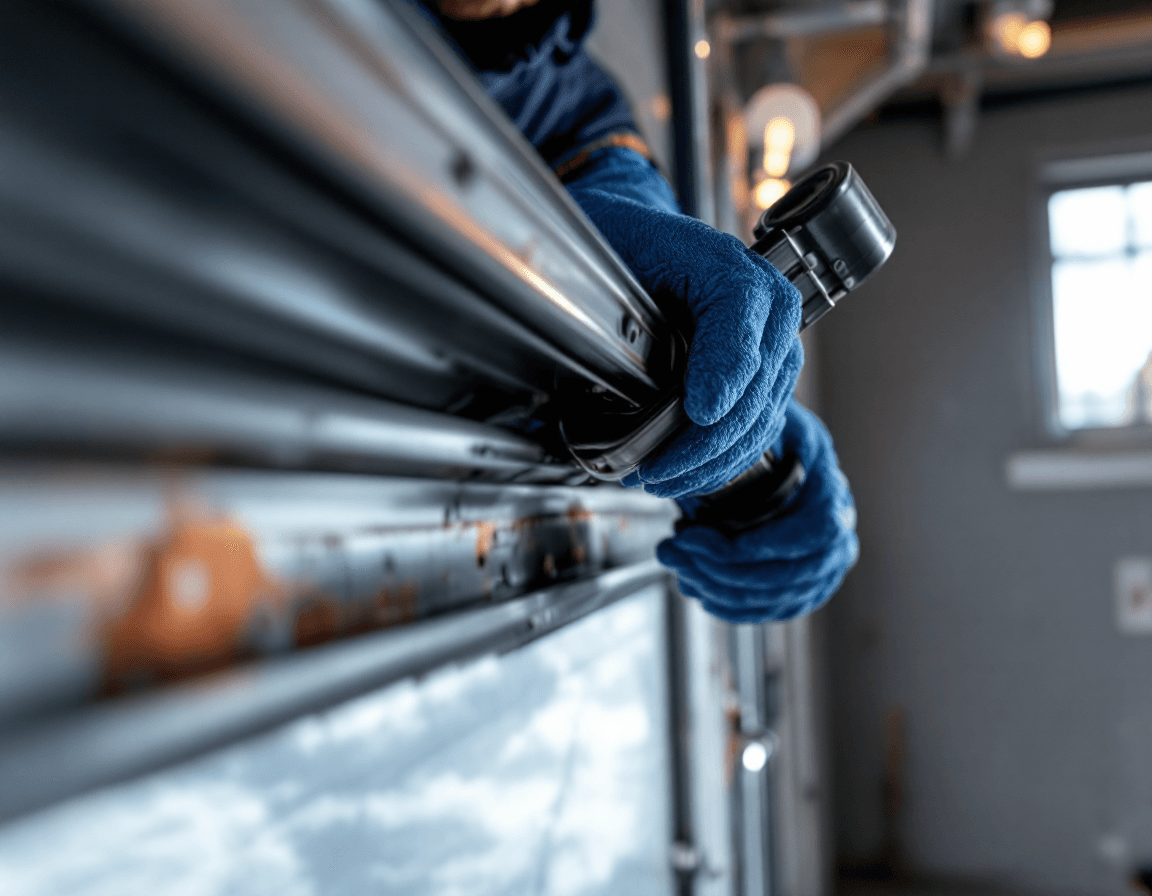
Garage Door Roller Replacement in Bainbridge Island, WA is one of the most common repairs we handle on the island, and it is often the cheapest fix that restores a door's quiet, smooth movement. Homeowners in Winslow, Lynwood Center, and the quieter neighborhoods near Rolling Bay usually notice the problem first as a harsh rattle when the door opens in the morning or a grinding noise that carries across the driveway. Rollers are small, inexpensive parts, but they carry the full weight of the door as it travels up and down the track, so when they wear out, the whole system works harder than it should.
This page explains what worn rollers look and sound like, why they fail sooner on Bainbridge than in many drier parts of the state, and what a replacement involves. We also cover the difference between steel and nylon rollers, what affects the price, and which tasks are safe for a homeowner and which belong to a licensed technician. Our goal is to help you make a clear decision about your door rather than pushing a repair you don't need.
If you have been putting off a noisy garage door because it still opens and closes, this guide is a good place to start. A roller problem tends to grow slowly, and a door that once made a faint squeak can, within a season or two, bind at a seam or lift unevenly. Read through the sections that match what you are hearing, and call us at (888) 799-3819 if you would like a technician to confirm the diagnosis on site.
Why Rollers Wear Faster on an Island Lot
Bainbridge Island sits in the middle of Puget Sound, and that location shapes almost everything about how a garage door ages. Winters bring long stretches of rain, and the air stays damp well into spring. Moisture settles into the steel tracks and the bearings inside older rollers, which accelerates corrosion and makes lubricant break down faster than it would in a dry climate. Many island homes also sit under mature conifers, so needles, sap, and fine grit collect in the track channel and grind against the roller surface every time the door cycles.
Salt air is a factor for homes closer to the water, particularly those with a view of the ferry lanes and the Sound. Salt residue speeds up rust on steel roller stems and hinge hardware, and that rust can seize a roller in its track or cause its wheel to flatten on one side. Even homes set farther inland receive salt-laden moisture on windy days, and the cumulative effect shows up over several years. A door that looks fine from the outside may have stiff, rust-stained rollers hiding inside the track.
Daily use matters too. Households that commute by ferry often open and close the garage before dawn and again late in the evening, which means dozens of cycles every week. Each cycle flexes the rollers, the hinges, and the track joints. Over time, the wheel bearings lose their smoothness and the roller stems wear into the bracket. Understanding this combination of moisture, debris, and frequent use helps explain why a door that worked perfectly for a decade can start complaining after only a few years in a wet, salty environment.
Reading the Noise: What Grinding, Squeaking, and Scraping Tell You
Different sounds point to different problems, and learning to read them can save you time and money. A high-pitched squeak that appears on a cold, wet morning usually means the bearings inside the roller are dry or contaminated with moisture. A deeper grinding noise, especially one that repeats at a steady rhythm as the door moves, often means the roller's wheel or bearing has started to break down and is no longer rolling freely. Metal-on-metal scraping is more concerning because it suggests the roller's outer surface has worn through or that a seized roller is dragging along the track instead of turning.
Listen for where the sound happens in the door's travel. If the noise is loudest at the bottom of the door, the rollers near the floor may be the culprit, or the bottom bracket may be loose. If the sound comes mainly in the middle or near the top, one or more rollers may be seized, or the track may have a bend or debris build-up at a particular point. Pay attention to whether both sides of the door sound the same. A noise on only one side often points to a single failing roller or a track that has shifted slightly out of alignment.
It helps to note when the problem appears. Noises that show up only during the first few cycles of a damp morning may point to moisture and lubrication issues, while noises that persist all day usually indicate mechanical wear. Keeping a short mental log of what you hear, where in the door's travel it happens, and what the weather was like can give a technician valuable clues before they ever open the door. That information also helps you judge whether the problem is urgent or can wait for a scheduled visit.
Nylon Versus Steel: Choosing Quieter Rollers Without Overbuying
Most garage doors leave the factory with steel rollers, which are durable and inexpensive but can be loud. As steel wheels travel along a steel track, they produce a clatter that many homeowners find irritating, especially in attached garages below bedrooms. Nylon rollers, often with sealed ball bearings, run more quietly because the material absorbs vibration and does not ring against the track. They also tolerate moisture better than many steel options, which is useful in our wet climate.
Nylon is not automatically the right choice for every door. Heavier, insulated doors or older doors with worn tracks may need steel-tipped or reinforced rollers to handle the load without flattening. A technician will check the door's weight, the track gauge, and the stem size before recommending a material. If you want the quietest possible operation, a full set of sealed nylon rollers with the correct stem length and diameter is usually the best fit for a standard residential door on the island.
Consider how you use the garage as well. A detached workshop that opens rarely may not need the premium upgrade, while a finished space adjacent to a living area often benefits from the quiet performance. We match the roller type to the door and the way the household uses it, rather than pushing a single product for every job. The goal is smooth, quiet operation at a reasonable cost, and an honest recommendation should reflect that.
Inspecting Your Rollers and Track Before the Technician Arrives
You can do a basic visual check before calling for service, as long as you keep your hands clear of springs, cables, and any part under tension. Never attempt to loosen a spring, remove a cable, or disconnect the door from the opener to work on the rollers. A few safe observations, however, can help you describe the problem accurately and make the appointment more efficient. Keep the door closed and the opener disconnected only if a technician instructs you to do so.
Here are some simple things to look for during a careful visual check:
- Rollers with flat spots, cracks in the plastic, or wheels that wobble when you spin them by hand with the door closed and locked
- Rust-colored stains or flaking metal around the roller stems and track joints
- Debris, moss, or dried sap packed into the track channel, especially near the bottom and at the curves
- Track sections that look bent, pinched, or out of line with the rest of the track
- Hinges or brackets that show loose bolts, cracked brackets, or gaps where the door panels meet
If you find any of these conditions, write them down or take a photo. Share what you observed when you call, along with the sounds you have noticed and when they happen. Those details let us arrive with the right nylon or steel roller options and the correct tools. They also help us separate roller wear from related problems such as a bent track or a worn hinge, which can produce similar symptoms.
How a Roller Swap Actually Unfolds on a Typical Bainbridge Home
A standard roller replacement begins with a full inspection of the door and track. The technician confirms that the door is in a safe, controlled state, checks the tension system, and identifies every roller that needs replacing. Replacing only the worst roller is tempting, but rollers wear as a set, and mixing old and new wheels can cause the door to track unevenly and wear the new rollers quickly. For that reason, a full set of rollers is the standard recommendation.
Next, the technician relieves tension where it is required and works roller by roller. Each old roller is removed from its bracket or track position, and the new roller is seated with the correct stem and wheel. The door is then cycled slowly to confirm smooth movement, and the technician checks each side for even travel. Track alignment, bracket tightness, and lubrication are reviewed during the same visit, since a new roller will not perform well in a bent or dirty track.
Most residential roller jobs on the island can be completed in a single visit, though timing depends on the number of doors, the door type, and the condition of the track. Once the work is done, the technician walks through the results with you, explains which rollers were replaced, and notes any other issues that deserve attention. You should leave with a door that moves quietly, travels evenly, and no longer binds or jerks along the track.
Why Cables, Springs, and Tension Stay With the Pros
Garage door springs and cables store a large amount of force, and mishandling them can cause serious injury. Even a door that appears to need only roller work may require the technician to adjust or temporarily release tension, which is a task that should never be attempted by a homeowner. For this reason, we always recommend a licensed professional for any work involving springs, cables, or the mechanisms that hold the door under load. Our technicians are licensed, bonded, and insured, and they carry the tools and training needed to handle tension safely.
Many homeowners ask whether they can replace rollers themselves to save money. Rollers may look simple, but the job often requires lifting the door panel, managing its weight, and working around a tensioned system. A slip can cause the door to drop or a cable to release, and those outcomes are not worth the savings. If you are unsure whether a part is under tension, assume that it is and call a professional.
It is also worth remembering that a roller problem can be an early warning for other wear. A technician who is already on site can check cable condition, spring balance, and opener alignment while replacing the rollers. Catching a frayed cable or an unbalanced door early often prevents a sudden failure later, which is far more disruptive than a planned repair during a convenient appointment.
Binding, Shaking, and Jerking: Track Problems That Mimic Worn Rollers
Some of the symptoms homeowners associate with worn rollers actually come from the track. A door that binds or sticks at a specific point may have a track section that has shifted, a bent area from an old bump, or a build-up of debris that makes the roller catch. A door that shakes or jerks along the track may be dealing with uneven roller wear on one side, a loose bracket, or a track that is no longer level. Replacing rollers alone will not fix these problems if the track underneath is damaged.
Track alignment is especially important on island homes built on uneven lots or in areas where the foundation has settled slightly over time. Even a small misalignment can cause one side of the door to climb faster than the other, which strains the rollers and the hinges. Our technicians check the track with a level and look for gaps, bends, and loose mounting bolts. When the track needs adjustment, we make the correction before installing new rollers so the new parts are not wasted.
Debris is another common cause of binding. Pine needles, cedar fragments, and fine grit collect in the track channel, especially in the lower sections where the door sits closed for long periods. A thorough cleaning of the track, followed by a light lubrication with a product designed for garage door components, often resolves a stubborn stick. If binding persists after cleaning, the rollers and track should be inspected together to find the true source of the problem.
Weather, Salt Air, and the Damp Season Around Winslow and Rolling Bay
The damp season on Bainbridge tends to arrive early and stay late, and garage doors feel it. Homes in and around Winslow, with their mix of older houses and newer builds, often have doors that see daily morning and evening use during the wetter months. Moisture cycles can cause metal to expand and contract slightly, and this movement can loosen brackets or shift a track over time. Keeping an eye on how the door sounds during the first cold, wet mornings of the year is a practical way to catch problems early.
Homes near Rolling Bay and other shoreline stretches may face a stronger salt influence. Salt residue settles on the door panels, hardware, and tracks, and it accelerates corrosion on exposed steel. A simple rinse of the lower track and roller brackets with fresh water every few months can slow this process. Rinse gently, avoid high-pressure sprayers that can push water into bearings, and dry the area thoroughly before applying lubricant.
Lynwood Center and the surrounding neighborhoods have their own mix of tree cover and driveway conditions, which can introduce more debris into the track. Fallen leaves, pollen, and small twigs can work their way into the channel and trap moisture against the steel. Periodic cleaning keeps these materials from grinding against the rollers. Pairing that routine with a seasonal check of the rollers and track gives you a reliable way to protect the door through the wet months.
What a Full Set of Rollers Costs and What Shapes the Price
Our typical pricing for a full set of garage door rollers on a standard residential door falls between $120 and $250. That range reflects the number of rollers needed, the material you choose, and the complexity of the job. Nylon rollers with sealed bearings usually sit at a higher point in the range than basic steel options, while a door that requires additional track work or hardware adjustments may fall toward the upper end. Your technician will explain the options and the expected cost before any work begins.
Several factors influence the final quote. The number of rollers depends on the door's design and the track layout, and a double-wide door with more sections naturally requires more parts. The condition of the track and brackets also matters, since replacing worn hardware or correcting alignment adds time. Access and door weight can affect labor as well, particularly on heavier insulated doors. Each of these factors is explained during the inspection so that the final price is clear.
- Number of rollers in the set, which varies with door width and track design
- Material choice, with sealed nylon typically costing more than standard steel
- Condition of brackets, hinges, and track that may need minor correction
- Door weight and construction, including insulated panels that require extra care
- Whether additional maintenance, such as track cleaning or lubrication, is included
Our goal is to give you an accurate, honest estimate and to avoid surprises. If the technician finds a problem that falls outside the original scope, such as a worn cable or a failing spring, they will explain it and let you decide how to proceed. You are never obligated to approve additional work on the spot, and a clear explanation of options helps you choose the repair that makes sense for your home and budget.
Keeping Quiet Rollers Quiet Through Maintenance Habits
Once your rollers are replaced, a few simple habits will keep the door running smoothly for years. Clean the track every few months to remove debris, paying special attention to the lower sections and the curves where dirt collects. Wipe away any salt residue or moisture after heavy weather, and check that the track bolts and bracket fasteners remain snug. These small tasks take only a few minutes but make a noticeable difference in how the door sounds and how long the rollers last.
Lubrication is another important habit, but it must be done carefully. Use a lubricant made for garage door components, and apply it to the roller stems, hinges, and track surfaces rather than to the springs or cables. Avoid heavy grease that attracts dust and debris, and wipe away any excess that drips onto the floor or the door panels. Nylon rollers with sealed bearings typically need little additional lubrication, but the track and hinges still benefit from periodic attention.
Finally, pay attention to changes in sound and movement. A new squeak, a faint rattle, or a slight hesitation at a particular point is often the first sign that something needs attention. Calling for a check early can prevent a small roller issue from turning into a bent track or a damaged bracket. If you notice any of these changes, or if your door has been noisy for a while, reach out to our team at (888) 799-3819 and we will help you determine the next step.
Quiet, smooth garage door operation is within reach for most Bainbridge Island homes, and replacing worn rollers is often the most effective place to start. If your door grinds, squeaks, scrapes, binds, or jerks along the track, a licensed technician can inspect the rollers, track, and hardware and recommend the right solution. Call Seattle Garage Door Fix at (888) 799-3819 to schedule a roller inspection or to ask about nylon roller upgrades for a quieter, smoother door.