
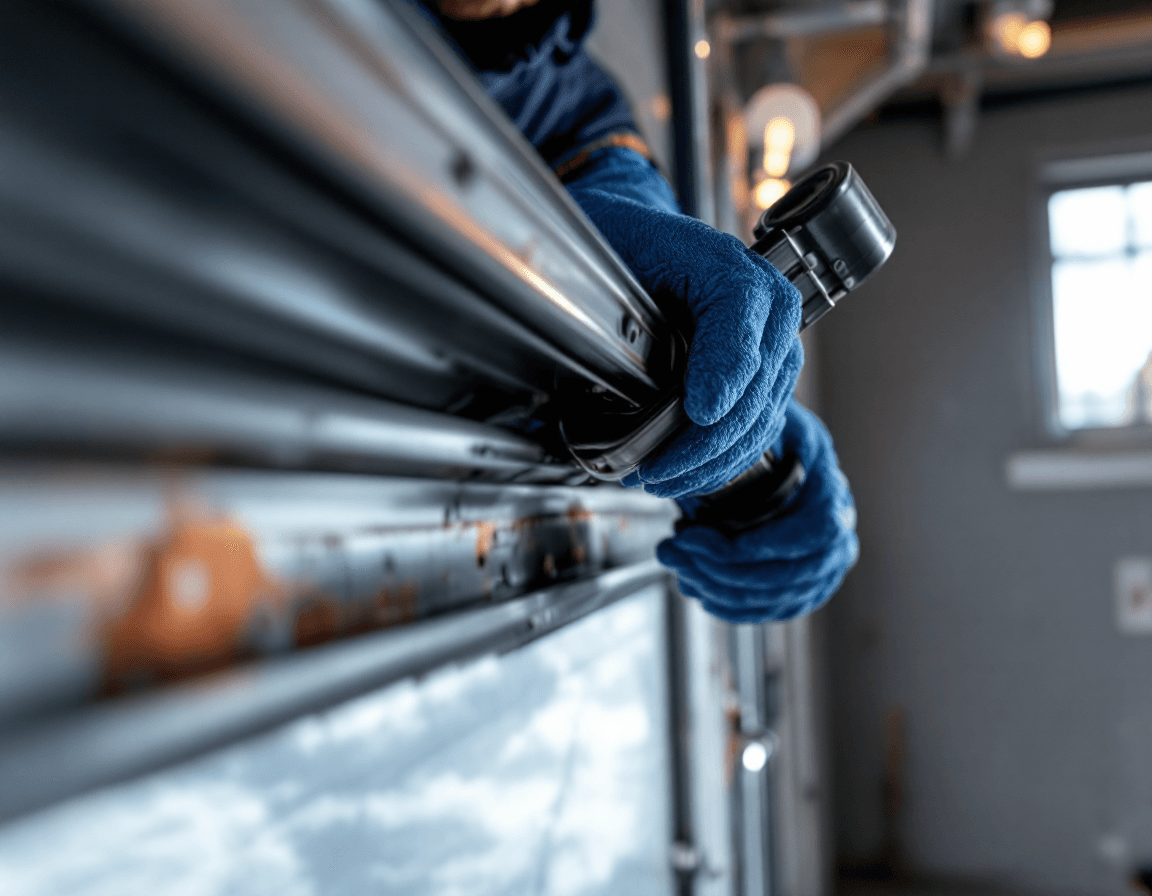
Garage door roller replacement in Poulsbo, WA is one of the most common fixes we handle for homeowners around Kitsap County, and it is also one of the easiest to put off. A door that rumbles, squeaks, or hesitates can seem like a minor annoyance, but the rollers riding inside those tracks are doing a lot of work every time the door opens and closes. When they wear out, the strain moves into the springs, the opener, and the door panels themselves. Replacing worn rollers early keeps the rest of the system from paying the price.
Poulsbo sits on the shores of Liberty Bay, and that setting shapes how garage doors age here. Salt-tinged air drifts up from the water, winter rain is frequent and steady, and the humidity rarely drops far enough for metal and lubricants to dry out completely. Homes in the older neighborhoods near downtown and in the newer developments on the hillsides face the same moisture, even though their driveways and exposures differ. Our technicians see the effects of that damp coastal climate in almost every service call, and they plan each roller replacement around it.
This page explains what worn rollers look and sound like, how to tell whether a simple upgrade will do the job or whether something else is causing the trouble, and what a typical full-set replacement involves. We also share the practical steps that help a quiet door stay quiet between visits. If you are hearing a new noise or noticing your door stick at one spot along the track, read on. Then give us a call at (888) 799-3819 and we can talk through what your door is telling you.
Why Poulsbo Garage Doors Wear Their Rollers Differently
Rollers do not fail on their own schedule. They fail according to how many cycles they run, how well they are lubricated, how clean the track stays, and what the surrounding air does to the metal and the bearings. In the Pacific Northwest, the moisture factor tends to dominate. Steel rollers that sit in damp conditions can develop surface rust, and that rust roughens the contact surface and pits the bearing races. Once that happens, every trip up and down the track grinds a little more material away.
Salt-laden coastal air adds a second problem. Even homes that sit a few blocks back from the water pick up a fine film of airborne salt, which settles on the track and the hardware. Salt accelerates corrosion on exposed steel, and it can mix with road grime and rain to create a gritty paste inside the track channel. Technicians working in Poulsbo often find that the track is dirtier than the rollers themselves, and that the grime was quietly accelerating the wear.
Temperature swings matter too. Our winters bring cold mornings followed by mild afternoons, and that cycle can cause lubricants to thicken and then thin out repeatedly. Grease that stays tacky in summer may stiffen on a cold January morning, forcing the door to labor through its first few feet of travel. Over several seasons, that extra effort wears down the roller stems and the holes in the bracket they sit in.
Reading the Noises Your Door Is Making
Sound is the first clue most homeowners notice, and each type of noise tends to point toward a particular problem. A loud grinding that starts at the beginning of travel usually means one or more rollers have seized or developed flat spots. A high-pitched squeak that comes and goes often indicates dry bearings or a roller that is rubbing against the track lip. Metal-on-metal scraping may be the worst sign of all, because it suggests a roller has worn down to bare metal or that a stem has cracked and is grinding against the bracket.
Vibration and shaking tell a slightly different story. When a door shudders or jerks along the track, the rollers may be running unevenly, which can happen when one side wears faster than the other. A door that jumps at a specific height often has a roller that is out of round or has a broken bearing that catches briefly before rolling freely again. Shaking can also come from loose track bolts, so a technician should check those during any inspection.
Here are the sounds we hear most often from Poulsbo homeowners, along with the usual causes:
- A steady grind from the start of the door's travel, often linked to seized steel rollers that have trapped moisture or grit inside the bearing.
- An intermittent squeak that appears on cold mornings, commonly tied to dried-out grease or a roller stem that needs cleaning and fresh lubricant.
- A rhythmic clicking or thumping, which can point to a flat spot on a worn roller or a cracked nylon wheel that is losing its shape.
- Sharp scraping when the door reaches a certain height, frequently caused by a roller whose housing has worn against the track or a bracket that has shifted.
If you hear any of these sounds, note when they happen. Does the noise occur only when the door is closing, only when it opens, or both? Does it get worse after rain? Those details help a technician narrow the diagnosis before arriving, and they make the visit more efficient.
Nylon Versus Steel: Choosing the Right Roller for a Damp Coast
Most garage door rollers fall into two broad categories: steel and nylon. Steel rollers are typically sturdy and hold up well under heavy use, but they depend on a good bearing and regular lubrication to stay smooth. In a damp environment like Poulsbo's, steel can develop surface rust and seized bearings more quickly if the door is not maintained. Steel rollers are still a reasonable choice for some doors, particularly older, heavier panels that were designed around them.
Nylon rollers, especially sealed-bearing designs, handle moisture much better. They do not rust, they run quieter than most steel options, and they often need less lubrication over time. Many homeowners who upgrade to nylon notice an immediate drop in noise, which is why quiet operation is such a popular reason to make the switch. Nylon wheels can wear down over many years, but in a coastal setting they generally outlast steel that sees the same moisture.
The right choice depends on your door's weight, track type, and how you use it. A lightweight insulated door on a standard track is an excellent candidate for nylon. A heavier wood panel door may still benefit from nylon for quiet operation, but the technician should confirm that the wheel size, stem length, and bearing rating match the load. Our team evaluates each door before recommending a specific roller, and we explain the tradeoffs in plain language so you can decide what suits your home.
What a Full Roller Set Typically Costs Around Kitsap County
Homeowners often ask what a roller replacement will cost before they commit to scheduling. For most standard residential doors, a full set of rollers typically runs between $120 and $250 in parts and labor, depending on the number of rollers, the type you choose, and the condition of the surrounding hardware. A single-door home with a standard track usually falls within that range. Doors with more rollers, unusual track configurations, or heavier panels may land in a different spot within the range.
The quoted range assumes the track and brackets are in reasonable shape. If the technician finds bent track sections, badly worn hinges, or a damaged bracket, those repairs are separate from the roller set and will be quoted individually. We would rather tell you about those issues upfront than surprise you at the end of the visit, so the technician will explain what they found and what it would take to address it. You are never obligated to approve additional work on the spot.
It is also worth knowing what the quote does not include. Spring replacement and cable work involve high tension and carry real safety risks, so they are handled separately and only by a licensed professional. If your door's springs appear damaged or the cables look frayed, the technician will flag those conditions and recommend the appropriate next step. Keeping roller work and spring work distinct helps you understand exactly what you are paying for.
How a Technician Replaces Rollers Without Disturbing the Springs
A roller replacement is a precise, methodical job. The technician first secures the door so it cannot move, which is a basic safety step before any work begins near the track. They then disconnect the opener if needed, relieve the tension on the door as appropriate for the design, and remove the bottom bracket or panel hinge that holds the roller in place. The old roller is slid out of its track channel or pulled from its bracket, and the new one is installed in the same orientation.
The critical point is that the springs stay untouched during a roller swap. Springs store large amounts of energy, and they should never be adjusted or removed by someone without the right training and tools. A roller replacement does not require spring work, and a competent technician will not touch the springs as part of this service. If the springs need attention, that becomes a separate job with its own safety procedures and its own cost.
Once the new rollers are seated, the technician checks that each one spins freely and sits squarely in the track. They then run the door through several full cycles, watching for binding, rubbing, or uneven movement. A quick test confirms the door balances properly and that the opener is not straining against any new resistance. The door should move smoothly from top to bottom, and the noise you were hearing before should be gone or greatly reduced.
Track Alignment Matters More Than Most Homeowners Think
Rollers ride inside the track, and the track must be straight, level, and properly spaced for the rollers to do their job. Even a brand-new roller will wear unevenly if the track is out of plumb or if a section has been bent by a bump from a vehicle or a shifted ladder. Misalignment forces the roller to rub against one edge of the track, which creates a scraping sound and gradually eats through the roller surface.
In Poulsbo, track alignment can drift over time because of the freeze-thaw cycles and the way the house settles on its foundation. A slight shift in the garage floor or a loosening of the wall anchors can change how the track sits relative to the door. Homeowners rarely notice these small changes, but the rollers feel them immediately. A technician who replaces rollers should also check that the track is straight and that the bolts holding it to the wall and ceiling are tight.
Here is what a careful technician checks during an alignment review:
- The vertical track is plumb from top to bottom, with no visible bowing or gaps at the seams.
- The horizontal track is level, and the slope at the top of the door matches the manufacturer's specification.
- The track bolts are secure, and the wall brackets show no cracks or stripped holes.
- The gap between the rollers and the track lip is consistent across the full height of the door.
Addressing alignment during a roller replacement prevents the new rollers from wearing unevenly and extends the life of the upgrade. It also reduces the chance that the door will bind again within a few months.
Weatherproofing Habits That Extend Roller Life Near the Water
Maintenance is where many homeowners can make a real difference without calling a technician every season. The most useful habit is keeping the track clean. A quick wipe of the track channel with a damp cloth removes salt film, dirt, and grit that would otherwise grind into the rollers. Doing this a few times a year, and after particularly wet or windy stretches, keeps the rollers running cleaner and the track surface smoother.
Lubrication is the next step, and it is worth doing carefully. Use a silicone-based or lithium-based lubricant designed for garage door parts, and apply it to the roller stems and hinge pivots rather than spraying it onto the track itself. Spraying the track can attract dirt and create a gummy buildup that makes the problem worse. Wipe away any excess so the lubricant does not drip onto the floor or the door panels. Over-lubricating is a common mistake, and a light, targeted application works better than a heavy coat.
Protecting the door from direct moisture also helps. Check the bottom weather seal for cracks or gaps, since water that enters under the door can run along the track and into the bearings. Keep gutters clear above the garage so rainwater does not pour off the roof directly onto the door tracks or the floor in front of them. In a climate like ours, a few small steps taken regularly add up to noticeably longer roller life.
When Binding Points to Something Bigger
Sometimes a roller is not the root cause of a binding door. A door that sticks at one specific height may be struggling because of a bent track section, a damaged hinge, a worn cable drum, or a spring that has lost tension. Replacing the rollers in that situation may reduce the noise for a while, but the underlying problem will continue to strain the system. A good technician looks at the whole door rather than assuming the rollers are to blame.
Binding can also signal a door that is out of balance. If the door feels heavy or pulls unevenly when you lift it by hand, the balance may need professional adjustment. Balance work involves the springs and cables, which means it belongs with a licensed technician who has the right tools and training. Attempting to adjust tension yourself can cause serious injury, and it is one of the main reasons we urge homeowners to leave spring and cable work to the pros.
Be cautious about certain signs that warrant an immediate call. A door that drops suddenly, a visibly broken spring, a frayed or snapped cable, or a panel that has come loose from its track should be treated as urgent. Keep people and pets clear of the door, and do not try to force it open or closed. A licensed professional can secure the door and recommend the safest repair path.
Planning Your Visit: What to Clear and What to Expect
Preparing for a roller replacement is simple, and a few minutes of planning helps the appointment go smoothly. Clear the area around the garage door, including any stored bicycles, tool benches, or bins that sit close to the track. Move your vehicle out of the garage if there is space to do so, and make sure the technician has easy access to the opener and the wall where the tracks are mounted. If the door is hard to reach because of stored items, let us know when you schedule so the crew can plan accordingly.
It is also helpful to tell us what you have noticed about the door. Describe the sounds, note when they happen, and mention any recent changes such as a new storm or a bump against the track. If you have a photo or short video of the door moving, share it, since that can reveal problems that are hard to hear. This background lets the technician focus on the most likely causes and reduces the time spent troubleshooting on site.
During the visit, expect the technician to explain each step before starting it. They will show you the worn rollers they removed and explain how the new ones differ. They will test the door several times before leaving and walk you through any maintenance steps you can handle yourself. If the work reveals additional issues, you will hear about them directly, with clear options and no pressure to decide immediately.
Keeping the Door Quiet Between Service Visits
A quiet garage door is not only the result of a good installation. It depends on steady, sensible care over the months and years that follow. Plan a simple seasonal check, ideally once in the spring and once in the fall. During each check, inspect the rollers for flat spots or cracks, look at the track for grime or bending, and listen to the door as it cycles. Catching a small change early keeps a minor noise from turning into a seized roller.
Pay attention to how the door behaves after heavy rain or a cold snap. A brief squeak that appears only on chilly mornings is often a lubrication issue, and a light application to the stems usually resolves it. If a noise persists for more than a few days or grows louder, schedule an inspection rather than waiting for the problem to worsen. Roller wear tends to accelerate once it starts, so early attention saves money and frustration.
Finally, remember that the rollers are only one part of a system that includes springs, cables, hinges, and an opener. Keeping that whole system in good shape protects your investment and your family's safety. If you are unsure whether your door needs a roller upgrade, a full inspection, or a spring evaluation, our licensed team can help you sort out the priorities. Call us at (888) 799-3819 to schedule a visit, and we will help you get your Poulsbo garage door running smoothly and quietly again.