
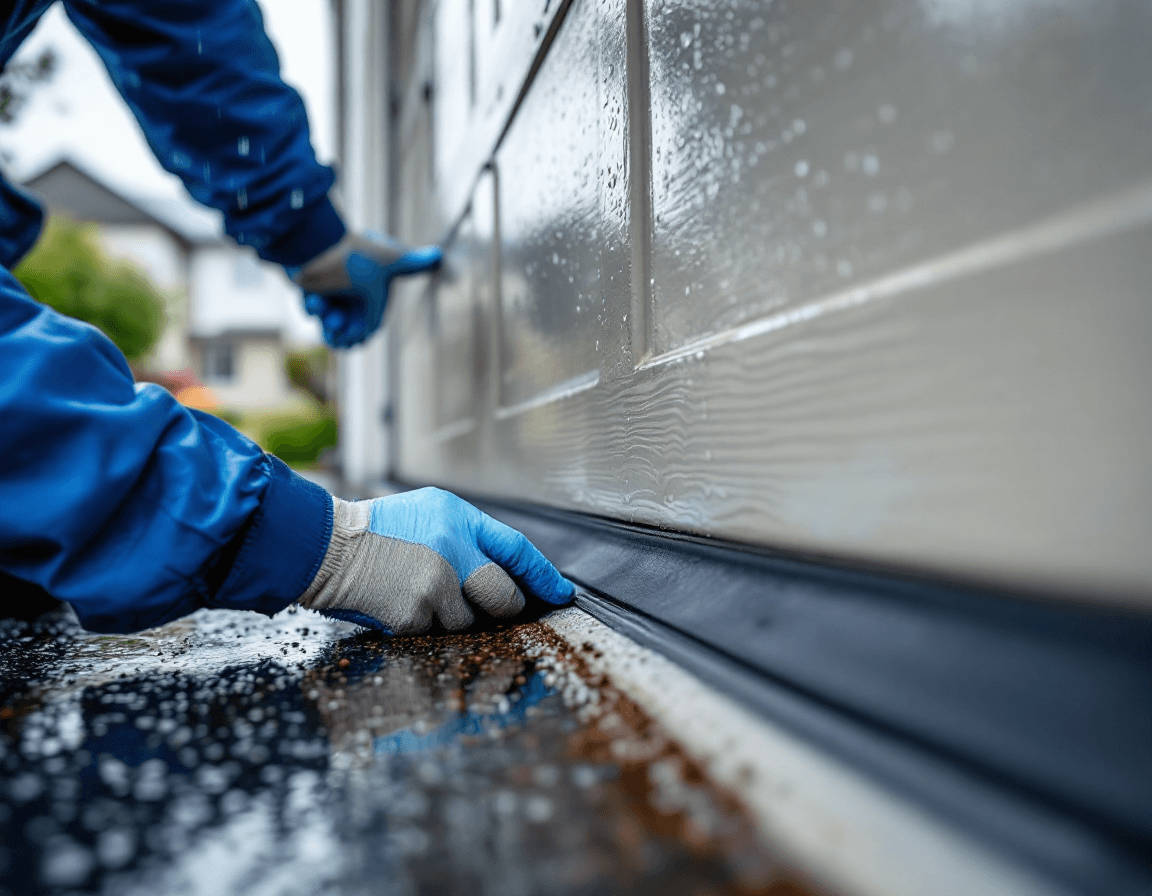
Garage Door Weather Seal Replacement in Renton, WA is one of the most affordable repairs a homeowner can make, and it often delivers noticeable results right away. A worn bottom seal or a split section of perimeter weatherstripping lets rain, cold air, leaves, and insects into a space that many Renton households use as a workshop, a storage room, or a second entry. Because the parts are inexpensive and the job is usually quick, a failing seal is easy to put off, even though it tends to get worse each wet season.
Renton sits in a part of King County where moisture is a constant factor. The Green River valley holds humidity, the hills around Talbot Hill and the Highlands catch wind and drizzle, and the long gray stretches of fall and winter keep driveways damp for weeks at a time. Those conditions turn a small gap at the base of a garage door into a steady water route, and they make the rubber and vinyl in a seal age faster than many people expect. A seal that looked fine in August can be cracked and stiff by the first hard rain of November.
This page explains what seals do, how to recognize when they have failed, what options are available, and how pricing typically breaks down. It also covers the points where a seal job stops being a do-it-yourself task and becomes work for a licensed professional. Whether your home is near The Landing, out in Fairwood, or somewhere in the neighborhoods that fall under the 98055 through 98059 ZIP codes, the goal is the same: a garage that stays dry, warmer, and better sealed against the outdoors.
Reading the Gap Under Your Door Before You Buy Anything
The simplest diagnostic is also the most revealing. Close the garage door, turn off the lights inside, and look for daylight along the bottom edge. A gap you can see from the inside is a gap that lets in water, cold air, and anything small enough to crawl under the door. Many Renton homeowners are surprised by how much light comes through once they check on a dark evening, especially on doors that sit over slightly uneven concrete.
Take a second look at the seal itself. A healthy bottom seal is flexible, sits firmly against the floor when the door closes, and has no obvious splits or chunks missing. A failing seal often looks flattened, curled at the corners, or pulled away from the door bottom where the retaining channel has loosened. Run a hand along it. If it crumbles, feels hard like old plastic, or leaves dusty residue on your fingers, it has likely reached the end of its useful life.
Also check the sides and top of the door. Perimeter weatherstripping is the flexible material that runs along the vertical tracks and across the header. When it compresses unevenly or has torn away in sections, you may feel a draft by standing near the door on a windy day or see a faint band of light along one edge. Doing this inspection before calling for service helps you describe the problem clearly and narrows down what parts will be needed.
Why Renton's Wet Winters Are Hard on Bottom Seals
Western Washington's weather is gentle in temperature compared with much of the country, but it is persistent. Renton rarely sees the kind of deep freeze that snaps rubber in other regions, so the wear pattern here is different. Instead of brittle cracks from extreme cold, many seals in this area degrade from repeated soaking, mildew growth, and the slow breakdown caused by UV exposure on the portion of the seal that is visible when the door is partly open.
Moisture also works its way into the mounting hardware. Water that pools near the threshold can soften the wood at the bottom of a door frame, corrode the brackets that hold the seal channel, and leave mineral deposits that push the seal out of alignment. A seal replacement that ignores these details may look fine for a season and then peel away again. Part of good work is checking whether the surrounding structure is solid enough to hold a new seal in place.
Concrete floors add another variable. Many garages in the area were poured with a slight slope toward the door so that rainwater drains outward. That slope is helpful, but it also means the threshold height can differ from one side of the door to the other. A seal that fits perfectly at the center may leave a gap near one end. Recognizing that pattern early saves a lot of frustration during installation.
Choosing Between Vinyl, Rubber, and Bulb Profiles
Bottom seals come in several profiles, and the right choice depends on how your door meets the floor. The most common types are T-style seals that slide into a channel along the bottom panel, bulb or U-shaped seals that compress against the floor, and bulb-fin combinations that handle slightly irregular surfaces. Each has strengths. T-style seals are easy to swap and keep a clean look. Bulb seals tend to seal well over minor unevenness. Combination profiles are useful when the floor has small dips that would otherwise let water through.
Material matters as much as shape. Vinyl is durable, handles moisture well, and is often the practical default for Renton garages because it resists mildew and holds up to repeated cycles. Rubber remains flexible in a wider range of temperatures and is commonly used on heavier doors or where a softer seal is needed to compress without lifting the door. Some seals include a reinforced core, which helps them keep their shape across a long run of door bottom.
The best choice is the one that matches your door's channel size and the condition of your floor. Bringing the old seal along when you shop is the most reliable way to get a match. If the existing seal is missing or too damaged to measure, the technician can identify the correct profile by checking the channel dimensions and the door's construction. Guessing at size usually leads to a seal that either won't seat or leaves a gap that defeats the purpose of replacing it.
Perimeter Weatherstripping: The Quiet Source of Drafts
Bottom seals get most of the attention because they are visible and easy to blame for water, but perimeter weatherstripping quietly causes just as much trouble. This strip runs up both sides and across the top of the door and presses against the frame to block wind and rain. When it wears out, the door can look perfectly closed while air moves freely around its edges. Homeowners often notice this only when they feel a cold draft near a light switch or when dust collects in a thin line along the frame.
Replacing perimeter weatherstripping usually involves removing the old strip from its retainer, cleaning the frame, and installing new material that matches the profile. Some strips are held by a channel that must be slid out and back in, while others are fastened with small clips or adhesive. The job is careful rather than complicated, but it benefits from patience. A strip that is stretched too tight will pull away from the corners, and one that is too loose will let air pass through the seams.
Because perimeter strips touch both the door and the frame, they also reveal alignment problems. If a door has shifted, the strip may be compressed heavily on one side and barely touching on the other. A technician can often correct minor alignment issues during the seal work, but significant misalignment may point to a larger problem with tracks, hinges, or springs. In those cases the seal is only part of the repair.
Threshold Seals and the Concrete Floor Problem
The threshold is the strip of material, sometimes metal, sometimes rubber or composite, that sits at the base of the door opening. In many Renton garages it is either a worn wood piece or a small rise in the concrete. A threshold seal fills the space between the floor and the bottom of the door, working alongside the bottom seal to block water that tries to slide under the edge.
Threshold work is especially important where rainwater collects on the outside driveway and pushes against the door base. Even a small amount of standing water can seep through a damaged threshold and spread across the garage floor, leaving stains, mildew smells, and slippery spots. Sealing the threshold prevents that intrusion, and it often reduces the moisture that feeds mold on stored cardboard, boxes, and drywall near the door.
Installation depends on the materials involved. Concrete thresholds may need a flexible caulk or a compression seal fitted to the contour of the floor, while wooden thresholds may need to be replaced or re-fastened. A technician will check whether the threshold is level enough to support the new seal and whether any cracks in the concrete need attention before the seal goes in. Fixing the floor first keeps the seal from failing early.
What a Seal Replacement Typically Involves
Most residential seal replacements follow a clear sequence, and understanding it helps you know what to expect when the work is scheduled. A technician generally begins with an inspection of the door, the seal, the threshold, and the surrounding frame. They then confirm the correct profile and length before removing any material. Working this way avoids surprises and keeps the job from dragging on while the garage stays open to the weather.
A typical visit often includes the following steps:
- Measuring the door width and checking the existing seal profile and channel size
- Removing the old bottom seal and cleaning the retaining channel of debris and residue
- Installing the new seal, trimming it to length, and securing the end caps
- Replacing or re-securing perimeter weatherstripping along the sides and top
- Inspecting the threshold and adding a threshold seal where needed
- Testing the door's close with the light check to confirm no daylight is visible
Some visits also include minor adjustments, such as tightening loose hardware or correcting a slight tilt that compresses the seal unevenly. These small steps make a large difference in performance. A new seal installed on a misaligned door can wear quickly, so checking the whole system is good practice.
Pests, Leaves, and Dust: Keeping the Outside Out
Renton's mix of greenery, creeks, and residential lots means that garages attract more than water. Leaves blow against the base of the door during windy weeks, spiders and beetles find their way through gaps, and mice look for shelter once the weather turns cold. A bottom seal that has failed is often the first point of entry, and once pests are inside they can chew through stored materials, nest in boxes, or leave droppings near the car and tools.
Dust and fine debris behave similarly. They ride in on wind gusts and collect in drifts along the threshold, where they can be tracked into the house if the garage connects to the living area. Clean, intact seals reduce this buildup substantially. They also make cleaning easier, since there is less material to sweep out after every storm.
Good seal work is not a replacement for pest control, but it removes the easiest route in. Keep stored items off the floor, store firewood away from the house, and trim vegetation that touches the garage wall. Combining those habits with a properly fitted seal gives you a much tighter, cleaner space. If you find signs of chewing or nesting, address the pest problem before you finish sealing so animals are not sealed inside.
Energy Bills and Comfort in Attached Garages
Many Renton homes have attached garages, and that connection matters for heating and comfort. Cold air leaking in through the bottom of the door and around the perimeter cools the garage, which then pulls heat from the adjoining rooms through shared walls and doorways. Over a long cool season, that exchange adds up. Homeowners sometimes notice a chilly mudroom, a cold floor near the entry from the garage, or a furnace that runs longer than expected.
Sealing the door does not solve every energy issue, and it is wise to think of it as one part of a broader approach. Insulation in the garage ceiling and walls, weatherstripping on the interior door to the house, and sealing around pipes and wiring all contribute. Still, the garage door is one of the largest openings in most homes, so improving its seal is among the most noticeable upgrades a homeowner can make for the cost.
Comfort improvements are often the first thing people feel. A garage that no longer draws cold air is easier to work in, and the space near the house feels steadier. If you use the garage for a workshop, a gym, or a laundry area, a tight seal also helps keep humidity down, which protects tools, paint, and appliances from the damp that drifts in during long wet stretches.
Pricing From $95 to $250: What Shapes the Number
Seal replacement pricing generally falls between $95 and $250, depending on the seal type, the door size, and how much of the system needs attention. A single bottom seal on a standard two-car door costs less than a full package that includes new perimeter strips and a threshold seal. Specialty profiles, reinforced materials, and wider doors add to the cost because they require more material and more time to install correctly.
Several factors commonly influence the final figure:
- The width of the door and the total length of bottom seal required
- The profile and material, such as vinyl, rubber, or a reinforced combination seal
- Whether perimeter weatherstripping on the sides and top also needs replacing
- Threshold condition, including whether concrete or wood repair is needed before sealing
- Access and layout, including any additional hardware that must be removed and reset
Getting an accurate quote usually means having the door inspected in person, because photos can miss alignment and floor issues that affect the final scope. A clear quote should explain which parts are included and why. Be cautious of any estimate that ignores the condition of the threshold or the hardware, since those details determine whether the new seal lasts.
Safety Boundaries: When to Bring In a Licensed Pro
Seal replacement is a manageable task for many homeowners who are comfortable with basic tools and careful measuring, but there are clear limits. The seal itself is low-risk work. The garage door system is not. Torsion springs and cable systems store enormous tension, and mishandling them can cause serious injury. Anything that involves spring adjustment, cable repair, track alignment under load, or opener changes should be left to a licensed professional.
If your inspection reveals that the door is out of balance, that the springs look worn or broken, or that the door hesitates, jerks, or drops unevenly, stop working on the seal and schedule a professional assessment. A seal installed on a door with a serious mechanical fault will not perform well, and attempting repairs yourself can create a dangerous situation. The same applies to rusted or bent tracks and to any door that has slipped from its rollers.
A licensed technician can handle the seal work and the mechanical checks together, which is often the most efficient path. That approach ensures the door is safe to operate and that the new seal is installed on a properly aligned system. When in doubt, ask for a full inspection before committing to parts.
A Seasonal Check for Renton Homeowners
Because seals wear gradually, a short seasonal routine can catch problems before they turn into water damage. Many homeowners find it helpful to inspect the door at the start of the rainy season and again in late winter, when the damp has had months to work on the rubber and vinyl. A few minutes with a flashlight and a dry cloth can reveal most of what matters.
A simple routine might include these checks:
- Close the door at night with the garage lights off and look for daylight along the bottom
- Run a hand along the bottom seal to feel for cracks, stiffness, or missing sections
- Watch for water tracking under the door or pooling on the threshold during heavy rain
- Check the perimeter strips for gaps, tears, or areas where the door no longer presses firmly
- Notice any new drafts, pest signs, or dust lines near the door base
If you find issues, address them promptly. Small seal repairs are far less costly than replacing damaged drywall, flooring, or stored belongings. Acting early also helps you avoid the discomfort of a cold, damp garage through the wettest months.
Ready to stop the drafts and keep the rain outside? Call Seattle Garage Door Fix at (888) 799-3819 to schedule a seal inspection for your Renton home. Our licensed, bonded, and insured technicians will check your bottom seal, perimeter weatherstripping, and threshold, then recommend the right fix for your door and your budget.