
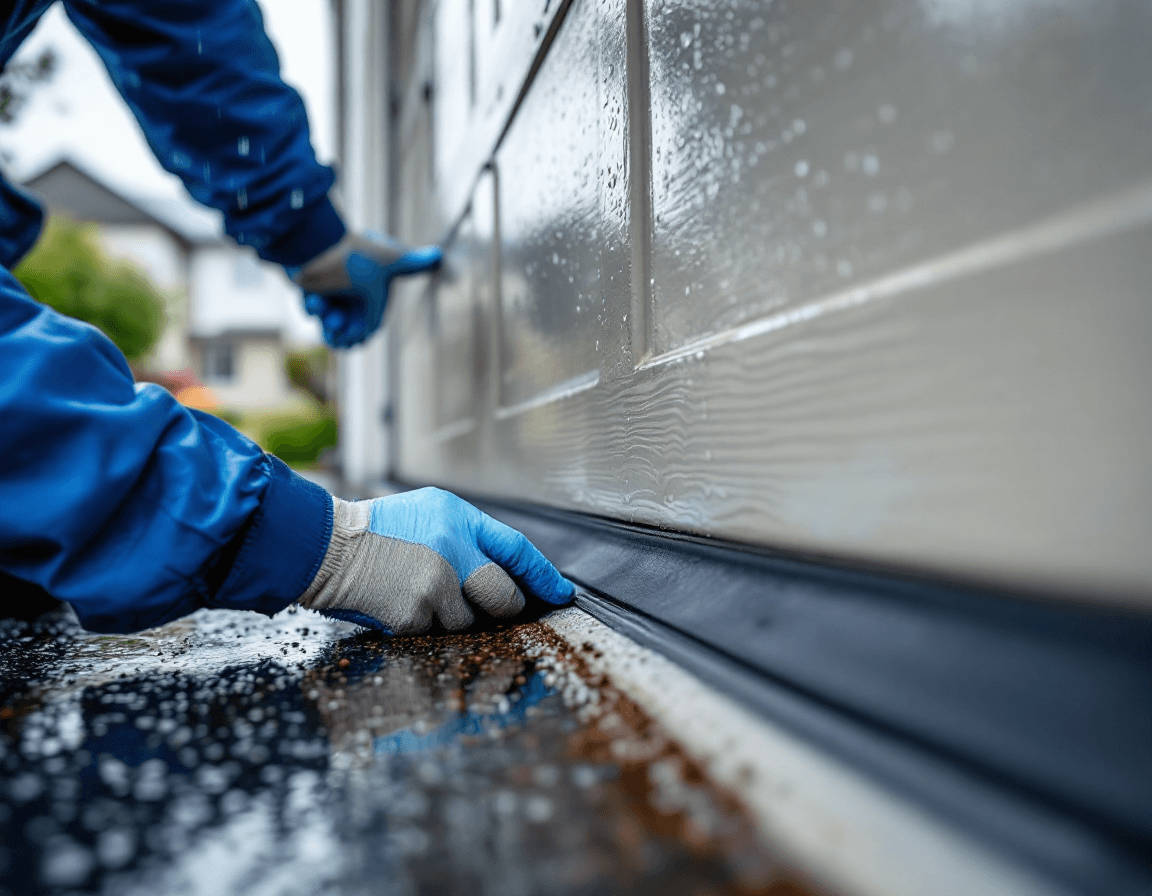
Garage door weather seal replacement in Maple Valley, WA is one of the most affordable fixes you can make to a garage that feels cold, smells damp, or lets in leaves and mice. Most homes in the 98038 ZIP code have a door that once sealed well and has since worn down, cracked, or pulled away from the floor. A seal costs far less than the damage it prevents, and the difference shows up quickly in comfort, cleanliness, and your heating bill. This guide explains how the bottom seal, perimeter weatherstripping, and threshold seal work together, and how to tell when yours need attention.
Seattle-area homeowners often treat the garage as a storage room, but the door is still the largest moving opening in the house. In Maple Valley, many attached garages share a wall with living space, and a leaky door can pull cold air straight into the rooms above and beside it. The same gap that lets in a draft also lets in wind-driven rain during the wet months and insects during the warm stretch of late summer. Understanding what each seal does makes it much easier to decide what your garage actually needs.
Our technicians work throughout Maple Valley and the surrounding communities, from the neighborhoods near Four Corners to homes that sit close to the shoreline at Lake Wilderness. Every visit starts with the same question: where is the door letting the outside in? The answer is rarely just one spot, and the sections below walk through the most common places we find problems and how we fix them.
Why the Bottom Seal Matters More Than Most Homeowners Think
The bottom seal is the strip fastened to the lowest panel of a sectional garage door, and it is the only part of the door that touches the floor when the door closes. Its job sounds simple, but it carries more load than people expect. Every time a vehicle rolls in, the door thumps against the floor and the seal compresses, and every rainy afternoon it sheds water that would otherwise pool at the threshold. Over several years of Maple Valley weather and daily use, that compression takes a toll on the rubber or vinyl.
Most bottom seals are either a flexible vinyl or rubber strip with a aluminum retainer, or a more rigid replaceable insert that slides into a channel along the bottom panel. Vinyl tends to stiffen and crack after years of sun exposure, especially on a south or west facing door that catches afternoon light. Rubber can flatten out and lose its springiness, which leaves a gap that opens a little more every season. When we replace a bottom seal, we match the profile to your existing channel so the new piece seats cleanly and holds its position under foot traffic.
Replacing the bottom seal is one of the most common repairs we handle in Maple Valley, and it generally falls in the range of $95 to $250 depending on the seal type and the width of your door. Wider doors, such as double-car models, need more material and sometimes a second piece, which is why the price is not a single flat number. If your door has an unusual bottom panel or an older style that is no longer manufactured in its original profile, we will explain the options before doing any work.
Reading the Gap: A Simple Light Test You Can Do Tonight
One of the fastest ways to judge the condition of your seals is the light test. Close the garage door after dark, turn on the lights inside the garage, and walk outside to look under and along the edges of the door. Any bright line you can see from the outside marks a spot where the seal has lost contact with the floor or the frame. Repeat the test with the lights off and a flashlight held inside the garage, moving slowly along the sides and top.
Pay close attention to the corners at the bottom of the door, since those spots tend to lift first and collect debris. A gap that is wider in the middle than at the ends often points to a worn seal that has been pressed unevenly, while a gap that appears on one side only may mean the door has shifted slightly out of level. Shifted doors are worth a professional look, because a seal cannot fix a door that no longer tracks evenly, and forcing the issue can strain the opener.
Keep in mind that a small amount of visible light is normal on an older door. What matters is whether the gap changes how the garage feels and what gets through it. If you notice daylight under the door, a damp patch after rain, or a steady stream of leaves collecting in the same corner each fall, the seal has moved past the point of ordinary wear. Those signs are a practical reason to schedule a replacement before the wet season builds momentum.
Perimeter Weatherstripping: The Quiet Layer Most People Forget
Perimeter weatherstripping runs along the vertical sides and the top of the door opening, where the door panels meet the frame. It is usually a vinyl or foam strip that compresses against the jamb when the door closes, and it works like a continuous gasket. Many homeowners never look at this strip because it sits out of sight behind the door edge, yet it does a large share of the work in keeping air and water outside. When it fails, drafts often seem to come from everywhere at once.
Perimeter strips wear in different ways. Along the side jambs, they can flatten or tear where the door rubs during operation, and along the top they can lose contact after years of the door sagging slightly under its own weight. Sun exposure dries out the material, and the strip may crack in the same spots that get the most direct light. A common mistake is to replace only the bottom seal while ignoring worn perimeter strips, which leaves a path for wind-driven rain to get past the sides of the door.
Replacing perimeter weatherstripping is usually quick and inexpensive when the door is in good mechanical shape. The price range of $95 to $250 we quote for seal work covers both the bottom and perimeter in many cases, depending on how much material your door needs. Before we install new strips, we clean the old adhesive residue off the jamb and check that the strip sits flush without bunching. A clean, properly seated strip makes a noticeable difference the first time a wind storm blows across the valley.
Thresholds, Concrete Slopes, and Why Water Finds the Low Spot
The threshold is the strip or raised area on the garage floor directly under the door, and it can be either a metal track or a simple concrete lip. Many garages in the Maple Valley area were built with a slight slope toward the driveway, which is helpful for drainage but can channel water straight under a poorly sealed door. A threshold seal fills the gap between the door and the concrete, and it works together with the bottom seal to keep moisture from creeping inward.
Water finds the low spot, and a worn threshold can create a shallow pool that spreads across the garage floor after a heavy rain. Over time, that moisture can lift paint from the floor, promote mildew on stored cardboard and fabric, and encourage rust on metal shelving and tools. Threshold seals are often overlooked during routine maintenance, but they are one of the best defenses against puddles that seem to appear from nowhere after a long wet spell.
When we evaluate a threshold, we check whether the concrete has cracked or heaved, since a damaged slab can allow water to travel under the seal even when the seal itself is in good shape. In that case, we will explain the limits of a seal repair and recommend the appropriate next step. We do not try to hide structural floor problems behind a strip of rubber, because that approach only postpones the cost and can make the eventual repair more expensive.
Pests Through the Gap: Mice, Spiders, Slugs, and Maple Leaves
Pests are a practical reason to replace worn seals, and the Maple Valley area gives them plenty of opportunity. Homes surrounded by evergreen and deciduous trees, including the conifers and maples common across the region, attract rodents and insects that look for shelter as the weather cools. A gap of only a quarter inch under a garage door is more than enough for a mouse, and many spiders and sow bugs can slip through even smaller openings. Once they are inside, they tend to move toward stored boxes, pet food, and the insulation in the walls.
Leaves, needles, and dust build up in the same corner again and again when the seal is damaged. Those piles hold moisture and give slugs and other soft-bodied pests a damp place to hide, which is why many homeowners notice slime trails near the door on cool mornings. Good seals do not stop every pest, and a clean garage with sealed gaps is still worth the regular sweep, but they remove the easy entrance that most intruders depend on.
Here are common signs that pests or debris are entering through the door:
- Droppings or chew marks along the bottom edge of the door or on nearby boxes
- A steady line of leaves, needles, or grit against the inside of the door each week
- Spider webs concentrated in the lower corners or along the track
- Slug or snail trails on the garage floor near the threshold, especially after rain
If you see any of these signs, a new bottom seal and a refreshed perimeter strip often solve the problem more effectively than sprays or traps alone. We recommend pairing the seal repair with simple habits, such as keeping stored items off the floor and clearing leaves from the driveway edge before they pile against the door.
Heating Bills, Attached Garages, and the Cold Draft Equation
Many Maple Valley homes use a heat pump or forced-air system, and a garage that leaks air forces that system to work harder during the cold months. The effect is most noticeable when the garage shares a wall with a bedroom, laundry room, or kitchen. Cold air pouring in under the door drops the temperature of the garage, which in turn draws heat out of the adjoining rooms through the shared wall and the floor above. Homeowners often blame the furnace or the insulation before they consider the door itself.
The draft equation is simple in principle. Every gap lets conditioned air escape and cold air enter, and the bigger the gap, the more energy the home loses. Sealing the bottom, sides, and top of the door reduces that exchange and makes the garage feel less like an outdoor space. Many homeowners find that a warmer garage also makes the car, workbench, and storage area more pleasant to use during the winter, which turns a utility space into a more usable part of the house.
It is important to be honest about what a seal can and cannot do. A seal reduces drafts and water intrusion, but it does not replace insulation in the garage ceiling or the walls, and it cannot fix a poorly insulated entry door. We recommend looking at the whole picture, including the door panels, the windows if your door has them, and the service door that connects to the house. Where a seal is the right fix, though, it is one of the most cost-effective improvements you can make to the comfort of a Maple Valley home.
Matching the Seal to Your Door: Materials, Sizes, and Honest Pricing
Not every seal fits every door, and choosing the right one depends on the panel design, the channel size, and how the door is used. Vinyl bottom seals are common and work well for many residential doors, while heavier rubber profiles can handle doors that see frequent use or sit in an exposed location. Some doors use a snap-in insert that can be replaced without removing the entire bottom panel, while others require a full channel replacement. Each option has a different installed cost, which is why our quotes fall within the $95 to $250 range depending on seal type and door size.
Door width affects the price directly, because a 16-foot double door needs about twice the material of a single-car door. Access, the condition of the existing channel, and whether the perimeter strips also need replacement can add to the total. We always explain which parts are worn and which are still serviceable, so you can decide whether to replace only what is failing or refresh the entire door at once. Transparency about cost is part of the job, and we would rather you understand the trade-offs than feel rushed into a larger repair.
Our work is performed by licensed, bonded, and insured technicians, and we keep the scope focused on seals and weatherstripping. If a seal inspection reveals problems with the springs, cables, drums, or track, those components require different skills and tools. Spring and cable work carries serious risk because the springs hold substantial tension, and that work should always be handled by a licensed professional rather than a homeowner. We will tell you clearly when a problem falls outside seal work and what the next step should be.
Quick Swap or Full Perimeter Refresh: Choosing the Right Scope
Some homeowners want the fastest possible fix, and a single bottom seal replacement may be exactly right when the sides and top are still firm and the only visible gap sits along the floor. Other homes need a fuller approach, especially when the perimeter strips have cracked, the top seal has pulled loose, and the threshold shows signs of moisture. Choosing the right scope saves money and prevents the frustration of repeated visits for problems that were visible during the first one.
A quick swap generally makes sense when the door is level, the perimeter strips seal well when you run your hand along them, and the light test shows gaps only at the bottom. A full refresh is more appropriate when several sections are worn, the door has been replaced or re-hung, or the garage has a history of water intrusion. In either case, we check the door's alignment before recommending materials, because a misaligned door will wear new seals quickly.
We also consider how the garage is used. A garage that houses a daily commuter vehicle, a workshop, or a pet area sees more contact and more temperature change than one used only for occasional storage. Heavier use can justify a more durable seal profile, even if the upfront cost is slightly higher. Our goal is to match the repair to your real needs, not to sell you more than your door requires.
What Happens During a Seal Visit at Your Maple Valley Home
A seal visit begins with a conversation about what you have noticed, when you noticed it, and whether the problem appears after rain, during windstorms, or in certain seasons. We then operate the door through a full cycle, look at the bottom seal from inside and outside, and check the perimeter strips for cracks, flattening, or loose sections. We also inspect the threshold and the concrete immediately beneath it, noting any slope, cracking, or standing moisture. This process typically takes less time than people expect, and it gives us the information needed for an accurate recommendation.
If replacement is the right choice, we explain the options before any work begins. You will hear what the seal material is, how it compares to the existing one, and what the installed price will be within the $95 to $250 range for your door size and seal type. Installation involves removing the old seal, cleaning the channel or jamb, fitting the new piece, and testing the door through several cycles to confirm it closes firmly without binding. Our technicians take care to avoid damaging paint, weatherstripping adhesive surfaces, or nearby trim.
Before leaving, we review what we found and what we recommend monitoring over the coming months. We may point out a spot that needs attention later, such as a perimeter strip that is starting to dry out, or a threshold that will benefit from better drainage on the driveway side. Clear communication at the end of the visit helps you plan maintenance without guesswork, and it lets you contact us easily if something changes. If we see a spring, cable, or track issue during the visit, we will flag it and explain why it requires a separate licensed repair.
Keeping Seals Working Through Wet Winters and Dry Summers
Pacific Northwest weather is unusual in its rhythm. The wet season tends to stretch from fall into spring, with long stretches of drizzle, periods of heavy rain, and wind that pushes moisture sideways against the garage door. Summers are generally drier, and the sun can bake rubber and vinyl until it loses flexibility. A seal that performs well in January may crack by August, so maintenance has to account for both extremes. Simple habits can extend the life of your seals by years.
Clean the bottom seal and the threshold a few times each year using mild soap and water, and avoid harsh solvents that can break down rubber or vinyl. Wipe the perimeter strips gently and check for debris caught behind them. Lubricating the door's hardware should be done according to the manufacturer's guidance and kept away from the seal material, since many lubricants can soften or swell rubber over time. Clearing leaves and grit from the driveway edge before fall storms reduces the amount of material that piles against the door.
Keep an eye on the door's balance and alignment as well, because a door that sags or rubs will wear seals faster than normal. If the door opens unevenly, makes unusual noises, or seems heavy, schedule a professional inspection rather than adjusting the springs or cables yourself. Those components carry significant tension, and handling them without the right training is dangerous. A seal refresh paired with routine professional checks is one of the most reliable ways to keep a Maple Valley garage dry, quiet, and comfortable year after year.
If you notice drafts, water, leaves, or pests getting past your garage door, a seal inspection is a practical next step. Call Seattle Garage Door Fix at (888) 799-3819 to schedule a visit with a licensed, bonded, and insured technician serving Maple Valley and the surrounding 98038 area. We will look at the bottom seal, perimeter weatherstripping, and threshold, explain what needs attention, and give you a clear price within the $95 to $250 range before any work begins.