
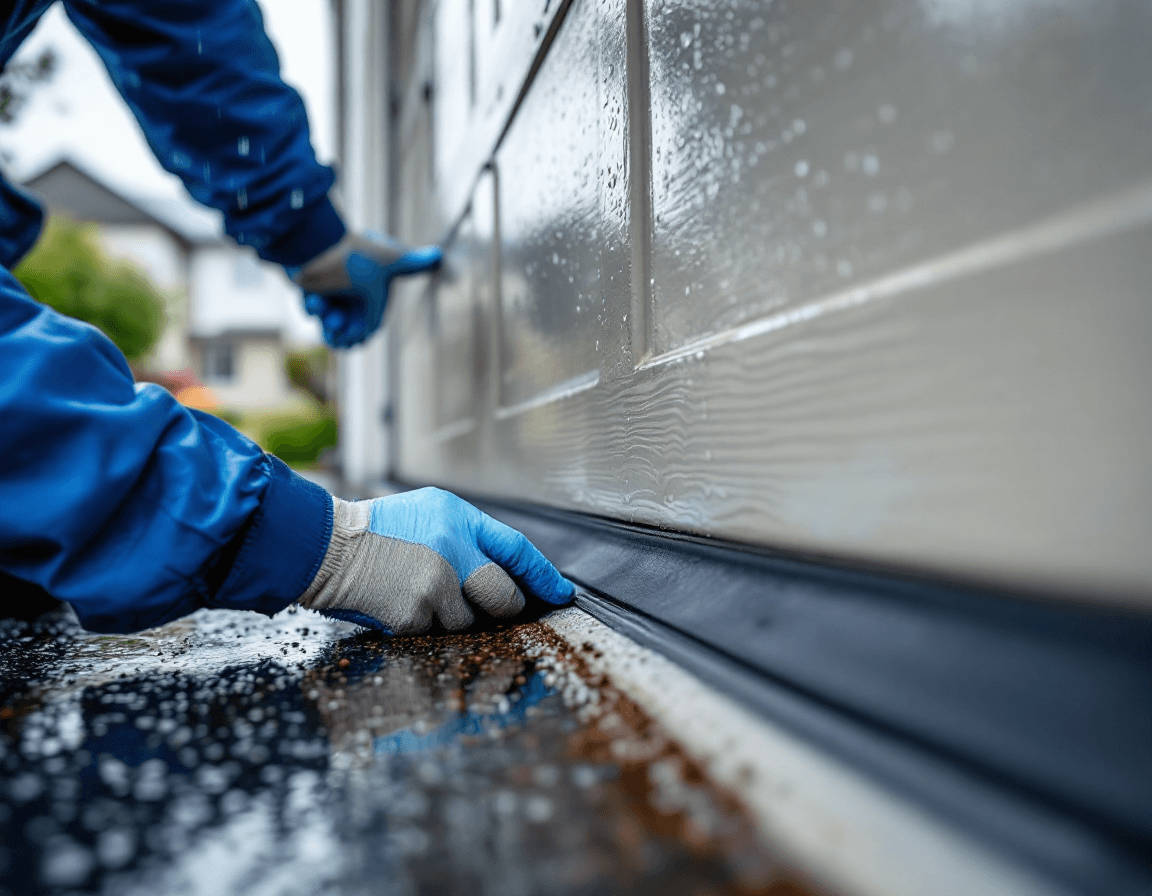
Garage door weather seal replacement in Black Diamond, WA is one of the most practical repairs a homeowner can make, and it is often one of the least expensive. Black Diamond sits at the edge of the Green River Gorge in southeast King County, where the rain that rolls in off the Pacific is steady rather than dramatic. Over a winter, that drizzle and the occasional heavy atmospheric-river storm work their way under a garage door that has lost its bottom seal, and what started as a thin line of damp can become standing water, cold air, and an open invitation to pests. A worn seal rarely fails all at once, which is why many households do not notice it until the first cold snap shows up on the power bill or a puddle appears near the back of the garage.
This page is written for homeowners in Black Diamond and the surrounding communities who want to understand what a failing seal looks like, what the replacement involves, and what it typically costs. Replacement generally runs between $95 and $250, depending on the type of seal you choose and the width of your door. The final price depends on whether you need only a bottom seal, a full perimeter weatherstripping kit, a threshold seal, or some combination of all three. We will walk through the signs to watch for, the local factors that wear seals down faster here, and how to decide whether a simple swap will do the job.
The goal is not to turn you into a technician. It is to help you make an informed decision, whether you plan to handle a quick inspection yourself or want a licensed crew to take care of everything. Seals are a low-risk repair, but the same door often has high-tension springs and cables that can cause serious injury if handled improperly, so we will point out where the line between a safe weekend job and a professional job sits.
Reading the Gap: What a Failing Bottom Seal Looks Like From the Inside
The most obvious clue that your bottom seal has given up is light. Turn off the garage lights during the day with the door fully closed and look along the bottom edge. If you can see a bright line, the seal is no longer making contact with the concrete floor. On many Black Diamond homes, particularly those with slightly uneven slabs or driveways that slope toward the garage, the gap may be wider on one side than the other, so check both corners and the center of the door.
Next, look at the seal itself. A bottom seal is typically a strip of vinyl, rubber, or flexible polymer fixed to the lowest panel of the door. Healthy seals are flexible and rebound when pressed. Failing seals look cracked along the bend, feel stiff or brittle, have chunks missing, or have pulled away from the bracket and now hang loose. Some seals become so compressed and flattened over the years that they no longer reach the floor even though they are technically still attached.
Here are the signs most often seen during a seal inspection:
- A visible light gap when the door is closed in daylight
- Cracks, splits, or flattening along the length of the rubber or vinyl
- A seal that has peeled away from its retainer channel or come loose at one end
- Damp spots, leaf piles, or wet footprints directly inside the door line after rain
- Cold air that you can feel with your hand when you stand near the bottom of the door on a windy day
If you see several of these at once, the seal has likely been failing for a long time, and the adjacent weatherstripping along the sides and top may be following the same path.
Why Wet Winters Wear Seals Down Faster in the Foothills
Black Diamond's climate is mild by most American standards, but it is persistently damp. Winters bring long stretches of cloud, frequent rain, and temperatures that hover near freezing overnight and rise into the 40s during the day. That cycle of wetting, drying, and freezing is hard on rubber and vinyl. Water works into microscopic cracks, freezes, expands, and widens them. Over several seasons, a seal that once bridged the gap neatly begins to crumble at the corners and shrink along its length.
UV exposure matters too. Even on a cloudy Pacific Northwest day, a garage door on a south or west exposure receives enough sunlight to slowly break down the polymers that make up most seals. Homes with long driveways or those set back from tree cover tend to see faster deterioration than homes tucked under mature conifers. Many newer houses in the area also have garage doors that sit close to the driveway apron, which means road spray and gravel grit collect right against the bottom seal every time the car pulls in.
Moisture also gets trapped between the seal and the door panel when seals are installed incorrectly or when the door has shifted slightly out of level. Once that happens, the bottom of the door can stay wet for days after a storm, which accelerates the rot of the wood trim or the corrosion of metal brackets near the floor line. Replacing a seal before that damage spreads is one of the cheapest forms of moisture control you can buy.
Drafts, Heat Loss, and the Energy Bill That Tells the Story
A garage is not a conditioned room in most homes, but it is often directly connected to the living space. A gap at the bottom of the door can pull cold, humid air into the garage, and that air moves into the house through the shared wall, the door to the laundry room, or ductwork that runs through the garage ceiling. On cold, windy evenings in Black Diamond, you may notice that rooms next to the garage feel chilly even though your thermostat is set normally.
Heat loss through a failing seal can be surprisingly noticeable on the energy bill. A gap large enough to see daylight through is also large enough to let a steady stream of outside air circulate under the door around the clock. If your furnace or heat pump is working harder through the winter months than it did the previous year and there is no obvious cause, the door seal is worth checking before you assume the equipment is failing. Sealing that gap is one of the more immediate ways to reduce the work your heating system has to do.
Drafts also affect comfort in ways that are easy to overlook. Cold air moving across the floor can make a family room feel drafty even when the windows are closed, and it can contribute to condensation in the garage when warm, moist air from the house meets the cold door surfaces. Good sealing reduces both the drafts and the condensation, and it keeps the temperature in the garage more stable for stored items, tools, and vehicles.
Pests, Leaves, and the Small Things That Find Their Way In
Anyone who has lived in the Maple Valley and Black Diamond area for a while knows that wildlife is part of the landscape. Mice, rats, shrews, spiders, earwigs, and slugs all become more active when the weather turns damp, and a gap under the garage door is one of the easiest entry points they can find. Rodents can squeeze through openings that look far too small to matter, and once they settle in a garage, they can chew through stored bags, wiring, and insulation.
Leaves, needles, dust, and grit are equally persistent problems. Fir needles and maple leaves from nearby trees collect along the driveway and are swept against the door by wind. A worn bottom seal lets that debris drift under the door and pile up along the inside edge, where it holds moisture against the floor and the bottom panel. Over time, that combination of organic debris and dampness can attract insects and encourage mildew on stored cardboard, fabric, and wood.
A good seal does more than block the obvious gap. It also keeps the fine dust and pollen common in late spring from settling across your workbench and shelves. If you use your garage as a workshop or keep a freezer, pantry, or pet food storage there, a tight seal reduces the chances that pests find those items before you do. Pairing a new seal with a quick cleanup of the threshold area and a check of exterior door sweeps on any side doors gives you the best return.
Choosing the Right Bottom Seal for Your Door and Your Slab
Bottom seals come in several profiles, and the right choice depends on how your door is built and what the floor looks like. The most common type is a vinyl or rubber T-style seal that slides into a retainer channel fixed to the bottom panel. It works well with most sectional doors and is generally the most affordable option. A flexible, rubber-based bulb seal is common on insulated doors and provides a good compression fit against an even floor. Some doors use a specialized one-piece retainer that takes a different profile, so measuring and matching the existing channel is important.
Your slab matters as much as the door. A smooth, level garage floor allows a seal to compress evenly across the full width of the door. Older slabs in some Black Diamond neighborhoods may have hairline cracks, uneven spots, or slight slopes toward the driveway, and those conditions can make a single-profile seal leave gaps in certain spots. In those cases, a seal with a slightly thicker profile or a flexible bulb design may close the gap better. A technician can compare the floor contour with the door's bottom edge and recommend the most suitable profile.
Door width also influences the price. A standard double-car door will need more material than a single, and wider doors often have more seal sections to replace. The $95 to $250 range generally reflects the difference between a basic bottom seal on a single door and a higher-end seal or a combined bottom and threshold job on a larger door. Ask for the exact seal profile in writing before work begins so you know what you are getting.
Perimeter Weatherstripping: The Side and Top Seals Most People Forget
The bottom seal gets the most attention, but the perimeter weatherstripping along the sides and top of the door does just as much to keep water, drafts, and pests out. This weatherstripping is usually a flexible vinyl or foam strip mounted to the door frame, the jamb, or the header. When it works, it compresses slightly against the door whenever the door closes, forming a seal along the full outline of the opening. When it wears out, the sides of the door show daylight at the top corners, and water can run down the inside of the jamb during a storm.
Perimeter weatherstripping often fails quietly. The foam compresses over years of use, the adhesive backing loses its grip, and the vinyl hardens in the sun. Many homeowners only notice it when a windy rain pushes water sideways into the garage or when a flashlight held outside reveals a bright line along the top corner. Replacing the perimeter strip while you are already working on the bottom seal can improve performance dramatically at a modest added cost.
Be careful with the top and side strips around the door tracks and springs. Those components are under high tension and should not be disturbed. Weatherstripping can usually be removed and replaced without touching the springs, but if you need the door to be lifted, unbolted, or adjusted to access the strip, that is a job for a licensed technician.
Threshold Seals for Uneven Concrete and Driveway Transitions
A threshold seal is the strip or pad that sits on the garage floor directly beneath the door and works with the bottom seal to close the gap. On many Black Diamond properties, the transition between the garage slab and the driveway is not perfectly flush. Settling, frost heave, and years of vehicle traffic can leave a small step or dip right at the doorway, and rainwater flowing down the driveway can pool against that transition. A threshold seal fills that low spot and helps direct water away from the door.
Threshold seals are often made of rubber, vinyl, or a composite material that is anchored to the concrete with screws or a strong adhesive. When they wear out, they may crack, lift at the edges, or tear away from the floor, and the bottom seal then has no support to press against. Because the threshold sits on the floor where cars, carts, and foot traffic pass over it, it takes more abuse than the other seals and may need replacing sooner.
If your garage has a step-down or a sloped entry, a threshold seal may be the most important component of the job. Pairing it with a correctly fitted bottom seal and perimeter strip creates a complete barrier that handles the rain, the wind, and the debris that a typical driveway sends toward the door. A technician can inspect the slab during the visit and tell you whether a threshold upgrade will make a noticeable difference.
What Replacement Usually Costs in Black Diamond
Garage door weather seal replacement generally runs between $95 and $250. The lower end usually covers a straightforward bottom seal swap on a standard single door with a level floor and an existing channel that is in good shape. The higher end typically reflects a larger door, a specialty seal profile, a full perimeter weatherstripping replacement, or a threshold seal that requires careful fitting on an uneven slab. Your exact price depends on the door size, the seal type, and what else the inspection turns up.
It helps to think about cost in terms of what you are protecting. A new seal stops water from reaching the garage floor, reduces the heat loss that makes the house harder to heat, and keeps pests and debris from getting into stored belongings. Replacing a seal early is far less expensive than repairing rot in door panels, replacing damaged drywall or insulation along the bottom of the wall, or cleaning up after a rodent problem. Many homeowners find that a seal replacement is among the most cost-effective repairs they can make to a garage.
When you request an estimate, ask whether the price includes removal of the old seal, cleaning of the retainer channel, and a test of the door after installation. A good technician will also tell you whether the seal can be trimmed to fit, whether it needs a specific adhesive or fastener, and how long the replacement is expected to last under typical Black Diamond conditions.
A Quick DIY Check You Can Do Safely Before Calling
Before you schedule service, you can do a basic inspection that requires no tools beyond a flashlight and a dry cloth. Close the door, turn off the garage lights, and have someone stand outside with a flashlight while you watch from inside. Move slowly along the bottom, the sides, and the top, and note any bright spots. Repeat the check in the daytime with the lights off. This will show you exactly where the gaps are and how wide they are.
Next, examine the seal itself. Clean off any dirt or debris with a damp cloth, then press along the length of the strip with your fingers. Note any stiff, cracked, or missing sections. Check whether the retainer channel is still attached to the bottom panel and whether the seal slides freely in or out. If the seal is loose or rolling away from the door, it is usually a simple matter to reattach it, but do not force it if the channel is bent or damaged.
Keep the inspection strictly limited to the seals. Do not unbolt brackets, loosen tension components, or touch the springs or cables. Those parts are dangerous even when the door looks calm, because the spring system stores enough energy to cause serious injury. If your inspection shows that the door itself is out of level, binding, or noisy, stop there and call a licensed technician.
When to Bring in a Licensed Technician Instead
Some seal problems look simple but are connected to larger issues. If the door sits crooked, sticks partway through its travel, or leaves a gap that changes depending on the position of the door, the seal may not be the root cause. A misaligned door can wear seals unevenly, and replacing the seal without correcting the alignment will leave you back where you started within a season. A technician can check the track, the rollers, and the balance of the door to determine whether an adjustment is needed.
Any work involving the springs, cables, drums, or lift hardware should be handled by a licensed professional. Spring tension can release suddenly and cause severe injury, and cable repairs require specialized tools and training. If you are unsure whether a task falls into that category, assume it does and make the call. Seal replacement itself is a reasonable job for many homeowners, but it is also a common reason people end up working near the door's mechanical systems, and that is where things go wrong.
Finally, consider a professional visit if you have recurring water entry, visible rot in the door panels, or signs of a significant pest problem. In those cases the seal is only part of the picture, and a technician can help identify the other entry points, the drainage issues, and the repairs needed to protect the garage long term. Calling early often prevents a small job from becoming a larger one.
Keeping New Seals Performing Through Every Season
A new seal will perform best if you give it a little attention through the year. Sweep the driveway apron and the area just outside the door regularly, especially during fall when leaves and needles accumulate. Grit and sand left against the seal act like sandpaper every time the door closes, so keeping the threshold clear extends the life of the material. Rinsing the bottom seal with a mild soap and water in spring removes road film and organic residue that can break down rubber over time.
Check the seal twice a year, ideally before the rainy season begins in the fall and again after the wettest months in late winter. Look for new cracks, flattened areas, or spots where the seal has pulled away from the channel. Catching these early means a quick adjustment or a small replacement rather than a full seal swap after water has already reached the floor. Keep an eye on the perimeter strips too, since they often wear at the top corners first.
Avoid using harsh solvents, petroleum-based cleaners, or abrasive pads on the seals, because these can accelerate deterioration. Silicone-based lubricants are generally safe for the rubber and vinyl, but they should be used sparingly and kept off the floor where they can create a slippery surface. With regular care and a properly fitted seal, most homeowners can expect their garage door to keep water, drafts, and pests out for years, even under the damp Black Diamond winters that make this area so beautiful and so demanding on exterior components.
Ready for a tighter, drier garage? Call Seattle Garage Door Fix at (888) 799-3819 to schedule a licensed technician for bottom seal, perimeter weatherstripping, or threshold seal replacement in Black Diamond and the surrounding area. We will inspect your door, explain your options clearly, and give you a straightforward estimate before any work begins.