
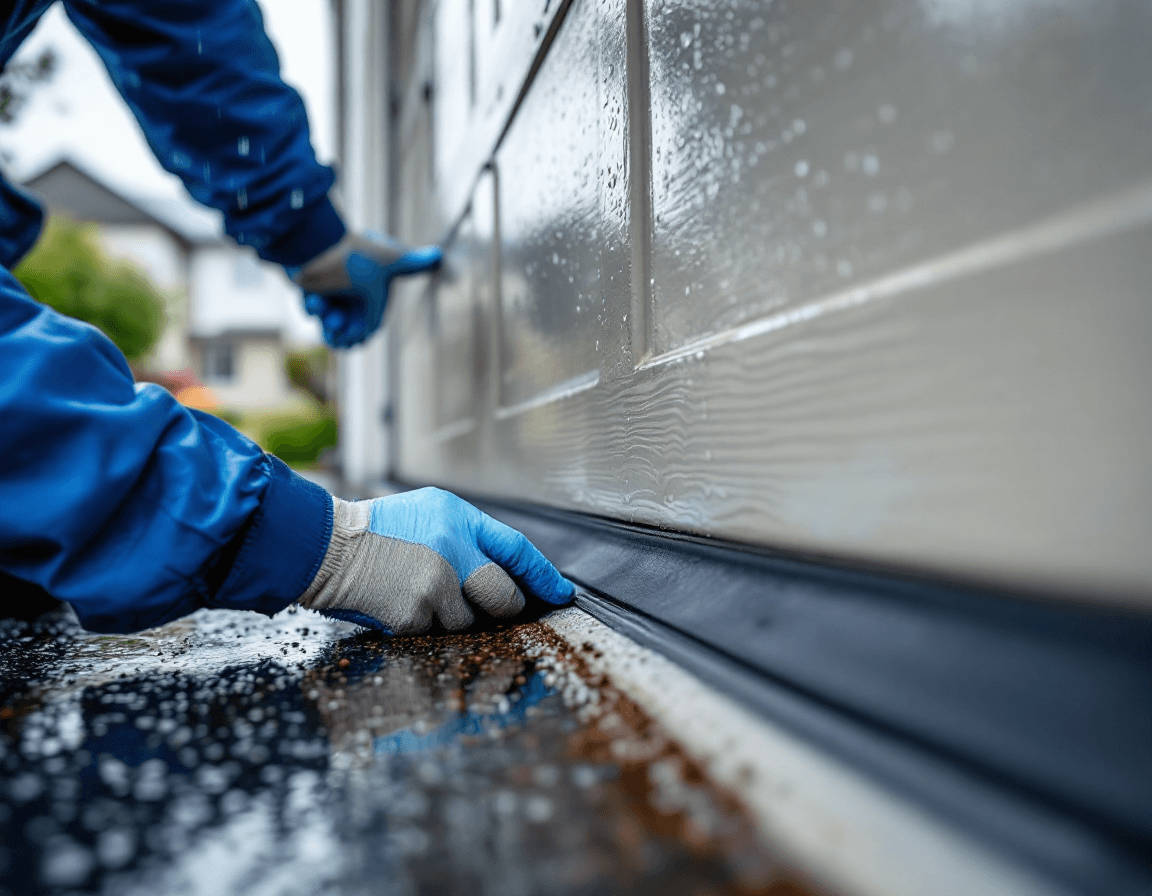
Garage door weather seal replacement in Ruston, WA is one of the most affordable repairs that makes a visible difference in how your garage feels, smells, and performs through the wet season. Ruston sits right on the shoreline of Commencement Bay, and the cool, damp air that drifts off the water works its way under and around garage doors faster than many homeowners expect. A worn bottom seal or a tired strip of perimeter weatherstripping can let in rainwater, leaves, cold air, and a steady stream of small pests long before the door itself looks like it needs attention.
Most of the homes in and around the 98407 area were built with a range of garage door setups, from older wood or steel sectional doors to newer insulated models with factory-installed seals. Over time, the rubber and vinyl that holds back the weather shrinks, hardens, cracks, or simply peels away from the door panel. Because the change happens gradually, many people only notice it when a puddle appears near the door after a storm or when the garage feels noticeably colder than the rest of the house. Catching the problem early keeps the repair simple and inexpensive.
This page walks through how seals fail, how to inspect yours, which seal types make sense for our climate, what a typical replacement involves, and where the cost falls within the $95 to $250 range. It also covers the situations where a seal is only part of the story and a licensed technician needs to look at the springs, cables, or tracks. Seattle Garage Door Fix serves Ruston and dozens of nearby communities, and the guidance below reflects the kinds of conditions our technicians see across Pierce County.
Why Ruston Garages Lose Their Seal Faster Than Expected
The climate along the Commencement Bay shoreline is mild in temperature but demanding on materials. Winters bring long stretches of rain, wind that comes in off the water with real force, and repeated cycles of damp and dry that stress rubber and vinyl. Summers are comparatively cool, which means the sun is not baking seals as hard as it does in eastern Washington, but the constant moisture and occasional salt-laden air still cause slow degradation. A seal that might last many years in a dry climate can show its age noticeably sooner here.
Garages near the water and the open lots around Point Ruston often catch wind-driven rain at an angle. That kind of rain does not just fall straight down on the driveway; it gets pushed sideways against the lower edge of the door and the side jambs. Seals that look fine from a distance can be pushed out of their channels or folded over by repeated wind, leaving a gap that only shows up during a storm. This is why some homeowners see water on the floor only during certain wind directions.
Ruston is also a community with a mix of older residences and newer construction, and the garage doors on each type of home behave differently. Older doors may have been fitted with seals that were never designed for the thicker insulation and heavier panels common today. Newer doors often come with factory seals that are good quality but still wear out. Knowing the age and construction of your door helps determine which replacement makes the most sense.
Reading the Gap: A Five-Minute Inspection You Can Do Yourself
Before calling anyone, you can learn a great deal about your seal with a quick walk-around on a dry day and then again on a wet one. Start by closing the door fully and turning off the lights inside the garage. Stand outside and look for daylight along the bottom edge, along both sides, and across the top. A thin line of light usually means the seal has compressed or split, and a wider gap points to a seal that has pulled away or disappeared entirely.
Next, run your hand or a sheet of paper along the bottom seal while the door is closed. If the paper slides out with no resistance, the seal is not making contact with the floor. Look closely at the rubber itself. Hairline cracks, flattened sections, chunks missing near the center, or a stiff, chalky texture all signal that the material has reached the end of its useful life. Pay attention to the corners, because that is where seals often start to lift.
- Check for daylight at the bottom, both sides, and the top with the lights off inside the garage.
- Slide a sheet of paper under the closed door at several points; any section where it moves freely needs attention.
- Look for cracks, splits, flattened areas, or missing pieces along the bottom and perimeter seals.
- Notice water tracks, leaf debris, or small insect bodies along the threshold after a rainstorm.
- Test the seal after the door has been closed for a few minutes, since rubber can relax and reveal leaks that were not visible when the door first came down.
Keep in mind that none of these checks involve touching the springs, cables, or drum. Those components store significant tension and belong only to trained technicians. The inspection above is limited to the rubber and vinyl components, which are safe to examine from the outside of the door.
Perimeter Weatherstripping and the Side Jamb Problem
Perimeter weatherstripping runs along the sides and top of the door opening, and it often gets less attention than the bottom seal even though it plays an equally important role. The side strips press against the jamb as the door closes, creating a barrier that stops wind, rain, and light from getting through. In Ruston, where wind pushes rain sideways, a failed side seal can allow more water into the garage than a damaged bottom seal ever would.
Perimeter strips usually wear in one of three ways. The first is compression fatigue, where the material loses its springiness and no longer presses firmly against the jamb. The second is tearing or peeling, often caused by the door brushing against the strip during operation or by a jamb that has shifted slightly over time. The third is simple sun and moisture damage, which turns the vinyl or rubber brittle so that it cracks at the bends and corners. Each of these problems can often be solved by replacing the strip rather than the entire door.
When replacing perimeter weatherstripping, it is important to match the profile and channel size to your existing door. Some doors use a fin-style strip that slides into a slot, while others use a bulb or tab design that attaches with adhesive or a retainer. A technician will measure the channel width and check whether the old strip was secured with fasteners or a friction fit. Getting the profile right means the new strip will seal properly without interfering with the door's movement.
Thresholds, Concrete Slabs, and the Sloped Apron
The threshold is the point where the garage floor meets the bottom of the door, and in many Ruston homes it is the hardest area to seal. Garage floors are typically poured concrete with a slight slope toward the door so that water drains outward. That slope is helpful for keeping water away from the house, but it can also create an uneven edge where the bottom seal has to flex to meet the floor. Over time, the seal can be pushed out of shape at the high and low points of the slab.
Some driveways in the area have settled or been resurfaced in ways that change the height of the apron relative to the garage floor. If the outside grade has risen, rainwater may pool against the door instead of running off, and even a good seal can be overwhelmed. In those situations, replacing the seal is still worthwhile, but the homeowner may also want to look at drainage, a small curb, or a threshold ramp to direct water away from the opening. Those are separate projects that should be planned carefully.
Threshold seals come in several forms, including rubber lip seals that attach to the floor, aluminum-backed sweeps that span uneven gaps, and modular sections that can be trimmed to fit. Choosing the right one depends on how much the floor varies and how much the door travels when it opens and closes. A technician who checks the threshold with the door in motion can recommend a design that stays in contact without causing drag or noise.
Choosing a Seal Type That Suits Puget Sound Weather
There is no single seal that works best for every garage, and the right choice depends on the door's construction, the amount of exposure to weather, and how much daily use it gets. Vinyl seals are widely available and handle moisture well, though they can stiffen in cold snaps. Rubber seals, particularly those with a higher-grade compound, tend to stay flexible through the damp chill of the Pacific Northwest winter. Some specialty seals include a dense foam core for extra insulation, which can help if the garage is attached to a heated living space.
For the bottom of the door, the most common options include a flexible T-shaped rubber seal that slides into a retainer channel, a flat vinyl sweep attached with screws, and a heavier commercial-style astragal for doors with larger gaps. Each type has trade-offs in durability, noise, and how well it handles an uneven floor. A flexible T-seal is often the simplest upgrade for residential doors, while a heavier seal may suit a garage used as a workshop or one that sees frequent wind-driven rain.
- Flexible T-seals fit common residential channels and handle small floor irregularities well.
- Vinyl sweeps are budget-friendly and easy to swap, especially when the existing bracket is still sound.
- Rubber compound seals tend to hold their flexibility through cold, wet months.
- Foam-core or insulated seals can help reduce drafts in garages that share a wall with heated rooms.
- Heavy-duty astragals suit larger gaps or doors that take hard daily use.
Whatever type you choose, make sure the material is rated for outdoor use and will not be damaged by the cleaning products or pressure washing that some homeowners use on their driveways. Seals that are exposed to constant sun and moisture benefit from a material with UV resistance, which keeps the rubber from hardening prematurely.
What a Typical Seal Replacement Involves On Site
A seal replacement is one of the more straightforward jobs a technician performs, but it still requires care. The process begins with a visual inspection of the door, the bottom panel, the threshold, and both jambs. The technician checks whether the door is level and whether the panels are flexing in a way that might be causing the seal to lift. This step matters because a new seal installed on a misaligned door will wear out quickly.
Next, the old seal is removed. For T-seals, this usually means sliding the strip out of the retainer channel, which may be fused in place by years of grime and sun exposure. For screw-on sweeps, the fasteners are removed and the bracket is checked for cracks or corrosion. Perimeter strips may be pried from their channels or peeled from adhesive backing. Once the old material is out, the channel is cleaned so that the new seal can sit flush and seal properly.
The new seal is then cut to length and installed, with the technician testing the fit as the door is opened and closed. A good installation leaves the seal lightly compressed against the floor or jamb, without so much pressure that the door drags or strains the opener. Finally, the technician checks for daylight and runs the door through several cycles to confirm the seal is not catching on the track or panels. The entire process usually takes less time than many homeowners expect.
Pricing From $95 to $250: What Shapes the Final Number
Seal replacement pricing generally falls between $95 and $250, and the final figure depends on several factors. The type of seal is the first consideration, since a simple vinyl sweep costs less than a heavy-duty astragal or a specialty insulated strip. The size of the door is the second, because wider doors require more material and additional labor to install. A double-car door will typically cost more to seal than a single-car door, though the increase depends on the specific seal and how many components need replacing.
Scope of work also matters. Replacing only the bottom seal is the least expensive option, while replacing the bottom seal plus perimeter weatherstripping on both sides and the top will cost more. If the threshold needs additional work, such as a new sweep bracket or a minor floor adjustment, that can add to the total. A technician who inspects the door in person can give you an accurate quote once the condition of each component is known.
Keep in mind that the price range reflects the seal itself and the labor to install it. It does not include unrelated repairs. If the inspection reveals a broken spring, a damaged cable, a bent track, or a panel problem, those issues are quoted separately and should be handled by a licensed technician. Asking for an itemized estimate helps you understand exactly what is being recommended and why.
Pests, Drafts, and Energy Use: What a Good Seal Actually Protects
Many homeowners in Ruston first notice a bad seal when they find leaves, sand, or small insects on the garage floor. Gaps at the bottom of a door are an open invitation for rodents, spiders, earwigs, and other pests that are drawn to shelter and to the stored items in a garage. Once they find a way in, they can settle into cardboard boxes, stored firewood, or insulation in the walls connecting to the house. A well-fitted seal removes most of that access and makes the garage much less appealing to small visitors.
Drafts are the second major concern. Cold air moving under a door can make the garage uncomfortable to use as a workspace, and it can also affect the rooms next to it. If the garage is attached to the house, that air can chill a laundry room, mudroom, or kitchen wall. Replacing worn seals reduces that flow and helps the heating system hold its temperature more consistently, though the amount of savings varies with each home's insulation and layout.
Water intrusion is the most urgent issue. Standing water near the door can warp wood flooring, damage stored belongings, promote mildew, and create a slippery surface. Repeated moisture exposure also accelerates corrosion on metal brackets and tracks. Addressing the seal early limits those problems and keeps the garage dry through the wettest months of the year.
When the Seal Is Only Part of the Problem
Not every gap or drafty spot is caused by a worn seal alone. Sometimes the door is out of level, the bottom panel is bowed, or the tracks have shifted so that the door no longer closes squarely. In those cases, replacing the seal may improve the situation temporarily, but the underlying issue will continue to cause wear. A technician will look for these signs during the inspection and explain what they found before any work begins.
Spring and cable work is a separate category entirely, and it should never be attempted by a homeowner. Torsion springs and extension springs store enough tension to cause serious injury, and cables can snap or unravel under load. If you notice that the door is hanging unevenly, that a cable is frayed, or that a spring looks stretched or broken, stop using the door and call a licensed professional. Weather seal work is safe to handle yourself, but that is where the line should be drawn.
Other symptoms that point beyond the seal include a door that slams shut, a panel that rubs against the frame, a track that has come loose, or an opener that strains when the door reaches the floor. Each of these may be connected to the seal, but they are often signs of a mechanical issue. Describing what you are seeing when you schedule service helps the technician arrive prepared and avoids unnecessary return trips.
A Seasonal Maintenance Rhythm for Ruston Homes
A simple seasonal routine can extend the life of your garage door seals considerably. Each fall, before the heavy rains set in, inspect the bottom seal, the perimeter strips, and the threshold, and clear away any leaves, grit, or debris that has collected in the channels. Wipe the seals with a mild soap and water solution, then let them dry before closing the door. This removes material that can cause abrasion and keeps the rubber supple.
In spring, after the wettest months have passed, repeat the inspection and look for any new cracks, flattened areas, or separations that developed over the winter. Check the threshold for pooling water and make sure the outside drainage directs runoff away from the door. Avoid using harsh solvents or petroleum-based products on rubber and vinyl, since these can soften or degrade the material. A light application of a silicone-based lubricant on the seal surface can help it slide smoothly, but apply it sparingly.
Finally, keep a simple record of when the seals were last replaced. Most residential seals last several years in our climate, though the exact lifespan depends on exposure, material, and how often the door is used. When a seal reaches the point where it is no longer blocking water or pests, replacing it promptly is far less expensive than dealing with the damage that follows.
If your garage in Ruston is letting in water, drafts, or pests, a worn seal is often the simplest fix. Call Seattle Garage Door Fix at (888) 799-3819 to schedule an inspection. Our licensed, bonded, and insured technicians will check the bottom seal, perimeter weatherstripping, and threshold, explain what they find, and give you a clear quote before any work begins.