
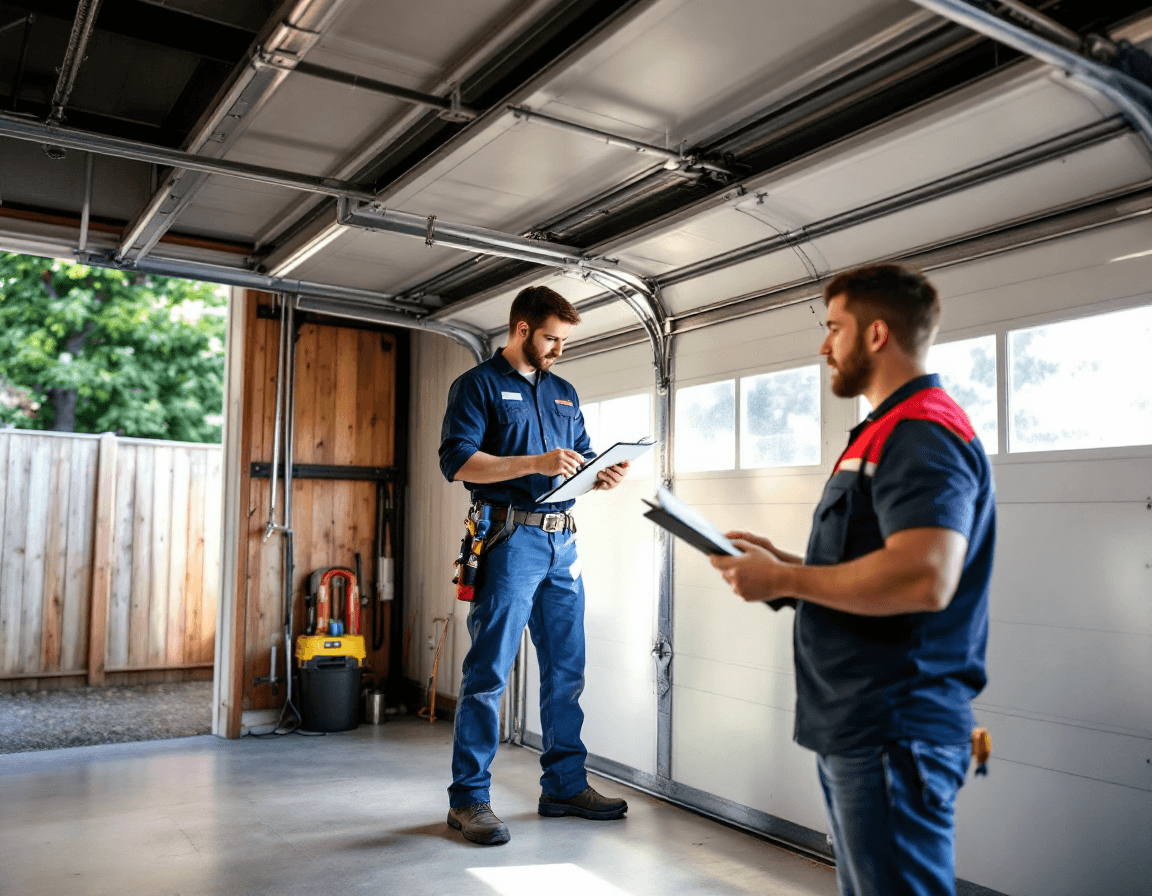
Bainbridge Island has a way of wearing down garage doors that homeowners in drier parts of the region rarely notice. Between the salt air drifting in off Puget Sound, the steady damp from October through April, and the stop-and-go rhythm of households that rely on a second car for the ferry commute, a garage door on the island is working harder than its specifications suggest. Garage door maintenance and tune-ups in Bainbridge Island, WA, are less about fixing something that has already failed and more about catching small problems while they are still small. A door that is ten minutes from the ferry dock in Winslow and a few minutes from the quiet roads near Rolling Bay faces the same mechanical stresses as any other door, plus a coastal environment that speeds up corrosion and tightens the rollers that never get attention.
This page explains what a professional tune-up includes, why it matters on the island specifically, and how to tell when your door is asking for help. Whether you have lived in your home on Bainbridge for twenty years or you closed on it last month, the goal is the same: a door that opens smoothly, closes firmly, reverses safely when something is in its path, and does not give you a surprise breakdown on a rainy Tuesday morning. We serve homes across the island, including the 98110 ZIP code, and we are happy to answer questions before you book anything.
If you are not sure whether your door needs attention yet, read through the sections below and compare them against what you hear, see, and feel when you press the wall button. Most of the issues covered here are inexpensive to address when caught early and considerably more disruptive when they turn into emergencies. A tune-up is a practical way to get a clear picture of your door's condition without guessing.
What a Multi-Point Tune-Up Actually Covers
A full multi-point tune-up is a structured inspection rather than a quick glance at the door. A technician works through the door panels, tracks, hinges, rollers, springs, cables, opener, and safety devices in a fixed sequence so nothing gets skipped. Our standard multi-point service runs from $89 to $149 depending on the door type, the opener model, and how many components need hands-on attention during the visit. The price reflects a complete pass across the system, not just a single lubrication step.
On a typical visit, the technician will look for loose hardware, worn rollers, bent or stressed tracks, hinge wear, and any signs that the door panels are shifting out of alignment. The springs and cables are inspected visually for wear, fraying, and rust, and the technician confirms that the mounting hardware is secure. The opener is checked for travel limits, force settings, and the condition of its mounting bracket. Each part of the system is evaluated as part of a single connected process, because a problem in one component often shows up as strain in another.
- Visual inspection of door panels, hinges, track sections, and mounting brackets
- Roller condition check, including wheel wear and bearing noise
- Lubrication of moving parts using the correct product for each component
- Balance testing to see whether the door holds position at mid-travel
- Opener force, travel limit, and auto-reverse safety testing
- Photo-eye alignment and wiring check, including the sensor path near the floor
- Review of the emergency release cord and manual operation
Reading the Warning Signs Before the Door Quits
Garage doors rarely fail without warning. In most cases the first signs are small: a new squeak on the way up, a slight hesitation at the top of the track, or a door that seems to drop a few inches before it stops. Homeowners often adjust to these changes gradually, so the door feels normal even as its performance slips. Recognizing those early changes is one of the most valuable things you can do for your door's long-term health.
Three symptoms come up again and again in our service calls on the island. The first is noise that gets louder over time. A door that once ran quietly but now grinds, rattles, or pops is usually telling you that rollers are wearing, hinges are loose, or lubricant has dried out. The second is a door that feels heavy when you lift it manually or that seems to rise unevenly. The third is an opener that sounds strained, runs longer than it used to, or stops halfway through its cycle. Each of these deserves a look before the situation becomes urgent.
It is also worth noting when you last had the door serviced. If the answer is more than a year ago, or if you cannot remember ever having it inspected, a tune-up is a sensible next step even if nothing seems wrong. Many problems develop slowly, and a fresh set of eyes can spot wear that you would never notice from inside the house.
Salt Air, Damp Winters, and What They Do to Hardware
Bainbridge Island sits in a marine environment, and that shapes almost everything about how a garage door ages. Salt-laden air settles on exposed metal, and even homes that are a comfortable distance from the water notice it on hinges, bearing plates, and the steel track. Over time this can lead to surface rust, pitting, and a stiff feel in parts that should move freely. Coastal moisture also works its way into the bottom of the wooden or composite panels, which can warp or swell and change how the door tracks.
The damp winters add another layer. Water that collects in the track or near the bottom seal can freeze on the rare cold snap, and it can leave a film that attracts grit and dust. Drip lines from roof valleys and gutters sometimes land directly in front of a garage, which keeps the lower edge of the door wet for long stretches. A technician who understands these conditions will look closely at the lower panel, the weatherstripping, and the floor-level sensors, because those areas take the brunt of moisture.
Mildew and moss are not just cosmetic concerns. Growth on the track and along the base of the door can trap moisture against metal parts and speed up corrosion. During a tune-up we note where water is collecting and where surfaces are staying damp, and we recommend practical steps such as improving drainage, adjusting the threshold seal, or switching to a more appropriate lubricant. The goal is to slow the damage rather than simply treating it after it shows up.
Balance Testing: The Quick Check That Protects Your Opener
Balance is one of the most important and most overlooked parts of garage door care. A properly balanced door should stay roughly in place when you stop it partway open, without drifting up or sinking down. When the springs are carrying the right share of the door's weight, the opener does not have to fight gravity. When the balance is off, the opener works harder, wears faster, and is more likely to burn out a motor or strip a gear.
During balance testing, the technician disengages the opener, lifts the door by hand to a mid-height position, and observes whether it holds steady. The test is repeated at a few heights to see whether the imbalance is consistent or changes with position. A door that feels heavy at the bottom and light at the top, or that pulls to one side, may have a spring that has lost tension or cable that has started to stretch. Those observations help determine whether a simple adjustment is enough or whether a component needs replacement.
Balance adjustments on torsion springs and cables are work that should be left to a licensed professional. Spring tension is stored energy, and a mistake during adjustment can cause serious injury. What a homeowner can do is observe the door's behavior and report it accurately. Describing the door as "drops two feet when I stop it" or "pulls left at the top" gives a technician useful information before the visit even starts.
Opener Safety Testing and Auto-Reverse Checks
Every modern garage door opener is required to reverse when it meets resistance, and the safety reversal system is one of the most important features in your home. Testing it during a tune-up means confirming that the door stops and reverses when it contacts an object, that the photo-eye sensors near the floor are aligned and clean, and that the force settings are appropriate for the door's weight and condition. A door that reverses too late or not at all is a real hazard, especially for children and pets who may be near the threshold.
Photo eyes are a frequent source of trouble on the island. Dust, cobwebs, and salt residue can cloud the lenses, and a slight bump from a bicycle or a tote can knock the sensors out of line. When the sensors are misaligned, the door may refuse to close, reverse for no clear reason, or stop partway down. A technician checks the wiring for wear, confirms that the sensor brackets are secure, and cleans the lenses so the beam path is clear. A simple adjustment at this stage prevents a frustrating morning of a door that will not close.
We also test the opener's travel limits, which control where the door stops at fully open and fully closed. If those limits drift, the door may slam against the header or fail to close fully. Force settings should be tuned so that the door has enough power to move smoothly without overreaching. Doing this check regularly is one of the easiest ways to keep the system safe and predictable.
Lubrication Without the Guesswork
Lubrication sounds like a simple task, but using the wrong product or applying it in the wrong place can make a door worse. Heavy grease on a track attracts dust and grit, which then grind into the rollers. Thin oil on a hinge may evaporate quickly in the coastal air and leave the part dry again within weeks. A proper tune-up matches the lubricant to each component and applies it sparingly so that moving parts glide without collecting debris.
On most residential doors, the technician will focus on the rollers, hinge pivot points, the spring coils, the lock mechanism, and the bearing plates at each end of the torsion shaft. The track itself is cleaned and inspected but usually not heavily lubricated, since excess product there can create a sticky film. The opener's chain or belt and its drive components may also get attention, depending on the model and its manufacturer guidance. Lubricating the opener's carriage or moving parts incorrectly can add stress, so the process is handled carefully.
- Rollers: a light lubricant on the bearing or stem, wiped clean of excess
- Hinges: a targeted application at the pivot points, not the whole hinge body
- Torsion springs and bearing plates: a thin coat to reduce friction and rust
- Lock and handle hardware: a dry or light lubricant to keep operation smooth
- Opener chain or belt: product recommended by the opener manufacturer
Buying a Home in Winslow or Lynwood Center? Start With a Baseline
When you buy a house on Bainbridge Island, the garage door is one of the systems that often gets less attention than the roof, the heating, or the septic situation. Many homeowners assume the door is fine because it opens when they press the button, but a door that works today may have worn components that will fail within months. Homes near Winslow, where many older houses have been updated over the years, sometimes have mixed hardware from different eras. Lynwood Center and the neighborhoods around it include a range of home styles, and it is common to find doors that were installed by a previous owner with parts that do not quite match.
A tune-up shortly after closing gives you a baseline. The technician documents the condition of the springs, cables, rollers, opener, and safety devices so you know what you are working with. If something needs attention, you can plan for it instead of discovering it during a cold February night. This is also a good time to ask questions about how the door was maintained, whether the opener has been reprogrammed, and whether any spare remotes or keypads are still in use from the prior owner.
A baseline visit is particularly helpful if you plan to use the garage for regular parking, storage, or a workshop. Those uses put more frequent demand on the door and make small problems more noticeable. Knowing exactly where the door stands gives you confidence and makes future maintenance easier to schedule.
Rolling Bay, Winslow, and Everywhere Else: Local Service Coverage
Our technicians serve homes throughout Bainbridge Island, including the Winslow area near the ferry terminal, the residential streets around Lynwood Center, and the quieter neighborhoods around Rolling Bay. Travel patterns on the island can be unpredictable, especially during commuter peaks and when ferry schedules shift, so we plan appointments with those patterns in mind. Our goal is to arrive when we say we will and to explain what we find before we begin any work.
Because island homes vary so much in age and construction, a tune-up here often involves thinking about the specific door rather than running through a generic checklist. A detached garage near the water may face different wear than an attached garage on a hillside lot. A two-car door with a single opener may behave differently than a single-car door with an older model. We adjust the inspection to what your home actually has, and we tell you clearly what matters most for your situation.
If your door is in the 98110 ZIP code or elsewhere on the island and you are unsure whether we cover your street, call us and we will confirm. We would rather answer that question before you schedule than leave you wondering after the fact.
When Spring and Cable Work Belong in a Licensed Pro's Hands
Some garage door work is dangerous enough that it should never be attempted by a homeowner, and spring and cable replacement sits at the top of that list. Torsion springs are under enormous tension even when they look relaxed, and a spring that releases unexpectedly can cause serious injury. Cables carry the door's load and can snap under stress, and a broken cable can cause the door to drop unevenly or fall. These components require proper tools, training, and an understanding of how the entire system is balanced.
During a tune-up we will tell you if a spring or cable shows signs of wear that warrants replacement, but we do not recommend that you attempt the work yourself. We are licensed, bonded, and insured, and that matters when the job involves stored energy and heavy moving parts. If your door needs a spring or cable, the technician will explain what is involved, what the timeline looks like, and what options are available. Please do not try to wind springs, remove tension, or repair cables on your own, even if you have seen a video or helped a friend with a similar door.
Keeping your household safe means respecting the difference between routine maintenance and high-risk repair. Lubrication, visual checks, sensor cleaning, and opener testing are appropriate for a scheduled tune-up. Spring and cable work is not. A good technician will be clear about that line and will help you stay on the right side of it.
How Often to Schedule a Tune-Up and What to Expect
For most homes, a tune-up once a year is a reasonable starting point, and doors that see heavy daily use or sit in a particularly damp location may benefit from more frequent attention. If your door is noisier than it used to be, feels heavy, or shows any of the symptoms described earlier, it is better to schedule sooner rather than later. Doors that have gone more than a year without service are good candidates for a visit as soon as possible, since wear tends to accumulate quietly.
A typical multi-point tune-up takes a focused window of time and includes a conversation at the end about what we found. You will hear what is working well, what needs attention, and what can wait. We do not expect you to accept repairs on the spot, and we will provide clear pricing for any additional work before anything is done. The multi-point service is priced between $89 and $149, depending on your door and opener, and that range reflects the full inspection, lubrication, balance testing, and opener safety checks described on this page.
If you have questions about your door, your opener, or what a tune-up would look like for your specific home on Bainbridge Island, our team is ready to help. Call (888) 799-3819 to schedule a visit or ask about availability. We will walk you through the process, answer your questions honestly, and help you keep your garage door running safely through the wet winters and busy summers the island is known for.