
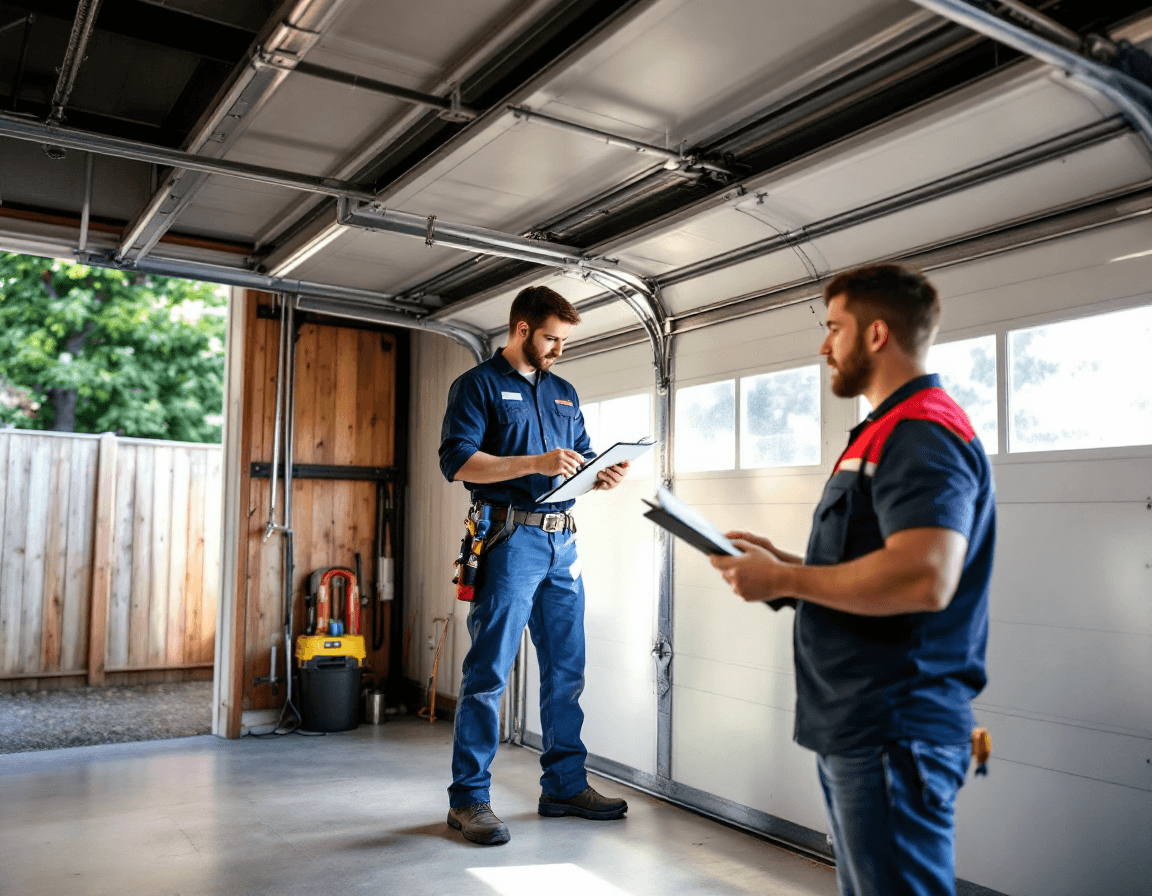
Garage Door Maintenance & Tune-Ups in Poulsbo, WA is one of the most practical things a homeowner can schedule for a door that does a lot of quiet work every day. Your garage door cycles up and down thousands of times over its life, and in a place with cool, wet winters and salty, humid air drifting in from Liberty Bay, that movement wears on metal, rollers, hinges, and the electronics inside the opener. Most people only notice the door when something goes wrong, usually on a cold morning when the door stops halfway or groans like it is about to fall apart.
A tune-up is a scheduled check that catches small problems while they are still small. Our technicians work through a multi-point inspection that covers the door panels, tracks, rollers, hinges, cables, springs, balance, and the opener's safety systems, then lubricate the moving parts that need it and adjust what has drifted out of spec. The typical price for a full multi-point tune-up runs from $89 to $149, depending on the door type, the opener, and how much time the inspection requires. If you live in Poulsbo, whether near Downtown Poulsbo or out on the hillsides where the wind and rain hit harder, the sections below explain what we look for and why it matters on the Kitsap Peninsula.
How Coastal Air and Wet Winters Work on Poulsbo Garage Doors
Poulsbo sits close enough to saltwater that airborne moisture and mineral residue are a real factor, especially for homes within sight of the water or on the windward side of a ridge. Salt does not need to be visible to cause trouble. It settles on steel tracks and hinge pins, mixes with road grime and dust, and speeds up surface corrosion, particularly where the galvanizing has been scratched during installation or by years of rolling contact. Aluminum and steel panels that look fine from the driveway may have hidden pitting along the bottom seal channel or around the bolt holes.
Wet winters bring a second set of problems. Rain runs under weatherstripping, pools against the threshold, and soaks into wood framing on older doors, which can warp panels or loosen the hardware that holds them together. Moisture also keeps tracks slick with a grimy film that makes the door drag, and it encourages moss and mildew on the garage floor that can work its way up the door bottom. In the cool months, condensation can form on metal parts overnight and then freeze lightly on cold mornings, which adds resistance that the opener has to fight.
During a tune-up we pay close attention to these conditions. We check the bottom seal for cracks and flattening, look at the threshold for water staining, inspect the track joints for rust bloom, and wipe down the components so we can see the actual wear pattern instead of guessing through the grime. These observations help us recommend the right lubricant and the right follow-up, because a door that lives on a damp coastal lot needs a different maintenance rhythm than one in a dry inland neighborhood.
What a Multi-Point Tune-Up Covers, Step by Step
A thorough tune-up is more than a quick squirt of lubricant and a wave goodbye. It follows a sequence designed to catch problems in the order they usually develop, starting with the components that carry the most load and ending with the safety systems that protect people and pets. Knowing the sequence helps you understand what you are paying for and what questions to ask at the end of the visit.
- Door panels and sections: We check for dents, cracks, loose or missing hinge bolts, sagging sections, and separation at the seams.
- Tracks and rollers: We verify track alignment, check for bent or loose track sections, and inspect roller stems and bearings for flat spots or noise.
- Springs, cables, and drums (inspection only): We look for visible wear, fraying, or uneven winding and document anything that needs licensed repair. We do not perform spring or cable work during a maintenance visit.
- Balance and operation: We disconnect the opener, lift the door by hand to check counterbalance, then test smooth movement from fully closed to fully open.
- Lubrication: We apply the correct lubricant to hinges, rollers, bearings, and track surfaces where it belongs, and we avoid spraying products where they will attract dirt.
- Opener and safety reversal: We test the auto-reverse feature, the photo-eye sensors, and the force settings, then confirm the emergency release works.
- Weatherstripping and seals: We inspect the bottom seal, side seals, and top seal for gaps that let in water, drafts, and pests.
Each item is checked and noted, so you can see what was adjusted, what looked fine, and what should be monitored. If we find something that calls for a repair quote, we explain the issue in plain language and let you decide on the timing. There is no obligation to approve work on the spot.
Noise, Strain, and Other Signs It Is Time for a Visit
Many Poulsbo homeowners wait longer than they should because their door still opens and closes. Garage doors rarely fail all at once. They tend to announce problems through gradual changes that people adapt to without realizing it. A door that has become noisier over the past year, a grinding or squealing that now starts in the first few feet of travel, or a rattle when the panels pass the track joints are all signals that friction, wear, or misalignment has crept in.
Opener behavior is another useful clue. If the motor sounds strained, takes longer to start, pauses mid-travel, or hums without moving the door as smoothly as it used to, the opener may be compensating for a door that is heavier to lift than it should be. The same is true when the door hesitates at the top or bottom, or when the auto-reverse engages for no obvious reason. Some of these symptoms come from simple alignment or sensor issues, and some point to balance problems that deserve prompt attention.
A simple rule of thumb: if your door has not had a professional look in more than a year, schedule a tune-up even if nothing seems wrong. A visit that costs a fraction of a repair can prevent the kind of breakdown that leaves you parking on the street while you wait for a same-day part. Preventive visits also give us a baseline, so the next technician knows what the door looked like when it was healthy.
Balance Testing and Why a Heavy-Feeling Door Matters
Balance is one of the most important and most overlooked parts of garage door health. A properly balanced door should feel nearly weightless when you lift it by hand with the opener disconnected, and it should stay where you leave it at any point in its travel. When the door drifts down or springs upward on its own, the counterbalance system is no longer matching the weight of the panels, and the opener is doing work it was never designed to handle.
Poulsbo homes often have heavier doors than standard models, particularly insulated steel doors with added windows or decorative hardware, and that extra weight adds stress to springs and openers over time. Cold weather can also change how springs respond, and a door that felt fine in the summer may feel noticeably heavier in January. During balance testing we disconnect the opener, lift the door partway, and let go to see whether it holds, then repeat the check at several positions. The results tell us whether a simple adjustment is enough or whether the springs need replacement by a licensed technician.
It is important to be clear about the boundary here. We will measure, observe, and document balance, and we can recommend next steps, but spring adjustment and replacement involve high tension and stored energy that can cause serious injury. Those tasks should be handled only by licensed professionals who have the right tools and training, and that is exactly what we recommend for any spring-related finding during a tune-up.
Opener Safety Testing and Strain on the Motor
Your garage door opener is responsible for more than moving the door. It is also responsible for stopping and reversing the door when something is in the way, which is why safety testing belongs in every maintenance visit. Modern openers use a combination of force sensing and photo-eye sensors mounted near the floor on either side of the opening. If something breaks the beam, or the door meets resistance while closing, the opener should stop and reverse. Those systems fail quietly over time, through sensor misalignment, wiring damage from rodents or moisture, or force settings that have drifted.
Safety testing is simple but essential. We place a test object under the door path to confirm the reversal, check that the photo-eyes line up and show their indicator lights correctly, and verify that the emergency release disconnects the door cleanly. We also look at the force settings to ensure the opener is not set so high that it could push a closing door into something without reversing. A door that fails these tests needs attention right away, not at the next scheduled visit.
Opener strain often comes from the same root causes as balance problems, which is why we test both together. A motor that works hard to lift a heavy door will run hotter, wear its gears faster, and eventually fail at the worst possible moment. Addressing balance and track friction is usually the most effective way to protect the opener, and it helps the whole system last longer on a Poulsbo driveway where dampness and temperature swings are part of daily life.
Buying a Poulsbo Home? Start With a Baseline Tune-Up
If you recently bought a home in Poulsbo, a garage door tune-up is one of the smartest first projects you can schedule. Many sellers do not keep detailed service records, and the previous owner may have never had the door looked at by a professional. You are inheriting whatever condition the door is in, along with any hidden corrosion, weak springs, or sensor problems that have built up quietly. A baseline inspection tells you exactly what you are working with before you start relying on the door every day.
A baseline visit also gives you useful information for your first year in the house. You will know whether the opener's safety features are working, whether the door balances properly, which components are due for lubrication, and whether any part is close to needing replacement. That knowledge helps you plan for the expenses that tend to surprise new homeowners, and it lets you compare future service against a known starting point. If anything calls for licensed spring or cable work, you will hear about it early rather than during a February cold snap.
We often suggest scheduling the inspection within the first few weeks of closing, especially if the garage has been unused for a while or the previous owners were not regular users of the door. Doors that sit idle can develop stiffness and seal problems, and a short visit can address those before they become daily annoyances. It is a modest investment that builds confidence in the home's systems from the beginning.
Habits That Extend the Life of Your Door Between Visits
Professional maintenance works best when it is supported by simple habits at home. Once or twice a month, take a minute to watch the door open and close while you are standing inside the garage. Listen for new sounds, look for panels that seem out of line, and check that the bottom seal is still touching the floor evenly across the full width. If something looks different from last month, make a note and mention it at your next service visit.
Keep the tracks and the floor clear of debris, leaves, and accumulated grit that can get pulled into the rollers. In Poulsbo, that often means sweeping out the wet leaves and fir needles that blow into the garage during the rainy season and wiping up any standing water near the threshold. Avoid spraying household lubricants like WD-40 onto the tracks or rollers as a long-term fix, because they can attract dirt and gum up the surfaces. Use lubricants specified for garage door components, and let a technician apply them during the tune-up so the right product goes to the right place.
Finally, test the safety reversal every few months with a simple, careful check. Place a small object such as a folded towel on the floor in the door path and close the door using the wall button. The door should reverse when it contacts the object. If it does not, stop using the opener and call for service. Do not attempt to adjust springs or cables yourself, even if a quick search suggests it looks simple.
Pricing, Timing, and What Affects Your Final Quote
Our full multi-point tune-up typically falls between $89 and $149. The final price depends on the type of door, the number of sections and whether the door is insulated, the age and model of the opener, and how much time the inspection and lubrication require. A standard single-car door on a straightforward opener will usually land at the lower end of the range, while a larger double door, a heavier insulated door, or a more complex opener setup may move toward the higher end. We always discuss the scope before work begins so you know what to expect.
Timing matters too. Scheduling a tune-up before the wetter months arrive gives the lubricant time to protect moving parts ahead of the season, and it allows us to catch seal damage before water finds its way under the door. Many homeowners also prefer to book visits when the weather is steadier, since assessing balance and safety is easier when the door is not fighting a freezing track or a slick film of rain. If your schedule is tight, let us know your preferred days and we will do our best to fit you in.
It is also worth knowing what a tune-up does not include. Spring replacement, cable repair, drum work, opener replacement, and major panel repairs are separate services with their own quotes, and we will tell you clearly if your door needs one of them. A tune-up is a diagnostic and preventive service, which means it is often the most cost-effective way to decide what, if anything, needs to be addressed next.
Who Should Handle Springs, Cables, and Other High-Tension Work
Springs and cables are the parts of a garage door system that deserve the most respect. Torsion and extension springs store a large amount of energy, and even a small mistake during adjustment or replacement can cause serious injury. Cables that are frayed, off the drum, or under uneven tension can snap or slip, sending panels into unsafe positions. For these reasons, any spring or cable work should be performed by a licensed, bonded, and insured professional who has the right equipment and training.
During a tune-up, our role is to inspect these components, document their condition, and explain what we see in clear terms. If a spring is worn, a cable is fraying, or a drum shows damage, we will tell you that the component should be addressed by a licensed technician and provide a repair estimate when appropriate. We never recommend that homeowners attempt spring or cable adjustments on their own, even if they have seen it done online. The risk is simply too high for a task that costs far less than an injury.
If you are unsure whether a noise or movement is a spring issue, do not wait to find out. Keep people and vehicles clear of the door path, avoid operating the door manually if it feels unstable, and schedule an inspection promptly. A short phone call to (888) 799-3819 can help you figure out whether the situation calls for a maintenance visit or a more urgent response.
Keeping a garage door in good working order is a steady, practical job, and Poulsbo's coastal climate makes it a job worth taking seriously. A multi-point tune-up gives you a clear picture of how the door, the opener, and the safety systems are holding up, and it catches the small problems that would otherwise become expensive surprises. If your door has not been serviced in more than a year, is getting noisier, feels heavy or off-balance, or your opener sounds strained, we are ready to help. Call (888) 799-3819 to schedule your Poulsbo garage door tune-up, and we will walk you through the inspection, the options, and the next steps so you can count on your door for the seasons ahead.