
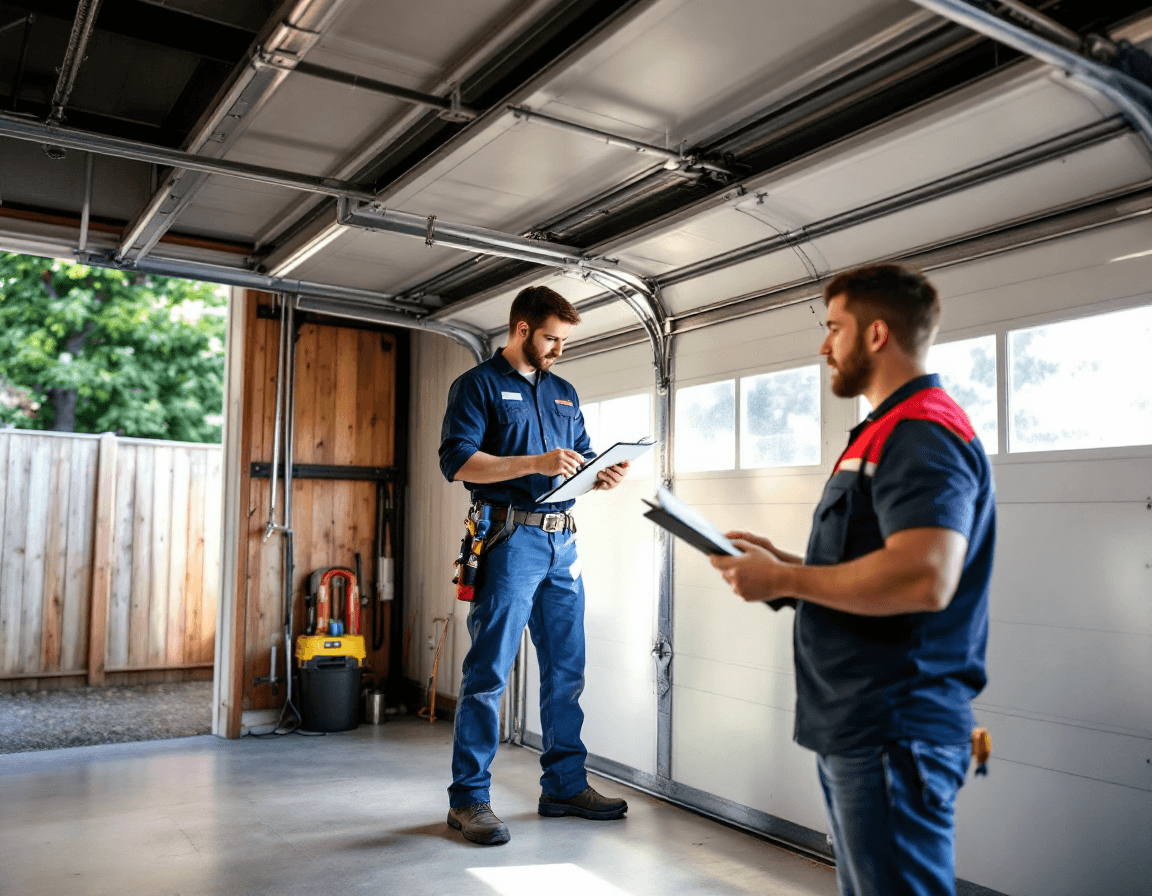
Garage Door Maintenance & Tune-Ups in Port Orchard, WA is one of the most practical services a homeowner on the Kitsap Peninsula can schedule, and it costs far less than the emergency call that often follows when a neglected door finally gives out. Whether you live near the waterfront in Downtown Port Orchard, in the established neighborhoods of Manchester, or in the hillside homes of McCormick Woods, your garage door works harder than most people realize. It lifts a heavy panel dozens of times a week, carries spring tension that can exceed a couple hundred pounds, and does it all in a climate that is rarely kind to metal and moving parts. Homes across the 98366 and 98367 ZIP codes share that same reality.
A tune-up is a scheduled inspection and adjustment, not a repair. A certified technician checks the hardware, the tracks, the rollers, the cables, the springs, and the opener, then makes small corrections that keep everything moving within its intended range. Think of it as the difference between changing your oil on time and waiting for the engine to seize. Our full multi-point tune-up is priced between $89 and $149 depending on the door type, the opener, and the condition of the components, and it is designed to catch small problems while they are still inexpensive to fix.
If your door has become noisier, slower, or harder to read, or if it has been more than a year since anyone looked at it, now is a good time to book a visit. You do not need to wait for a failure to justify the appointment. The sections below explain what the Pacific Northwest climate does to your door, what happens during each part of a tune-up, and how to tell when your door is asking for attention. Call (888) 799-3819 whenever you are ready to schedule.
Salt Air, Drizzle, and Damp Garages: What the Kitsap Climate Does to Your Door
Port Orchard sits on the shore of Sinclair Inlet, which means many garages are exposed to moist, salt-laden air for much of the year. The region's long stretches of drizzle, overcast skies, and steady humidity rarely produce dramatic weather events, but they work on metal slowly and persistently. Hinges, roller stems, and torsion spring coils are especially vulnerable because moisture can settle into the small gaps where surfaces meet. Over several wet seasons, that film of humidity can turn into surface rust that quietly reduces the smooth movement the door was engineered to have.
Winter adds another layer of stress. Our area sees relatively mild temperatures compared with much of the country, but it does get freezing nights, and those cycles of cold and damp can cause the lubricant on rollers and bearings to thicken or wash away. Many homeowners notice their door becomes harder to lift on the first cold morning in November and then seems to ease up a little once the weather warms. That pattern is a sign that lubrication has broken down and that metal is working against metal. A tune-up addresses that before the friction becomes a strain on the opener.
Spring and summer bring their own issues. Pollen, road grit, and the dust that drifts in during dry stretches can collect in tracks and on rollers, making the door sound gritty as it travels. Garage floors in older Port Orchard homes sometimes trap dampness at the threshold, which softens the bottom weatherstrip and encourages mildew on the lower panels. A technician who understands local conditions will look at these details rather than only checking whether the door opens and closes.
Inside a Multi-Point Safety Inspection on the Peninsula
A multi-point safety inspection is the foundation of every tune-up we perform, and it is more thorough than a quick look from the driveway. The technician begins by operating the door manually and then with the opener, watching for uneven movement, hesitation, or sections that bind. Each check is designed to reveal whether the door is moving as a single system or whether one side is working harder than the other. Because the inspection covers both the door and the opener, it can identify problems that only show up under load.
During the inspection, a technician typically examines the following items on most residential doors:
- Torsion springs or extension springs for visible wear, gaps between coils, and signs of rust or stretching
- Cables for fraying, kinks, slack, or loose drum connections, without any attempt to adjust spring tension
- Rollers and hinges for cracks, wobble, worn nylon wheels, and loose mounting bolts
- Tracks for alignment, bends, gaps at the joints, and loose brackets along the wall and ceiling
- Bottom seal, weatherstrip, and the lock mechanism for damage that could let water or pests in
- Opener safety features, including the photo eyes, auto-reverse function, and manual release handle
Each item is documented so you can see what was found, what was adjusted on the spot, and what might need attention in the future. We believe homeowners deserve to understand the condition of their equipment in plain language. If a spring or cable needs professional replacement, the technician will explain the reason and recommend next steps, since spring and cable work is high-tension and should only be performed by a licensed and trained professional.
Lubrication Done Right: Which Parts Get Oil and Which Don't
Lubrication is one of the most misunderstood parts of garage door care. Many homeowners grab whatever spray is on the shelf and coat everything in sight, which can actually make the problem worse. Grease and heavy oils attract dust and grit, which then form a paste that jams rollers and clogs tracks. A proper lubrication service uses products matched to each component and applies them only where friction actually occurs.
In our Port Orchard service area, technicians generally focus on hinge pivot points, roller bearings, the track surfaces where rollers travel, and the bearings in the center bracket and bearing plates. The track itself should typically be wiped clean before lubricant is applied, because lubricant laid over grit simply grinds the grit deeper. Springs also benefit from a light coating in the right product, which reduces the metallic squeal homeowners often mistake for a serious fault. Chain-drive openers and their rails may need a different product entirely, and the manufacturer's recommendations matter here.
There are also parts that should not receive lubricant. Rubber weatherstripping and vinyl seals can be damaged by petroleum-based products, and the door's photo eyes and safety sensors should be cleaned rather than sprayed. A good technician knows which surfaces to protect and will tell you when a dry cleaning is more appropriate than an oil. If you are doing any of your own maintenance between visits, ask your technician which products they recommend for your specific door.
Balance Testing for Doors That Feel Heavy or Lopsided
A garage door should feel nearly weightless when you lift it by hand, at least in the sense that it stays put when you release it partway up. This is called balance, and it is one of the simplest and most revealing checks in a tune-up. To test balance, the technician disconnects the opener, raises the door manually to about halfway, and then lets go. If the door drops, it is too heavy relative to its springs. If it rises, the springs are too strong for the door's weight. Either condition strains the opener and can eventually cause damage.
Doors that feel off-balance often reveal themselves in other ways. You might notice that one side of the door lifts higher or lower than the other, that the door seems to pull toward one track, or that the opener labors more at the start of travel. These symptoms can come from uneven roller wear, a bent track, a sagging hinge, or a spring that has lost tension on one side. Balance testing helps determine which of these is responsible. Because spring tension is involved, any adjustment to the springs themselves must be handled by a licensed professional.
Balance is also influenced by the weight of the door itself. Insulated steel doors, wood doors with decorative hardware, and older doors that have absorbed moisture over many seasons all behave differently. Some Port Orchard homes have added heavier windows or upgraded panels over the years, which changes the load the springs were originally sized to handle. A tune-up accounts for these real-world changes rather than assuming the door is still in its original configuration.
Opener Strain, Slow Travel, and What Your Motor Is Telling You
Your garage door opener is a powerful motor, but it is designed to help a balanced door move, not to do all the lifting itself. When a door is stiff, poorly balanced, or dirty in its tracks, the opener compensates by drawing more current and running more slowly. Over time this strain can wear out the drive gear or belt, overheat the motor, or shorten the lifespan of the logic board. Many homeowners first notice a slow, labored sound during the initial moment of travel, or they see the door pause before continuing.
The opener's safety systems also deserve careful attention. Modern openers are required to reverse when they encounter an obstruction, and most use photo eyes mounted near the floor on each side of the opening. A tune-up includes testing the auto-reverse force and confirming that the photo eyes are aligned, clean, and responding correctly. Sunlight entering the garage at low angles, which is common in the late afternoon during some seasons, can occasionally interfere with sensors, so the technician will check placement and make sure the system works under real conditions.
Opener strain should never be ignored, but it also should not be assumed to mean the opener is failing. In many cases the cure is a balanced door, clean tracks, and properly lubricated rollers. A technician can often restore smooth operation with those adjustments, extending the life of equipment you already own. If the opener itself is near the end of its service life, the inspection will show that too, and you will get a clear, honest recommendation rather than a sales pitch.
Noise Creep: Reading the Sounds Your Door Makes Over Time
Most garage doors do not become loud overnight. The sounds develop gradually, and homeowners often adapt to them without realizing how much the door has changed. A squeak becomes a grind, a rattle becomes a clatter, and eventually the family notices the door from the kitchen or the bedroom. Learning to read these sounds is one of the best ways to catch problems early, because each noise tends to point toward a specific component.
Common noises and what they often indicate include:
- A high-pitched squeal when the door moves, which often suggests dry hinges, rollers, or springs that need lubrication
- A rumbling or grinding noise along the tracks, typically caused by grit, debris, or worn roller surfaces
- A rattling or banging at the top of travel, which can point to loose brackets, track bolts, or a bent track section
- A popping or snapping sound from the spring area, which warrants immediate professional inspection because it may indicate a spring problem
- A deep mechanical hum or straining sound from the opener, usually linked to imbalance or a worn drive component
Noise is information, but it is not always easy to interpret on your own. A technician will listen during the tune-up, operate the door through several cycles, and isolate the source. If you hear a sudden loud bang or a spring that seems to have moved, stop using the door and call a professional. Spring and cable issues can be dangerous, and the safest path is always to have a licensed technician examine the system before anyone attempts to operate it further.
Buying a Home in Manchester or McCormick Woods? Get a Baseline First
If you have recently purchased a home in Manchester, McCormick Woods, or any other part of the Port Orchard area, the garage door is one of the systems most likely to have been neglected by the previous owner. Sellers rarely service doors before listing, and many homes simply come with whatever condition the last family left behind. Scheduling a tune-up soon after closing gives you a documented baseline of the door's condition and helps you understand exactly what you are living with.
A baseline inspection is especially valuable because it establishes what is normal for your particular door. Doors vary widely in weight, spring type, opener model, and track configuration, and a technician can tell you what sounds, movements, and timing are typical for your setup. Later, when something seems different, you will have a reference point. Keep a copy of the service notes with your home records, along with the make and model information of the door and opener, so that future technicians can work efficiently.
Newer construction in some of these neighborhoods may include insulated doors, upgraded openers with battery backup, or smart-home integration. These features are convenient, but they add components that can be affected by moisture, power interruptions, and wiring issues. A tune-up can confirm that the battery backup is charged, the remote and keypad pairings are working, and any connected devices are responding as expected. If you are unsure what your home came with, the inspection is a good opportunity to find out.
Downtown Port Orchard Townhomes and Older Garages: Special Considerations
Downtown Port Orchard includes a mix of older homes, converted buildings, and townhome-style properties where garages can be narrower, shallower, or built with less clearance than modern suburban construction. These spaces create unique challenges for garage doors. Headroom may be limited, which affects whether a standard high-lift or low-headroom track configuration is in use, and side clearance may be tight enough that rollers and brackets have little room to shift. A technician familiar with these layouts will know how to inspect hardware that is squeezed into awkward spaces.
Older garages often have doors that were installed decades ago and have since been modified, repainted, or repaired with mismatched parts. Mixed hardware can cause uneven wear and balance problems, so a tune-up is a good time to identify parts that no longer belong together. Wood doors in particular deserve attention because they can swell in damp weather and shrink in dry periods, changing how they sit in the tracks. Moisture can also work its way into the bottom panels and the framing around the opening, which should be checked for soft spots or rot.
Shared or detached garages in dense areas may also be exposed to more road traffic vibration, debris, and parking-related bumps. Corner posts, track brackets, and the lower sections of the door can take a beating. A tune-up will look for dents, cracks, and loose fasteners, and it will recommend repairs before a minor impact becomes a jammed door.
Why a Year Without Service Quietly Raises Breakdown Risk
Many homeowners assume a garage door will tell them when it needs help, and in some cases it does. Often, however, the warning signs are subtle and build over many months. A door that has gone more than a year without attention may still open and close, but the margin for error has shrunk. Rollers that were slightly worn last year are more worn now, lubrication that was fading has likely disappeared, and small alignment shifts can accumulate until the door starts to bind. When one of those components finally fails, it often takes others with it.
The most expensive breakdowns are usually the ones that could have been prevented. A cable that frays slowly can snap without warning, and a worn roller can jump the track and bend a section of rail. An opener working against a stiff, unbalanced door can overheat or burn out its gear. None of these failures is a reason to panic, but each one is far more disruptive when it happens at an inconvenient time, such as before an early ferry commute, during a rainy evening when you need to get the car inside, or while a family member is trying to leave for work.
Scheduling a tune-up regularly, typically once a year for most households, gives your technician the chance to see changes over time and address them early. Regular service also allows you to compare notes from one visit to the next, which makes it easier to spot patterns. If your door has not been checked in more than a year, the best time to start is now.
What a $89–$149 Tune-Up Covers and What It Doesn't
Transparency matters when you are evaluating any home service, so it helps to understand exactly what a full multi-point tune-up includes. Our tune-up is priced between $89 and $149 depending on the door type, the opener model, and the condition of the components. The visit includes the multi-point safety inspection described above, lubrication of the appropriate parts, balance testing, and a full functional test of the opener and its safety features. The technician will also document findings and explain what they discovered in plain terms.
A tune-up is a maintenance service, not a complete overhaul. If the inspection reveals a worn spring, a frayed cable, a damaged panel, or a failing opener, the technician will explain the issue and provide a separate estimate for repair. Spring and cable replacement, for example, require specialized tools, correct tension calculations, and careful handling, and they must be performed by licensed professionals. We will never pressure you into work you do not need, and we will tell you when a component is still serviceable.
Pricing can vary with factors such as the number of doors, the height of the opening, and whether the opener is a belt drive, chain drive, or screw drive. When you call (888) 799-3819, the team can explain how those factors apply to your home before the appointment, so you know what to expect.
Simple Habits Between Visits That Keep Your Door Running Smoothly
Between professional visits, a few simple habits can extend the time between problems. Keep the tracks free of leaves, dirt, and debris by brushing them gently with a soft broom. Avoid spraying lubricant directly onto the tracks or into the opener, and do not use household grease, which can attract grit. Test the auto-reverse function monthly by placing a piece of wood on the floor in the door's path and confirming that the door reverses when it contacts the obstacle. Keep the photo eyes clean with a soft, dry cloth.
Watch the door as it operates. Note any change in speed, sound, or the way the door sits when closed. If you see daylight around the edges of the door, feel a draft, or notice water pooling at the threshold, the weatherstrip may need attention. Keep the remote controls and keypad batteries fresh, and check the battery backup if your opener includes one. Small, consistent attention is one of the most effective ways to protect your door.
Finally, never attempt to adjust, unwind, or replace torsion springs or cables yourself. Those components store tremendous energy, and even experienced homeowners can be seriously injured by a sudden release. If something seems wrong with the springs or cables, keep the door closed, disconnect power to the opener if it is safe to do so, and call a licensed professional. Regular tune-ups are the best way to reduce the chance that you ever face that situation in the first place.
Ready to keep your Port Orchard garage door quiet, balanced, and dependable through every wet season? Call Seattle Garage Door Fix at (888) 799-3819 to schedule your multi-point tune-up. Our licensed, bonded, and insured technicians serve Downtown Port Orchard, Manchester, McCormick Woods, and surrounding neighborhoods in the 98366 and 98367 ZIP codes, and we will walk you through every step so you know exactly where your door stands.