
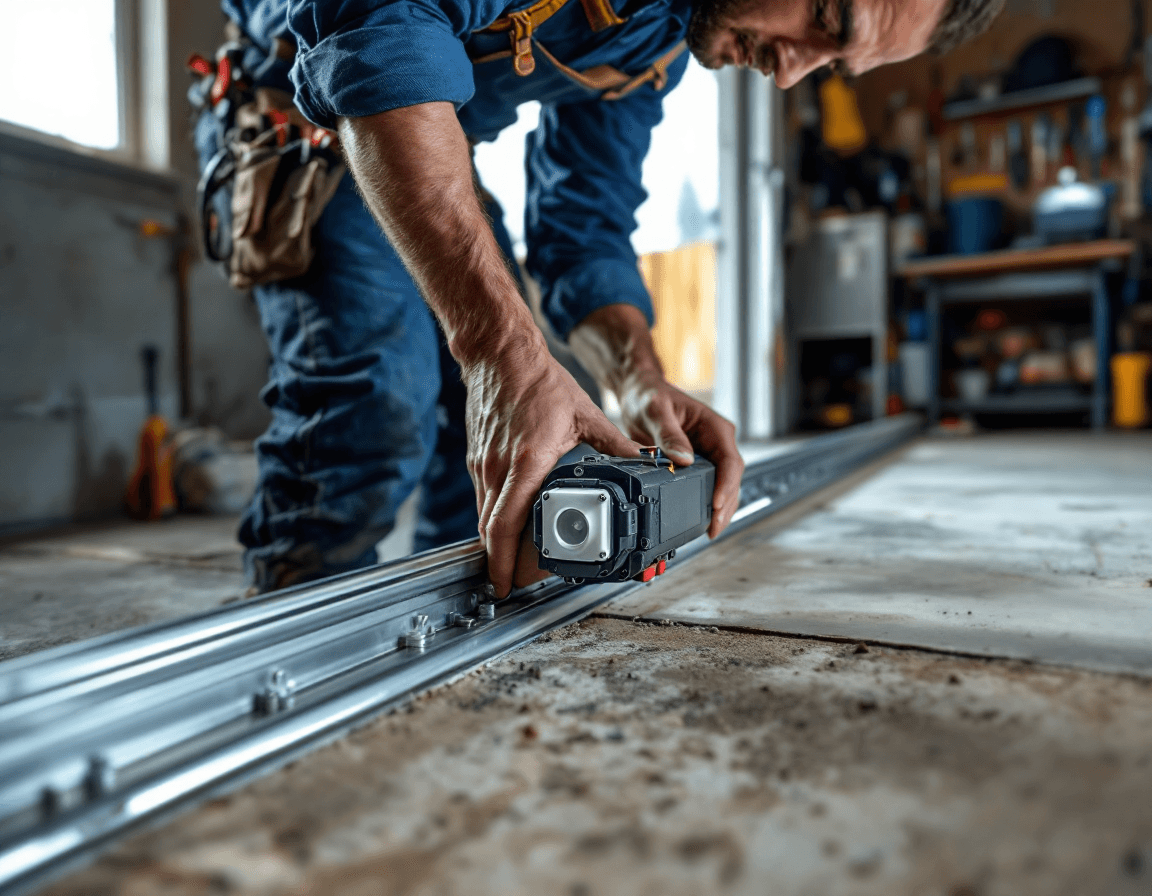
Garage door sensor repair in Bremerton, WA is one of the most common calls we handle, and it is also one of the most fixable. When a door refuses to close, closes and then bounces back up, or sits there with a blinking sensor light, the cause is usually a small problem with the photo-eye safety sensors that line the bottom of the door track. Those sensors send an invisible beam across the doorway, and if the beam is interrupted or misread, the opener is designed to stop and reverse. That behavior protects people and pets, but it can feel maddening when there is nothing in the way.
Bremerton homes face a particular mix of conditions that make sensor trouble more frequent here than in drier parts of the country. Damp air off Sinclair Inlet, long stretches of wet weather from autumn into spring, and the occasional bright low-angle sun in summer all affect how the sensors see the world. Many garages in East Bremerton, Manette, and the neighborhoods around Kitsap Lake were built decades ago, and their wiring and mounting brackets have had years to loosen, corrode, or shift. Whether you live in 98310, 98311, 98312, or 98337, the same basic diagnosis applies, though the details vary from one house to the next.
This page walks through the symptoms we see most often, explains what a licensed technician checks when sensors are involved, and gives you a clear picture of what sensor repair typically costs. We also cover the difference between a simple realignment and a wiring or replacement job, and we share a few safe checks you can make before you call. Anything involving the springs, cables, or heavy door hardware belongs with a trained professional, and we will point that out where it matters. If your door is misbehaving right now, the information below should help you narrow down the cause quickly.
What Causes a Bremerton Garage Door to Reverse Without Warning
A garage door that reverses the moment it starts to close is almost always reacting to something the safety system believes it sees. The opener checks the photo-eye beam every time the door begins its downward travel, and if the receiving sensor does not confirm a clear, continuous signal from the transmitting sensor, the door stops and goes back up. In our service area, that signal is most often disrupted by misalignment, dirty lenses, damaged wiring, or a sensor that has simply worn out after years of exposure. The reversal is not a random glitch, and it is not usually a sign that the opener motor has failed.
Bremerton's weather plays a bigger role than many homeowners expect. Fine salt spray and moisture drift into garages that sit near the water, and over time they leave a film on sensor lenses and corrode the small screw terminals inside the sensor housings. Leaf debris and cedar dust from the tall trees common across Kitsap County collect at the base of the door and can block one lens without anyone noticing. When the beam is partly obstructed, the sensor may read as intermittent, and the door will close fine one day and reverse the next.
Vibration from daily use also loosens things over time. Every time the door moves, it transmits small shocks through the frame, and sensor brackets that were tight at installation can slowly rotate or slip out of their original position. A bracket that drops even a fraction of an inch can send the beam slightly off target, especially on a long garage where the sensors are mounted farther apart. This is why many of the calls we answer involve doors that worked perfectly for years and then began acting up without any obvious change.
Reading the Sensor Lights Before You Start Troubleshooting
Most photo-eye sensors have two small indicator lights, one on each unit, and those lights tell a clear story if you know how to read them. A steady light on both sensors usually means the beam is connected and aligned, so the problem may lie elsewhere in the system. A light that is off, or a light that blinks rapidly, points toward alignment, wiring, or power problems that need attention before the door will close reliably. Checking these lights takes only a few seconds and gives you useful information before you pick up a tool.
- Steady light on both sensors: the beam is likely connected, so look at the door track, the wall button, or the opener's own logic board.
- Light off on one or both sensors: check the wiring connections at the sensor and at the opener terminals, and confirm that the unit has power.
- Light blinking quickly: the sensors often cannot see each other, which usually means misalignment, a blocked lens, or a damaged wire.
- Light blinking slowly or irregularly: this can indicate a loose connection, a wire that is pinched or chewed, or interference from direct sunlight.
Keep in mind that sensor light patterns differ slightly between manufacturers, so your owner's manual is the best guide for the exact meaning of each signal on your model. If you cannot find the manual, the opener brand and model number printed on the motor unit will usually lead you to the right documentation online. Note the light behavior before you make any changes, because that record can help a technician diagnose the problem faster if you end up calling for service.
Alignment Drift in East Bremerton and Manette Garages
Alignment is the single most common reason sensors stop talking to each other, and it is especially common in the older homes found in East Bremerton and Manette. Many of these garages have uneven slabs, settling foundations, or tracks that were never perfectly level to begin with. Sensors are typically mounted low on each side of the opening, often roughly six inches above the floor, and even a small shift in the mounting height or angle can break the beam. When a sensor bracket is bumped by a car door, a bike, or a wheelbarrow, the beam can move enough to fail without any visible damage.
Aligning the sensors is usually straightforward once you know what to look for. The two units should face each other directly, with their lenses at the same height and pointed squarely across the opening. Many technicians use a simple approach of loosening the mounting screw, gently pivoting the sensor until the indicator light turns steady, and then tightening it while holding the position. It helps to check the alignment on both sides, because the receiving sensor may need a small adjustment even if the transmitting unit looks fine.
In older Bremerton garages, the wall-mounted brackets sometimes fail before the sensors themselves. Drywall anchors can loosen, wood framing can crack, and the brackets can flex when the door vibrates, which makes a proper fix require more than simply turning a screw. A licensed technician will make sure the mounting surface is solid and the sensor is held firmly, because a sensor that moves after alignment will just cause the problem to return within days. Securing the bracket correctly is often what keeps the repair from becoming a repeat visit.
Sun Glare and the Low Western Light That Confuses Sensors
Sun glare is a surprising cause of sensor trouble, and it tends to show up in the warmer months when the sun sits lower in the sky and shines directly into a garage opening. Photo-eye sensors are designed to detect a specific infrared beam, but strong direct light can overwhelm the receiver and make it read the signal inconsistently. A door that closes fine in the morning may reverse in the late afternoon when the western sun angles straight into the receiving lens. This is a classic pattern in Kitsap County neighborhoods where garages face west or sit with an open view toward the water.
The fix is often simple. Adjusting the sensor's angle slightly so the receiving lens is not looking directly into the sun can solve the problem, and in some cases a small shield or a change in mounting position helps even more. Some homeowners find that a light-colored shade or a shadow strip across the top of the sensor reduces glare without blocking the beam. Any shielding must be placed carefully so it does not interrupt the beam itself, which would create a new problem.
If glare persists despite adjustments, the sensors may need to be relocated or replaced with a model that handles bright light better. Newer sensor designs are often more tolerant of ambient light than older units, and that can make a noticeable difference in homes where the sun is a regular factor. A technician can test the sensors under the actual lighting conditions of your garage and recommend a practical solution rather than guessing.
Damaged and Chewed Wiring After Wet Bremerton Winters
Wiring problems are some of the most frustrating sensor issues because they can be intermittent and hard to spot with the naked eye. Sensor wire typically runs from the sensor, along the wall or ceiling, and into the opener, and it is often stapled in place where it is easy to nick or pinch. Rodents, particularly mice and rats that seek shelter in garages during the wet season, sometimes chew through the insulation, and once the copper is exposed, the signal becomes unreliable or disappears entirely. Moisture can then creep into the damaged spot and corrode the conductor.
Corrosion is another concern in our damp climate. Terminal screws inside the sensor housings and at the opener can develop a green or white crust when humidity stays high for long stretches, and that crust increases resistance enough to break the connection. A loose or corroded terminal may cause the light to flicker or go dark, and it can look like a failing sensor even when the unit itself is fine. Cleaning the connections and re-seating the wires sometimes solves the issue, but damaged insulation or deep corrosion usually calls for replacing the affected section of wire.
- Signs of chewed wire: small teeth marks, nicks in the insulation, or wire that has been gnawed along a section near the floor or the bottom of a wall.
- Signs of corrosion: green or white residue on terminals, dark spots on wire ends, or a light that works only when the wire is gently moved.
- Signs of a loose connection: a sensor light that flickers when the door vibrates or when someone walks past the opening.
- Signs of pinched wire: wire caught under a bracket, a staple driven through the insulation, or a cable that has been stretched near a hinge point.
Whenever wiring is involved, it is important to disconnect power to the opener before touching any connections. A technician will check continuity, test the signal path, and replace any compromised wire with the correct gauge and insulation for the installation. Taking shortcuts with wire splices or tape can leave the system vulnerable to the same failure a few months later, especially in a Bremerton winter.
When the Door Closes Only If You Hold the Wall Button
A door that closes only while the wall button is held down is a different symptom from one that reverses immediately, and it points toward a specific part of the system. In most setups, pressing and releasing the wall button starts a full automatic close, but if the sensors are considered faulty, the opener may switch to a limited mode that requires constant pressure. This is a built-in safety behavior: the opener will not complete an automatic close when it cannot verify that the path is clear. Holding the button overrides the automatic close and allows the door to move under manual control.
The most common cause is a sensor that is not communicating correctly, whether because of misalignment, a blocked lens, a loose wire, or a failed sensor unit. Less commonly, the problem is in the opener's logic board or in the wall control's wiring. A technician will test the sensors first, because that is the quickest way to rule out the most likely culprits. Fixing the sensor side usually restores normal automatic operation without any other work.
It is worth noting that this mode is meant to protect people, so it should not be bypassed or disabled. Some homeowners attempt to override the sensors by taping them, removing them, or wiring around the safety circuit, and those shortcuts can leave a door that closes on a child, pet, or car bumper. If your door has entered this limited mode, the safe approach is to diagnose and repair the sensor system rather than working around it.
Typical Sensor Repair Pricing Across Kitsap County
Pricing for sensor repair depends on what the technician finds, but most sensor repairs we perform fall in the range of $85 to $225. A simple realignment of existing sensors, with a quick check of the wiring and a clean of the lenses, usually sits at the lower end of that range. Replacing a sensor pair, correcting a damaged wire run, or relocating a sensor to solve a glare problem generally falls toward the upper end. Final pricing should always be confirmed on site, since every garage has different wiring routes, mounting surfaces, and equipment.
Several factors can affect the total. The age and brand of the opener matter, because some older systems use sensor designs that are no longer common and need a compatible replacement. Access also plays a role, since a sensor mounted high on a wall or behind stored items takes more time to reach safely. If the problem turns out to involve the opener itself rather than the sensors, the scope of work changes, and a technician will explain that before doing any additional work.
Homeowners in Bremerton, Manette, East Bremerton, and the surrounding Kitsap County communities sometimes ask whether a sensor problem might be part of a larger failure. In many cases it is not, and a focused sensor repair is enough to restore normal operation. A good technician will tell you plainly whether the repair is worth doing on your particular system, and will avoid recommending extra services that do not address the symptom you are seeing.
Replacing Sensors Versus Repairing the Existing Wiring
One of the most useful decisions in a sensor repair is whether to replace the sensors or repair the existing wiring. If the sensors are functioning and only misaligned or dirty, replacement is unnecessary and adds cost without solving anything new. If the sensor housings are cracked, the lenses are clouded beyond cleaning, or the internal components fail when tested, replacement is the more reliable choice. The right answer depends on what the diagnosis reveals rather than on a general rule.
Wiring repair is often the more economical path when the sensors check out but the signal does not reach them reliably. A short section of chewed or corroded wire can be spliced and protected properly, and a loose terminal can be cleaned and re-secured. Where wire runs are long, damaged, or poorly routed, a technician may recommend running a new segment along a safer path that keeps it away from the floor, the bottom of the door, and areas where rodents travel. Good routing and protective conduit can prevent the same problem from returning.
When replacing sensors, it is important to match the new units to the opener. Compatibility matters for voltage, signal type, and mounting configuration, and using the wrong sensor can create a safety gap or a system that never works reliably. Licensed technicians will confirm compatibility before installing anything, and they will test the complete safety reversal after the work is done to make sure the door responds correctly.
Safe Checks You Can Do Before Calling a Technician
There are a few safe checks you can make before you call for service, and they can sometimes resolve a minor problem or at least give the technician useful information. Start by clearing the path of the door, including any toys, bins, or bike wheels that may sit in the sensor beam. Then look at both sensor lenses, and if they appear dusty, wipe them gently with a soft dry cloth. Confirm that the wall button and any remote controls are working and that the door is not stuck in a manual mode from a previous attempt to open or close it.
You can also visually inspect the sensors for obvious alignment problems. Compare the height of the two units and check whether they appear to face each other directly. Look along the visible wire for any nicks, bite marks, or loose staples, and check whether any sensor bracket feels loose when you gently touch it. Take photos of the lights and the wiring before you make any changes so you have a record of the original condition.
These checks should stay within a narrow scope. Do not climb unstable ladders, do not open the opener housing, and do not attempt any work on the springs, cables, drums, or track hardware. Spring and cable systems store significant tension, and mishandling them can cause serious injury. Those components should only be serviced by a licensed, trained professional, and a sensor problem does not justify taking that risk.
Keeping Sensors Reliable Through Kitsap County Rain and Humidity
Preventive care can extend the life of your sensors and reduce the number of reversal calls you make over the year. Wiping the lenses a few times each year helps keep them clear of salt film, dust, and cobwebs, which are common in garages that stay closed for long periods. Checking the alignment after a big storm or after the door has been bumped by a vehicle or equipment can catch small shifts before they cause the door to misbehave. A quick look at the wire routing during seasonal cleaning can also reveal new wear before it turns into a failure.
Storage habits matter as well. Keeping the floor near the sensors clear of boxes, garden tools, and recycling bins reduces the chance of accidental bumps, and it also limits the hiding places where rodents might target the wire. Sealing gaps around pipes, vents, and door frames can help keep moisture and pests out, which protects both the wiring and the opener. In our damp climate, these small steps add up to noticeably fewer service calls over time.
If your sensors have started acting up, do not wait until the door becomes unusable. Intermittent reversals often signal a developing problem that will get worse with the next rain, and early attention is usually less expensive and less disruptive than an emergency call. Bremerton homeowners who take a proactive approach tend to enjoy steadier operation through the wet months, and a licensed technician can help you build a simple maintenance plan that suits your particular garage.
If your garage door won't close, reverses the moment it starts down, or only moves while you hold the wall button, call Seattle Garage Door Fix at (888) 799-3819. Our licensed, bonded, and insured technicians serve Bremerton, East Bremerton, Manette, the Kitsap Lake area, and surrounding Kitsap County communities, and we will diagnose the sensors, alignment, and wiring before recommending any repair. Sensor repairs typically range from $85 to $225, and we will confirm the exact price on site before any work begins. Call today and let us get your door closing safely and reliably again.