
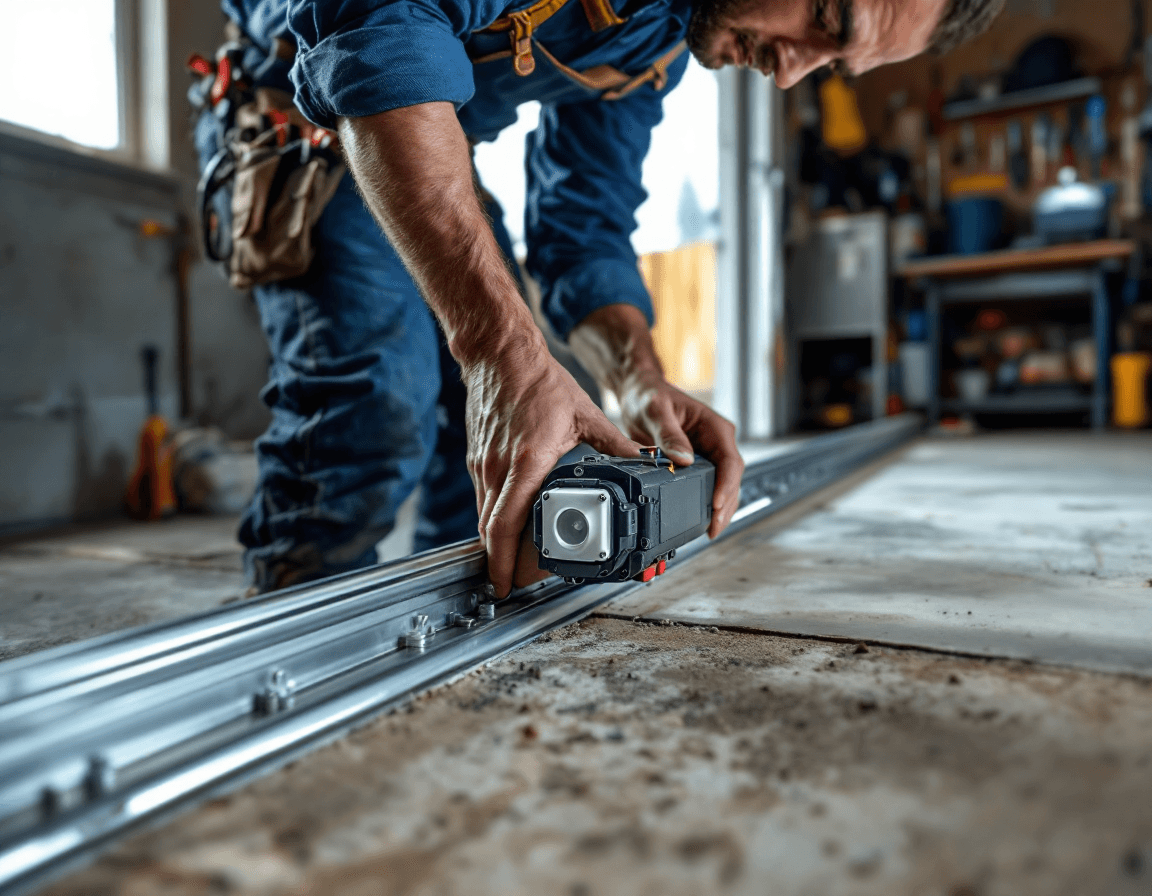
Garage door sensor repair in Poulsbo, WA is one of the most common calls we handle on the Kitsap Peninsula, and it is also one of the most fixable. When the photo-eye sensors at the bottom of your door stop talking to each other, the opener reads that as an obstruction and sends the door back up. Homeowners often assume the opener has failed, but in most cases the problem is a misaligned lens, a loose wire, or a light that has been dimmed by a season of salt, pollen, and rain. Knowing what the sensors are doing and why they fail will help you decide whether a quick adjustment is enough or whether the sensor pair needs replacing.
Poulsbo sits on the shore of Liberty Bay, and that location shapes how garage doors age here. Homes around Downtown Poulsbo and the neighborhoods climbing the hills above the bay get a steady diet of marine air, wind-driven drizzle, and long gray stretches from October through April. Those conditions are hard on small electronics that sit at knee height, exactly where sensors live. This page explains the symptoms we see most often, how our technicians diagnose them, what a typical repair costs, and what you can safely check yourself before calling for help.
Why Your Door Reverses the Moment It Starts to Close
If your garage door lowers a few feet and then rises again without touching anything, the opener is almost certainly responding to a broken beam between the two sensors. The safety system is designed to stop the door if it detects an object in the path, and it does this by checking that the sending eye and receiving eye are still lined up. When the beam is interrupted or never reaches the receiver, the logic board treats the path as blocked and reverses the travel. This is a deliberate safety feature, and it should never be bypassed.
In our experience across Poulsbo and nearby communities, the reversal usually traces back to one of three causes: a sensor that has been bumped out of alignment, a wiring fault that intermittently breaks the signal, or a lens that has become too dirty or faded for the receiver to read reliably. Sometimes a child's bike, a shifted recycling bin, or a strong wind pushing a bracket can nudge a sensor just enough to matter. Other times the sensor is fine, but the wire running from it to the opener has been pinched or chewed, so the connection opens and closes as the door moves.
Because the causes overlap, the first useful step is to watch the behavior carefully. Does the door reverse at the same height every time? Does it reverse only after rain or in the morning? Does it reverse only when you use the wall button, or also when you use the remote? Those details point a technician toward the right fix much faster than guessing.
Reading the Sensor Lights Like a Technician
Most modern sensor pairs have a small indicator LED on each unit. On the sending side, the light usually stays solid as long as power is reaching it. On the receiving side, a solid light generally means the beam is aligned and the signal is strong enough to pass the safety check. A blinking light, or a light that goes dark when the door moves, tells you the receiver is not seeing a clean beam. The exact patterns vary by manufacturer, so the printed label or the opener manual is the authority on what each blink means for your model.
When the sending light is off entirely, the problem is usually power or wiring rather than alignment. Check whether the wire run is intact where it leaves the sensor bracket and where it enters the opener housing. A sensor that works after you tap it but fails again soon afterward often has a loose or corroded terminal. We also see many cases where a sensor light is dim because the lens has been coated with a film of road grime and salt spray, which can be enough to confuse the receiver on a bright or damp morning.
Keep in mind that the indicator lights are diagnostic clues, not a complete test. A light can look fine while the wiring is still failing under movement. For that reason, our technicians check the light behavior while the door is actually operating, watching both the lights and the door path together.
Why Poulsbo's Weather Makes Sensors Misbehave
The Pacific Northwest climate is not extreme in temperature, but it is persistent. A typical Poulsbo winter brings many days of drizzle and high humidity, and the moisture gets into everything that is not sealed well. Sensor housings are designed to resist water, but the mounting brackets, screw holes, and wire entry points can let moisture creep in over time. Once that happens, corrosion can build on the terminals and reduce the signal strength, especially on the receiver side where the signal is already faint.
Temperature swings matter too. Metal brackets expand and contract slightly across seasons, and a bracket that was tight in August may shift a few degrees by January. Combined with the vibration of the door traveling up and down many times a day, that movement can gradually knock a sensor out of its ideal angle. Homes near the water also experience more wind-driven rain hitting the lower part of the garage door, which pushes moisture toward the sensors even when the door itself is closed.
Sunlight adds a different kind of problem. Low-angle sun in spring and fall can shine directly into the receiver lens, a condition often called sun glare. Infrared-based sensors can be confused by strong direct light, especially when the sun rises or sets directly across the driveway. This is why some doors only misbehave for a few weeks each year, and why the problem may appear to fix itself and then return.
Common Failure Patterns We See Around Liberty Bay
Every neighborhood has its own pattern, and sensor problems around Liberty Bay tend to fall into a few recognizable groups. Our technicians see these repeatedly, and knowing them can help you describe your problem accurately when you call.
- Door reverses at the same height every time, usually within the first two feet of travel, which often points to a sensor bracket that has shifted or a lens that is misaligned.
- Door reverses only in the morning or late afternoon, which frequently indicates sun glare hitting the receiver directly.
- Door closes only when you hold the wall button down, which suggests the safety circuit is being bypassed by a fault and the opener is no longer receiving a valid signal from the sensors.
- Sensor light flickers when the garage door is jostled or when the wind picks up, a classic sign of a loose or damaged wire.
- One sensor light is steady while the other is dark, which usually means one unit has lost power or its wire has been severed.
Recognizing a pattern does not replace a proper inspection, but it can save time on the phone and help the technician arrive with the right parts and tools.
Alignment Adjustments You Can Safely Try
Many sensor problems can be solved with a careful alignment, and this is a reasonable task for a homeowner who is comfortable working near a closed door. Start by making sure the garage door is fully closed and the opener is disconnected from power if you need to work near the wires. Locate both sensor units, which are typically mounted on opposite sides of the door opening about four to six inches above the floor. Look at the small indicator lights, and gently adjust the bracket of each unit until the receiver light turns solid.
Do not force the brackets, and never adjust anything near the torsion spring or the cables. Those components store a great deal of energy and must be handled only by a licensed professional. Once the lights are steady, wipe the lenses with a soft dry cloth to remove grime. Test the door several times using both the wall button and the remote, and watch whether the reversal returns. If the door still reverses after a clean alignment, the problem is likely in the wiring or the sensor itself.
Be cautious about overcorrecting. A sensor aimed too far can lose the beam when the door shifts slightly, and the fix will appear to work for one or two cycles before failing again. Our technicians often use a meter or a sight line check to confirm the beam is centered rather than merely lit, which produces a more durable result.
When Wiring Damage Is the Real Culprit
Sensor wiring is thin, and it runs through a part of the garage that sees foot traffic, rolling bins, ladders, and the occasional bump from a vehicle. Over time the insulation can crack, and rodents can chew through it, especially in homes near wooded areas on the Kitsap Peninsula. Damaged wire may still carry a weak signal when the door is stationary and then fail once the door begins to move and the wire flexes. That is why a sensor can look fine on the bench and still cause reversals in real use.
A technician will inspect the full length of the wire from the sensor bracket to the opener, paying attention to staples, clips, and any spot where the wire passes over a sharp edge. If the damage is limited to a short section, the wire can often be repaired with proper connectors and sealed against moisture. If the insulation is badly chewed or the conductors are corroded, replacing the wire run is usually the more reliable choice. We do not recommend splicing with household tape alone, since that rarely survives a Poulsbo winter.
Wiring work is one of the areas where a professional makes the most difference. Correct gauge, secure routing, and proper strain relief keep the connection stable as the door cycles thousands of times over its life.
Choosing Between a Repair and a Full Sensor Replacement
Not every sensor problem ends with an adjustment. Sometimes the photo-eye itself has failed, the lens has cracked, or the internal electronics have degraded. In those cases a replacement pair is the more honest and durable option. Replacement sensors for most residential openers are not expensive in parts, and the labor involved is usually modest, which is why our typical sensor repair pricing falls in the range of $85 to $225 for most jobs.
The right choice depends on what we find. If the sensors are compatible with your opener, the wiring is sound, and the only issue is alignment or cleaning, a repair is often enough. If one or both units show physical damage, failed indicator behavior after cleaning, or a history of repeated failures, replacing the pair usually prevents a second visit. A technician should confirm compatibility before ordering parts, since older openers and some newer models use different safety communication standards.
When you call, describe what you have noticed and whether the door has been reversing for days or months. That information helps us estimate the scope before we arrive, and it lets you compare options with clear expectations rather than surprises at the door.
Protecting Your Sensors Through a Wet Kitsap Season
Good maintenance will not stop the rain, but it can reduce the number of sensor calls you make in a year. Once or twice a season, wipe the sensor lenses with a soft cloth and a little water, then dry them thoroughly. Check that the mounting screws are snug without being overtightened, since overtightening can crack plastic housings. Look for green or white crust on the terminals, which signals corrosion, and note any spot where the wire has come loose from its clip.
Consider the placement of your sensors as well. If sun glare is a recurring issue, a small shield or a slight change in angle may help, though the bracket should always stay within the manufacturer's recommended position. If wind or debris regularly strikes the sensor area, a more protected mounting location may be possible. Keeping the area around the door clear of stored items also prevents accidental bumps that knock the brackets out of line.
Finally, schedule a professional check if you notice any change in how the door behaves. Early attention is cheaper than waiting until a winter storm leaves the door stuck open or closing only when you hold the button.
What to Expect From a Professional Sensor Visit
A proper sensor visit begins with a conversation about the symptoms, followed by a walk-through of the door, the opener, and the wiring. Our technicians test the sensor signal under normal operation, check the wire path for damage, verify alignment, and confirm that the safety reversal works as designed once the repair is complete. We do not consider a job finished until the door closes reliably with the wall button and the remote, and the reversal test passes.
We also explain what we found in plain language. If the issue is sun glare, we will say so and discuss practical options. If the wire is compromised, we will show you the damage and outline the repair. The goal is to leave you with a door that works safely and an understanding of why it failed, so you can spot early warning signs next time.
Any work involving springs, cables, drums, or the door's counterbalance system should be handled only by a licensed and insured professional. Those parts carry significant force, and attempting repairs without proper training can cause serious injury. Sensor work is different, but the same principle of caution applies whenever you are near a moving door.
Serving Poulsbo and Nearby Kitsap Communities
Our technicians regularly work across Poulsbo, including the homes and businesses near Downtown Poulsbo and the residential areas that surround Liberty Bay, under ZIP code 98370. We understand the local rhythm of the seasons, the salt air that drifts in from the water, and the way wet weather can turn a minor alignment issue into a daily frustration. Whether your door reverses on the first foot of travel or refuses to close unless you hold the button, we can diagnose the cause and recommend the most practical fix.
Every sensor repair we perform is backed by our licensed, bonded, and insured team, and we will always tell you clearly what the work involves and what it costs before we begin. If you are unsure whether your problem is a simple alignment or a wiring failure, a quick call can help you decide the next step.
If your garage door keeps reversing, will not close all the way, or only moves when you hold the wall button, call Seattle Garage Door Fix at (888) 799-3819. Our team serves Poulsbo and the surrounding Kitsap Peninsula, and we will get your sensors working safely and reliably again.