
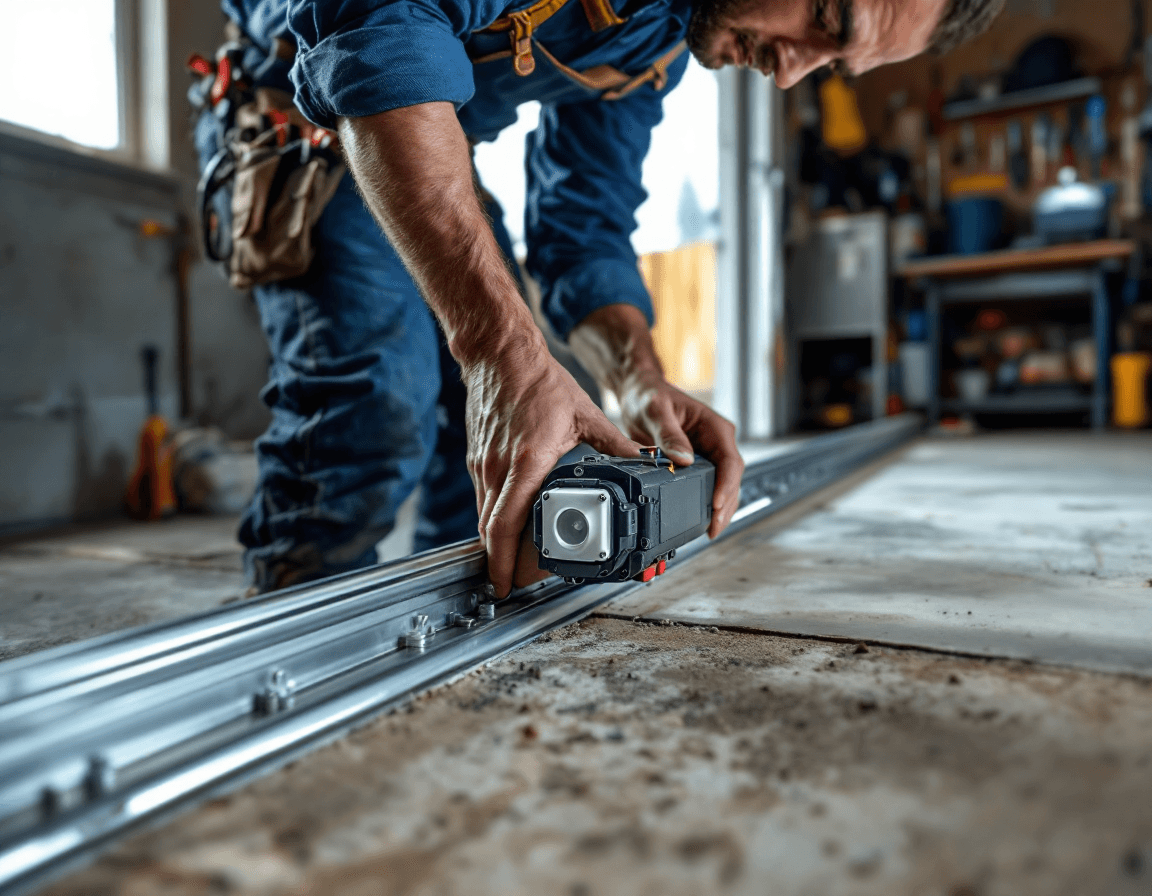
Garage door sensor problems are some of the most common calls a technician gets in Duvall, and they are also some of the most frustrating for homeowners. A door that refuses to close, or that starts back up the moment it touches the threshold, can turn a simple morning routine into a daily annoyance. The good news is that most sensor issues come down to a handful of causes: misalignment, dirty lenses, damaged wiring, or light interference. Our team at Seattle Garage Door Fix handles garage door sensor repair in Duvall, WA every week, from older detached garages off the back roads to newer attached units near Main Street. Sensor alignment, replacement, and wiring repair are all part of that work, and most jobs fall within the $85 to $225 range.
Duvall sits in the Snoqualmie Valley of King County, and that location shapes how garage doors behave here. Wet winters, morning fog that settles along the river corridor, and long stretches of gray drizzle put moisture into every electrical connection a door owns. Spring brings a sharp change as the sun climbs and low-angle light slides straight into garages that face east or west. Those conditions do not break sensors by themselves, but they expose weak wiring, loose brackets, and lenses that were already on their way out. Understanding how the valley climate interacts with your equipment is the first step toward a lasting fix rather than a temporary workaround.
This page walks through the symptoms we see most often, explains what your sensor lights are trying to tell you, and describes the repairs a licensed technician typically performs. It also covers the simple checks you can safely do yourself, the situations that call for a professional, and what affects the cost of a repair. If your door is currently stuck open or refusing to close, you do not need to read everything at once. Start with the section that matches what you are seeing, and keep in mind that a quick diagnostic often reveals the problem in minutes.
What the Photo-Eye Pair Actually Does
Every modern residential garage door that closes automatically relies on a pair of photo-eye sensors mounted near the floor on either side of the opening. One sensor emits an infrared beam and the other receives it. As long as the beam reaches the receiver unbroken, the opener is free to close the door. When something interrupts that beam, such as a child, a pet, a bicycle, or a stray box, the control board is supposed to stop the door and reverse it. That safety function is required on automatic openers, which is why sensor faults always need to be taken seriously.
The sensors are usually mounted on brackets bolted to the vertical tracks or to the wall, typically within several inches of the floor. Wires run from each sensor up the wall and along the ceiling to the opener's logic board. Because the components are small and low voltage, they are easy to overlook until something goes wrong. Many homeowners assume the problem is the opener motor, when in reality a single bumped bracket or a pinched wire is responsible for the entire symptom.
Understanding this basic arrangement makes troubleshooting much easier. If the beam is blocked, misaligned, or electrically interrupted, the opener behaves as though something is in the doorway. That is why a door can reverse for no visible reason, or refuse to close at all. The door is not being stubborn; it is responding to the sensor signal it receives.
Reading the Indicator Lights Before You Reach for a Ladder
Most photo-eye sensors have small indicator lights, and those lights offer a surprisingly clear picture of what is happening. On many common models, one sensor shows a steady light when it is powered and properly aligned, while the other shows a light that changes color or stays on when the beam is connected. A light that is completely off usually points to a power or wiring problem rather than an alignment issue. A light that blinks often means the sensors are receiving power but cannot see each other clearly.
Check the indicator on each side before assuming which sensor is at fault. Sometimes the transmitting sensor is fine and the receiving unit has been knocked out of alignment, or the reverse is true. Note the color and pattern, then compare them to the labeling printed on your sensor housing or the instructions that came with the opener. Model-specific guides vary, so do not rely on memory alone. Photographing the lights with your phone can help if you later need to describe the behavior to a technician over the phone.
A blinking light that changes when you gently nudge a sensor is a strong sign of misalignment. A light that stays dark regardless of how you adjust the sensor is more likely pointing to damaged wiring, a failed sensor, or a problem at the opener's control board. Keeping this distinction in mind saves time and prevents you from replacing parts that were never the problem.
When the Door Reverses Before It Touches Anything
One of the most alarming symptoms is a door that starts closing, travels partway, and immediately heads back up without ever contacting the floor. Homeowners often describe this as the door "changing its mind." In most cases, the sensors are detecting something that is not visible from inside the garage. Dust, cobwebs, a moth caught in the lens, a dropped leaf, or even a sprinkle of rain on the lens can briefly interrupt the beam. On a damp Duvall morning, condensation can form on the lens and create just enough interference to trigger a reversal.
Another common cause is a sensor that has shifted slightly over time. Doors vibrate every time they open and close, and that vibration gradually loosens mounting hardware. A bracket that was once square to the opening can drift a few degrees, and the beam no longer lands squarely on the receiver. The system may work perfectly for weeks and then start reversing after a cold snap causes the metal track to contract slightly. This is why an intermittent reversal often seems random even though it has a clear mechanical cause.
If your door reverses immediately after you press the button, check the path of the beam by looking across the opening at floor level. Make sure nothing is sitting in the gap, including a strip of weatherstripping or a portable shelf that has rolled into position. Wipe both lenses gently with a dry microfiber cloth. If the problem continues after cleaning, the next step is a proper alignment check, which is something a licensed technician can complete quickly with the right tools.
Sun Glare and Low Winter Light on Valley Driveways
Sun glare is one of the most overlooked causes of sensor trouble in the Snoqualmie Valley. When the sun sits low in the sky during fall and winter mornings or late afternoons, its light can enter a garage through the gap beneath the door or through a side window and strike the receiving sensor directly. Infrared light from the sun can overwhelm the signal from the transmitter, causing the receiver to read the beam as broken. The door may close fine at noon and then reverse at sunset, which confuses many homeowners.
Garages that face east or west are the most susceptible, especially if the driveway is wide open to the sky and the door sits at the end of a long, unshaded approach. Homes near open fields or along river-adjacent roads can see strong low-angle light for extended periods. Seasonal changes matter too. As the days lengthen in spring, the angle of the light shifts, and a door that behaved perfectly all winter may suddenly start reversing during certain hours.
Solutions for glare are usually practical rather than expensive. Realigning the sensors so the receiver is shielded from direct sun is often enough. A small hood or shade placed over the receiver can help, provided it does not block the beam itself. In some cases, a technician may recommend a different sensor model with better tolerance for ambient light. We always recommend testing the door at several times of day after any adjustment so you know the fix holds through the full cycle of light changes.
Alignment Drift from Bumps, Bikes, and Wind-Loosened Brackets
Sensor alignment drift is the most common mechanical cause of door closing problems in older garages. A stray bicycle handlebar, a trash can rolled too close to the wall, a pressure washer hose, or a child's scooter can all knock a sensor a few degrees out of position. Even a firm slap from a closing door against a lawn tool can rotate a bracket enough to break the beam. Because sensors are mounted low, they are easy targets for everyday garage traffic.
Valley wind also plays a role. Gusts that rattle a detached garage or a shed-style building can slowly loosen the screws that hold a sensor bracket to the wall or track. Over several months, the bracket can tilt just enough to cause repeated reversals. Homes with older siding or masonry walls sometimes have anchors that have worked loose, which lets the whole sensor assembly wobble when the door vibrates. A quick visual check of every mounting screw can reveal this problem before it becomes a major service call.
Proper alignment is more than just pointing the sensors at each other. The beam must be level, centered on the receiver, and mounted securely enough that it will not drift again. A licensed technician uses a careful process to set each sensor, test the reversal function, and confirm that the door responds correctly when an object is placed in the path. This testing is important because a sensor that appears aligned by eye may still be slightly off in ways that cause intermittent failures.
Chewed, Brittle, and Water-Damaged Sensor Wiring
Wiring is the hidden weak point of many sensor systems, and Duvall's climate makes it more vulnerable than many homeowners realize. Damp conditions, temperature swings, and the constant flex of a door panel all put stress on the thin wires that connect each sensor to the opener. Over time, insulation can crack, especially where wires pass through staples or sharp edges. Water that seeps into a junction box or a cracked jacket can corrode connections and create intermittent faults that are maddening to diagnose.
Pests are another real concern in the valley. Mice and other small rodents are attracted to garages, and they sometimes chew through low-voltage wiring simply because it is within reach. Wires that look intact on the surface may have hairline breaks inside, which makes the sensor work sometimes and fail other times. A sensor light that flickers when the door moves, or that goes dark after the opener has been running for a while, often points toward a wiring fault rather than an alignment issue.
Common signs of wiring trouble include:
- Sensor lights that come on only when the door is moved or when the wire is gently pressed
- Visible nicks, cracks, or chew marks on the jacket where the wire runs along the wall or track
- Green or white crusty residue at terminal connections, which often means moisture has reached the metal
- Staples or clips pressing hard against the insulation, which can cut through the coating over time
Repairing wiring is not something to attempt casually. Low-voltage sensor wire is inexpensive, but locating the break, splicing it correctly, and protecting the connection from moisture takes care. A technician will usually replace the damaged section, reseat the terminals, and secure the run so it cannot be stressed again. Sometimes the wire itself is fine, and the real issue is a loose terminal screw at the opener, which is a quick correction once the cover is removed.
The Hold-to-Close Problem and What It Means
Some homeowners describe a different symptom entirely: the door closes only when they hold the wall button down, and it stops or reverses the moment they release it. This behavior is a clear sign that the system has detected a safety condition and has switched to a limited mode. Most openers are designed to close in "constant pressure" mode when the sensors are not functioning correctly, so that a person standing at the wall can watch the door and release the button if anything goes wrong. It is a protective feature, not a random malfunction.
When the door only closes while you hold the button, the most likely causes are a sensor that is not communicating with the logic board, a blown fuse on the control circuit, or a wiring break that interrupts the safety signal. Less commonly, the wall control itself may be sending an odd signal, or the opener's safety logic may need to be reset. Because this symptom indicates the safety system is offline, it should be treated as urgent. Continuing to operate the door in constant-pressure mode is not a long-term solution, and it leaves you without the automatic protection the opener was built to provide.
A technician will typically start by checking the sensor lights, testing continuity along the wire run, and confirming the control board's status indicators. Once the source of the interruption is identified, the repair is often straightforward. Replacing a failed sensor, reseating a connector, or repairing a wire may restore full automatic operation the same visit. If the fault lies within the opener's board, the discussion shifts toward a repair estimate and a comparison of options, which we always explain before any work begins.
Simple Checks You Can Safely Do Before Calling
There are several steps a homeowner can take safely before scheduling service. Start by clearing the path of the sensors and wiping both lenses with a dry cloth. Check that nothing is leaning against the door track or sitting in the beam path. Look at the sensors from the side to see whether either one has visibly tilted. If the bracket is loose, you may be able to snug the mounting screws, but do not force a bracket that is cracked or stripped.
You can also run a simple reversal test with the door at the bottom of its travel. Place a piece of cardboard or a folded towel in the doorway at floor level and press the button to close the door. The door should stop and reverse when it contacts the obstruction, and it should not reverse when the path is clear. If the door reverses with nothing in the path, the problem is likely alignment, glare, or wiring. If it fails to reverse when obstructed, stop using the automatic close function and call for service right away, because the safety system may not be working.
What you should not do is attempt to adjust tension springs, cables, drums, or the torsion system. Those components store very high energy, and mishandling them can cause serious injury. Spring and cable work must be performed by a licensed, insured professional with the proper tools and training. Keep this boundary firmly in mind, even if a sensor issue seems to have an obvious fix that involves the door's hardware. Our technicians can diagnose sensor faults and perform sensor repairs, and they will tell you immediately if a separate safety concern needs attention.
Replacement Sensors, Pricing, and What the Range Covers
Most sensor repairs we perform fall between $85 and $225, depending on what the diagnosis reveals. An alignment adjustment with a thorough safety test sits at the lower end of that range. Replacing a sensor pair, repairing a section of damaged wire, or correcting a loose terminal often lands in the middle. Jobs that involve running new wire through finished walls or addressing multiple faults at once may sit toward the higher end. Every estimate depends on the specific opener, the sensor model, and how accessible the wiring is.
Sensor models vary, and replacement parts should match the opener's system. Using an incompatible sensor can create a new set of problems, including erratic reversals or a failure to detect obstructions properly. A technician will confirm the correct part before ordering or installing anything. Because sensor technology has changed over the years, older openers sometimes require a different sensor pair than what was originally installed, and we will explain the reasons for any substitution.
Before work begins, we will describe what we found, what we recommend, and what the estimated cost covers. There is no obligation to proceed with a repair you do not want, and we will not recommend unnecessary replacements. If the sensors are functioning and the real problem lies elsewhere, such as in the opener logic or a separate safety component, we will say so plainly. Transparent pricing matters to us, and we would rather explain the situation clearly than leave you guessing about what you are paying for.
When the Sensors Are Not the Real Culprit
Sometimes the symptoms point toward the sensors, but the root cause lies elsewhere. A door that moves unevenly, makes grinding noises, or stops partway may be experiencing a mechanical issue such as worn rollers, a bent track, or a balance problem. In those cases, the sensors may be reacting to the door's abnormal movement rather than failing themselves. Addressing only the sensors will not solve the underlying problem, and the door will continue to misbehave until the mechanical fault is corrected.
Opener logic boards, control panels, and wall buttons can also produce symptoms that resemble sensor failures. A wall control that sticks, a receiver that picks up interference from a nearby device, or a board that has worn out after years of service can all make a door act as though the sensors are at fault. In Duvall, we occasionally see electrical irregularities linked to storms or power fluctuations, which can damage control components. A thorough diagnosis considers all of these possibilities before recommending parts.
For this reason, we treat each service call as a full evaluation rather than a quick swap. We check the sensors, the wiring, the opener's status indicators, and the door's movement to determine the actual cause. If spring tension, cable condition, or other high-risk components show signs of trouble, we will flag them and recommend licensed follow-up work as appropriate. Our goal is to make sure the repair you pay for solves the problem that is really there.
If your garage door is refusing to close, reversing for no clear reason, or only closing while you hold the wall button, call Seattle Garage Door Fix at (888) 799-3819 for garage door sensor repair in Duvall, WA. Our licensed, bonded, and insured technicians serve Duvall and surrounding Snoqualmie Valley communities, including the areas near Main Street and Cherry Valley, and we will explain your options clearly before any work begins. A prompt call can prevent a small alignment issue from turning into a larger wiring or safety problem.