
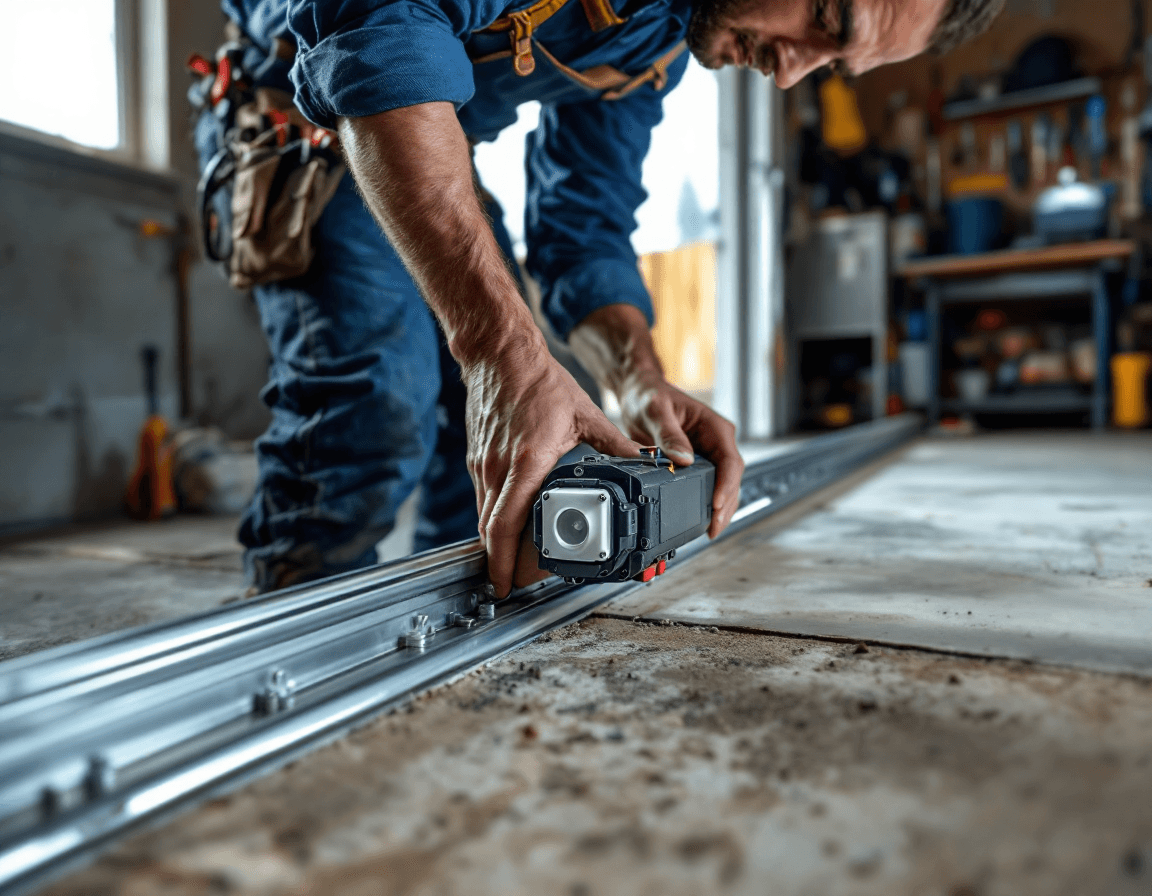
Garage door sensor repair in Fircrest, WA is one of the most common calls we handle, and it is also one of the most fixable. When a door that worked fine last week suddenly refuses to close or slams back up at the first inch of travel, the problem is usually a pair of small photo-eye sensors that have lost track of each other. These safety devices sit near the bottom of the door tracks and send an invisible beam across the opening, and if that beam is interrupted, the opener is designed to stop and reverse. The good news is that most sensor problems come down to alignment, a loose connection, or a failed sensor, and a technician can usually sort them out in a single visit.
Fircrest homes have their own set of conditions that make sensors more likely to misbehave. The city sits in Pierce County close to Tacoma, and the damp, mild winters common across the South Sound mean moisture, moss, and temperature swings are constant factors in how garage hardware ages. Many garages in the area also see heavy driveway traffic, careless backing, and the occasional bike or yard tool left near the door, all of which can nudge sensors out of line. This page explains what the symptoms mean, what causes them in our area, what a repair typically involves, and when you should stop troubleshooting and call a licensed professional.
If you are reading this with a door in front of you that will not close, the fastest way to make progress is to understand what the sensors are telling you. Blinking lights, a light that has gone dark, and a door that only closes when you hold the wall button each point to a different fault. Working through those clues before the technician arrives can save you time and help you describe the problem clearly when you call (888) 799-3819.
Reading the Blinking Lights Before You Pick Up the Phone
Most residential sensor pairs have two small lights, one on the sending unit and one on the receiving unit. On many models, a steady light on both sides means the beam is connected and the door should operate normally. When one light is off, or when the receiver blinks rapidly, the opener is seeing an interruption or a fault and will refuse to close as a safety measure. Manufacturers vary in their light patterns, so check the labels on your specific sensors or the opener manual before drawing firm conclusions.
A dark sending light usually indicates a power or wiring problem rather than an alignment issue, because the sender draws power through the same low-voltage run as the receiver. A receiver that blinks steadily while the sender stays lit often means the two units can see each other only intermittently, which is the classic sign of a bracket that has shifted or a lens that has gotten dirty. If both lights are steady but the door still reverses, the sensors may be fine and the opener's logic board or force settings could be the culprit. Those are distinctions a technician can confirm quickly with a multimeter and a test run.
Take a moment to note exactly what the lights do and when they do it. If they blink only when the door is partly open, the fault may be related to where the beam crosses the door track or the path of a hanging object. If they blink all the time regardless of door position, the wiring or power supply is more suspect. Those details help a technician move straight to the likely cause instead of checking everything from scratch.
When the Door Reverses the Moment It Starts Down
A door that begins to close and then immediately rises again is the most dramatic sensor symptom, and it is almost always a sign that the opener has received a signal that something is blocking the beam. The reversal can happen so fast that homeowners assume the door itself is broken, but the opener is simply doing exactly what it was designed to do. Sensors exist to protect people, pets, and vehicles, and the opener's response to a broken beam is intentionally cautious.
In our part of Pierce County, the most common reason for an immediate reversal is a sensor that has been knocked slightly out of alignment. A rolling trash bin, a car bumper that sits a little too far forward, or a ladder leaned against the wall can shift a bracket by a few degrees, and that is enough to break the beam. Sometimes the bracket loosens over time as the wall expands and contracts with seasonal humidity, and the sensor simply drifts. Either way, realigning the pair often restores normal operation within minutes.
Less commonly, the reversal is caused by a sensor that is failing internally or by a short in the wire that makes the opener believe the beam is broken even when it is clear. Those problems will not go away with simple adjustment and often require a replacement unit. A technician can tell the difference by testing the sensors with the wiring disconnected and by watching the light behavior while the door moves. Please do not stand in the path of a door that is reversing unexpectedly, and never bypass or tape over sensors to force the door shut, because that defeats the entire safety system.
Alignment Drift on Fircrest Driveways and Garage Walls
Garage doors in Fircrest live in a climate that is hard on hardware. Wet winters soak into framing and drywall, dry summer spells can shrink wood trim, and the constant movement of the structure gradually changes the relationship between the wall, the track, and the sensor brackets. A sensor that was perfectly aimed at installation can end up several degrees off within a few seasons without any visible damage, which is why alignment problems often appear suddenly after a long stretch of normal use.
Vibration from daily operation also plays a role. Each time the door runs, the bracket absorbs a small amount of shock, and the wing nut or screw holding the sensor can loosen slightly. Homes with older openers, heavier doors, or tracks that have never been properly tightened tend to see this happen more often. Wind-driven rain pushing against an exposed garage wall can add to the stress on mounting hardware over time.
A proper realignment starts with a visual check of both brackets, followed by a test in which the technician aims each sensor by eye and then confirms the connection with the indicator lights. Good alignment means the beam is centered on the receiver lens rather than just barely hitting it. Technicians also check that the sensors are mounted at a consistent height on opposite sides of the opening, typically within roughly six inches of the floor, and that neither bracket is bent or cracked. Once the pair is solid, the technician runs the door through several full cycles to confirm the beam holds steady.
Sun Glare and the Low-Angle Problem
Sun glare is a surprisingly frequent cause of sensor complaints, and it tends to show up in ways that confuse homeowners. Photo-eye sensors use an infrared beam, and when bright light enters the receiver lens at the right angle, it can overwhelm the signal and make the opener believe the beam has been interrupted. This is most likely when the door is partly open or closing and the sun is low in the sky, such as early morning or late afternoon, and it can make a door behave perfectly at noon and erratically at sunset.
Fircrest garages that face west or south, or that have large windows, side doors, or open breezeways aimed toward the sun, are particularly likely to see glare issues. Wet pavement and standing puddles in the driveway can reflect light up toward the sensor lenses, which adds another layer of interference during the rainy months when the sun sits low for long stretches. Sometimes a neighbor's exterior lighting or a bright security floodlight triggers the same problem after dark.
Solving glare usually involves a combination of smart adjustments. A technician may re-aim the sensors slightly downward, shift the mounting position a few inches, or install a small shield that blocks direct light from reaching the receiver without blocking the beam itself. Keeping the lenses clean matters too, since the film from road grime and cooking residue can scatter light and make glare worse. If glare persists even after careful aiming, the sensors may be older models with limited tolerance, and a newer unit with better light rejection could be the most reliable fix.
Chewed and Corroded Sensor Wiring
The low-voltage wire that runs from the opener to each sensor is thin, and it often travels along the wall, through staples, or across the ceiling where it can be pinched, scraped, or chewed. In many Pierce County homes, the wire is one of the first things to fail after a rodent moves in. Mice and squirrels are attracted to the soft insulation, and a few nibbled spots can interrupt the signal or cause intermittent faults that are maddening to diagnose.
Corrosion is the other common wiring problem in this region. Moisture that seeps along the wall or enters through a poorly sealed door penetration can oxidize the copper at the terminal screws and splices. Green or white crust on the connectors, loose screw terminals, and wires that have turned brittle near the sensor bracket all point toward moisture damage. These faults can make a sensor work on some days and fail on others, which is why homeowners often describe the door as acting up for no reason.
Repairing wiring typically means stripping back damaged sections, installing new low-voltage cable with proper insulation, and securing it in a way that prevents future pinching. A technician will also clean and re-terminate connections, check continuity with a meter, and confirm that the sender and receiver are getting the correct voltage from the opener. Where the damage runs through a long section of wall, it may be more practical to replace the entire run than to patch it. Never splice low-voltage wire carelessly near the opener's main power connections, and leave any work involving line-voltage circuits to a qualified electrician or technician.
Why the Door Only Closes When You Hold the Wall Button
Some of the most frustrating calls we hear involve a door that closes normally only when someone holds the wall button down. This behavior usually means the opener has been placed into a reduced-safety mode because it cannot confirm that the sensor beam is clear. Instead of simply refusing to move, many openers are designed to allow a close command that is held continuously, which lets the homeowner finish the job while watching for obstacles. It is a useful feature in a pinch, but it is not a repair.
When a door responds only to a held button, the sensor circuit is almost always the first place to look. A misaligned pair, a dirty lens, a blown sensor, or a damaged wire can all trigger this mode. The opener's logic board may also be part of the picture, especially if the door has been running with sensor faults for a long time. A technician will test the sensors individually, check the voltage at the opener terminals, and confirm the sensors are seated correctly before deciding whether the logic board needs attention.
Please do not keep using a door that closes only under constant pressure as your everyday routine. The safety system is still there to protect children, pets, and anyone who might be standing in the opening, and that protection depends on the sensors working. If the door has been acting this way for more than a day or two, schedule a repair and avoid walking under it until the problem is resolved.
What a Typical Sensor Visit Covers and What It Costs
Most sensor repairs we perform fall within a range of $85 to $225, depending on what the technician finds and what parts are needed. A straightforward realignment and cleaning usually sits at the lower end of that range, while a full sensor replacement or a wiring repair that involves several feet of new cable typically lands higher. The final figure depends on the specific equipment, the access to the wall and track, and whether any related components need attention during the same visit.
A standard visit generally includes an inspection of both sensors and their brackets, a check of the lights and connections, cleaning of the lenses, and realignment of each unit. The technician will test the door through several full cycles, confirm that it reverses correctly when the beam is broken, and verify that the opener responds normally to the wall control and remote. If a sensor or wire needs replacing, the technician will explain what was found and what the repair involves before proceeding, so you know what you are approving.
Here is what homeowners in Fircrest commonly ask about before a visit:
- Whether a simple realignment is enough or a replacement is needed
- How long a typical sensor repair takes, which is often under an hour
- Whether the repair affects the warranty on the opener
- What can be done to reduce glare or moisture problems going forward
- Whether other parts of the door should be checked while the technician is on site
Keeping Sensors Reliable Through Wet Pierce County Winters
Preventive habits go a long way toward reducing sensor trouble in a region with long, damp winters. The most effective step is a simple monthly look at the sensors: check that both lights are steady, wipe the lenses with a soft dry cloth, and make sure the brackets have not loosened. Keeping the area around the sensors clear of debris, cobwebs, and standing water helps the beam stay unobstructed, and a quick check after storms can catch problems before they become emergencies.
Consider these practical habits for Fircrest garages during the rainy season:
- Wipe sensor lenses after heavy rain or when road spray kicks up dirt
- Keep trash bins, bikes, and tools a few feet away from the door track
- Inspect exposed low-voltage wire for nicks, staple damage, or signs of rodent activity
- Check bracket screws twice a year and snug them without overtightening
- Look for green or white corrosion at the wire terminals near the sensor bases
Seasonal sealing also matters. Weatherstripping along the bottom of the door and sealing gaps around wall penetrations keeps wind-driven rain and humidity away from wiring and terminals. If your garage has a history of moisture problems, a technician can recommend protective covers or relocate connections to a drier location during a repair visit.
When a Sensor Problem Points to a Bigger Issue
Sometimes what looks like a sensor failure is actually a sign that another part of the door system needs attention. A door that is out of balance, binding in the track, or struggling under its own weight can stress the opener in ways that make the safety circuit behave strangely. Worn rollers, bent track sections, and loose hinges can all change how the door moves and cause sensors to appear faulty when they are not. A thorough technician will look at the whole system rather than treating the sensors in isolation.
Be especially cautious about any symptom that involves the springs or cables. Torsion springs and lift cables store a great deal of energy, and working on them without the proper tools and training can cause serious injury. If the door is hanging unevenly, a cable has come off the drum, or a spring looks cracked or stretched, do not try to adjust it yourself. Those repairs belong to a licensed, insured professional who can safely release tension and replace components correctly.
If you are unsure whether a problem is limited to the sensors, describe what you see and hear when you call. A good technician will ask about the light patterns, the door's movement, and any unusual noises, and will tell you honestly whether the repair is simple or whether additional work is needed. Catching a developing problem early often means a smaller repair and a safer door for everyone who uses the garage.
Garage door sensors are small, but they do a big job, and they deserve prompt attention when they stop working. If your door in Fircrest will not close, reverses the moment it starts down, or only responds when you hold the button, call Seattle Garage Door Fix at (888) 799-3819. Our licensed, bonded, and insured technicians can diagnose the issue, explain your options clearly, and get your door closing safely again.