
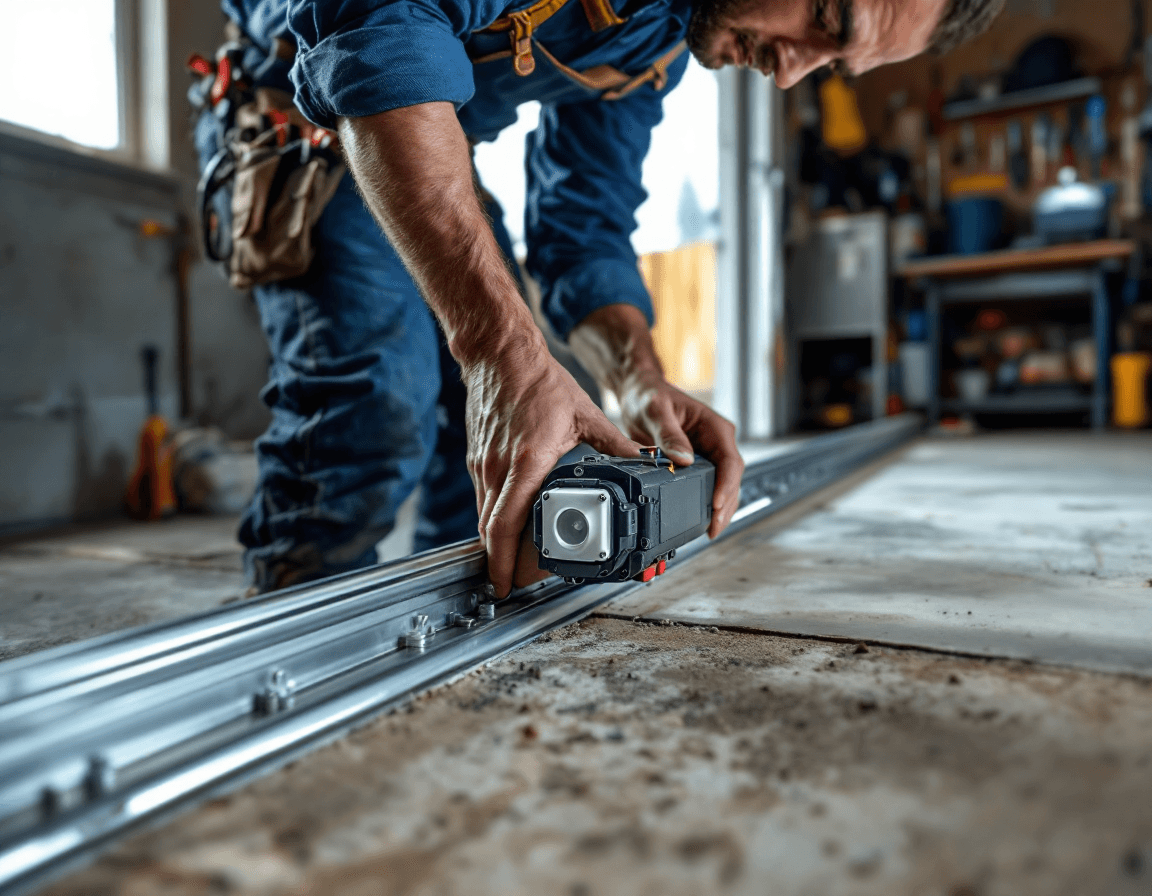
Garage door sensor repair in Tacoma, WA is one of the most common calls we handle, and it is often one of the easiest to fix once a technician finds the cause. Those two small photo-eyes mounted near the floor on either side of your door are the reason your opener stops and reverses when something breaks the beam, and when they fall out of alignment or lose power, the door can refuse to close at all. For homeowners from Downtown Tacoma to the Hilltop neighborhood, the problem usually shows up on a damp morning when the car is already backing out and the door will not come down.
Our technicians serve Tacoma and the surrounding Pierce County communities, including ZIP codes 98402, 98404, 98405, 98406, 98407, 98408, 98409, 98418, 98421, 98422, 98444, 98445, 98465, 98466, and 98467. Whether your house sits near the North End with its older housing stock, along the Proctor shopping corridor, close to the Stadium District, or on a sloped lot on the Hilltop, the sensor issues we see tend to follow patterns tied to our weather, our terrain, and the way Tacoma garages are built. This page explains those patterns, what you can check yourself, and when it makes sense to call a licensed professional. Typical sensor repairs we complete run from $85 to $225, depending on whether the job is a realignment, a wiring fix, or a full sensor replacement.
What a Sensor Fault Looks Like From the Driveway
Most homeowners first notice a sensor problem in one of three ways. The door may start to descend and then immediately reverse, the wall button may only move the door if you keep your thumb pressed on it, or the door may refuse to move at all while the indicator light on one sensor stays dark or flickers. Each of these symptoms points toward a slightly different cause, and learning to read them will save you a call or at least help you describe the problem accurately when you do call.
A door that reverses the instant it starts to close usually means the opener is receiving an interruption signal from the photo-eyes. That interruption could be real, such as a bicycle, a recycling bin, or a pet standing in the path, but more often it is a misaligned pair of sensors or a sensor that has lost its connection. A door that only closes while the wall button is held down is a different story. In that mode the opener has bypassed the safety sensors, which is designed as a temporary diagnostic or emergency function, and it tells you the photo-eyes are not reporting a clear path. A dark or blinking sensor light is the clearest clue of all, because it tells you the unit is either unpowered, miswired, or not seeing the light from its partner.
Reading the Indicator Lights Before You Reach for a Screwdriver
Photo-eyes on most residential openers have one or two small LEDs. On many systems, one sensor shows a steady light when it is powered and the other shows a steady light when it is aligned and receiving a clear signal from its counterpart. If one light is steady and the other is dark, the dark side is the one to investigate. If both lights are blinking, the sensors are usually trying to communicate but cannot lock onto each other, which often points to alignment, dirt, or glare rather than a dead unit.
Start by checking the manufacturer's manual for your specific opener, since the light patterns and blink codes vary by brand. Look for a diagnostic section that lists what each combination of flashing and steady lights means. Write down what you see, note whether the door reverses at the same point every time, and check whether the problem changes between a dry afternoon and a wet morning. That information is valuable to a technician, and it often narrows the cause before any tools come out of the truck.
Tacoma's Wet Winters and the Slow Damage They Cause
The Pacific Northwest is famous for its gray, damp winters, and Tacoma gets its share. Persistent moisture, fine mist, and long stretches of cool humidity work their way into exposed hardware over time. Photo-eyes mounted at ankle height are especially vulnerable because they sit close to the ground, where runoff, splashed water, and tracked-in grit collect. The lenses can fog or develop a film, the mounting brackets can rust, and the small wire connectors can corrode until the signal becomes intermittent.
Homes near Commencement Bay can also see the effects of a salt-tinged air environment, which accelerates corrosion on metal brackets and screw heads. Even inland neighborhoods can experience condensation inside uninsulated garages, especially where a door has a gap at the bottom or where the garage shares a wall with a cold basement. If your sensors work fine in summer but begin acting up every November, moisture is a likely suspect. Cleaning the lenses, tightening connectors, and replacing corroded brackets can often restore reliable operation without replacing the entire pair.
Sun Glare Along West-Facing Driveways
Tacoma's long summer evenings bring a low, bright sun that shines directly into many garages during the afternoon and early evening hours. When that light hits the receiving photo-eye at the right angle, it can overwhelm the sensor's ability to detect the infrared beam from its partner. The result is a door that closes fine at noon but reverses at 6:30 p.m. on a clear July day. Homeowners often assume the sensors are failing when they are actually working as designed in an environment they were not positioned to handle.
Glare problems are more common on driveways that face west or northwest, and they become worse when a light-colored garage door or a bright gravel driveway reflects additional sunlight toward the sensors. Adjusting the angle of each sensor slightly, so the lens is aimed squarely at its partner rather than at the sky, often solves the issue. In some cases a small shield or hood over the receiving lens can help, though it must never block the beam itself. A technician can test the sensors at different times of day to determine whether glare is the true cause before recommending any replacement.
Why Holding the Wall Button Is a Warning Sign
When a door closes only while you hold the wall control, the opener is operating in a manual or override mode, which bypasses the photo-eyes entirely. That feature exists for specific situations, but relying on it is risky. Without the sensors, the door will not stop or reverse if a child, a pet, or a vehicle moves into its path. Treat this symptom as urgent, and avoid running the door in override mode until the sensors are working again.
The most common reasons a door behaves this way are a sensor that has lost power, a broken or pinched wire running between the sensor and the opener, or a sensor that has been knocked out of alignment and never recovered its connection. Sometimes the problem is simply a loose terminal screw at the opener, which is an inexpensive fix. In other cases the sensor itself has failed internally, and it will not report a clear path no matter how carefully it is aimed. A licensed technician can test each component in sequence and identify the failed piece rather than replacing parts on guesswork.
Realigning Photo-Eyes Without Making Things Worse
Realignment is often the least expensive part of a sensor repair, but it is also where well-meaning homeowners sometimes cause new problems. Each photo-eye has a small adjustment point, and the goal is to aim the sending lens directly at the receiving lens so the indicator light on the receiver becomes steady. Because the beam is narrow, even a slight tilt can break the connection, so small movements matter.
A reasonable homeowner approach is to loosen the mounting bracket just enough to pivot the sensor, then make very small adjustments while watching the light on the receiving unit. Stop as soon as the light turns steady, and tighten the bracket without changing the angle. Avoid bending the bracket with force, and never disconnect or reroute wires while the opener has power. If the lights do not steady after a few careful attempts, or if the bracket is cracked or the wire is damaged, it is time to call in a technician rather than continuing to adjust.
Chewed, Pinched, and Stressed Sensor Wiring
Sensor wiring in Tacoma garages takes a surprising amount of abuse. Pests such as mice and rats are attracted to the insulation on low-voltage wire, and a single chewed section can cause intermittent faults that are maddening to diagnose. Wire that runs along the track or through a door bracket can be pinched or stretched when the door moves, and staples driven too tightly into the wire jacket can cut through insulation over time. Older homes in the North End and Proctor areas sometimes have wiring that was routed through walls or joists decades ago and has since become brittle.
Look for exposed copper, shredded jackets, or sections where the wire has been flattened against the door track. Be aware that low-voltage sensor wire is different from household line voltage, but the opener itself is connected to household power, and any work near the opener's terminal board should be approached carefully or left to a professional. If the wire is damaged, the correct repair is usually a complete replacement run rather than a quick splice, because splices in a moisture-prone garage tend to fail again within a season. Sealing any entry points where pests can reach the wire is also worth the effort.
- Check the wire path from each sensor to the opener for visible chewing, pinching, or staple damage.
- Look for green or white corrosion on terminal screws, especially in garages with poor ventilation.
- Confirm the wire is not stretched tight along the track, where door movement can pull it loose.
- Note any sections where the wire has been spliced with tape, since these are common failure points.
- Keep rodent bait and traps placed outside the garage, not inside near the opener wiring.
What Sensor Repairs Cost and What the Price Covers
For most sensor repairs in the Tacoma area, our pricing falls between $85 and $225. The lower end of that range generally covers a realignment, a cleaning, or a simple reconnection at the terminal board. The higher end usually reflects a full sensor replacement, a wire run that needs to be redone, or a repair that requires more time to diagnose and test. Exact pricing depends on the make and model of your opener, the condition of the wiring, and whether the sensors themselves need to be replaced.
When you request a quote, ask what is included. A solid estimate should describe whether the technician will test both sensors and the opener's safety reversal function, whether replacement parts are compatible with your brand, and whether the door will be checked for proper auto-reverse behavior before the visit ends. Those checks matter because a door that closes but does not reverse correctly when it contacts an obstacle is not safe, even if the sensors appear to work. Honest technicians will explain the tradeoffs between repairing an older pair and replacing them, rather than pushing the most expensive option.
Hillside Lots, Sloped Driveways, and Sensor Mounting Height
Tacoma's hillside neighborhoods and sloped lots present a particular challenge for garage door sensors. When the floor of the garage is not level with the driveway, or when the driveway slopes sharply toward the street, the sensors may be mounted at heights that do not match the way the door meets the ground. A sensor installed too high can be blocked by the door's bottom bracket or by a rubber seal, while one installed too low may pick up debris, snowmelt, or puddles that interfere with the beam.
Sloped driveways also change the path a car or object takes into the door's travel. A vehicle parked at an angle may trigger the sensors in an unexpected way, and a door set on a steep grade may need its tension and travel limits adjusted to close smoothly. If you live on the Hilltop or in another area with significant grade, it is worth asking your technician to evaluate mounting height and sensor spacing during the repair, not just the immediate fault. Proper installation on uneven ground prevents repeat service calls and keeps the door operating safely through the seasons.
Safety Limits and When to Call a Licensed Professional
Homeowners can safely perform a few basic checks on their garage door sensors. You can clear dirt and cobwebs from the lenses, wipe away film with a soft dry cloth, watch the indicator lights, and test the door's reversal function by placing a sturdy object such as a folded towel or a piece of lumber in the door path at a safe, low height and confirming the door reverses. Those steps are reasonable and useful, and they help you identify problems early.
Once a repair involves the opener's electrical terminals, the door's spring system, or the cables and drums that lift the door, the work belongs with a licensed and insured professional. Spring and cable work carries serious risk, because the tension stored in a torsion or extension spring can cause severe injury if released improperly, and cable failures can drop a heavy door without warning. Sensor work often looks simple, but it is connected to the same safety system that protects people and vehicles, so it should be completed carefully and tested thoroughly. If you are unsure whether a task is within your comfort level, stop and call us at (888) 799-3819. Our team serves Tacoma and the surrounding Pierce County communities, and we are glad to help you get your door closing safely again.