
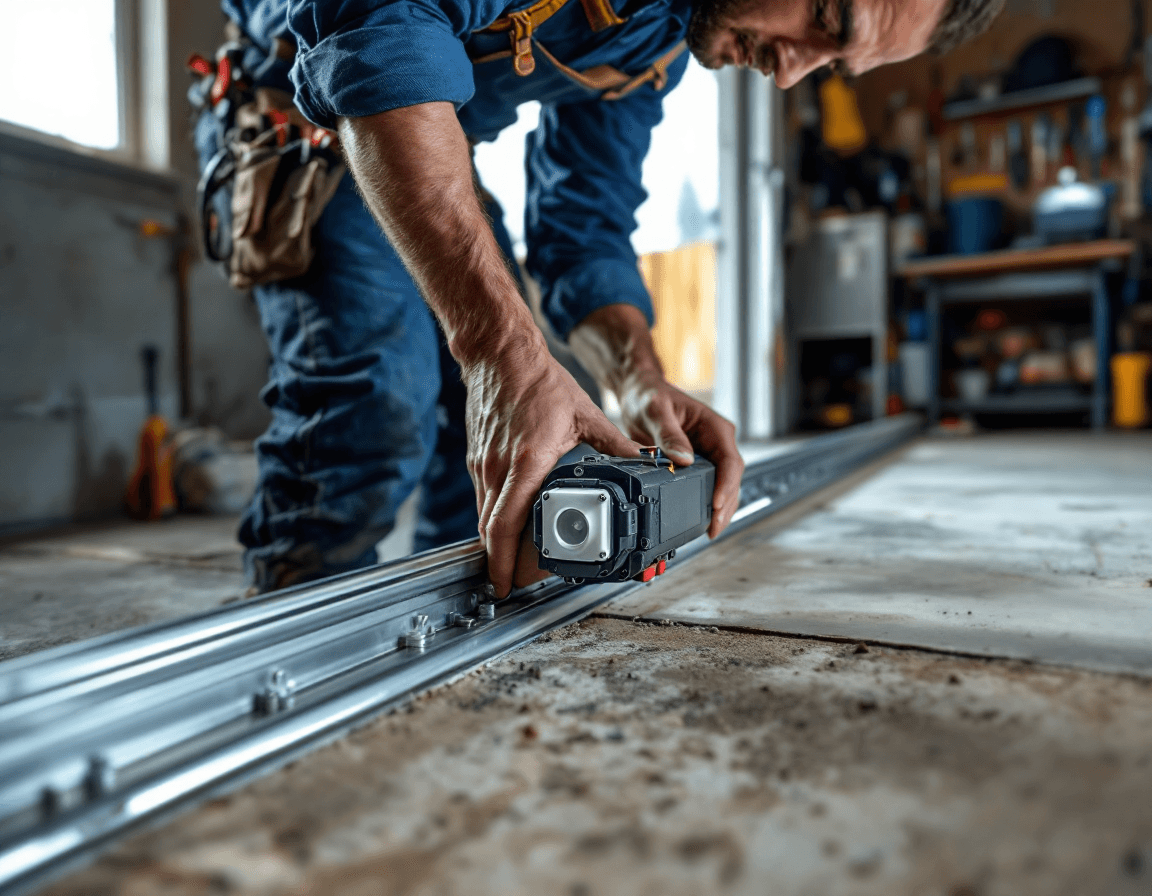
Garage Door Sensor Repair in Puyallup, WA is one of the most common calls we handle, and it is often the cheapest fix a homeowner can get. Photo-eye sensors are the small pair of units mounted near the bottom of the door tracks, and they tell the opener that nothing is blocking the opening. When they lose alignment, get wet, or stop receiving a clean signal, the door will either refuse to close or reverse the moment it starts moving down. Puyallup's mix of wet winters, low summer sun, and older homes with exposed wiring creates its own pattern of sensor problems.
If your door has suddenly started acting up, you are not alone, and you probably do not need a new opener. Most sensor failures come down to a bump, a bit of debris, a loose wire, or a shift in the angle of the light beam, and those can usually be corrected in a single visit. Our technicians serve the city and the surrounding neighborhoods across ZIP codes 98371, 98372, 98373, 98374, and 98375, and most sensor repairs fall in the range of $85 to $225 depending on what is wrong. This guide explains what is happening inside that small pair of lenses, how to read the warning lights, and when it makes sense to call a licensed professional.
Why Puyallup Garage Doors Trip Their Own Safety Eyes
The photo-eye system is a simple idea with a surprisingly fragile setup. One sensor sends an infrared beam across the door opening to the other, and as long as that beam lands squarely on the receiver, the opener is allowed to close the door. Anything that interrupts the beam, from a child's bicycle to a dog wandering through, signals the opener to stop and reverse. The system is designed to protect people and property, which is exactly why it is so sensitive to small changes in position.
In Puyallup, a few local conditions make that sensitivity show up more often. Many homes in the older neighborhoods near Downtown Puyallup have garages where the door tracks have been bumped by lawn equipment, moving boxes, or even a car mirror over the years. Newer subdivisions on the edges of town tend to have sensors mounted on drywall or siding that can flex when the building settles. Either way, a sensor that was perfectly aimed at installation can drift off target long before anyone notices.
Weather adds another layer. The Pacific Northwest brings long stretches of moisture, condensation on cold mornings, and the occasional storm that drives rain sideways under a garage door. Those conditions do not destroy sensors on their own, but they do speed up corrosion on terminal screws and make wire insulation brittle over time. When a sensor begins to fail in a damp garage, the first symptom is often an intermittent signal that works on some days and not on others.
Reading the Sensor Lights Before You Call Anyone
Most photo-eye sensors have one or two small LEDs that tell you exactly what the system sees. Learning to read those lights can save you a service call, and it gives a technician a head start if you do need help. The exact behavior varies by brand, so check the label on your sensor bracket or your opener manual, but the general patterns are consistent across most residential openers.
- A solid light on both sensors usually means the beam is connected and aligned, so the problem is likely somewhere else, such as the wall button, the remote, or the travel limits.
- A light that is completely off on one sensor often points to a wiring break, a blown connection, or a sensor that has lost power at the opener terminals.
- A blinking light, or a light that flickers when you tap the bracket, suggests the beam is partially blocked or the lens is misaligned.
- Lights that behave differently when you cover one lens with your hand can indicate that only one sensor is responding, which narrows the problem to a single unit or a single wire run.
Write down what you see before calling. A note like "left light blinks only in the afternoon" is extremely useful, because it may point toward sun glare rather than a true hardware fault. Taking a clear phone photo of the sensors and their wiring can also help our technicians prepare the right parts before they arrive.
Sun Glare Along the South Hill Slopes and Open Streets
Summer in Puyallup is a different challenge. From late June through August, the sun sits low and bright on many evenings, and when it aligns with a garage opening, it can flood the receiving sensor with light that confuses the signal. Homes on South Hill, where lots often face west or southwest and driveways catch the afternoon sun, see this problem more than flatter parts of town. The door may close fine in the morning and then start reversing every evening for a few weeks until the sun angle changes.
Glare-related issues are tricky because the sensors are not actually broken. The receiver is reading the infrared light from the sun and mistaking it for a weak or interrupted beam. Sometimes a simple adjustment of the sensor angle, or a small shade over the receiver lens that does not block the emitter, is enough to stabilize things. In other cases, the sensor needs to be moved slightly on its bracket so that the sun does not line up with the receiver at the hour the door is most often used.
We also see glare trouble on open or lightly wooded lots where the garage faces a clearing, and during the weeks around the Western Washington Fair at the Puyallup Fairgrounds, when evening traffic and longer days stretch the routine of many households. If your door is reversing only at certain times of day, keep a simple log for a week. That pattern is often the clearest evidence a technician can use to decide whether the fix is alignment, shading, or a sensor upgrade.
Damp Winters, Wet Wiring, and Chewed Conductors
Winter in Puyallup is mild by many national standards, but it is persistently wet. Long gray stretches, frequent rain, and cold snaps that bring condensation into unheated garages all work against low-voltage sensor wiring. The copper strands inside the thin cable can oxidize at connection points, and insulation can crack where the wire bends around a bracket or passes through a gap in the door track. These changes often happen slowly, which means the door may behave normally for months before it starts closing unpredictably.
Pests are another factor, especially in older homes and detached garages where rodents find easy access through gaps around utility lines. Mice and squirrels sometimes chew sensor wires because the insulation is soft and the cable runs along warm, sheltered paths. A chewed conductor can produce an intermittent fault that is hard to diagnose from the outside, and the symptoms often mimic a misaligned sensor. Before assuming the hardware has failed, look for bare copper, flattened insulation, or nesting material near the wire run.
When we inspect wiring, we check connections at both the sensor and the opener terminals, look for green or white corrosion, and confirm that the cable is secured so it cannot be pinched by a moving door panel. If the damage is limited to a short section, we can often splice or replace that section with the correct low-voltage wire. If the cable is brittle throughout, it is usually more reliable to run a fresh line than to patch multiple weak points.
What a Typical Sensor Repair Costs Around Puyallup
Most photo-eye sensor repairs we perform fall in the range of $85 to $225. That range covers common visits such as realigning sensors, tightening or replacing a loose wire connection, cleaning lenses, or swapping a single sensor pair when the existing unit is no longer functioning. The final price depends on what the technician finds once the cover is off and the sensors are tested under real operating conditions.
Several details tend to push a repair toward the higher or lower end of that range. Factors that usually keep a visit on the lower end include a single misaligned sensor, a loose terminal, or a light cleaning of the lens. Factors that often increase the cost include a damaged cable that needs a longer run, a sensor bracket that has cracked, or a compatibility issue where the replacement sensor must match a specific opener model.
- Basic realignment and lens cleaning, typically on the lower end of the range.
- Wire repair or a short cable replacement at the sensor or opener connection.
- Full sensor pair replacement, especially for older or non-standard brands.
- Additional diagnosis when the opener logic board, travel limits, or force settings are contributing to the problem.
We always explain the likely cause and the recommended fix before doing the work, so you know what you are paying for. If a more significant repair is needed, such as a failing logic board or a worn spring, we will say so and let you decide how to proceed.
Adjusting Sensors Safely Without Making the Problem Worse
Many homeowners want to fix a sensor problem themselves, and a careful adjustment can sometimes solve a simple misalignment. Start by turning off the opener at the wall or unplugging it, so the door cannot move while your hands are near the tracks. Then look at the two sensors and confirm that the lenses are clean, free of spider webs, dust, or condensation. A quick wipe with a soft dry cloth often restores a reliable signal.
Next, check the alignment by eye, then with the indicator lights. Loosen the wing nut or bracket screw just enough to pivot the sensor, and move it slowly until the receiver light turns solid. Tighten the mount without shifting the angle, then test the door several times by hand-operating the opener and watching for reversal. If the door still reverses, avoid forcing the sensor into an extreme angle, because a beam that appears aligned for only a few feet can fail as soon as the door moves.
Stop and call for help if you find frayed wires, scorched terminals, a cracked housing, or a sensor that will not hold its position. Those signs point to hardware or wiring damage that is not safe to patch with tape and guesswork. Also avoid adjusting any spring, cable, or drum component while troubleshooting sensors, because those parts store significant tension and are a different category of work entirely.
When Sensor Replacement Makes More Sense Than Tuning
Not every sensor problem can be fixed by adjusting. Lenses can cloud over with age, internal electronics can fail after years of temperature swings, and older openers sometimes use sensors that are no longer manufactured in their original form. If a sensor has been realigned several times without lasting improvement, or if one lens never lights regardless of position, replacement is usually the smarter choice.
Matching the replacement matters. Some sensors use different voltage or wiring configurations, and mixing components can create confusing behavior that looks like a fault in the opener. Our technicians check the opener model, the existing wire gauge, and the mounting style before recommending a specific sensor pair. This prevents the common frustration of installing a part that fits physically but does not communicate correctly with the rest of the system.
Replacement also gives an opportunity to upgrade mounting hardware. Sensors on flimsy brackets tend to drift, especially on older garages where walls flex slightly over time. A sturdier mount, combined with a clean and secure wire run, can keep the beam aimed correctly for years rather than months.
Holding the Wall Button to Close: What That Symptom Really Means
One of the most telling symptoms is a door that closes only when you hold the wall button down. Normally, pressing the button once starts a full closing cycle, and the opener would let the door finish closing on its own. When the door requires constant pressure, the opener has detected a problem with the safety circuit and has switched into a restricted mode. This is a deliberate safety response, and it protects anyone who might walk under the door during closing.
The most common cause is a sensor that is not sending a valid signal, whether because of misalignment, a damaged wire, or a failed receiver. In some cases, the wall button itself may have a stuck contact or a damaged wire, which can make the opener think it is receiving a constant command. A technician can test these possibilities quickly by checking each component in sequence, starting with the sensors and then moving to the wall control.
Do not try to bypass this safety feature by taping over sensors or disconnecting them. Those workarounds may let the door close for a while, but they remove the protection that keeps children, pets, and vehicles from being trapped. If your door is in this mode, use the wall button carefully while keeping an eye on the opening, and schedule a repair as soon as possible.
Keeping Puyallup Sensors Reliable Through Every Season
A little seasonal attention goes a long way in a damp climate. Each fall, before the heaviest rains arrive, take a few minutes to inspect the sensors and wiring. Wipe the lenses, look for loose brackets, and confirm that the cable is not sagging near the door track. A quick visual check can catch small problems before they turn into a service call during a cold snap.
- Wipe both sensor lenses with a dry microfiber cloth every few months, and after heavy dust or pollen seasons.
- Check that the sensor brackets are tight and that the sensors still point straight across the opening.
- Look for any visible wire damage, insulation cracks, or signs of rodent activity near the garage door.
- Test the auto-reverse by placing a light object, such as a folded towel, in the path of the closing door, and confirm that the door reverses as expected.
- Note any changes in door behavior at different times of day, since low sun angles can reveal glare problems that do not appear in other seasons.
Keeping the garage clean and dry also helps. Moisture trapped in a poorly ventilated garage accelerates corrosion on terminals and encourages pests. A small dehumidifier or regular airing of the space can reduce those risks, especially in older Puyallup homes where garages were not built with modern ventilation in mind.
Why Spring Tension and Cable Work Belong with a Licensed Professional
Sensor repair is one of the few garage door tasks a careful homeowner can reasonably attempt, but many related jobs carry serious risk. Torsion springs are under enormous tension, even when they look still, and a slip during a DIY attempt can cause severe injury. Lift cables, drums, and bottom brackets can also fail suddenly when they are mishandled. These parts should never be adjusted or replaced without proper training and equipment.
If a sensor visit reveals a worn spring, frayed cable, or uneven door balance, our licensed and insured technicians will explain what needs attention and recommend the safest path forward. We are bonded and insured, and we treat spring and cable work as a specialized job that requires proper tools and procedures. Pairing a sensor fix with a professional safety inspection is often the most cost-effective way to keep a door running reliably.
Schedule Your Puyallup Sensor Repair Today
If your garage door refuses to close, reverses for no clear reason, or only closes while you hold the wall button, you do not have to live with the inconvenience or the safety risk. Call Seattle Garage Door Fix at (888) 799-3819 to schedule a sensor visit in Puyallup or anywhere in the surrounding ZIP codes. Our technicians will confirm the cause, explain the options, and give you a clear price before any work begins, with most sensor repairs falling between $85 and $225.