
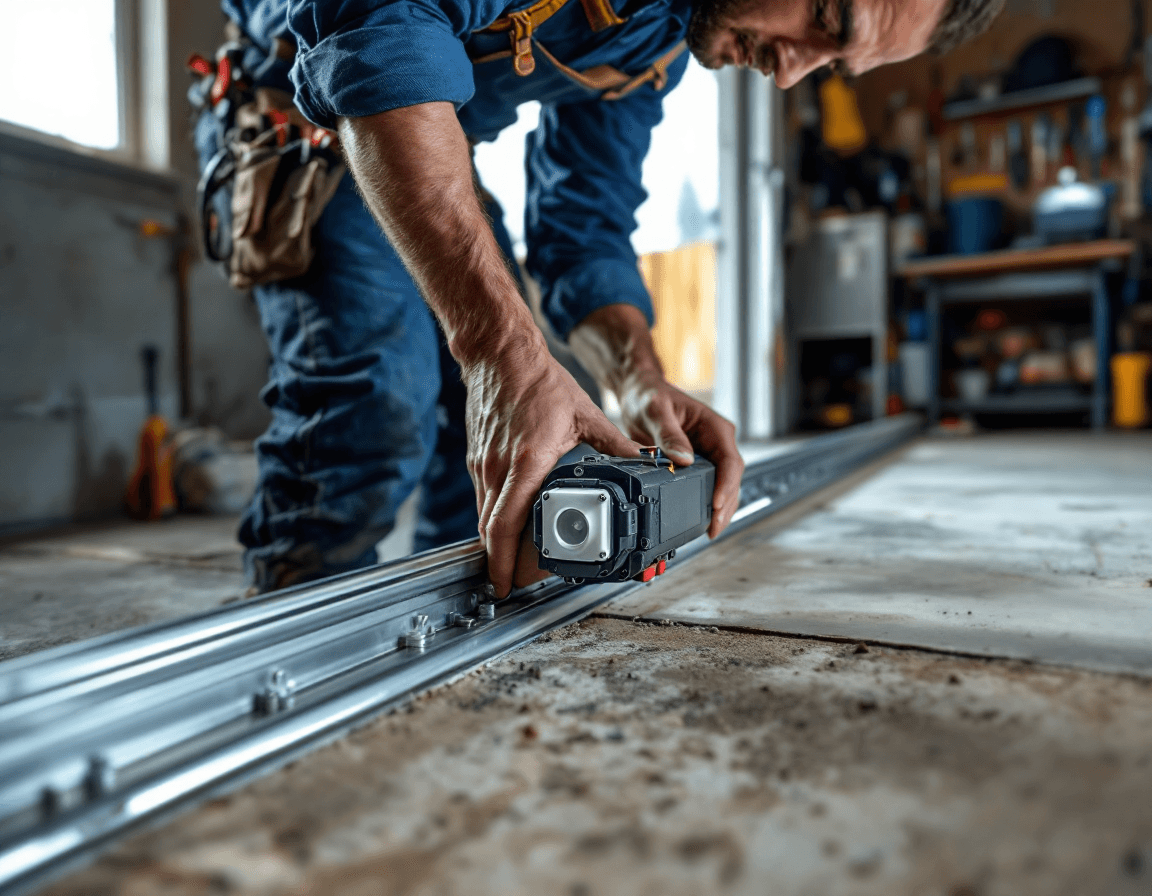
Garage door sensor repair in Edgewood, WA is one of the most common calls we handle for homeowners in the area, and it is often one of the most fixable. When a door that worked fine last week suddenly reverses the moment it meets resistance, or refuses to close at all, the photo-eye sensors near the floor are usually the first suspect. These small safety devices sit about six inches off the ground on each side of the opening, and they send an invisible beam across the door path. If the beam is interrupted or misaligned, the opener is designed to stop and reverse, which protects kids, pets, and anything parked underneath.
Edgewood sits in the Pierce County foothill-to-valley transition east of Tacoma, close to the Puyallup River corridor and the neighborhoods around Edgewood Meadows. Our technicians see the same sensor problems again and again here: wet winters that swell and corrode wire connections, low-angle afternoon sun that washes out the beam, and driveway movement that nudges brackets out of line over time. The good news is that most sensor complaints come down to alignment, a loose connector, or a damaged cable run, and those repairs are generally straightforward when handled by someone who knows what to look for. This guide explains what is happening inside the system, what you can safely check yourself, and when it makes sense to call a licensed technician.
Whether your door is one of the newer builds in the Edgewood Meadows area or an older attached garage that has seen a few decades of Pacific Northwest weather, the principles stay the same. We will walk through the symptoms that point toward sensors, the local conditions that cause them, and the realistic cost range for typical sensor work. We will also be clear about the boundaries of homeowner repair, because springs, cables, and drum components carry serious stored energy and should only be handled by a licensed professional. Read on for a practical, locally grounded overview from a team that works on these doors every week.
Why Edgewood Garages Trip Their Own Sensors
Sensor trouble in Edgewood often starts with the environment rather than the equipment. Many homes here have garages that sit close to the ground, where runoff, splashback, and seasonal saturation reach the lower portion of the door track and the sensor brackets. Moisture gets into the mounting hardware, the bracket paint lifts, and the metal starts to pit. Over several wet seasons, a bracket that once held the eye steady can loosen just enough that the beam drifts off its target.
Temperature swings add another layer. A garage can run noticeably cooler than the house during a cold February morning and warm up quickly once the afternoon sun hits the door. Metal expands and contracts slightly, and vinyl or plastic sensor housings can shift a few millimeters over a season. That is rarely enough to notice by eye, but it can be enough to break the beam path when the sensors are already sitting at the edge of their alignment window.
Finally, the sensors are simply in a hard place. They are at knee to ankle height, which means they meet lawn equipment, recycling bins, dog leashes, kids' bikes, and the occasional shopping cart nudged the wrong way. A single tap from a bin wheel can knock an eye several degrees off center, and the door will behave as if something is in the opening even when the track is completely clear.
Reading the Blinking Lights Before You Grab a Tool
Most modern openers include small indicator lights on each sensor, and these lights are a quick diagnostic if you know how to read them. The exact patterns vary by manufacturer, so the owner's manual or the label inside the opener cover is the authority for your specific unit. Still, a few general rules apply across most brands and make a good starting point before anyone climbs a ladder.
- A steady light on both sensors usually means the beam is connected and aligned, which points the problem toward the wall button, the remote, or the opener logic rather than the eyes themselves.
- A light that is completely off on one or both sensors often indicates a wiring break, a loose connector at the opener terminal block, or a power problem at that sensor.
- A blinking or rapidly flashing light commonly means the sensor is receiving a signal but not enough to establish a solid connection, which often comes from misalignment or dirt on the lens.
- A light that changes state when you wave a hand across the door path suggests the sensor pair is working and the issue may be a stuck obstruction, a warped track, or sun interference.
Write down what you see before you touch anything. A photo on your phone showing the lights and the sensor positions can be surprisingly useful when you call for service, and it helps a technician arrive with the right parts and the right expectations.
Sun Glare Along the Western Wall in Late Afternoon
Sun glare is a particular headache for Edgewood homeowners whose garage doors face west or south. Low-angle light, especially in the late afternoon and during the lower sun of autumn and early spring, can shine directly into the receiving eye. The receiver is designed to detect the modulated infrared signal from its partner, but a strong direct beam of sunlight can overwhelm that detection and make the system think the path is blocked or unreliable.
The fix is usually simple but requires attention to detail. Check whether the sun is hitting the receiver lens directly at the time the door misbehaves, which you can test by observing the door at the same time of day for a few days in a row. Sometimes a small shield made from a matte, non-reflective material can block direct light without interfering with the beam. Never paint over the lens or use anything that blocks the path between the two eyes, because that would defeat the safety function entirely.
If glare is a recurring issue, a technician can evaluate whether the sensors need to be repositioned slightly, whether the receiver should be swapped for a model with better ambient light tolerance, or whether a shade structure is more practical. Our team will always prioritize a solution that keeps the door safe rather than simply turning down the sensitivity.
Alignment Drift from Bumps, Wind, and Wet Ground
Alignment drift is the most common reason a sensor pair stops talking to each other, and it is often caused by something you never saw happen. A neighbor's car door swinging against the bracket, a gust of wind that pushes a loose mount, or a wheelbarrow that clips the sensor during a spring garden project can all shift the eyes a few degrees. Because the beam is narrow, even a small rotation can make the receiver lose sight of the transmitter.
Adjusting alignment is a careful task. Start by confirming the power is on and the lights indicate a signal, then loosen the mounting bolt just enough to rotate the sensor head. Make small movements and watch the indicator on the receiver until it reaches a steady state. Tighten the bolt without letting the housing move, then test the door through a full open and close cycle. Repeat the test a few times, since the sensor may behave differently once the door has warmed or cooled.
Many homeowners do this adjustment successfully on their own, and it costs nothing beyond time. However, if the bracket is bent, cracked, or corroded through, or if the sensor will not hold position after tightening, the hardware likely needs to be replaced. That is a good moment to call a technician, because a mount that has failed once may hide other issues in the nearby wiring or track.
Chewed and Corroded Wiring: The Silent Failure
Wiring damage is one of the trickier sensor problems because it can look like everything else. Pets, rodents, and even woodpeckers in some areas have been known to chew through low-voltage sensor cable, and the cable often runs along the wall or through a gap near the floor where it is hard to see. Rodent activity is common in garages with stored firewood, bags of pet food, or unused lawn supplies, and it tends to peak in the cooler months when homes in the South Hill and Edgewood area become more attractive shelter.
Corrosion is the quieter cousin of chewing. Moisture that seeps into staple points, wall penetrations, or the terminal block at the opener can oxidize copper contacts over time. The result is an intermittent connection that works on dry days and fails after a rainy stretch. Homeowners often describe this as a door that closes fine in the morning and reverses in the evening, which is a classic sign of a wiring or connector issue rather than an eye that has drifted.
Inspect the cable visually along its full length, looking for nicks, flattened sections, green or white crust on exposed conductors, and places where the jacket has been pulled loose from a staple. Check the connection at the opener terminal block and make sure each wire is seated firmly. If you find damage, do not splice it with tape. Low-voltage sensor wire should be replaced with the correct gauge and run in a way that protects it from foot traffic and pests. Our technicians routinely reroute sensor wiring through conduit or secure channels in Edgewood garages to prevent repeat failures.
When the Door Only Closes If You Hold the Button
One of the more specific symptoms we hear from Edgewood households is that the door will only close if the wall button is held down the entire time. This behavior is a strong signal that the opener has detected a sensor fault and switched into a constant-pressure safety mode. Instead of running on a single press, the system needs continuous input so that the person pressing the button is responsible for watching the door.
This mode is designed as a safety fallback, and it is not a fix. The most frequent culprits are the same ones discussed above: a sensor that has lost alignment, a wire that has broken or corroded, or a receiver that is not seeing the transmitter. Less often, the problem is a failing wall control or a programming setting that was changed during a previous repair. Because the opener is protecting you from a potential crush hazard, it is best to diagnose the sensors promptly rather than living with the workaround.
If your door has been stuck in hold-to-close mode, check the sensors with a simple object test. Place a flat piece of cardboard in the door path at floor level, press the button, and confirm the door reverses. Then remove the object and check whether the door closes normally when the button is pressed once. Any uncertainty about the result should prompt a service call, since the wiring and sensor components may need more detailed testing.
Replacing a Photo-Eye Pair: What the Technician Checks
When alignment and cleaning do not solve the problem, sensor replacement becomes the logical next step. A professional replacement is more than swapping two plastic housings. The technician will confirm the sensor type matches the opener, since older systems and newer models can use different voltage and signal characteristics. Compatibility matters, and an incorrect eye can cause intermittent behavior that is hard to diagnose later.
The process typically includes verifying power at the sensor, checking the cable for continuity, mounting the new eyes at the correct height on opposite sides of the opening, and aligning them until the indicators confirm a solid connection. The technician will then run a full cycle test, including checks with the object test described earlier and a review of the door's reversing behavior. We also look at the surrounding hardware, because a sensor that failed early may be a symptom of a bracket that is working loose or a track that is out of plumb.
A good replacement should leave you with clear documentation of what was changed and why. Ask for a brief explanation of the sensor model, the wiring path, and any recommendations for protecting the new components from bumps or sun exposure. You should never feel pressured into unnecessary parts, and you should expect the technician to explain the difference between a sensor fault and a larger door problem that requires separate attention.
Price Ranges and What Shapes the Final Bill
Most sensor repairs we perform for Edgewood and nearby Pierce County homes fall in the range of $85 to $225. The actual number depends on the scope of the work, the age and brand of the opener, how accessible the wiring is, and whether replacement parts are needed. A straightforward alignment or connector fix will land at the lower end, while a full pair replacement with rerouted wiring will sit higher.
- Simple realignment and cleaning of sensors with working wiring typically sits at the lower end of the range.
- Replacing one damaged sensor or a bracket assembly usually falls in the middle of the range, depending on the part and its availability.
- Full photo-eye pair replacement combined with wiring repair or conduit work tends to land near the upper end.
- Additional charges can apply if the opener control board or a separate wall control needs attention, since those are outside the typical sensor scope.
Every estimate should be clear about what is included before work begins. If a technician identifies a problem that goes beyond sensors, such as a worn spring or frayed cable, that work requires its own evaluation and should be discussed separately. Our goal is to give you a clear picture of the repair and the options, not to stretch a small fix into a larger job.
DIY Checks That Are Safe for Homeowners
There are several sensor-related checks a homeowner can perform safely without special tools. Start by wiping the lens of each eye with a soft, dry cloth, since dust, cobwebs, and road grime can reduce signal strength in damp weather. Make sure nothing is blocking the path between the sensors, including stored bins, pet bowls, or the edge of a floor mat. Confirm the wall control is working and that the opener is receiving power.
You can also check the sensor mounting screws and make sure they are snug without being overtightened. Look for visible cable damage near the floor and along the wall, and note any loose staples or areas where the cable is pinched behind a shelf or cabinet. Observe the door during the afternoon to see whether sun glare appears to be the trigger, and take notes on the time and conditions.
Stop there. Do not attempt to adjust spring tension, remove a cable, or work on the drum or torsion assembly yourself. Those components store significant energy and can cause serious injury even when the door appears to be at rest. Spring and cable work must be performed by a licensed professional, and if your sensor check reveals a problem in those areas, call a technician rather than proceeding on your own.
Keeping Sensors Reliable Through Pierce County Winters
Preventing sensor trouble is easier than fixing it, and a few seasonal habits make a real difference in Edgewood's wet and variable climate. Once or twice a year, wipe the sensor lenses and check the brackets for corrosion or loosening. Keep the floor of the garage clear of items that could bump the eyes, and consider a small guard or relocated storage if bins or equipment regularly brush against the lower corners of the door.
Inspect cable runs during the fall, before the heaviest rain arrives, and look for rodent signs such as droppings, gnaw marks, or shredded insulation. Sealing gaps around pipes and utility penetrations can reduce moisture and pest access. If you notice the door reversing more often after a storm or during a cold snap, record the conditions and mention them to your technician, since patterns like this often point to moisture or temperature-related issues.
Regular professional inspections also help catch problems early. A technician can check alignment under real operating conditions, test the reversing safety function, and identify wear before it turns into a failed sensor on a busy weekday morning. Consistent attention is the best way to keep the door safe and dependable through the full range of Pacific Northwest weather.
Garage door sensors are small, but they carry a big responsibility for the safety of everyone who uses your garage. If your door in Edgewood will not close, keeps reversing, or only moves when you hold the button, call Seattle Garage Door Fix at (888) 799-3819 to schedule a licensed technician. We serve Edgewood Meadows and neighborhoods throughout Pierce County, and we will explain your options clearly before any work begins.