
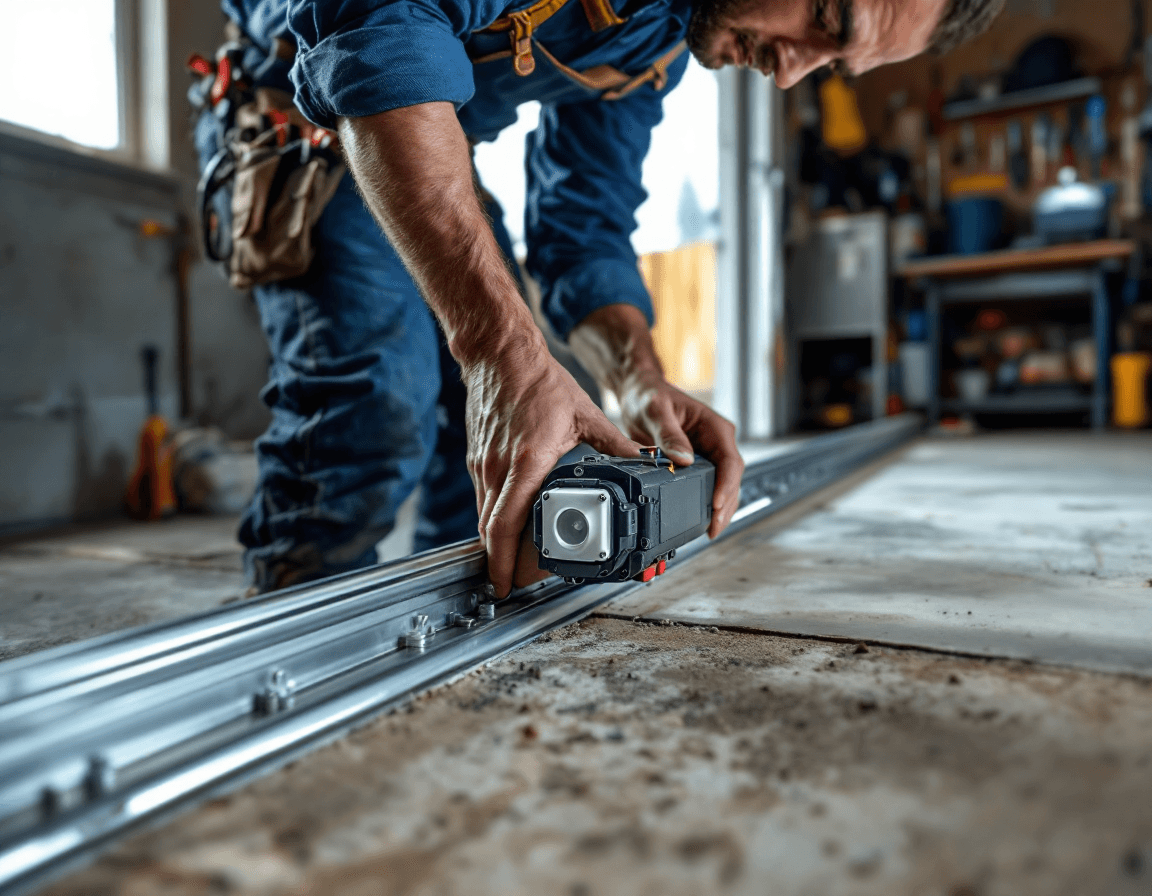
Garage Door Sensor Repair in Fife, WA is one of the most common calls we take from homeowners and small-business owners in this part of Pierce County, and it is also one of the most fixable. When a door will not close, or it starts up, touches the floor, and immediately climbs back to the top, the problem is usually not the motor or the springs. The safety photo-eyes that sit low on each side of the opening have lost their line of sight, their wiring has been damaged, or something in the environment is confusing them. Those sensors exist for a serious reason: they tell the opener to reverse if something is standing in the path of a closing door, and an opener that ignores them is a real hazard to kids, pets, and anyone who walks under a descending panel.
Fife sits in a particular kind of setting that shapes how these sensors behave. The city is tucked between the Interstate 5 and State Route 167 corridors, and much of its footprint is occupied by warehouses, distribution yards, light manufacturing, and the trucking traffic that follows the Port of Tacoma edge. Many of the garages we service here are attached to homes in older neighborhoods close to the industrial core, while others belong to shops and storage buildings where doors open and close dozens of times a day. Dust, road grit, moisture off Commencement Bay, and the damp winters typical of Western Washington all work against a sensor that was installed with a little dab of adhesive and a hope.
This page explains what usually goes wrong with garage door sensors in and around Fife, how to tell the difference between a simple alignment issue and a wiring or hardware failure, what a typical repair involves, and where the cost generally lands. Most sensor repairs we complete fall in the range of $85 to $225, depending on whether the job is a quick realignment or a replacement pair with new wiring. We also cover the situations where you should stop troubleshooting and call a licensed technician, because some garage door work, especially anything involving the springs or cables, is not a weekend project. If your door is misbehaving right now, the fastest way to get it back to safe operation is to call (888) 799-3819.
Why Fife Garages Test Their Sensors Harder Than Most
A sensor that works fine in a quiet suburban cul-de-sac can fail within a season in an area with heavy truck traffic and industrial dust. Fine particles from loading yards, road sanding grit from winter storms, and general airborne grime settle on the sensor lenses and gradually reduce the infrared beam's strength. Because the beam is designed to be detected cleanly, even a thin film can leave the receiving eye unsure whether it is seeing the transmitter at all. Technicians in Fife often find sensors that look passable from a distance but have a visibly cloudy lens when we open the cover.
Moisture adds a second layer of trouble. Pierce County winters bring long stretches of drizzle, fog, and high humidity, and the sensor housings, which are usually plastic with a small pair of exposed electronics, can accumulate condensation at the seams. Over time that moisture finds its way to the terminal connections at the bottom of the unit and to the wire where it enters the housing. Corrosion on those contacts causes intermittent faults, which is why a sensor might work perfectly on a dry afternoon and then refuse to let the door close on a damp morning.
Proximity to the port and industrial district also means many garages sit near loading traffic, forklift routes, and delivery vehicles that bump or brush against the lower part of the door frame. Sensors mounted about four to six inches above the floor are exactly the height that a rolling cart, a bumper, or a hand truck can clip. In shared driveways and commercial yards we often see sensor brackets that have been knocked loose and turned sideways, and the damage can be invisible until someone tries to close the door.
Reading the Little Light: What Blinking and Dark LEDs Are Telling You
Nearly every modern safety sensor pair has a small indicator light, and learning what that light does is the quickest way to start diagnosing the problem. On most systems, a steady light on both units means the sensors are aligned and can see each other. A blinking light, or one that alternates between the two sensors, typically means the receiver is not picking up a clean signal from the transmitter. A light that stays completely dark usually points to a power problem, a broken wire, or a failed unit. Because the exact light patterns vary by manufacturer and opener model, the printed manual or the label on the sensor bracket is the best reference for what each pattern means on your specific system.
When we arrive at a Fife job, we start by watching the light through a full open and close cycle. If the light is steady while the door is open but begins to flicker or go dark as the door comes down, that often means the bracket is flexing or the wire is pinching as the door travels. If the light was never on at all, we move straight to the power and wiring check before touching the alignment. Taking a few minutes to observe the light before grabbing a screwdriver tends to prevent a lot of unnecessary adjustments.
Homeowners sometimes assume that a blinking light always means a bad sensor. In practice it is more often a misalignment, a dirty lens, or a bit of direct sunlight hitting the receiver. A quick way to narrow it down is to wipe both lenses with a soft dry cloth, watch the light again, and then consider whether any strong light source is shining across the opening at the same hour the door misbehaves. If the light changes when you cover the receiver with your hand, the sensor is responding to light and not to its partner, which points toward glare or interference.
Alignment Problems That Show Up After Bumps and Settling
Sensor alignment is the single most common reason a door refuses to close, and it is also the easiest to fix. The transmitter sends a narrow infrared beam to the receiver on the opposite side of the opening, and if that beam misses even slightly, the opener treats the path as blocked. Brackets get knocked by carts, by a ladder leaning against the wall, or by a car door swung too close during a tight parking maneuver. Over time, vibration from the door itself can also loosen the mounting screws until the sensor drifts out of its original angle.
To check alignment, look at the two units from the side and confirm that both faces are pointed directly at each other and that the mounting brackets are level with the floor. Many technicians use a simple trick of sighting along the sensor face the way you would sight down a rifle barrel, which makes it easier to see when a unit is tilted even a few degrees. Gently loosen the wing nut or mounting screw, adjust the angle, and retighten without forcing the bracket. Then test the door several times, because a sensor that works once is not necessarily stable.
Some homeowners overcorrect and end up with a sensor pointed at the floor or at a wall, which can cause random reversing. The goal is a clean, straight line between the two faces, not the most dramatic angle possible. If a bracket has bent or cracked, adjusting it will only buy you a short time, and replacing the bracket is a better long-term repair. We carry common mounting hardware for the main opener brands we see around Fife, which helps keep the visit efficient when the bracket itself is the weak point.
When the Door Only Closes If You Hold the Wall Button
One of the most telling symptoms is a door that will only come down when the wall button is held continuously. Most openers are designed to close a door with a single press, but when the safety system is not confirmed, many models switch to a hold-to-close mode. In that mode the door moves only while you keep pressing, and it stops the moment you let go. It is a protective feature, and it is a clear sign that the opener has detected a fault in the safety circuit and does not trust the sensors to protect anyone.
The hold-to-close symptom does not always mean the sensors themselves have failed. It can also result from a broken or pinched wire between the sensor pair and the opener, a loose terminal screw on the opener's control board, or a sensor that has lost power because the wire was nicked by a staple or a fastener driven too close to the run. Walk the wire from the sensor back to the opener and look for places where it has been pinched by a door track bracket, rubbed through on a sharp corner, or chewed by a rodent. Those rodent problems come up more often than many people expect in older Fife homes and in outbuildings near the industrial edge.
Once the wiring is inspected, a technician will typically test the continuity of the sensor circuit and verify that the opener is receiving the correct safety signal. If the sensors are old or the housings show clear water damage, replacing the pair is often the cleaner fix. We recommend against bypassing or jumpering the sensor connection to make the door close, even as a temporary measure. A door that closes without a working safety beam can injure someone who is standing in the path, and that risk is not worth a few days of convenience.
Damaged and Chewed Sensor Wiring: Spotting the Problems Early
Sensor wire is low-voltage and thin, which makes it vulnerable in a garage environment. It runs along walls, across ceilings, and down door tracks, and it often sits within reach of pets, tools, and shelving. In our experience, the wire itself is one of the most overlooked points of failure. A short run can look intact on the surface while the conductor inside has been cut or stressed where it bends around a corner or passes through a metal bracket.
Look for several warning signs. Brittle or cracked insulation near the bottom of the sensor, green or white crust on the terminals, and a wire that has been stapled too tightly are all common findings. Rodent damage tends to show up as small nicks or stripped sections, sometimes with droppings or nesting material nearby. If the wire has been repaired before with electrical tape or a twisted connection, those splices are often the source of an intermittent fault, since they can loosen as the door vibrates.
Fixing wiring is usually straightforward, but it should be done with the correct gauge and the right connectors so the signal remains reliable. Splicing a sensor cable with household wire, or leaving exposed copper in a damp garage, will cause the same problem to return within weeks. If the run is long or passes through a difficult path, replacing the entire cable from the opener to the sensor is often the most dependable choice. A tidy, well-secured run that stays away from the door's moving parts is worth the extra time.
Sun Glare and the Afternoon Problem Nobody Expects
Sun glare is a classic cause of intermittent sensor trouble, and it shows up in a very specific way. A door that reverses only in the late afternoon, or only during certain months, is a strong clue that low-angle sunlight is entering the garage opening and striking the receiver lens. Infrared sensors are designed to ignore ambient light to a degree, but a strong direct beam can overwhelm the receiver and make it think the path is blocked or unclear. Because the sun's angle changes with the seasons, the problem may appear in the fall, fade in midwinter, and return in early spring.
Fife's geography and orientation can make this more noticeable on some properties than others. Garage doors that face west or southwest can catch a long, low sun in the late afternoon, especially on clear days that break up the usual overcast. Reflective surfaces across the street, such as a metal building, a parked vehicle with a glossy finish, or a freshly painted wall, can bounce light directly into the sensor. In those cases, moving the sensor a little, adding a small shield, or changing the mounting height can solve the issue without replacing any hardware.
Be careful with makeshift shades that block the beam itself. A cardboard hood placed over the receiver can stop glare, but if it also obstructs the transmitter's signal or touches the lens, it will create a new alignment problem. A proper sensor shield, or a small adjustment to where the unit is mounted, is the better approach. If you notice the door works fine in the morning and fails only when the sun is low, that is worth mentioning when you call so the technician can check the sensor position at that time of day.
A Quick Homeowner Checklist Before You Call
Some sensor problems can be checked safely at home, and running through a short list can save time and sometimes solve the issue outright. Before you schedule service, try the following steps, and note what you observe so the technician has useful information when they arrive.
- Wipe both sensor lenses with a soft, dry cloth and remove any cobwebs, dust, or spider webs from the housings.
- Check that both units are mounted securely and point directly at each other, with the brackets level and tight.
- Watch the indicator light through a full open and close cycle and note whether it steadies, blinks, or goes dark.
- Clear anything from the door path, including boxes, tools, pet bowls, and the edge of a rolling cart.
- Test the door at different times of day to see whether sunlight or glare changes the behavior.
- Inspect the sensor wire for visible nicks, staples, rodent damage, or loose connections at the terminals.
If these checks do not restore normal operation, or if you find damaged wiring, a cracked housing, or any sign of water in the unit, it is time to have a licensed technician look at the system. Trying to pull the sensor cover apart while the door is powered or while the springs are under tension can lead to serious injury. Sensor work itself is typically low-voltage, but the surrounding door hardware is not, and a technician will know how to isolate the opener safely before they begin.
What a Typical Sensor Repair Involves and What It Costs
A professional sensor repair in Fife usually begins with a safety-first inspection of the entire system. The technician will test the door's reversing behavior, confirm that the opener is receiving a proper signal, and check the power supply to the sensors. Next comes the cleaning, alignment, or replacement step, followed by a complete set of tests that include closing the door on a safe obstruction test and verifying that the auto-reverse function works as intended. Most visits include a clear explanation of what was wrong and what was changed.
For many homeowners, the repair is a quick realignment or a lens cleaning, with the total cost falling near the lower end of our typical range. When a sensor pair needs to be replaced, or when the wiring must be run again over a longer distance, the job moves toward the upper end of the range. Our standard pricing for most sensor repairs falls between $85 and $225, and the final figure depends on the parts needed and how much work the installation requires. Ask the technician to explain the scope before work begins so there are no surprises.
Warranty and parts questions are reasonable to raise at the time of service. Ask what brand and model of sensor is being installed, whether it is compatible with your opener, and what coverage applies to the labor and the part. A good technician will be comfortable answering those questions and will not push you toward a larger repair than the situation calls for. If the door has a different underlying problem, such as worn rollers or a failing opener, the technician should tell you that plainly and explain your options.
When to Stop and Call a Licensed Professional
Most sensor issues are safe for a homeowner to observe and clean, but certain situations require a licensed technician with the right tools and training. Any problem involving the torsion springs, the extension springs, the cables, or the drums should be handled by a professional. Those components store a large amount of energy under tension, and a spring that releases unexpectedly can cause severe injury or property damage. Even a door that seems to hang unevenly or sits crooked on its tracks deserves professional attention before anyone attempts a repair.
Electrical concerns also belong with a licensed professional. If you see scorched insulation, smell burning near the opener, notice that the opener trips a breaker repeatedly, or find exposed wires near a power outlet, stop and call for service. Water intrusion into the opener or the sensor wiring should be treated seriously, especially in a garage that has experienced flooding or repeated damp weather. A licensed and insured technician can determine whether the damage is limited to the sensors or extends into the opener's control board.
Our company is licensed, bonded, and insured, and our technicians are trained to work safely around the full range of garage door hardware. If you are unsure whether a problem is safe to handle yourself, it is always better to ask. A short phone call can help you decide whether a sensor cleaning will do the job or whether the situation calls for a full inspection.
Keeping Your Sensors Reliable Through a Pacific Northwest Year
A little routine care goes a long way toward preventing sensor problems in a climate like ours. Wiping the lenses every few months, especially after the wet season and after dusty stretches, keeps the beam strong and reduces the chance of false reversing. Check the brackets once or twice a year to confirm they are still tight and pointing at each other, and look over the wire for new staple marks or signs of pests. These small habits take only a few minutes and can catch a developing problem before the door stops working entirely.
Consider the seasonal shift in light as well. If your sensors act up during certain months, mark the pattern on a calendar and mention it to the technician, because the fix may be a simple repositioning or a shield that you can install once and forget. In garages near heavy traffic or industrial activity, it may also help to keep the door path clear of stored items and to remind anyone using the space to avoid bumping the sensor brackets with carts, ladders, or equipment. Clear communication with household members or coworkers is often the easiest protection of all.
Finally, schedule a professional safety check on the entire door system every year or two. A technician can test the sensors, confirm the reversing force, inspect the springs and cables from a safe distance, and catch small issues before they become expensive ones. Keeping your door in good working order protects your home, your vehicles, and the people who walk through the garage every day.
Whether your door refuses to close, reverses for no clear reason, or only comes down when you hold the button, a qualified technician can usually restore safe operation the same day. For Garage Door Sensor Repair in Fife, WA, and the surrounding Pierce County area, call Seattle Garage Door Fix at (888) 799-3819 to schedule a visit and get your sensors aligned, cleaned, or replaced with a clear explanation of the work.