
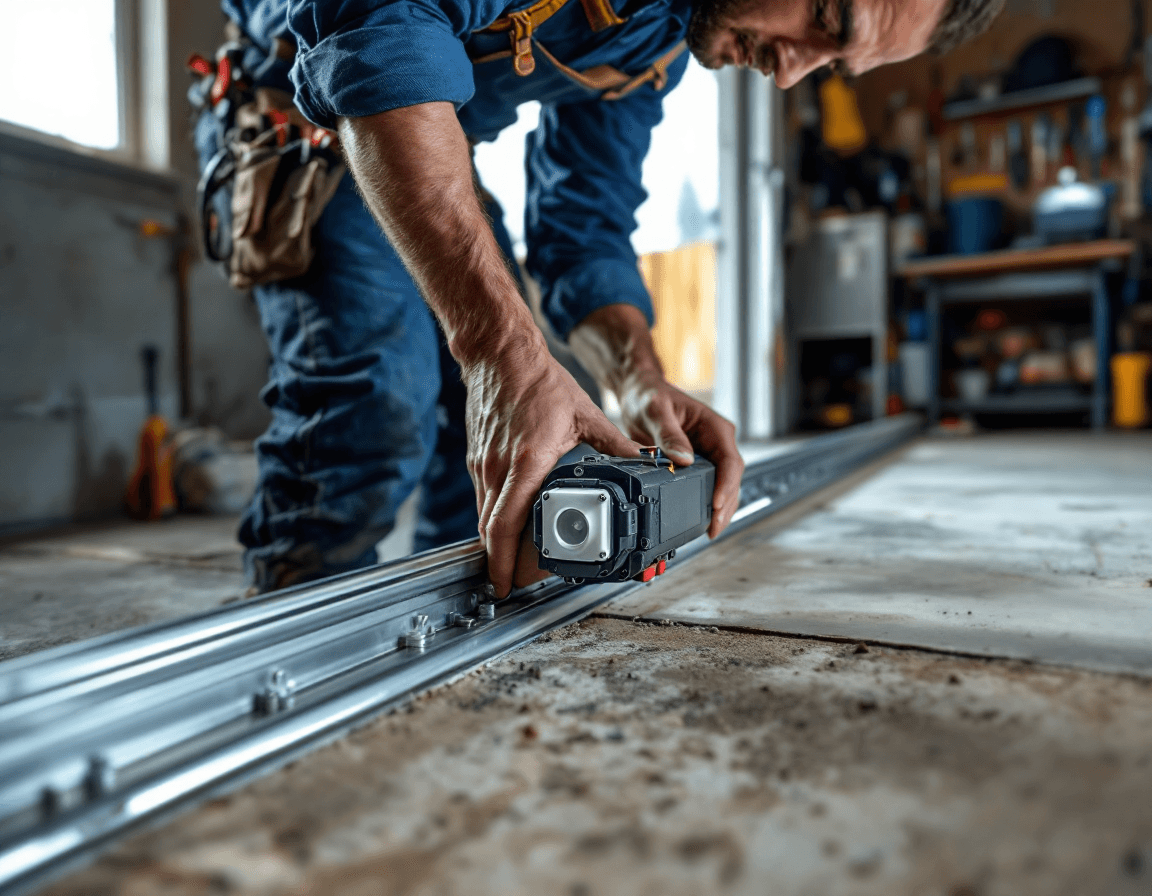
Garage door sensor repair in Lake Forest Park, WA is one of the most common calls we take from homeowners on the north end of King County. A door that stops mid-travel, slams back up the moment it touches the floor, or refuses to close at all is frustrating, especially when you need to leave for work or secure the house for the night. The good news is that most sensor problems are inexpensive to fix once someone finds the actual cause. The photo-eye sensors at the bottom of your tracks are simple devices, but they sit in a demanding environment of rain, road grime, low winter sun, and the occasional bumped bicycle.
This page explains how these sensors work, why they fail in our part of the Pacific Northwest, and what you can check yourself before calling a technician. We also cover where the sensors are most likely to misbehave in Lake Forest Park homes, from older attached garages to newer driveways that catch afternoon light. Whether your door is in a neighborhood near Lake Forest Park Towne Centre or closer to the shoreline around Sheridan Beach, the underlying causes are similar, and so are the fixes.
Our goal is to give you enough background to understand what is happening above your head, so you can describe the problem accurately and make a sound decision about repair. Sensor work is usually low risk and low cost, but spring and cable work is a different matter entirely, and we will point out where that line sits. Read on for a practical guide written by people who spend their days in local garages.
Why Your Door Refuses to Close Around Lake Forest Park
Every automatic garage door opener built in the last few decades includes a safety reversing system. Its purpose is to stop the door and send it back up if something is in the path, such as a child, a pet, or a parked car's bumper. Two photo-eye sensors, one on each side of the opening, send an invisible beam across the doorway. When the beam is interrupted during closing, the opener reverses. That safety feature is exactly why a door that should be closing will sometimes just go back up without any obvious obstruction.
In Lake Forest Park, the most common reason a door will not close is not a fault in the opener itself but a sensor that cannot see its partner. The beam may be misaligned, the lens may be dirty, the wiring may have been damaged, or the sensor may have lost power. The opener interprets all of these situations the same way: it does not trust that the path is clear, so it refuses to close fully or reverses the moment the door begins to descend. Understanding that the opener is simply protecting people is the first step toward fixing the real problem.
It also helps to know that the symptom and the cause are often separated by several feet of wire and a few small brackets. A sensor mounted on the left jamb can be perfectly healthy while the right-side unit has been nudged loose, which is why a good technician tests both ends and checks the beam path rather than replacing parts based on guesswork. This diagnostic approach saves homeowners money, because a sensor replacement is rarely needed when realignment or a clean lens will do.
Reading the Sensor Lights Before You Call
Most photo-eye sensors have a small indicator light that tells you a great deal about their condition. On many common models, one sensor shows a steady light while the other shows either a steady light or a different indicator, depending on whether the beam is connected. When the light is completely off on one unit, that often points to a wiring break, a blown connection at the opener terminal, or a sensor that has lost power. When the light blinks instead of staying steady, the sensor is usually reporting that it cannot align with its partner.
Take a few minutes to look at the lights before you do anything else. Stand near the door without blocking the beam and note whether both units show the expected indicator pattern. Check the owner's manual for your specific opener, since the color and blink behavior differ between manufacturers and model years. Writing down what you see, along with when the problem started, gives a technician useful information before they even climb the ladder.
- Steady light on both sensors: the sensors are powered and probably aligned, so look at the door path, the lens surface, or the opener's force and limit settings.
- Light off on one sensor only: check the wire connection at that sensor and at the opener terminal block, and look for chewed or pinched insulation.
- Light blinking or flickering: the sensors are powered but cannot see each other, which usually means misalignment, debris, or sun glare.
- Light off on both sensors: suspect a power or control board problem, a blown fuse, or a wiring fault that affects both units.
How Photo-Eye Sensors Actually Work on Your Door
A photo-eye pair consists of a transmitter and a receiver. The transmitter sends a narrow infrared beam across the opening, roughly six inches above the floor on most residential installations. The receiver must detect that beam continuously to tell the opener the path is clear. Because the beam is narrow, even a small angle change can break the connection, which is why alignment matters so much and why these units are sensitive to vibration.
The sensors are wired back to the opener, usually with a low-voltage two-conductor cable. The opener sends low voltage to the sensors and receives the signal back. This is a safety circuit, which means that if the wiring is interrupted or the signal is inconsistent, the opener is designed to refuse to close. That design protects people, but it also means that a sensor problem can look like a serious mechanical failure when the actual fault is a loose screw terminal.
It is worth knowing that the sensors do not care about the door's motor or springs. They only care about the beam and the wiring. This is why sensor repair is among the more affordable and less hazardous garage door services. Springs, cables, drums, and torsion components store large amounts of energy and must be handled only by trained, licensed professionals. Sensor brackets, lenses, and wiring can be inspected and adjusted with basic tools, though a qualified technician should confirm any repair before you rely on it.
Rain, Moss, and Mildew Along the Track Near the Lake
Western Washington's wet season leaves a mark on everything at ground level, and garage door sensors sit right where that moisture collects. Rain splashes off the driveway, spray from tires gets flung against the lower panels, and damp air condenses on the lens surfaces overnight. Over several months, a thin film of grime, pollen, and mineral residue can build up until the beam is weakened enough to trigger a reversal. Homes closer to the lake or in shaded lots tend to see more moss and mildew along the bottom of the door and the track, which can also be drawn toward the sensor housings.
Cleaning the lenses is one of the simplest and most effective fixes available. Use a soft, lint-free cloth and a small amount of mild soap or a glass-safe cleaner, then wipe the lens gently and dry it. Avoid abrasive pads, paper towels that leave fibers, and harsh chemicals that can fog the plastic. After cleaning, check that the bracket has not shifted, because scrubbing can nudge a loosely mounted sensor out of its original position.
Moisture also works its way into wire connections over time. Look for green or white corrosion on terminal screws and on any exposed copper. If the sensor wiring runs through a damp corner or along a section of the wall that gets wet, consider having a technician replace the cable with a rated run and secure it so it cannot sag into standing water. Protecting the wiring is much cheaper than chasing an intermittent fault that only shows up after a week of heavy rain.
Sun Glare in the Late Afternoon and Winter Low Angles
Sun glare is a frequent culprit in Lake Forest Park, particularly for garages that face west or south and receive strong light in the late afternoon. Infrared from direct sunlight can overwhelm the receiver, causing it to read the beam as interrupted even when the path is perfectly clear. The result is a door that closes fine in the morning but reverses at four o'clock or refuses to close during the evening. Winter adds a different twist, because the sun sits lower in the sky and can shine straight into the sensor lens at an angle that is easy to overlook.
If you suspect glare, test the door at different times of day and note when the behavior changes. A simple fix is to adjust the sensor angle slightly so the receiver faces away from the direct sunlight, or to add a small shield or hood over the lens. Be careful not to block the beam itself, and do not paint or tape the lens. Some technicians also recommend moving the sensor a few inches higher or lower on its bracket, though this must be done with the beam path in mind so the transmitter and receiver remain aligned.
Glare problems can be stubborn, and sometimes the fix involves a different sensor model that is designed to resist ambient light better. Newer units often include improved filtering, and a technician can check whether your existing hardware is compatible with an upgrade. If the glare is severe and recurring, a replacement pair may be the most cost-effective long-term solution.
Knocked Out of Line: Bumps, Bikes, and Backing Out
Garages are busy places. Strollers, recycling bins, kids' bikes, and the occasional grocery cart can all strike a sensor bracket and knock it out of alignment. Vehicles pulling in too quickly can also tap the lower corners of the door frame, and a single hard bump is enough to change the angle of the beam. Because the units are small and mounted close to the floor, they are easy to miss during routine cleaning and even easier to damage by accident.
Signs of a knocked sensor include one unit hanging at a slight angle, a bracket that wiggles when you touch it, or a sensor face that no longer points straight at its partner. Sometimes the bracket bends rather than the sensor itself, which can leave the lens pointed at the floor or the wall. A technician will check both units, straighten or replace the mounting hardware as needed, and then confirm the beam is fully aligned by testing the door through several complete cycles.
Realignment is usually quick, but it should be done methodically. Loosen the mounting screw just enough to move the sensor, adjust it until the indicator light shows a steady connection, then tighten the screw without letting the sensor rotate. If the light will not stabilize after a few tries, the problem may be a damaged lens or a wiring issue, and continuing to adjust can make things worse. At that point it is better to call for help.
Chewed, Pinched, and Corroded Sensor Wiring
Wiring is the most underestimated part of a sensor system. The low-voltage cable that runs along the wall and into the opener is often stapled, pinched by the door's rollers, or exposed to pests. In our area, rodents occasionally chew cable insulation, especially in attached garages with stored firewood, pet food, or insulation nearby. A small nick in the jacket can allow moisture to reach the conductors, leading to intermittent signals that are maddening to diagnose.
Pinching often happens where the cable crosses the door track or runs around the jamb. When the door moves up and down, a cable caught under a roller or against a bracket can gradually wear through. The sensor might work perfectly for weeks and then fail on a damp morning. Careful routing, using insulated staples that do not crush the cable, and leaving a little slack at the sensor end can prevent most of these failures.
If you see chewed insulation, green corrosion, or wires that have pulled out of their terminal screws, do not try to splice them with improvised tape. Sensor wiring is part of a safety circuit, and a poor connection can cause the opener to behave unpredictably. A technician will typically replace the damaged section with a continuous run, test the circuit, and confirm that the reversing function responds correctly.
When the Door Only Closes If You Hold the Button
Some homeowners describe a different symptom: the door will only close if they hold the wall button down, and it stops or reverses as soon as they let go. This is what many openers do when the safety reversing circuit is faulty or bypassed. In many models, a "constant pressure" or "override" mode allows the door to move while the button is held, even when the sensors are not reporting a clear path. That mode is meant for temporary troubleshooting, not for daily use.
If your door behaves this way, treat it as a sign that the safety system needs attention. The most common causes are the same ones described above: misaligned sensors, dirty lenses, damaged wiring, or a sensor that has lost power. In some cases the problem is the opener's logic board, particularly on older units, though that is less common than a simple sensor fault. Continuing to operate the door in override mode is not safe, because the reversing protection is not working as designed.
Please do not defeat or disconnect the sensors to make the door close. That shortcut removes the protection for people and pets and may violate local building or safety expectations. A proper repair restores the full safety feature so the door closes automatically and reverses reliably when something is in the path.
What a Typical Sensor Repair Costs Here ($85–$225)
For most photo-eye sensor repairs, our pricing falls in the range of $85 to $225. The actual cost depends on what needs to be done. A simple realignment or lens cleaning sits at the lower end of that range, while sensor replacement, wiring repair, or a combination of both usually lands higher. The final figure depends on your specific opener, the sensor model required, and how much access the technician has to the wiring run.
Factors that influence the total include the type of sensors installed, whether replacement parts must be ordered, and whether the wiring needs to be run through a finished wall or along a long section of the garage. Attached garages sometimes present more access challenges than detached structures, and older homes may have wiring that must be upgraded to meet current expectations. A technician who inspects the system in person can give you a clear estimate before any work begins.
It is also worth asking whether a sensor issue is actually the cause of a larger problem. If the door's springs, cables, or track are worn, sensor repair alone will not solve the symptoms of a door that binds or fails to close smoothly. A thorough inspection helps you avoid paying for a fix that does not address the root issue.
DIY Checks Worth Trying and the Lines You Shouldn't Cross
There are several simple checks any homeowner can safely perform. Clean both sensor lenses with a soft cloth. Confirm that each unit is mounted firmly and points straight at the other. Look at the indicator lights and compare them to your manual. Clear any debris, cobwebs, or leaves from the beam path, and make sure nothing is stored in front of the sensors. These steps take only a few minutes and resolve a surprising number of calls.
- Wipe both lenses with a soft, dry or lightly dampened cloth, then dry them completely.
- Check that both brackets are tight and the sensors have not rotated or tilted.
- Look for visible wire damage, loose screw terminals, or cable that has been pinched by the door.
- Test the door with nothing in the path and note whether it closes fully and smoothly.
- Confirm that the sensors are not in direct afternoon sun, and note the time of day if the problem recurs.
Some tasks are off-limits for homeowners. Spring adjustments, cable replacement, drum and bearing work, and any repair involving the torsion system carry serious risk of injury because the springs store enormous tension. These jobs must be performed by a licensed, insured professional with the right tools and training. Even if sensor work looks straightforward, if you find yourself near the springs or cables, stop and call for service.
Scheduling a Visit Near Towne Centre and Sheridan Beach
If your sensors are misbehaving and the DIY checks have not solved the problem, our technicians can come to your home in Lake Forest Park and inspect the full safety system. We serve the 98155 area and the surrounding communities across the greater Seattle and Western Washington region, and we routinely work in neighborhoods close to Lake Forest Park Towne Centre and the residential streets near Sheridan Beach. A visit includes checking alignment, testing both sensors, inspecting wiring, and confirming the reversing function before we leave.
When you call, describe what the sensor lights are doing, when the problem happens, and whether the door reverses, refuses to move, or only closes while you hold the button. Mention any recent bumps, storms, or changes in the garage such as new storage or a moved bicycle rack. This information helps us prepare the right parts and shortens the visit. We will explain what we find, give you a clear price range before work begins, and recommend only the repairs that your door actually needs.
For sensor problems that are stopping you from using your garage, the fastest path to a reliable fix is a careful inspection and a well-executed repair. Call Seattle Garage Door Fix at (888) 799-3819 to schedule a visit for your Lake Forest Park home. Our licensed, bonded, and insured team will get your door closing safely again.