
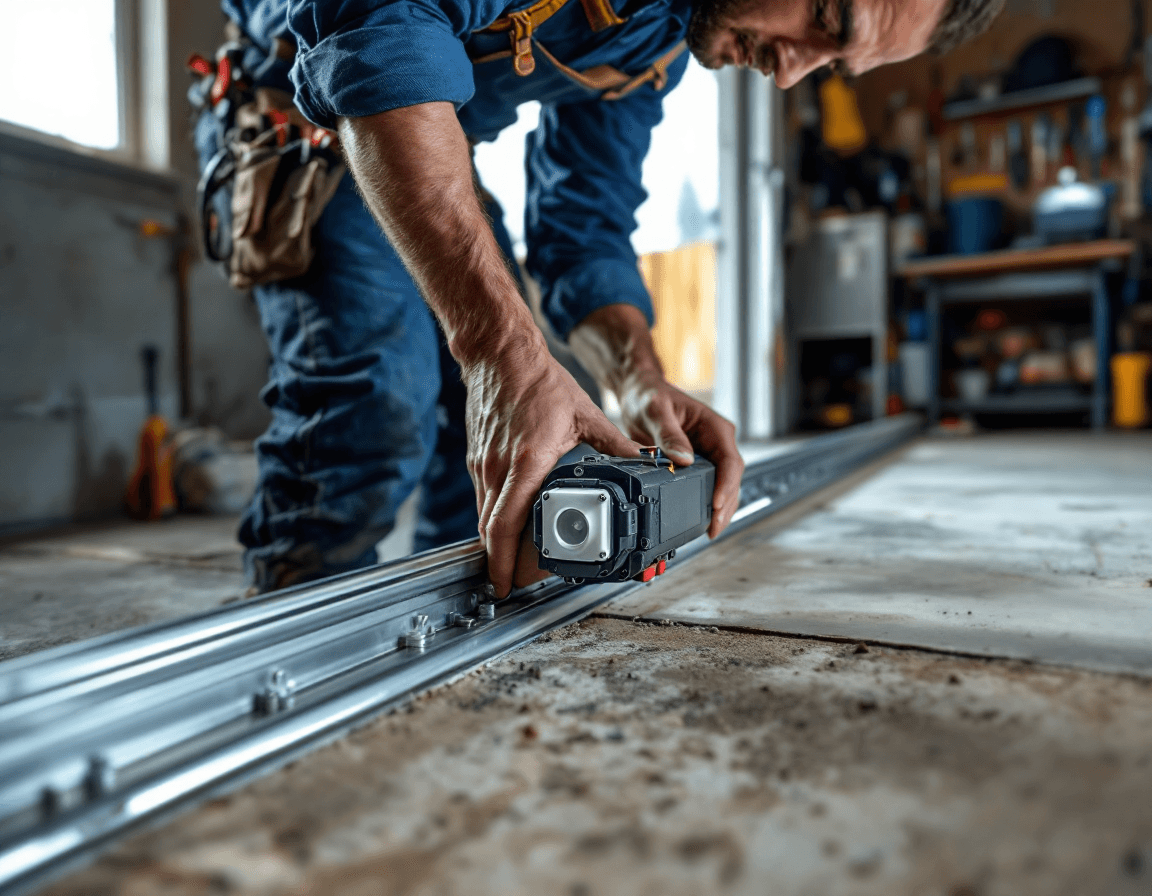
Garage door sensor problems are some of the most common calls we handle in Kenmore, and they're often the easiest to fix once someone takes the time to find the actual cause. If your door won't close, or it starts to lower and then springs back up as soon as it nears the floor, the safety sensors are usually the first place to look. Kenmore homes sit along the northeast shore of Lake Washington, where damp air, shifting light, and a lot of rain all put extra stress on the small photo-eye sensors mounted at the bottom of your tracks. Garage Door Sensor Repair in Kenmore, WA is a routine service for us, and most jobs take less time than homeowners expect.
These sensors have one job: to make sure nothing is blocking the door's path before it moves down. Each pair includes a sender and a receiver, and when the beam between them is broken, the opener stops or reverses. That protective feature is required on modern openers for good reason, and it's also why a sensor that is slightly out of line, dirty, or receiving too much sunlight can make a perfectly healthy door behave as if something is in the way. The good news is that most sensor problems come down to alignment, wiring, or light interference, and all three can be diagnosed without replacing expensive parts.
This page explains what we typically find in Kenmore garages, how to read the signs your door is giving you, and when a repair is the smart call. We also cover what to expect from a service visit, what homeowners can safely check on their own, and where the line sits between a sensor fix and work that belongs to a licensed professional. If you have a door that keeps reversing or refuses to close, the information below should help you narrow down the cause before a technician arrives.
Why Kenmore Garage Doors Struggle With Their Own Safety Eyes
Kenmore is a leafy, residential community with plenty of older attached garages, detached workshops, and driveways that slope toward the street or toward the lake. Many of the homes near the waterfront and in the surrounding neighborhoods have garages that take on moisture from the ground, and that humidity finds its way into everything mounted near the floor. Sensor brackets are often steel, the lenses collect dust and residue, and the wiring runs along the track where it's exposed to splashes, dripping water, and the occasional wandering cat or leaf blower. Over several wet winters, these small conditions add up.
The sensors sit low on purpose, usually mounted around six inches above the garage floor on each side of the door opening. At that height they are the first things hit by rain tracked in on boots, muddy tires, and blown debris after a windy Pacific Northwest storm. A bracket that was perfectly square when installed can gradually twist as the mounting screws loosen with repeated vibration from the door. Once the bracket shifts, the beam no longer lands squarely on the receiver, and the opener reads that misalignment as an obstruction.
Temperature swings matter too. A garage can be chilly and damp in the morning, then warm up enough during a bright afternoon to cause small amounts of expansion and contraction in the mounting hardware and wiring insulation. None of this happens dramatically, which is why homeowners often don't notice until the door begins behaving erratically. Understanding that these sensors live in a damp, changeable environment helps explain why a repair that worked fine last year might need attention again.
Reading the Sensor Lights Like a Technician
Most garage door sensors have small indicator lights, and those lights are the fastest way to understand what's happening. On many common systems, both sensors show a steady light when the beam is aligned and nothing is blocking the path. If one light is off, blinking, or the two lights don't match, the opener is telling you that the sensors aren't communicating correctly. Learning to read these lights can save you a service call, or at least help you describe the problem accurately when you call us.
A steady light on the sender and a steady light on the receiver usually means the system is healthy. A light that is completely off on one side often points to a wiring break, a loose connector, or a failed sensor, while a blinking light commonly indicates that the beam is not lining up well enough to complete the connection. Keep in mind that exact light patterns vary by manufacturer, so check the label on your opener or the manual that came with it before assuming what a specific blink means. If the light pattern doesn't match anything in your documentation, that's a good reason to bring in a technician.
When you're checking the lights, do it with the door closed and then with the door open. Watch whether the light changes when you wave a piece of cardboard through the beam, and note whether it recovers when you remove the obstruction. A sensor that flickers only when the door moves, or only when the sun hits one side of the garage, is giving you important clues. Writing down what you see before a visit lets the technician focus on the likely cause rather than starting from scratch.
Sun Glare Off the Lake and Low Winter Light
One of the most frustrating sensor problems in the Kenmore area is glare. The lake, the open sky over the water, and the low-angled sun of fall and winter can all send bright light into garage openings at times of day when it seemed the door would be fine. A receiver is designed to detect the specific infrared signal from its sender, but strong ambient light can confuse it, especially if the receiver is facing a window, a glossy garage floor, or a pale wall that reflects a lot of brightness. The result is a door that closes perfectly at noon and reverses at four in the afternoon.
This is particularly common for garages with a west-facing or north-facing opening that catches the low sun. In the Pacific Northwest, the sun can come in at a shallow angle for long stretches of the year, and it may shine directly across the sensor face rather than from above. Shading the sensors with a small, non-reflective cover or repositioning them slightly can help in some cases, though the sensor must still be able to see its partner clearly. A technician can often test whether glare is the cause by observing the door at the time of day when it misbehaves.
Reflective surfaces deserve attention as well. A polished concrete floor, a freshly painted white wall, or a mirror-like panel near the sensors can bounce light in ways that interfere with the signal. Some homeowners in Kenmore have also noticed that the problem appears after a driveway or garage floor is sealed with a glossy coating, since the shine can redirect light toward the receiver. If the trouble started after a home improvement project, that timing may be a useful clue for your technician.
Wiring Damage: Chewed Cords, Staples, and Moisture Creep
Sensor wiring is thin, low-voltage cable, and it is surprisingly easy to damage. Mice and other small rodents are a real concern in many Western Washington garages, especially in homes near wooded areas or open green spaces like those around Saint Edward State Park. Rodents tend to chew on wiring that is easy to reach and that carries no obvious current, which means a sensor cable can be nibbled long before anyone notices a problem. A chewed wire may cause one sensor to go dark or cause the door to refuse closing altogether.
Staples and cable clips are another frequent culprit. Over time, cable can be pinched where it passes behind a track bracket or under a door seal, and the insulation may crack under repeated flexing. Moisture also finds its way into connections, especially where wires enter the sensor housing or where splices were made with inadequate protection. Corrosion at a connector can create intermittent faults that come and go with the weather, which is maddening for homeowners but very typical for damp coastal-influenced climates.
If you suspect wiring damage, look for cable that is kinked, pinched, exposed, or discolored, and check whether it has come loose from its clips. Avoid tugging on the wire, since that can make an existing break worse. Replacement wire and proper connectors are inexpensive, but the work should be done carefully so that the sensor pair remains correctly wired and the opener's safety logic remains intact. In many cases a wiring repair is part of a sensor service call that falls within the typical range of $85 to $225, depending on how much cable needs replacing and how difficult the run is to access.
When the Door Only Closes If You Hold the Wall Button
A door that closes only when you hold the wall button down is a classic sensor symptom, and it's one that tends to scare homeowners because it feels like a major mechanical failure. In reality, most openers are designed to allow a manual, "constant pressure" close mode when the safety sensors are not detected or are being bypassed. If the door will only move while you keep the button pressed, the opener is often telling you that it can't see a working sensor pair, even though the door itself may be perfectly fine.
Begin by checking whether the sensors have power and whether both lights are on when the door is operating. If one sensor is dark, the opener may be blind to the beam on that side and will refuse to complete an automatic close. Next, check for any visible obstruction in the door path, such as a bin, a hose, or a bicycle that has drifted into the tracks. A small object on the floor can break the beam just enough to keep the opener in cautious mode, so take a moment to clear the area and try again.
Be careful not to disable or bypass the sensors to make the door behave. It's tempting, especially when the door is needed right away, but the sensors are a safety feature designed to protect people, pets, and property. A technician can quickly determine whether the issue is alignment, a failed sensor, a wiring fault, or a problem in the opener's control logic, and it's far safer to have that verified than to run a door that could close on someone. For most homeowners, a prompt diagnostic visit restores automatic operation without any risky shortcuts.
Knocked-Out Alignment After Bumps, Wind, and Bracket Settling
Alignment is the single most common reason sensors stop talking to each other, and it's often caused by something ordinary. A ladder bumped against a sensor, a car door tapped during a tight parking maneuver, or a child swinging on the door can nudge the bracket out of position. Even the vibration of a door that opens and closes many times a week can slowly loosen a mounting screw until the sensor drifts out of its original line. Wind gusts through a partially open garage can also rattle the door and shift the sensor, especially on older mounts.
Alignment problems usually show up in a few telltale ways. One sensor may be pointed slightly up or down, so its beam misses the receiver by a fraction of an inch. The sensors may work when the door is at the top of its travel but fail when it reaches the bottom, which suggests the bracket has shifted or that the door's path has changed. Some homeowners notice that the problem began after a storm or after a new piece of storage was placed near the tracks, and that's a reasonable timeline to share with a technician.
Realigning sensors is usually a gentle process. The technician will loosen the bracket just enough to adjust the angle, aim each sensor at the other, and tighten everything back down so the position holds. Once the lights are steady, the door is tested through several full cycles to confirm reliability. Because the work is precise but not complicated, alignment is often the least expensive sensor repair, and it's usually completed in a single visit.
Sensor Replacement Versus Repair: Making the Call
Not every sensor problem can be solved by adjusting the bracket or repairing a wire. Sensors can fail internally, lenses can become cloudy from years of exposure, and some older systems use components that are no longer easy to source. When a sensor pair is replaced, it's important to match the new units to your opener's requirements, since mismatched sensors may not communicate correctly. A technician will identify the model, confirm compatibility, and make sure the replacement is mounted and wired properly.
Several signs suggest replacement may be the better choice. Persistent failure after alignment and wiring checks is one clear indicator, particularly if the lights go dark even when the beam path is clear. Visible cracks in the housing, burned or melted connectors, or a lens that has yellowed and clouded enough to reduce its range are also reasons to consider new units. In the damp Kenmore climate, corrosion inside a sensor housing can gradually degrade performance, so a sensor that has been in service for many years may simply be reaching the end of its useful life.
Replacement is not always the first step, and it shouldn't be the default. A careful technician will check alignment, wiring, glare, and power before deciding that a sensor has failed. This approach saves money and avoids replacing good parts. When replacement is needed, the cost usually falls within the same general range we quote for most sensor repairs, with the final figure depending on the model, the condition of the wiring, and the time required to mount the new hardware correctly.
What a Typical Kenmore Sensor Visit Covers
When a homeowner calls about a sensor problem, the goal of the visit is to find the real cause quickly and fix it without unnecessary parts. A thorough visit follows a predictable sequence, and knowing what to expect can make the appointment feel less mysterious. Most of the time, the technician will start by observing the door in action, noting the sensor lights, and confirming whether the problem is intermittent or constant. From there, the diagnostic work can move forward systematically.
- Observing the sensor lights during a full open and close cycle, and noting any change when the beam is interrupted
- Checking the alignment of both sensors and adjusting the brackets so the beam lands squarely on the receiver
- Inspecting sensor wiring for chewed insulation, pinched runs, loose connectors, and moisture damage
- Testing for sun glare or reflective surfaces that may be confusing the receiver at certain times of day
- Verifying that the opener's safety reverse and force settings work correctly after the repair
- Replacing a failed sensor or wiring section only after confirming the fault cannot be corrected more simply
Once the work is complete, the door should be tested several times in both directions. The technician will confirm that the door closes automatically without needing the wall button held down and that it reverses properly if an object is placed in its path. A clear explanation of what was found and what was done is part of a good service visit, and homeowners should feel comfortable asking questions about the repair.
Keeping Your Sensors Reliable Through Wet Seasons
Preventive care can make a real difference for garage door sensors in the Kenmore area. Because the wet season is long and the air stays damp for much of the year, a few simple habits can reduce the number of unexpected reversals and dark sensor lights. None of these steps require special tools, and most can be done in a few minutes every month or two. The goal is to keep the lenses clear, the brackets secure, and the wiring protected from the things that commonly cause trouble.
- Wipe the sensor lenses gently with a dry or slightly damp soft cloth to remove dust, cobwebs, and road grime
- Check that both sensor brackets are still tight and square, and look for any new gaps or wobble
- Walk along the sensor cables and look for chew marks, loose clips, or areas where the insulation has worn
- Keep the area near the tracks clear of bins, tools, and stored items that could bump the sensors
- Note whether the problem appears only at certain times of day, which may point to glare rather than a hardware fault
- Schedule a periodic inspection before the heaviest rain months, especially if the door has begun to behave unpredictably
Pest control is worth thinking about too. If you have noticed droppings, nesting material, or signs of gnawing near the garage, address that issue promptly, since rodents are a leading cause of sensor wiring damage in many homes. Sealing gaps around pipes and door seals can also limit how much moisture and pests enter the garage. These small steps protect the sensors and the door itself, and they make future service calls less frequent.
Safety Lines You Should Never Cross Yourself
Sensor adjustments and simple cable checks are reasonable tasks for a careful homeowner, but there are firm boundaries that every Kenmore homeowner should respect. Garage door springs and cables store a great deal of energy, and even a small mistake during spring or cable work can cause serious injury. Those components should only be handled by a licensed, bonded, and insured professional with the right tools and training. If a sensor problem seems to be connected to the spring system, the cables, or the drum, stop and call a technician rather than experimenting.
Electrical work also deserves caution. While sensor wiring is low voltage, the opener itself and its main power connection are not. Anything involving the opener's control board, its power supply, or its wall plug should be left to a qualified person. Avoid modifying the safety reverse settings to get around a problem, since those settings are designed to protect people and pets. Any repair that involves removing the opener cover, disconnecting primary power, or adjusting force settings should be handled professionally.
If you're ever unsure whether a task is safe, the right answer is to ask. A quick phone call to a trusted local technician can save you from a dangerous mistake and get your door working again more quickly. Our team is happy to explain what can be checked at home and what should be handled during a visit, so you know exactly where your comfort level ends.
Choosing a Technician Who Understands Local Garage Conditions
Kenmore homeowners benefit from working with a technician who understands how Pacific Northwest weather affects garage doors. Damp air, seasonal glare, rodent pressure, and the way sun angles change across the year all influence sensor performance, and a technician familiar with these conditions can diagnose problems more efficiently. The best service provider will explain what they found in plain language, present options clearly, and avoid pushing unnecessary replacements. Asking about licensing, insurance, and how they handle safety-critical components is a reasonable way to evaluate any company.
When you call, describe the symptoms in as much detail as possible. Mention whether the door won't close at all, reverses right away, or only closes when you hold the wall button. Note the sensor light behavior, the time of day the problem occurs, and any recent events such as a storm, a bump, or a noticeable change in the garage. This information helps the technician arrive prepared and often makes the visit shorter and more focused.
We serve Kenmore and many nearby communities across the greater Seattle and Western Washington area, and our technicians are accustomed to the particular challenges of these garages. Whether your door is closing unpredictably near the waterfront or your sensors went dark after a rainy week, a practical, honest assessment is the goal. Most sensor repairs in this range fall between $85 and $225, and we will explain the expected cost before any work begins.
If your garage door won't close, keeps reversing, or only moves when you hold the wall button, don't wait for the problem to get worse. Call Seattle Garage Door Fix at (888) 799-3819 to schedule a sensor repair in Kenmore. Our licensed, bonded, and insured technicians can align, rewire, or replace your sensors and make sure your door closes safely and reliably.