
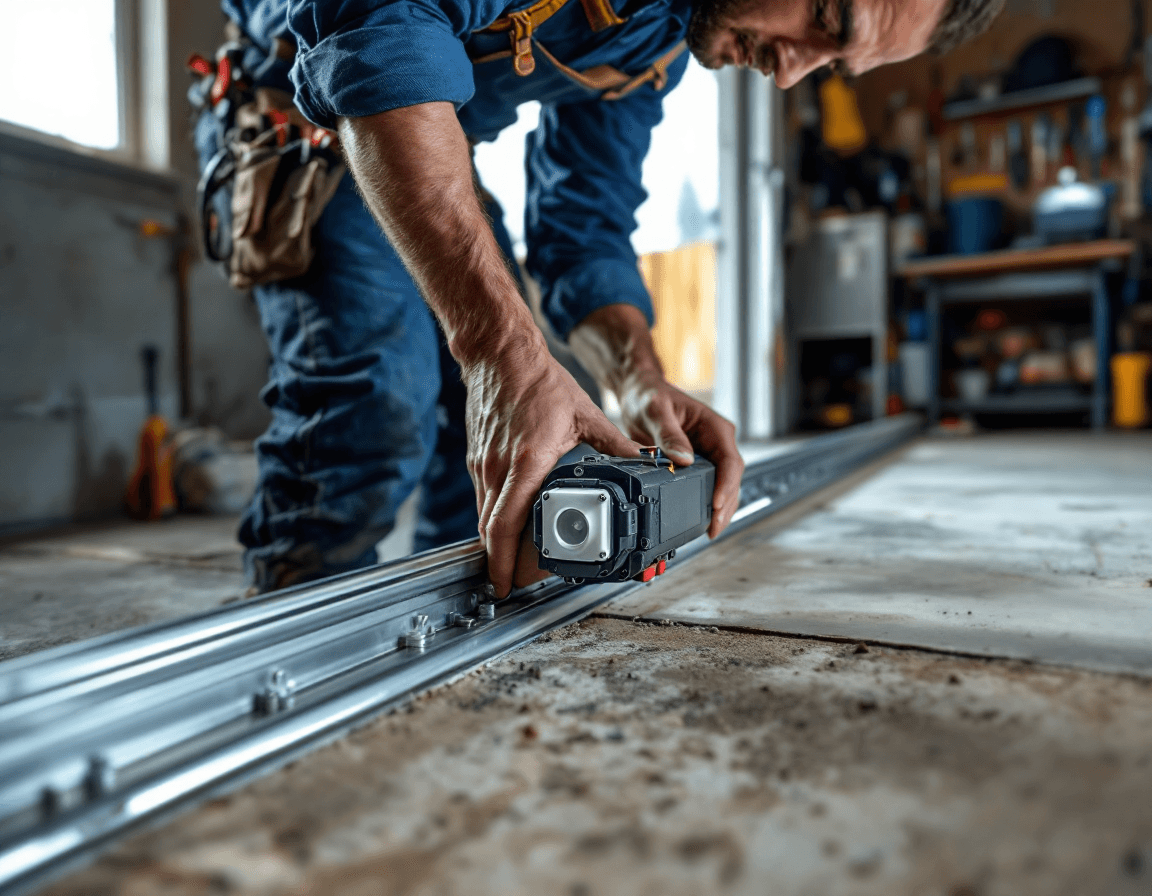
Garage Door Sensor Repair in Kirkland, WA is one of the most common calls we take from homeowners on the east side of Lake Washington, and it usually starts with a frustrating moment: the door comes down, reaches the floor, and then climbs right back up. Those photo-eye sensors near the bottom of your tracks are doing an important job, since they look for anything blocking the door's path and tell the opener to stop or reverse. When they fail, misalign, or get confused by light, the door can refuse to close even though nothing is actually in the way. The good news is that most sensor problems are inexpensive to fix once someone finds the real cause.
Kirkland homes face a particular mix of conditions that affect garage door sensors. Our wet winters, damp spring mornings, and the lake-influenced humidity that settles over neighborhoods near the shoreline all add up to a lot of moisture and grime around the lower door track. Sensors mounted at knee height also collect dust, cobwebs, road spray, and the occasional leaf, and many Kirkland garages sit close to driveways where kids, pets, and recycling bins regularly pass by. This guide explains how to read the warning signs, what usually goes wrong, what a typical repair involves, and when it makes sense to bring in a licensed technician.
Why Kirkland Garages Trip Their Sensors So Often
Garages across Kirkland, from the older ranch-style homes near Downtown Kirkland to the newer builds that have gone up in the hillside areas, share one thing in common: they are exposed to a steady cycle of damp and dry weather. Moisture works its way into wire insulation, corrodes the small terminals on sensor brackets, and gradually weakens the connection between the sensor and the opener. A sensor that worked perfectly through a dry August may start acting up in November after several weeks of rain have soaked the track area. Homeowners often assume the sensor has simply worn out, but in many cases the underlying issue is a connection that has loosened or corroded over time.
Temperature swings also matter. A garage that is cool in the morning and warms up by afternoon can cause metal brackets to expand and contract slightly, which may nudge a sensor just enough to lose its aim. Older door tracks in some Kirkland homes have a little more play in their mounting hardware, so a sensor that was aligned correctly during installation can drift over several seasons. Vibration from a heavy truck parking nearby, or from repeated slamming of a side entry door, can have the same effect. Because these changes are gradual, the door may work fine for months before the symptoms show up.
Finally, the sensors themselves simply age. Most photo-eye units use a small emitter and receiver that depend on a clean, unobstructed beam. Over years of exposure, lenses cloud, indicator LEDs dim, and the internal electronics can start to fail. A technician who understands these patterns can usually tell within a few minutes whether the problem is mechanical, electrical, or environmental, and that distinction determines the repair.
Reading the Light: What a Sensor's Indicator Is Telling You
Most garage door sensors have a small indicator light on each unit, and learning to read it is one of the fastest ways to narrow down what is wrong. On many common models, a steady light on both sensors means the beam is connected and aligned, while a light that is off or blinking suggests that one side is not seeing the other. A blinking light is often a sign of a wiring fault, a misaligned bracket, or a beam that is being interrupted intermittently by dirt, glare, or movement. The exact meaning varies by manufacturer, so the owner's manual or the label on the sensor housing is worth checking before you start guessing.
When the light on one sensor is off completely, the problem is usually in that unit's power or wiring. Sensors are low-voltage devices that draw power through the same wire run that connects them to the opener, so a break, a pinched conductor, or a loose terminal can shut one off without any visible damage. In Kirkland garages where the wiring runs along the wall and up into the ceiling, cables sometimes get pulled tight or rubbed against a stud, and the damage hides inside the jacket. This is one of the reasons a technician tests continuity rather than relying on appearance alone.
If both lights are on but the door still reverses, the sensors are probably communicating correctly with each other and the issue lies elsewhere, such as a lens that has become dirty or a beam that is being bounced off a reflective surface. It is worth noting that a steady green or amber light does not guarantee the sensors are seeing each other correctly under all conditions. Sunlight at certain angles can overpower the receiver even when the light on the housing looks normal.
The Door That Only Closes When You Hold the Button
One of the most telling symptoms is a door that closes only when someone holds down the wall button. This usually means the opener has detected a sensor fault and switched to a limited, constant-pressure mode, which is a safety feature designed to prevent the door from closing on someone who cannot be seen. The door will not complete a normal automatic cycle until the sensor issue is resolved. Many homeowners mistake this for a motor problem, but the opener is working exactly as it was built to work.
Holding the button is not a long-term fix, and it can hide a developing problem. If the sensors are only partially misaligned, the door may close fine on some days and refuse on others, depending on temperature, humidity, and how much light is coming in through the side windows. Over time, the wall button habit can also lead people to ignore the reversing behavior entirely, which is risky if a child or pet walks under the door during a manual close. A sensor that is not doing its job puts everyone near the door at greater risk.
It is also worth checking whether the wall button itself is sticking or sending a weak signal. A worn button or a loose wall control wire can produce symptoms that look a lot like a sensor fault, especially if the door responds only when the button is held. A quick technician visit can test both the sensors and the control circuit so that you do not pay for a sensor replacement when the actual problem is the wall station.
Knocked Out of Line: Alignment Problems After Bumps and Storms
Sensor misalignment is one of the most common repairs we perform, and it often follows a specific event. A ladder bumped against the track, a delivery cart clipped the bottom bracket, or a strong windstorm rattling the garage door can nudge a sensor just enough to break the beam. Even a small shift of a few degrees can mean the receiver no longer sees the emitter. In Kirkland's windy winter months, it is not unusual for a bracket to rotate slightly after a few gusty nights.
Alignment is usually fixed by loosening the mounting screw, adjusting the sensor until the indicator lights are steady, and then tightening the bracket again without letting the angle shift. The process sounds simple, but it takes patience, because the beam needs to be centered on the receiving lens and the bracket must hold its position under the normal vibration of the door. Technicians often use a small level and check the alignment with the door in motion, since a sensor that looks correct when stationary may drift during operation.
Sometimes the bracket itself is bent or the mounting surface has become loose. In those cases, simply re-aiming the sensor will not last, and the bracket may need to be replaced or reinforced. Pay attention to whether the sensor seems to point at a slightly different spot after each adjustment, because that usually means the mount is compromised. Fixing the mount at the same time as the alignment prevents the problem from returning after the next storm.
Chewed Wires, Rodents, and Hidden Damage Along the Track
Damaged sensor wiring is one of the more frustrating causes of door problems because it often cannot be seen from the outside. Rodents are a real concern in many Kirkland garages, especially in neighborhoods near wooded lots, creeks, and open green space. Mice and rats are drawn to the insulation on low-voltage cables, and a chewed wire can cause intermittent signals that come and go unpredictably. The door may work for a week, fail for a day, and then work again, which makes diagnosis harder.
Physical wear is another common culprit. Wires that run along the track or through the wall cavity can be pinched by the door's moving hardware, rubbed raw against metal brackets, or stretched when the sensor is moved during a previous repair. Cold weather can make older insulation brittle, so a cable that bends slightly when you install a new cover might crack. When the damage is inside a wall or under a finished ceiling, a technician may need to trace the run carefully to find the break.
Repairing wiring is not something to attempt if you are not comfortable with low-voltage connections and the opener's control circuit. A professional can splice or replace the affected section, test continuity, and confirm that the sensors and opener communicate correctly afterward. This is typically a straightforward repair, but the goal is a clean, durable connection rather than a quick patch that will fail again in the next rainy season.
Glare, Angles, and the Sun's Influence on Sensor Beams
Sun glare is a surprisingly common cause of sensor trouble, and it affects garages in ways many owners do not expect. When low-angle sunlight enters through a side window or an open garage entry, it can flood the receiver lens and confuse the sensor into thinking the beam has been interrupted. This is most noticeable during the lower-sun months, when light comes in at a flatter angle and strikes the sensor directly for part of the day. The door may reverse only in the late afternoon, which can make the problem look random.
Reflective surfaces create a similar issue. Light bouncing off a polished floor, a metal bumper, or a glossy car hood can sometimes reach the receiver at odd angles and interfere with the beam. Homes with large garage windows or lightly tinted glass in the door panels may amplify this effect. In some Kirkland neighborhoods where houses sit on slopes or face open views, the sun can strike a garage from unexpected directions depending on the season.
The fix is usually a combination of thoughtful positioning and sensor design. Technicians may shield the sensors from direct sun, adjust the mounting height slightly, or recommend a different sensor model with better ambient light tolerance. In some cases, a small cover or hood can block glare without affecting the beam. Because every garage has its own lighting pattern, the correct solution is best determined by observing the door at the time of day when the problem occurs.
What a Typical Sensor Repair Covers and What It Costs
For most sensor repairs, the typical price range is $85 to $225, depending on what is needed to restore reliable operation. Simple realignment or cleaning often falls near the lower end of that range, while sensor replacement or repairs involving wiring can land higher. The final number depends on the sensor model, how much access the technician has to the wiring, and whether the mounting brackets need attention. A reputable technician should explain the work and the expected cost before starting, so you know what you are paying for.
A standard visit usually includes a visual inspection of both sensors, a check of the indicator lights, a test of the wiring continuity, and a review of how the door behaves through a full open and close cycle. The technician will also look at the wall control and the opener's safety reverse settings to make sure the entire system is working as designed. In some cases, cleaning the lenses and tightening loose hardware resolves the issue on the spot. If replacement is needed, the technician should confirm compatibility with your opener before installing a new unit.
It is reasonable to ask what the repair includes before you agree to it. Some owners are surprised to learn that a sensor fault and a larger opener problem can look similar, so a careful diagnostic step matters. If the sensors test fine but the door still behaves erratically, the issue may involve the logic board, the travel limits, or the force settings, and those require a different level of work. Clear communication up front keeps the repair focused and avoids unnecessary parts.
Quick Checks Homeowners Can Safely Try First
There are several simple checks you can perform before scheduling a visit. These steps are meant to help you describe the problem accurately and sometimes resolve it outright. Always disconnect power to the opener before reaching near the sensors or wiring, and never attempt to adjust springs, cables, or the door's counterbalance system, which carry significant stored energy and should only be handled by a licensed professional.
- Wipe the lenses of both sensors with a soft, dry cloth to remove dust, cobwebs, and water spots.
- Check the indicator lights on each sensor and note whether they are steady, blinking, or off.
- Look for obvious obstructions such as boxes, tools, or a stray bucket along the door's path.
- Inspect the sensor cables for visible cuts, chewing, or cables pulled tight against a bracket.
- Test whether the door closes normally at different times of day to see if sunlight is involved.
- Confirm that the wall button is not sticking and that the door responds consistently when pressed.
If these checks do not resolve the issue, or if you notice cracked insulation, burned smell near the opener, or a door that moves unevenly, stop and call a technician. Those signs point to problems that need professional diagnosis. Even when the fix seems minor, a licensed technician can confirm that the safety reverse is working before you rely on the door again.
When the Problem Is Bigger Than the Sensors
Sometimes the sensors are only part of the story. A door that reverses unexpectedly may be responding to a force setting that has drifted, a worn gear, or a balance issue in the springs. Springs and cables are under high tension, and any work on them should be left to a licensed professional. If the door is slow, noisy, sticking at a certain height, or pulling unevenly, those are signs that the mechanical system needs attention in addition to the sensors.
The opener's internal settings can also influence how the door reacts to the sensors. Force and travel limits that were set years ago may no longer match the door's current weight or the way it moves. A technician can review these settings and adjust them safely, but this is not a task for homeowners to attempt without training. Improper adjustments can create a door that fails to reverse when it should, which is a serious safety risk.
Occasionally a sensor problem reveals an aging opener that is nearing the end of its useful life. If the motor is struggling, the logic board is showing errors, or replacement parts are hard to find, it may make more sense to discuss an upgrade than to keep patching. A good technician will explain the options honestly and let you decide based on the condition of your equipment and your budget.
Choosing a Licensed Technician for Sensor Work Across 98033 and 98034
Finding a qualified technician matters, especially because garage doors are heavy, safety-critical equipment. When you contact a company, ask whether they are licensed, bonded, and insured, and whether their technicians are trained to work on both sensors and the broader door system. A clear, itemized estimate and a straightforward explanation of what needs to be done are good signs. Be cautious of anyone who pressures you into expensive replacements before running basic diagnostics.
For homeowners in ZIP codes 98033 and 98034, local experience helps. Technicians who regularly work in Kirkland understand the typical garage layouts, the older door hardware common in some neighborhoods, and the moisture and light patterns that affect sensors across the area. That familiarity can shorten the diagnostic process and reduce the number of return visits. It also helps when the technician knows how the seasons influence sensor behavior in this part of King County.
Whatever company you choose, expect a respectful, safety-first approach. A licensed professional will protect the spring and cable system, explain any risks, and make sure the door is tested through several full cycles before they leave. If anything about the repair feels rushed or unclear, ask questions until you are comfortable. A dependable sensor repair should leave you confident that the door will close safely every time you press the button.
Garage door sensors may look like small components, but they are one of the most important safety features on your door, and getting them right protects your family, pets, and vehicles every day. If your Kirkland garage door won't close, reverses on its own, or only moves when you hold the wall button, call Seattle Garage Door Fix at (888) 799-3819 to schedule a licensed technician. We will check the sensors, wiring, alignment, and door response, explain what we find, and walk you through the repair options before any work begins.