
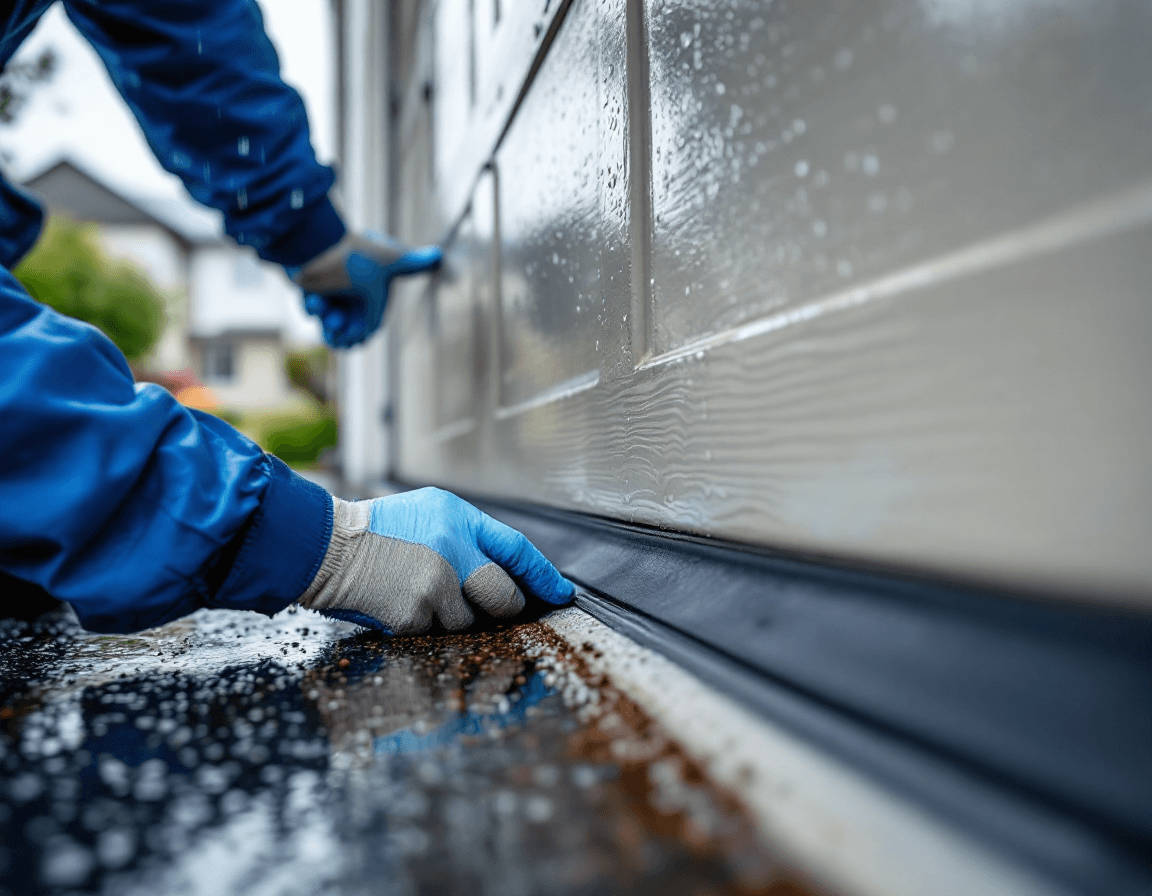
Garage Door Weather Seal Replacement in Des Moines, WA is one of the most practical repairs a homeowner can schedule, and it often costs less than people expect. A worn bottom seal, a cracked threshold strip, or tired perimeter weatherstripping can let rain, cold air, leaves, and pests into a garage that is supposed to keep them out. Most of these problems develop slowly, so they're easy to overlook until a damp spot appears on the concrete or a utility bill climbs for no obvious reason. Our technicians see these failures across Des Moines every year, from homes near the marina to older houses tucked into the blocks above Pacific Highway South.
Seal failures are rarely dramatic. The rubber on a bottom seal hardens, the vinyl on a threshold strip pulls away from the slab, and the foam or rubber running down the sides of the door compresses until it no longer touches the frame. Each change on its own seems minor, but together they turn a garage from a sheltered space into a drafty opening. Because the door is the largest moving part of most homes, even a small gap can admit a surprising amount of wind, water, and debris during a Puget Sound storm.
This page explains how to recognize a failing seal, why Western Washington weather is so hard on these components, what affects the cost of replacement, and how our team handles the job. The pricing range we typically quote runs from $95 to $250, depending on the seal type and the width and style of your door. Read through the sections that match what you are seeing, and call us at (888) 799-3819 if you would like a technician to look at your door in person.
Reading the Daylight Test From Inside Your Garage
The simplest way to judge a bottom seal is to close the garage door and switch off the overhead lights during the day. If you can see thin lines of light along the bottom edge, along the sides, or across the top of the door, those gaps are letting in air, water, and anything small enough to slip through. Repeat the check from the outside by standing near the door on a bright afternoon and looking for glowing edges where the panels meet the frame. Many homeowners are surprised by how much light gets through a seal that looked fine from a distance.
Homeowners in Des Moines often notice these gaps first in the winter, when the sun sits low and the garage is dim. Still, the test works any time of year, and it is worth repeating after big windstorms, since a seal that was only slightly worn can be pushed out of position by sustained gusts. Pay attention to whether the gap is uniform across the width of the door or concentrated in one corner, because uneven wear often points to a slightly out-of-level door or a threshold that has settled over time.
Watch for these common warning signs while you are inside the garage:
- Daylight visible under the closed door, especially near the center or at one edge
- Damp patches, water lines, or a faint film of dirt along the bottom of the door after rain
- Leaves, grass clippings, or small debris collected in a neat line just inside the threshold
- Cold air you can feel with your hand when standing near the door on a windy day
- Spiders, earwigs, or other insects appearing in the garage more often than before
If several of these show up together, the bottom seal is almost certainly past its useful life. A single sign, such as one damp corner, may point to a localized problem like a cracked section or a misaligned panel, and a technician can usually confirm that during a short visit.
Why Puget Sound Air Wears Rubber Faster Than You Might Expect
The Pacific Northwest climate is gentle in some ways, with mild temperatures that rarely swing to extremes, but it is tough on garage door seals for reasons that are easy to miss. Long stretches of gray, damp weather keep the rubber and vinyl in a constant state of moisture exposure. When that moisture is combined with the freeze-thaw cycles that do occur during cold snaps in the region, seal materials can stiffen, crack, and separate from their mounting surfaces. Summer sun also plays a role, because strong UV exposure on the days it does show up breaks down the outer layer of many common seal materials.
Salt air is another factor for homes closer to the water. Coastal breezes carry fine salt particles that settle on driveways, door tracks, and the bottom edge of the door. Over time, that residue accelerates corrosion on metal hardware and can make rubber surfaces feel tacky and brittle. Homes in the lower-lying parts of the city, including those within a short distance of the Des Moines Marina and the beach areas of Woodmont and Redondo, tend to show this kind of wear sooner than homes a few miles inland. Regular rinsing of the door bottom and the threshold can slow the process considerably.
Wind-driven rain adds one more layer of stress. Storms that come in from the southwest often push water sideways at the base of the door rather than straight down onto it. A seal that handles ordinary rain well may still fail under those conditions, because water is forced past the lip and collects on the garage floor. For that reason, we recommend inspecting seals at the end of the wet season and again before the first heavy storms of fall, since those are the periods when a marginal seal is most likely to show its weakness.
Matching the Right Seal to the Right Gap
Garage doors use several types of weatherproofing, and each one solves a different problem. The bottom seal is the rubber or vinyl strip attached to the lowest section of the door, and it compresses against the concrete when the door closes. Perimeter weatherstripping runs along the vertical sides and across the top of the door, sealing the gaps between the panels and the frame. Threshold seals sit on the floor itself and provide a barrier that the bottom seal rests against, which matters a great deal when the concrete is uneven or the old threshold has cracked.
Identifying which component has failed is the first step toward an effective repair. A bottom seal that is torn, cracked, or missing usually produces a visible gap along the floor, while failing perimeter strips tend to show up as light or drafts at the sides and top. A damaged threshold may look fine from the door but allow water to run under the edge when it rains. In some cases, two or three components need attention at once, and replacing only one of them leaves the others to undo the improvement.
Here is how we typically approach the choice of material:
- Standard rubber bottom seals offer solid flexibility and work well for most residential doors with reasonably level floors.
- Vinyl bottom seals are a common choice for budget-minded repairs, though they can stiffen faster in cold weather if they are not a high-grade product.
- Heavy-duty or fully enclosed seals suit doors that see more wind exposure or have irregular concrete, and they tend to hold their shape longer.
- Perimeter weatherstripping comes in foam-backed, vinyl, and rubber profiles, and the correct profile depends on the track design and how much compression the door needs.
- Threshold seals are often sold in aluminum or vinyl profiles and are secured to the slab with fasteners or adhesive appropriate for concrete.
We will explain these options during the visit and recommend what fits your door rather than defaulting to the most expensive product.
Water Getting In: Recognizing the Early Stages of Garage Flooding
Water in the garage is one of the most frustrating results of a failed seal, mainly because it can leave behind stains, warped cardboard, rusted tool bottoms, and a musty smell that is hard to remove. Many homeowners assume the problem comes from the driveway or from a drainage issue, and sometimes that is true. More often, however, the water is entering through the gap at the base of the door, particularly when the driveway slopes toward the garage. A sloped approach can channel runoff directly to the threshold, where a worn seal has no way to stop it.
Look for water tide lines on the floor or on the bottom panel of the door, which show the highest point the water reached during a storm. Check whether the damp spots are concentrated near one side, because that often indicates a damaged perimeter strip or a threshold that has lifted at that corner. If your garage has a floor drain, make sure it is clear of leaves and silt, since a blocked drain can cause water to back up toward the door even when the seal is in good shape. Clearing the drain and replacing the seal together usually solves the problem more reliably than either step alone.
If water is coming through the door and you also notice cracking or separation along the threshold, the concrete may need separate attention. Seal replacement addresses the barrier, but it cannot fix a slab that has settled or a drainage pattern that directs runoff toward the garage. A technician can tell you whether the seal alone will solve the problem or whether other site conditions need to be addressed first.
Pests, Leaves, and the Small Openings That Invite Them
A garage with a failing seal is an open invitation to a wide range of pests and debris. Rodents can squeeze through remarkably small openings, insects follow moisture and warmth, and wind pushes leaves and soil into any gap it can reach. In the damp months, a damp garage floor combined with dark corners makes an appealing environment for spiders, earwigs, and sowbugs, all of which move in under a door that no longer seals against the concrete. Over time, the debris that accumulates can also scratch the floor and clog the track.
Pest control is usually more effective when the entry point is sealed first. Spraying insecticide along the threshold without addressing the gap may reduce numbers for a short period, but new insects will keep arriving until the opening is closed. For that reason, we recommend replacing a worn bottom seal before taking other steps. Once the seal is in place, sweeping the garage floor thoroughly and clearing away stored materials from the walls can help prevent a fresh population from settling in.
Homeowners with pets, young children, or stored food in the garage should pay particular attention to these issues. A continuous, well-fitted seal helps keep out the pests that tend to carry bacteria or leave droppings near the entrance to the home. If you find evidence of rodents, such as gnaw marks or droppings, contact a pest control professional in addition to having the seal replaced, since the animals may already be using the garage as a shelter.
Cold Drafts, Higher Bills, and the Comfort Problem Along the Floor
A drafty garage can affect the rest of the house more than most people realize. If the garage shares a wall with living space, cold air leaking through the door can chill the adjoining rooms, and the heating system may run longer to compensate. Many homeowners first notice this in the laundry room, a mudroom, or a kitchen corner that never seems to warm up on cool mornings. Tracing the draft back to the garage door is often a surprise, but it is a common source of discomfort in Western Washington homes.
The energy impact depends on the size of the gap, the age of the heating system, and how the garage is used. A seal that has lost much of its compression can leave a noticeable opening along the full width of the door, which means conditioned air escapes whenever the heater runs and outside air pushes in during windy weather. Replacing the seal will not transform a home's energy profile on its own, but it is one of the more affordable steps that reduces unnecessary heat loss, especially when combined with other sealing work around the house.
To check whether the door is contributing to drafts, hold a lightweight piece of tissue or a strip of paper near the bottom and sides of the door on a windy day. If the paper moves or flutters, air is passing through the gap. You can also compare the temperature of the garage floor near the door with the temperature a few feet inward, although this is a rough measure and most homeowners find the tissue test more convincing.
What Shapes the Price: Seal Type, Door Width, and Site Conditions
Our typical price range for weather seal replacement runs from $95 to $250, and the final figure depends on several factors. The most significant is the type of seal being installed, since a standard rubber bottom seal costs less than a heavy-duty enclosed seal or a complete threshold system. The width of the door also matters, because wider doors require more material and more time to fit correctly. Doors with multiple sections or unusual track configurations may require additional adjustment to ensure the new seal compresses evenly.
Site conditions can also influence the quote. A threshold that is cracked, uneven, or badly worn may need to be prepared before the new strip can be installed, and that preparation adds time. Perimeter weatherstripping on older doors sometimes requires removing old adhesive or fasteners, and those tasks are included in the visit. If the technician finds that a panel is bent or that a roller or hinge is interfering with the seal, we will explain the issue before proceeding and discuss whether a separate repair is needed.
We believe homeowners should understand the reasoning behind a price before agreeing to it. When we give an estimate, we will identify which components need replacement, explain why, and offer the option that matches your door and your budget. We do not recommend a higher-grade seal when a standard product will perform well for the conditions at your home, and we will tell you if a different approach makes more sense.
How Our Technicians Replace a Worn Seal
A typical seal replacement begins with a careful inspection of the entire door. The technician will check the bottom panel, the perimeter tracks, the threshold, and the surrounding weatherstripping to determine the full scope of the work. We look for signs of misalignment, worn rollers, or damaged hardware that could affect how well the new seal performs, because a fresh seal on a door that does not sit level will wear out quickly. The inspection usually takes a short time and gives us a clear picture before any material is removed.
Once the scope is confirmed, the old seal is removed and the mounting channel is cleaned of debris, old adhesive, and corrosion. The new bottom seal is then cut to length, fitted into the retainer, and adjusted so it touches the concrete evenly across the full width of the door. Perimeter strips are installed the same way, with attention to compression and to avoiding gaps at the corners where two sections meet. Threshold seals are secured to the slab according to the material and the condition of the concrete, and we test the door through several full open-and-close cycles to confirm the seal engages properly.
Before we leave, the technician will show you the new seal, explain how to check it, and answer any questions about care. If the door needed adjustment in addition to seal work, we will document the changes so you know what was done and why. Our work is backed by our standard licensed, bonded, and insured service, and we are happy to walk you through the results in person.
Timing Your Repair Around Des Moines Weather
The best time to replace a worn seal is before the heavy rain season sets in, which in our region usually means scheduling the work in late summer or early fall. Installing a new seal during a dry period makes it easier for the adhesive to cure and for the concrete to be prepared without interference from standing water. That said, seal replacement is a relatively quick job, and it can be completed during the cooler, wetter months when a leak has already appeared. If you are in the middle of a wet stretch, we can still make the repair, though the technician may need to work around damp conditions and make sure the surface is dry before installing new material.
Summer is also a good time to address seals that have been damaged by sun and heat. Rubber and vinyl that have faded or become chalky in strong sunlight often feel stiff and may crack when the door is operated. Replacing those components before cooler weather arrives helps avoid a rushed repair during a storm. Many homeowners find that scheduling a seasonal inspection once a year keeps small issues from turning into water damage or pest problems.
Seasonal checks can be simple. Once a year, close the door, look for daylight, run a hand along the bottom edge, and sweep the threshold clean. Make a note if the seal feels brittle, if you see cracks, or if the bottom edge no longer touches the floor evenly. A short call at that point can prevent a larger repair later.
Caring for Your New Seals Between Service Visits
A new seal will last longer if it is cleaned and checked periodically. Wipe the rubber or vinyl with a mild soap and water solution every few months, rinsing away salt residue and dirt that can break down the material. Avoid harsh solvents, petroleum-based cleaners, and abrasive pads, since they can damage the surface and shorten its life. Keep the threshold free of leaves and grit, because debris trapped under the seal can prevent it from compressing evenly and can scratch the floor.
Pay attention to how the door closes after the seal is installed. If the door hesitates, binds, or stops at an odd height, the problem may lie in the tracks, the rollers, or the springs rather than the seal itself. Do not try to adjust torsion springs or cable drums yourself, since those components store enormous tension and can cause serious injury if they are handled improperly. A licensed technician should inspect any spring or cable issue, and our team can do that during the same visit as the seal work.
It is also wise to keep the garage floor clear of items that could block the door from closing fully. Boxes, bikes, and stored lumber placed against the threshold can push the seal out of position or cause uneven wear. A few minutes of tidying each season helps the seal and the door perform as intended.
When a Seal Problem Points to a Spring or Cable Issue
Sometimes a homeowner calls about a drafty door and the technician discovers a deeper mechanical problem. A door that sits crooked, lifts unevenly, or drops suddenly may have a worn cable, a broken spring, or a misaligned track, and those issues can make it impossible for a seal to work properly. A door that is out of balance will push harder on one side of the threshold than the other, which quickly destroys a new seal. For that reason, we always check the door's balance and hardware during a seal visit.
Springs and cables are among the most dangerous components of a residential garage door. Torsion springs are under high tension even when the door is closed, and attempting to replace or adjust them without the right tools and training can cause severe injury. If you notice a broken spring, a frayed cable, a door that will not stay open, or a loud bang when the door moves, stop using the door and call a licensed professional. Please do not try to repair these parts yourself, no matter how confident you may feel.
When a spring or cable problem is found, we will explain what we see, show you the affected part if it is safe to do so, and outline the repair options. A seal replacement can still be completed once the door is safe and balanced, and that combined approach ensures the new seal is not wasted on a door that is still out of alignment.
Ready to Stop the Drafts, Water, and Pests?
A worn garage door seal is an inexpensive problem to fix, and the sooner it is addressed, the less damage it tends to cause. Whether you are dealing with a damp floor after a Puget Sound storm, a cold draft that reaches the kitchen, or a steady stream of pests under the door, a qualified technician can identify the failed component and replace it with a seal that fits your door and your climate. Our team serves Des Moines and the surrounding communities, and we are glad to schedule an inspection at a time that works for you. Call (888) 799-3819 to talk with a licensed technician about your garage door weather seal replacement in Des Moines, WA, including the seal options and pricing that match your home.