
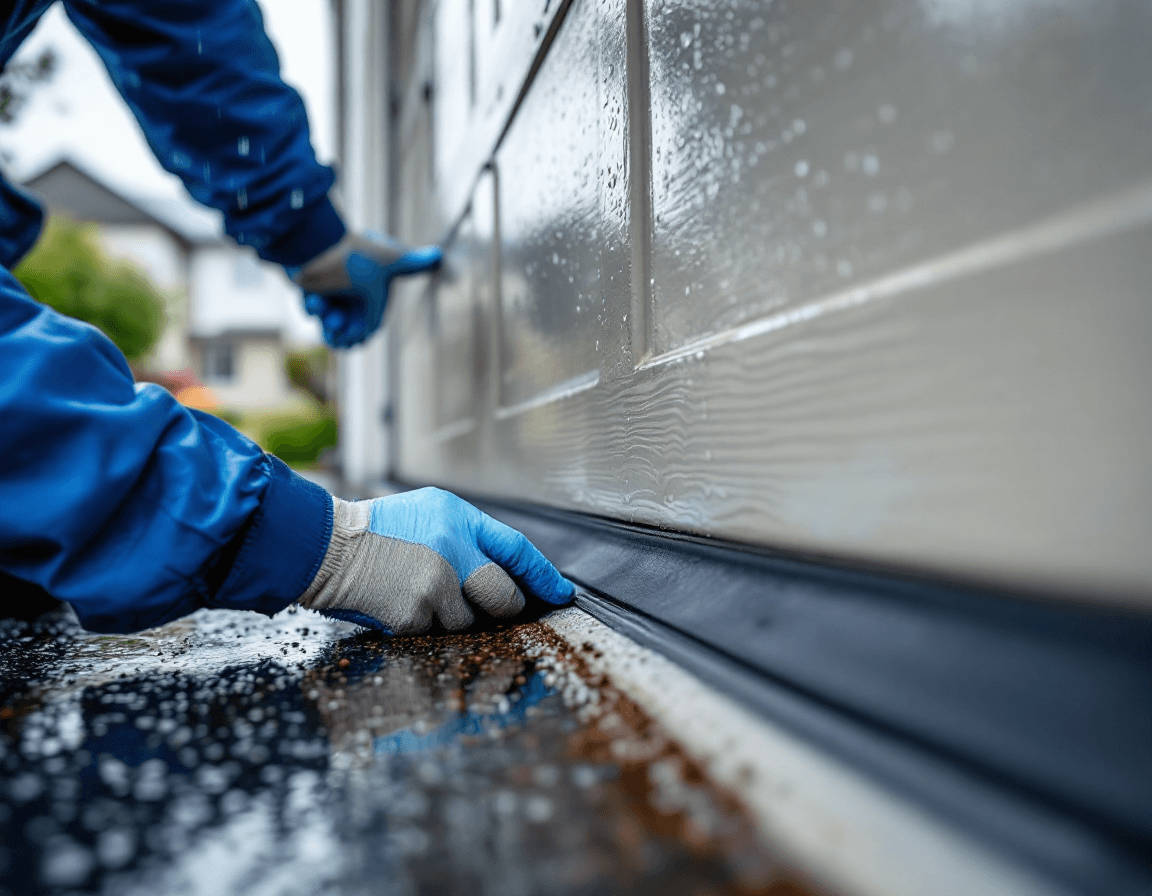
Garage Door Weather Seal Replacement in Fife, WA is one of the simplest repairs that makes a visible difference in how a garage feels, sounds, and smells during a Pierce County winter. A worn bottom seal lets rain, cold air, and pests slip under the door, while tired perimeter weatherstripping lets the heat you pay for drift out at the edges. Our technicians at Seattle Garage Door Fix see this problem often in Fife homes and businesses, and it usually starts small: a faint line of daylight, a damp patch near the door, or a spider web that appears overnight.
Fife sits in the middle of a busy stretch of the Tacoma area, with heavy truck traffic, industrial lots, and the Port of Tacoma corridor close by. That location adds dust, road grit, and fine debris to the mix, and those particles collect along the bottom of a door and work into rubber that is already stiffening in the cold. A seal that looked fine in August can be cracked and flattened by February. The good news is that most seal problems are inexpensive to correct once you know what to look for, and replacing the seal before water reaches the floor or the drywall is far cheaper than repairing the damage it causes.
This page explains how to recognize a failing seal, what the different seal types do, why the Pacific Northwest climate is so hard on them, and what a typical replacement involves. We also cover the situations where a seal is not the real problem and a licensed technician should take a closer look. Pricing for seal work generally falls between $95 and $250, depending on the seal style and the width of your door, and a technician can give you an exact figure after inspection.
Reading the Light Along the Bottom of Your Door
The simplest test takes about thirty seconds. On a bright day, or with a work light shining from outside, stand inside the closed garage and look along the bottom edge of the door. If you can see daylight through a gap, cold air and water have a direct path inside. Some gaps are obvious, while others show up only as a thin shimmer that is easy to miss, so it helps to run the test on both sides of the door and at the corners where the bottom seal meets the side tracks.
Also check whether the gap is even along the full width of the door. Uneven gaps often point to a seal that has been bent, pulled loose at one end, or compressed unevenly over years of use. A door that sits slightly out of level can also leave one corner with more clearance than the other, and that corner will leak first. If the gap is wider on one side, note it, because the technician may need to check the door's balance and track alignment at the same visit.
Take a few photos with a phone while you look. Images of the gap, the seal, and the surrounding threshold help a technician estimate the job before arriving, and they give you a baseline to compare against after the new seal is installed. Many homeowners are surprised by how much daylight they were tolerating until they see it captured on a screen.
How Fife's Wet Winters Work Into a Garage
The Pacific Northwest does not usually deliver dramatic storms. Instead, it offers long stretches of drizzle, steady rain, and cold, damp air that lingers for weeks. That kind of weather is hard on garage doors because moisture has time to soak into every gap, and it never fully dries out. A bottom seal that might survive a short downpour can fail under weeks of saturation, especially if the garage floor slopes slightly toward the door.
Fife's wet season also brings temperature swings that stress rubber and vinyl. Seals stiffen in cold snaps, then expand and contract as the days warm and cool. Over several seasons, that movement can tear a seal away from its mounting channel or cause the bottom edge to curl up. Once the seal lifts, water wicks underneath it, and the constant dampness speeds up cracking and mildew along the edge.
Water entering the garage is rarely just a nuisance. It can pool against the back of the door, soak cardboard boxes, rust the lower panels and hardware, and creep toward stored lumber, tools, and stored paint. In older homes and detached garages with concrete floors that are not perfectly level, water can travel several feet inside before anyone notices the puddle. A worn seal is often the first point where those problems begin.
Bottom Seals, Perimeter Strips, and Thresholds Explained
Garage door weather protection is not a single part. The bottom seal is the rubber or vinyl strip attached to the bottom panel of the door, and it is the piece that presses against the floor or threshold when the door closes. It handles most of the water and draft control at the base of the opening, and it is the component most likely to wear out first because it takes the hardest abuse from foot traffic, vehicles, and debris.
Perimeter weatherstripping runs along the vertical sides and across the top of the door opening. It is usually a flexible vinyl or foam strip attached to the door frame or jamb, and it seals the gaps where the door meets the wall. Worn perimeter strips often show up as light leaking around the edges, dust lines on the frame, or a cold draft you can feel when standing near the side of the door. Replacing these strips is usually quicker than replacing the bottom seal, but the two work together, so they are often inspected at the same time.
The threshold is the strip or ramp at the floor where the door lands. On some garages it is a metal or composite piece bolted to the concrete, and on others there is no threshold at all, just bare slab. Thresholds can crack, lift, or pull away from the floor, and when that happens no bottom seal can fully close the gap. A proper seal job begins with checking whether the threshold is sound, because a seal cannot compensate for a damaged base.
- Bottom seal: The main barrier against water, drafts, and pests at floor level. Typically replaced when cracked, flattened, torn, or missing.
- Perimeter weatherstripping: Side and top seals that stop air leaks and light around the door frame. Often replaced when stiff, split, or pulled away from the jamb.
- Threshold seal or threshold strip: The interface between the door and the floor. Inspected for cracks, lifting, or gaps that would defeat a new bottom seal.
Signs Your Seal Has Quietly Given Up
Some seal failures announce themselves with a puddle, but many develop slowly. Cracking is one of the most common early signs. Run your fingers along the bottom seal and feel for hairline splits, chalky surfaces, or sections that crumble when pressed. A seal that feels hard and brittle in cold weather has likely lost most of its flexibility, and it will not regain a tight fit even if it is pressed back into place.
Missing or displaced sections are another clear sign. Seals are often held in a channel or clipped to the bottom panel, and vehicle traffic, shovels, and repeated door cycles can pull them loose over time. A section that is only a few inches missing can allow a surprising amount of water and air to enter, so do not assume a small gap is harmless. Look for sections that sit higher than the rest of the strip, because those are often the first to lift.
Perimeter weatherstripping usually shows its age through flattening and dirt. When the foam or vinyl loses its spring, it no longer bounces back against the frame, leaving the sides exposed. Dark streaks, dust lines, or small piles of grit along the jamb often mark the spots where air has been moving through for months. If the strip looks fine at a glance but still lets light through, it has probably lost its compression and needs replacing.
- Hairline cracks or a chalky surface when you rub the seal between your fingers
- A seal that stays flat or curled after the door closes
- Daylight visible at the corners or along the center of the bottom edge
- Damp spots, mineral deposits, or dried water lines on the garage floor near the door
- Dust, leaves, or small debris on the inside of the door track or along the threshold
- A noticeable cold draft when standing next to the closed door on a windy day
Drafts, Heating Bills, and the Cost of a Leaky Garage
Many Fife homeowners first notice a failing seal because the garage feels colder than it should, and that chill often spreads into the adjoining rooms. Garages are typically unheated, so the door is a major boundary between conditioned living space and outside air. When the bottom seal and side strips are working, that boundary stays tight. When they fail, cold air can flow into the garage and then migrate into the house through the connecting door, laundry area, or utility spaces.
For attached garages, the effect on heating bills can be real, especially during long winter months when the furnace or heat pump runs frequently. A drafty garage door is not the only source of heat loss in a house, and it is usually impossible to attribute an exact dollar amount to one seal. Still, sealing a door is one of the more affordable energy improvements a homeowner can make, and it addresses a leak that is often ignored because it is out of sight.
Drafts also affect comfort in unexpected ways. Workshops and hobby spaces become difficult to use in cold weather, and vehicles parked in the garage may sit in cold, damp air for days. Stored items such as paint, batteries, and some electronics prefer stable temperatures, and a constantly drafty space can shorten their usable life. Replacing a worn seal helps keep the garage more predictable, which benefits both the space and everything inside it.
Pests, Leaves, and Debris Crossing the Threshold
Pests are one of the most overlooked consequences of a bad seal. A gap of even a quarter inch can be enough for mice, rats, spiders, earwigs, slugs, and other small animals to enter, and Pacific Northwest gardens and wooded edges give them plenty of reasons to explore. Once inside, they can nest in stored boxes, chew through insulation, or leave droppings near food and pet supplies stored in the garage. A new bottom seal is one of the most direct ways to reduce that traffic.
Leaves, dust, and yard debris also find their way under a door with a poor seal. In Fife, wind-blown debris from nearby lots and roadsides can collect along the threshold, and each time the door opens, some of it is pulled inside. Over time, that accumulation can clog the track area, abrade the seal, and create an uneven surface that prevents the door from closing fully. Keeping the seal intact limits both the debris and the wear it causes.
Because seal replacement is relatively inexpensive, it often pays for itself quickly when you factor in pest control, cleanup time, and damage to stored items. If you have already had a mouse or insect problem in the garage, treat the seal as part of the solution rather than a standalone repair. Sealing the entry point is far more effective than repeatedly cleaning up after an animal that keeps finding its way back in.
Seal Materials and What Works Best in Western Washington
Garage door seals are made from several materials, and the right choice depends on your door style, the condition of the frame, and how much weather exposure the door gets. Vinyl is widely used for bottom seals because it resists moisture, holds its shape reasonably well, and is affordable. Rubber seals tend to remain more flexible in cold temperatures, which can be an advantage during Western Washington winters. Foam seals are common for perimeter strips, but they need good protection from moisture to avoid breaking down over time.
Look for seals rated for outdoor use and designed for your door type. Some doors have a grooved bottom panel that accepts a snap-in or slide-in seal, while others use a retainer bracket or a bottom bulb that fits a specific profile. Using the wrong profile can leave gaps even if the seal looks like it fits. A technician will match the replacement to your door, rather than relying on a generic piece that may not sit properly.
Color and thickness also matter more than many homeowners expect. Darker materials can absorb more heat in summer sun, while lighter ones may show dirt more quickly. Thicker seals can close larger gaps but may increase the force needed to close the door, which matters for older openers. Discuss your goals with the technician, whether the priority is stopping water, reducing drafts, or keeping pests out, so the seal you choose addresses your actual problem.
What a Typical Seal Replacement Involves
A standard bottom seal replacement is usually a short appointment. The technician begins by inspecting the door, the existing seal, the threshold, and the surrounding frame to determine whether the seal alone will solve the problem. They will also check the floor for low spots or debris that could prevent a tight fit. If the door is out of level or the tracks are misaligned, those issues are noted before any new material is installed.
Next, the old seal is removed. Depending on the design, this may involve sliding it out of a channel, unscrewing a retainer, or pulling it free from adhesive. The technician cleans the bottom panel or channel so the new seal sits flat, then installs the replacement and trims it to length. A properly installed seal should close firmly against the floor without causing the door to bind or the opener to strain. After installation, the door is cycled several times to confirm smooth operation and an even seal along the full width.
Perimeter weatherstripping is often replaced at the same visit. The technician removes the old strips from the jambs and head, cleans the surfaces, and attaches new material with the appropriate fasteners or adhesive. Pricing generally falls between $95 and $250, depending on the seal type and the size of the door, and the technician can confirm the exact cost after inspection. Ask for a clear explanation of what is included before the work begins, so there are no surprises about additional parts or labor.
When the Seal Is Not the Real Problem
Sometimes a seal that keeps failing is a symptom of a larger issue. If the door sits unevenly, the bottom edge may press harder on one side and wear out faster there. A door that is out of balance can also rise or drop unexpectedly, which stresses the seal and the track. Before replacing a seal repeatedly, have the door checked to make sure the mechanical setup is not the cause of the wear.
Damaged panels, bent sections, and warped bottom brackets can also create gaps that no seal can fully close. Likewise, a cracked or heaved concrete threshold can leave a permanent low spot that allows water to pass. In these cases, a seal is only part of the fix, and the underlying damage needs attention first. A technician can tell you whether the seal alone will perform well or whether other repairs should come before it.
Be cautious about any work that involves the springs, cables, drums, or tension components. These parts store significant energy, and mishandling them can cause serious injury. Seal replacement itself does not require touching those systems, but if you notice a broken spring, a frayed cable, or a door that will not stay balanced, stop and contact a licensed professional. Our technicians are licensed, bonded, and insured, and they handle that work with the proper equipment and training.
Keeping New Seals Performing Through Every Season
A new seal will last longer with simple, regular care. Sweep the threshold area periodically to remove grit and leaves that can grind against the seal each time the door closes. Rinse the bottom seal with water and a mild soap during dry spells to remove road film and salt residue, especially after winter months when the garage door sees more moisture and mud. Avoid harsh solvents or petroleum-based products, which can break down rubber and vinyl.
Check the seal at least twice a year, ideally once in late fall before the rainy season and once in spring after the coldest weather. Look for new cracks, flattened sections, or places where the seal has pulled away from the panel. Early detection makes replacement easier and prevents water from reaching the floor. If you notice a change in how the door closes, such as scraping, unusual noise, or an uneven contact line, schedule an inspection rather than waiting for the seal to fail completely.
Finally, keep the door and track in good working order. A balanced, properly aligned door places even pressure on the seal, which extends its life. Tighten loose hardware when you see it, but leave spring and cable adjustments to licensed professionals. A few minutes of attention each season can prevent water damage, pest problems, and cold drafts, and it keeps the garage comfortable for the long stretch of Pacific Northwest weather that comes every year.
Garage door seal problems are easier to fix when you catch them early, and a qualified technician can usually resolve them in a single visit. If you see daylight under the door, feel a draft along the sides, or find water and debris inside the garage, Seattle Garage Door Fix can inspect the door, recommend the right seal for your setup, and explain the cost before any work begins. Call (888) 799-3819 to schedule a seal inspection or replacement for your Fife home or business.