
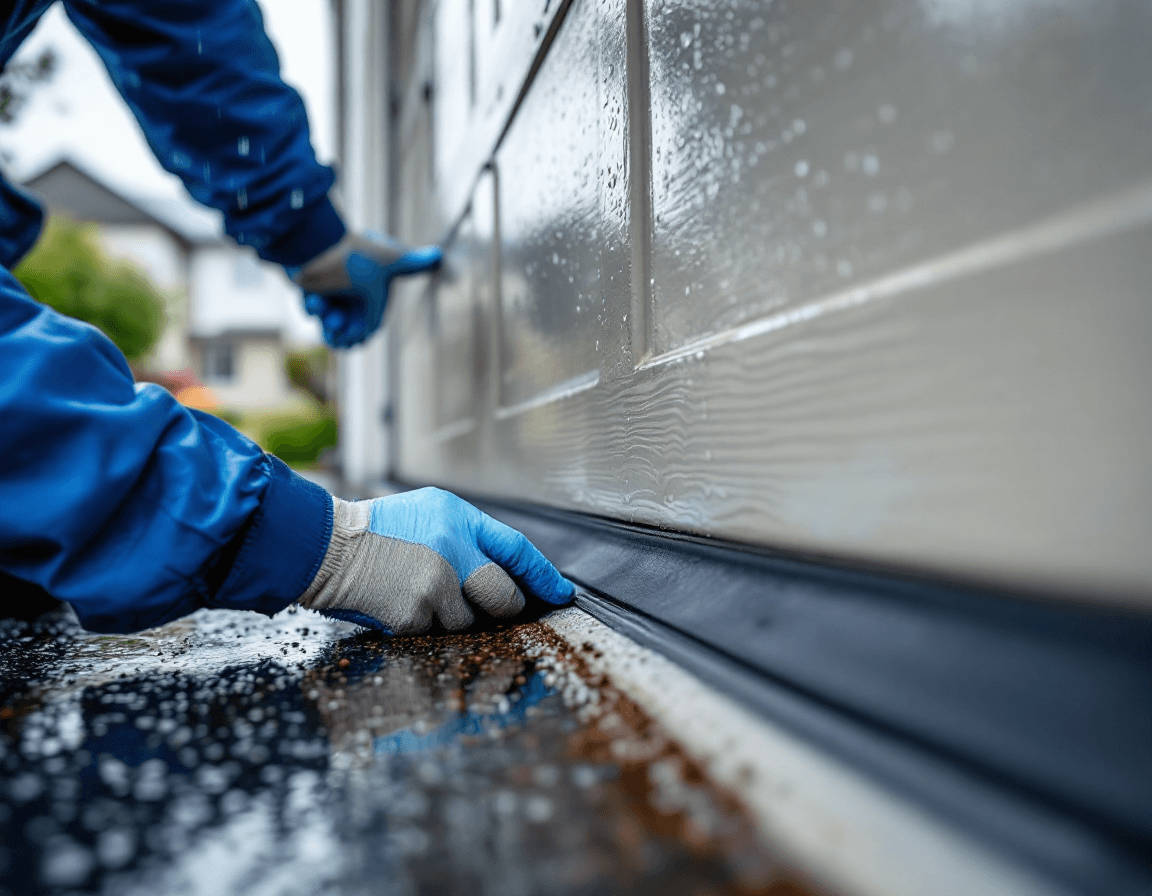
Garage Door Weather Seal Replacement in Issaquah, WA is one of the most affordable fixes a homeowner can make, and it often delivers an immediate difference. If you can see daylight under your closed garage door, feel a cold breeze across the floor on a windy afternoon, or find a damp line on the concrete after every storm, the seal along the bottom or sides has likely worn out. Issaquah sits in the foothills east of Lake Washington, where the air is cool, the rain is steady for much of the year, and the wind funnels through the valleys around Squak Mountain. Those conditions test garage door seals harder than many people expect.
Seal problems rarely announce themselves with a dramatic failure. Most homeowners notice a few small signs over a season: a slightly higher heating bill, a film of leaves that somehow made it inside, or a spider web strung across the lower edge of the door every morning. Because these changes happen gradually, it is easy to assume they are normal. In reality, a worn seal is inexpensive to replace compared with the damage it allows, including moisture in the garage, stored items that mildew, and drafts that make the rest of your home work harder.
This page explains what the seal components do, how to recognize wear, what influences cost, and how a professional approaches replacement for homes across Issaquah and the surrounding 98027 and 98029 areas. Our goal is to give you enough detail to make a confident decision, whether you plan to call us or simply want to understand what you are looking at when you open the garage door.
Reading the Daylight Test: Spotting a Gap Under Your Door
The simplest diagnostic you can perform takes about two minutes. Close the garage door, turn off the lights inside the garage, and go outside to look at the bottom edge from the driveway on a bright day. If you see a clear line of light running across the width of the door, the bottom seal is not making full contact with the pavement or threshold. Repeat the check at the top corners and along both sides, because perimeter weatherstripping can fail independently of the bottom seal.
Pay attention to where the light is brightest. A gap that is consistent across the full width usually points to a bottom seal that has compressed flat, cracked, or shrunk over years of temperature swings. A gap that appears only at one corner or in a single section often means the seal has torn, pulled loose from its retainer channel, or was never fully seated after a previous repair. Uneven slabs in older Issaquah driveways can also leave a dip that a standard seal cannot bridge, which is worth noting if the gap seems fixed in one location.
Take photos during the daylight check if you are planning to call for an estimate. Pictures of the gap, the seal profile, and the floor where water collects help a technician arrive with the right seal type and fewer surprises. Many homeowners find that a single close-up image of the seal’s cross-section is enough to identify its style. If you are unsure, note the door width and the brand of opener, since those details help narrow down compatible replacements.
Why Issaquah's Wet Winters Find Every Weak Spot
Western Washington is famous for drizzle, but the real challenge for garage doors is persistence. Long stretches of wet weather keep the ground saturated, which means water sits against the exterior of the garage for days rather than draining quickly. When the door bottom is not sealed, that water wicks inward under the door and spreads across the slab. Even a thin film can seep beneath stored boxes, pool near the back wall, and leave a dark tide line that dries only partially before the next storm arrives.
Issaquah's elevation and slope add another layer. Homes in several neighborhoods sit on grades where runoff from the hillside moves toward the garage apron, especially during heavy rain or snowmelt. A door with a compromised seal can take on water even when the driveway looks fine from the street. Homeowners near the base of Squak Mountain often notice that the lowest part of the garage floor is the first to stay damp, which is a clear clue that the threshold and bottom seal are doing less work than they should.
Temperature swings matter as well. Winter nights in the foothills can drop well below freezing, then warm during the day, which causes rubber and vinyl to contract and expand repeatedly. Over several seasons, a seal can harden, lose elasticity, and crack along its flex points. A seal that once pressed firmly against the concrete may now sit a quarter inch above it. This is why replacement is often needed every few years in climates like ours, even when the door itself is in excellent mechanical condition.
Bottom Seals, Perimeter Strips, and Thresholds: Knowing the Difference
Garage door sealing is not a single part. The bottom seal is the flexible strip fastened to the lowest section of the door, and it meets the floor to block water, wind, and pests. Most bottom seals are made of vinyl, rubber, or a composite material, and they slide into a retainer channel that runs along the bottom panel. Because this seal takes the most abuse from traffic, vehicle tires, and debris, it wears out faster than the other components in most homes.
Perimeter weatherstripping runs up both sides and across the top of the door opening. It is usually a flexible vinyl or foam strip attached to the door frame, and its job is to block drafts and water that might otherwise slip around the edges. When perimeter strips are worn, you may feel air moving at the sides of the door on windy days, or see light peeking through at the top corners. These strips often look intact from a distance, so a close inspection is worth the effort.
The threshold is the strip or ramp on the garage floor directly beneath the door, sometimes called the sill. In many older Issaquah homes, the threshold is a simple aluminum or rubber piece that has loosened or cracked over time. Threshold seals work together with the bottom seal, so replacing one without checking the other can leave a gap that defeats the upgrade. A thorough service visit evaluates all three components as a system rather than treating each in isolation.
- Bottom seal: the lowest flexible strip that contacts the floor, usually the first component to fail
- Perimeter weatherstripping: side and top strips that block wind, drafts, and light at the frame
- Threshold seal: the floor-mounted piece that closes the remaining gap beneath the door
- Retainer channel: the track that holds the bottom seal in place and should be checked for bent or rusted sections
Cold Air, Heating Bills, and the Hidden Cost of a Drafty Bay
Many homeowners assume a garage is a neutral space that does not affect the rest of the house, but the attached garage is often a major pathway for cold air. When the garage door leaks, outside air flows into the bay and then migrates through the shared wall into living areas. Rooms above or beside the garage may feel chilly, floors near the garage entry can be noticeably colder, and HVAC systems may run longer to compensate. Over a full heating season, these losses add up in ways that are easy to overlook.
The garage also influences the temperature of any space that houses a water heater, furnace, or freezer. A drafty door can make these appliances work harder in winter, and it can contribute to condensation on cold surfaces in humid months. Some homeowners notice frost or moisture on the garage ceiling or walls near the door, which is a sign that warm, moist interior air is meeting a cold surface. Sealing the door does not solve every humidity issue, but it reduces the uncontrolled airflow that drives many of these problems.
Replacing worn weatherstripping is one of the more cost-effective energy improvements for a single-family home. A complete seal refresh typically falls within the $95 to $250 range, depending on seal type and door size, which is modest compared with the comfort and efficiency gains many homeowners report. We avoid promising specific savings because every home is different, but a tighter door generally means less wasted conditioned air and a more stable garage environment. If you have been noticing drafts near the garage entry, a seal inspection is a logical first step before you invest in anything more expensive.
Critters, Debris, and the Leaf Litter Problem Near Squak Mountain
Homes near wooded areas and hillsides across the Issaquah plateau see more visitors than neighborhoods on flat, paved lots. Mice, voles, rats, spiders, earwigs, and insects all look for shelter, and the gap beneath a garage door is one of the easiest entry points. A seal that is cracked or missing can let small rodents squeeze through openings that look too small to matter. Once inside, they tend to nest in stored cardboard, insulation, and pet food, creating a problem that is far more expensive than the seal itself.
Leaves, pine needles, and fine dust also find their way under worn doors. During autumn, a loose bottom seal can gather a neat line of debris along the threshold, and in drier months, fine dust can coat the floor near the door. This material carries moisture and seeds, which promote mildew and attract more insects. If you regularly sweep a pile of debris from the same spot, your seal is probably the reason it keeps returning.
Pest control and sealing work best together. Replacing the bottom seal and threshold closes the main opening, while sealing gaps at the sides and top addresses smaller access points. Keep stored items off the floor, store food in sealed containers, and trim vegetation that touches the exterior of the garage. A technician can point out any additional gaps in the frame or siding during a visit, but homeowners should understand that a seal reduces entry rather than guaranteeing a pest-free garage.
Choosing a Seal Material for Foothill Weather
Not every seal performs the same way in Issaquah conditions. Vinyl bottom seals are widely used because they are durable, resist moisture, and remain flexible in moderate temperatures. Rubber seals tend to offer strong compression and good resistance to ozone and weathering, which helps in areas with long wet seasons and occasional temperature extremes. Composite or hybrid seals combine stiffness and flexibility, and they are often chosen for heavier doors or uneven floors.
The right choice depends on the door profile, the size of the gap, and how the existing retainer channel is built. Some doors use a T-shaped seal that slides into a groove, while others use a flat or bulb-style seal held by a clip or fastener. Using the wrong profile can leave the seal loose, cause it to pop out during operation, or damage the door panel. This is why we recommend identifying the existing seal style before ordering a replacement, and why many homeowners benefit from a professional measurement.
Perimeter strips have their own material considerations. Foam-backed vinyl works well for side and top applications where contact pressure is moderate, while more robust rubber profiles may be better for heavily used doors. Thresholds vary in durability as well, and aluminum thresholds can corrode or pit in persistently damp environments if the finish is compromised. Choosing a material suited to your specific exposure reduces the chance that you will need a repeat repair within a few seasons.
What a Seal Replacement Visit Looks Like in Issaquah Highlands and Gilman Village
Homes in Issaquah Highlands and Gilman Village come in a range of styles and ages, and the garage door setup can vary significantly from one block to the next. Some properties have newer doors with factory seals that are still in good shape, while others have older doors where the retainer channel has bent or the panel edges have shifted. A visit should start with a look at the entire door assembly rather than jumping directly to the seal, because a seal can only perform as well as the frame and track it meets.
During a typical visit, a technician checks the bottom seal for compression, cracking, and proper seating in the channel, then examines the perimeter strips for flexibility and contact. The threshold is inspected for loose fasteners, uneven spots, and signs of water staining. The door is operated slowly to observe how the seal behaves through its full travel, since some gaps appear only when the panel flexes or when the door reaches the floor. Measurements are taken for door width and seal length so the replacement fits without trimming errors.
Replacement is usually efficient, but the best results come from careful installation. Old seal material should be removed completely, the channel cleaned of grit, and the new seal cut to fit with slight overlap at the corners. Thresholds are adjusted or replaced so the entire opening closes evenly. Once the job is complete, the door is cycled several times to confirm that the seal does not catch, bind, or stress the opener. Homeowners in both neighborhoods can expect a practical, straightforward process focused on function.
Price Ranges and What Shapes the Final Quote
Garage door weather seal replacement generally falls between $95 and $250 depending on seal type and door size. Lower-end estimates usually involve a standard bottom seal on a single-car door with a simple retainer channel, while higher estimates reflect wider doors, specialty profiles, or combined work on the bottom seal, perimeter strips, and threshold. A complete refresh of all three components typically costs more than a single bottom seal, but it may prevent repeat visits and deliver a more consistent seal around the entire opening.
Several factors influence the final number. Door width matters because longer seals require more material and more installation time. Seal profile matters because some styles are less common and require special ordering. The condition of the retainer channel can also affect cost, since a bent or corroded channel may need repair before a new seal can be installed correctly. Thresholds that are cracked, rusted, or set into concrete may require additional labor.
Before accepting any quote, ask what is included. A clear estimate should specify the seal type, whether perimeter strips are part of the job, whether the threshold is being replaced or only adjusted, and whether any cleanup or adjustment is included after installation. Reputable technicians explain the reasoning behind their recommendations and are willing to leave a worn but still functional component alone if it does not need replacing. Transparent pricing protects you and helps ensure the work matches what your door actually needs.
A Quick Homeowner Check You Can Do This Weekend
Before calling for service, many homeowners can complete a short, safe inspection that helps clarify the problem. This check involves only visual observation and light cleaning, and it does not require any work on the door springs, cables, or opener. If anything about the door looks bent, unbalanced, or under tension, stop and leave it to a licensed professional.
- Clean the bottom seal and threshold with a damp cloth to remove grit, then recheck for daylight from outside.
- Press the bottom seal gently with your fingers and note whether it springs back or stays flat and hard.
- Look for cracks, tears, or missing sections along the seal, especially at the corners and near the center.
- Feel along the sides and top of the door on a windy day for drafts, and watch for light at the frame edges.
- Check the threshold for loose fasteners, raised edges, or water stains that suggest moisture is getting underneath.
Record what you find and note any patterns, such as damage concentrated on one side or leaks that appear only after heavy rain. These observations help a technician diagnose faster and reduce the number of return visits. Keep in mind that a seal is a wear item, and minor surface marks do not always mean replacement is needed. The goal is to identify functional gaps, not to chase cosmetic blemishes.
When the Seal Is Not the Real Problem
Sometimes a gap or draft is a symptom of a larger issue. If the door no longer sits level, if the bottom panel is bowed, or if the garage floor has settled unevenly, a new seal may not stay effective for long. In these cases, the door may need alignment, track adjustment, or structural repair before sealing will perform reliably. Replacing the seal first can still be useful, but the homeowner should understand that the underlying geometry needs attention.
Water entering through the door can also come from outside drainage problems rather than the seal itself. If water pools at the apron, if gutters overflow near the garage, or if the slab slopes toward the door, the seal may be fighting a losing battle. Grading corrections, gutter extensions, or drainage improvements may be needed alongside sealing. A knowledgeable technician can often identify these conditions during the visit and explain which fixes are most important.
Safety must come first whenever spring tension or cable systems are involved. Torsion springs and extension springs store significant energy, and attempting to adjust, remove, or replace them without proper training can cause serious injury. Cables can also fray or slip under load. Homeowners should never attempt spring or cable work themselves. If your inspection reveals a broken spring, a frayed cable, or a door that will not balance, call a licensed garage door professional who can handle that repair safely. Seal replacement is a straightforward task, but it should never become a reason to work on high-tension components.
Keeping New Seals Working Through Issaquah Seasons
A new seal performs best when it receives simple, regular care. Sweep the threshold area periodically to prevent grit from grinding against the seal, and rinse off accumulated mud or pine debris after heavy storms. Avoid using harsh solvents or petroleum-based cleaners on vinyl and rubber, since these can degrade the material over time. A mild soap and water solution is usually all that is needed to keep the seal supple and clean.
Seasonal checks are valuable in our climate. In late fall, before the heaviest rain arrives, run the daylight test again and look for any new gaps. In early spring, after the wettest months, check the threshold for water staining and confirm that the seal still contacts the floor evenly. Small adjustments made promptly can prevent a minor gap from becoming a larger leak or pest entry point.
Finally, keep an eye on how the door operates. A seal that binds, drags, or makes unusual noises during travel may need repositioning or replacement. If the door begins to hesitate or the opener strains, stop using it and schedule a professional inspection rather than forcing it. Well-maintained seals, a level door, and good drainage around the garage will keep the space dry, warm enough, and protected for many seasons.
If you have noticed a gap under your door, damp spots after storms, drafts near the garage entry, or signs that pests are getting in, our team can inspect the bottom seal, perimeter weatherstripping, and threshold and recommend the right replacement for your home. Call (888) 799-3819 to schedule a visit for your Issaquah property, and we will walk you through the options, the expected range of $95 to $250 depending on seal type and door size, and what to expect from the process.