
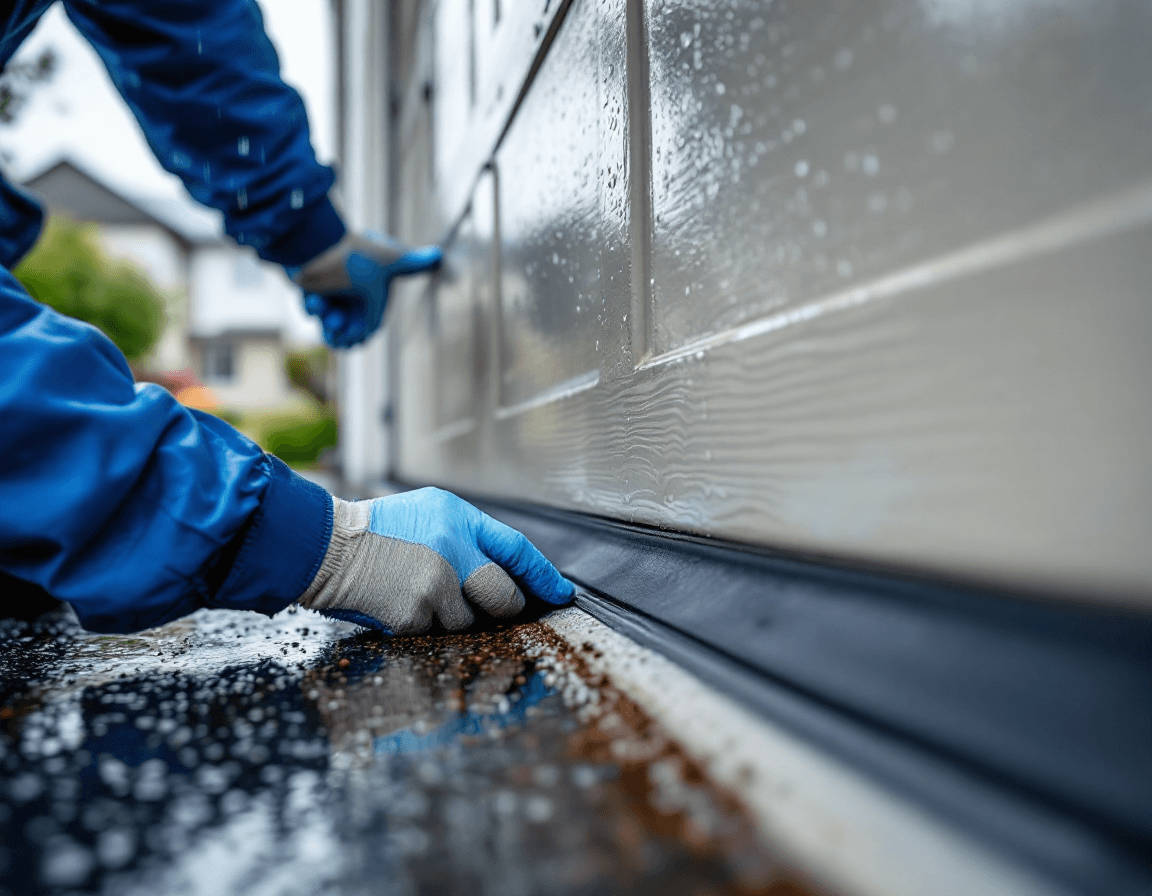
Garage door weather seal replacement in Sammamish, WA is one of the most practical repairs a homeowner can schedule, because a worn bottom seal or tired perimeter strip affects comfort, energy use, and how dry your garage stays all winter. Sammamish sits on the Eastside of King County, where autumn and winter bring long stretches of drizzle, steady rain, and damp air that settles into everything. A door that closes well in July can start letting water, cold air, and bugs under it by November without anyone noticing.
At Seattle Garage Door Fix, our technicians see this pattern across the plateau neighborhoods, the lakeside streets, and the newer subdivisions near the commercial core. Many homeowners assume the door itself is failing, when the real problem is a rubber or vinyl seal that has hardened, split, or simply pulled away from the steel. Replacing the seal is usually far less expensive than replacing the door, and it can noticeably change how the garage feels on a cold morning. This guide walks through what to look for, why our weather behaves the way it does, and how to decide between a weekend project and a professional visit.
Whether you live near Pine Lake, in the Klahanie area, or somewhere in the 98074 or 98075 ZIP codes, the goal is the same: a closed door that keeps the weather where it belongs. The sections below cover the symptoms to watch for, the types of seals available, approximate pricing, and a few simple checks you can run yourself. If anything involves the springs, cables, or other tensioned parts, you will also find a clear reminder about why those jobs belong to a licensed professional.
Reading the Light Under Your Door
The simplest test for a failing bottom seal takes about thirty seconds. Close the garage door, switch off the interior lights, and step outside with a flashlight or ask someone inside to shine a light toward the floor along the door's edge. If you can see daylight in a thin line anywhere along the bottom, that gap is letting in more than light. Rain, cold drafts, dust, and insects all travel through the same opening.
Pay attention to where the gap appears, because the pattern tells you something useful. A gap that is wider in the middle often points to a bottom seal that has lost its shape or sagged after years of compression. A gap at one corner may indicate a bent track, an uneven floor, or a bottom seal that was never cut to the full width of the door. Sammamish homes built on sloped lots sometimes have garage floors that tilt just enough to leave one side slightly higher, and that imbalance shows up quickly in the seal.
Some homeowners notice the problem first as a smell or a damp patch. If the concrete near the door looks darker than the rest of the floor after a storm, or if you find a faint line of mineral residue where water has dried, the seal is no longer doing its job. Catching this early matters, because standing moisture can creep under stored items, cardboard boxes, and shelving, and it can speed up rust on hinges and the lower panel. A few minutes of inspection now is far cheaper than cleaning up a damp garage in February.
How Our Pacific Northwest Weather Wears Down Seals
Rubber and vinyl are good at keeping weather out, but they are not immune to the conditions that define a Sammamish year. Long wet seasons keep these materials saturated and cool, and then sunny stretches in summer heat the same surfaces. That repeated swelling, drying, and temperature swinging gradually breaks down the polymers. Over several seasons, a seal that once pressed firmly against the concrete begins to curl, flatten, or crack at the corners.
Moisture is only part of the story. Our falls often bring a damp chill that stiffens rubber, and winter mornings can drop well below the temperatures that make the seal flexible. A stiff seal will not conform to small irregularities in the floor, so it leaves gaps that a more pliable one would have covered. Homeowners sometimes mistake this for a door that has gone out of alignment, when the door is actually fine and the seal has simply stopped flexing.
UV exposure matters too, especially for garages with a south or west-facing door that gets sun for part of the day. Even under our frequent cloud cover, long summer daylight hours take their toll on exposed rubber. Look for a chalky, grayish surface, small surface cracks, or a seal that feels brittle when you press it with a fingernail. Those are signs the material is aging, and replacement is usually a better long-term choice than trying to patch it.
Bottom Seals, Perimeter Strips, and Thresholds
Garage door protection works as a system, and it helps to know the three main pieces before you buy anything. The bottom seal is the rubber or vinyl strip attached to the bottom panel of the door. It contacts the floor when the door closes and handles the largest share of water, drafts, and pest entry. Most bottom seals are replaceable without removing the door, although some designs slide into a retainer channel that requires careful removal.
Perimeter weatherstripping runs along the sides and top of the door opening, usually on the door frame or jamb. It keeps air and water from passing around the edges, and it often wears more quietly than the bottom seal. Worn perimeter strips may show as light peeking through near the top corners, or as a whistle when wind hits the door. Replacing them is generally a straightforward job that many homeowners complete in an afternoon.
The threshold is the piece of the floor or track assembly that the bottom seal presses against. Some garages have a raised threshold or a separate sill that channels water outward, and damage there can make even a new seal ineffective. Common options include:
- Bottom seals with a T-shaped profile for doors that use a retainer channel
- Vinyl or rubber bottom seals with a flat foot for doors that rest directly on the floor
- Perimeter strips in vinyl, foam-backed rubber, or a combination of both
- Threshold seals or sweep strips for uneven concrete or older garage slabs
Choosing the right profile matters more than choosing the most expensive material. A seal that does not match your door's channel or floor contact will either pop out or fail to seal, so bring a measurement or a photo when you shop. Our technicians check the profile before recommending a part, because a seal that looks similar on the shelf can still be a poor fit.
Pine Lake, Klahanie, and the Eastside Lots
Sammamish neighborhoods vary a great deal in lot shape, grading, and drainage, and that variation shapes which seal problems show up most often. Homes near Pine Lake and the streets that wind through the surrounding hillside pockets can sit on lots that slope toward the garage apron. When runoff from rain flows downhill toward the door, even a modest amount of water pushes against a bottom seal that is already tired. Over time, that pressure can lift the seal's edge and open a channel for water.
Klahanie's planned layout includes a mix of driveway angles, garage orientations, and slab conditions, so you may find that one side of your garage floor is noticeably higher or lower than the other. A bottom seal that fits perfectly on a level floor can leave a gap on a slight tilt, and homeowners often misread this as a door problem. The fix is usually a seal designed to accommodate minor floor variation, along with a check of the door's balance and track alignment to make sure the panels are not sitting unevenly.
The commercial and retail areas near Sammamish Commons see a different kind of wear, because garage doors in nearby multi-use buildings and older storage structures often open and close many times a day. High cycle counts stress perimeter weatherstripping and speed up the loss of compression in bottom seals. Residential garages in those same blocks can show similar patterns if the household uses the door frequently for bikes, strollers, or loading groceries. Frequent use does not mean something is wrong, but it does mean the seals may need attention sooner than you expect.
Pests, Leaves, and the Small Things That Sneak Inside
A gap under the garage door is an open invitation to more than water. Spiders, earwigs, ants, and rodents all find their way in through the smallest openings, and the damp, sheltered environment of a garage makes it attractive to them. Fallen leaves and fine debris also drift under the door during windy weeks, especially in autumn when the trees around Sammamish drop heavily. Those leaves trap moisture against the threshold and can make the gap look worse than it is.
Dust and fine grit are sneaky problems too. They build up along the bottom edge and can wear down a seal from the outside, while also settling onto stored items and vehicles inside. If you notice a line of sediment along the inside of the door or small droppings near the corners, your bottom seal is probably not closing tightly enough. Clearing the debris is a good temporary step, but the seal itself needs to be replaced if the gap remains.
Garage pests tend to follow the same paths that moisture uses, so one repair can solve several problems. Sealing the bottom and perimeter together reduces the number of entry points and makes it harder for insects to hide in the corners of the door frame. For homeowners who keep pet food, bird seed, or recycling bins in the garage, a complete seal often pays off in cleaner storage and fewer surprises. It is also worth checking any gaps where utility lines or vents enter the garage, since those can undo the benefit of a new seal if they stay open.
What Replacement Usually Costs in Sammamish
Our typical pricing for garage door weather seal replacement falls between $95 and $250, depending on the seal type and the size of the door. A basic bottom seal for a standard single-car door costs less than a heavy-duty or specialty profile on a wide double door, and perimeter weatherstripping adds to the total when the whole opening needs attention. The final figure depends on what your door needs, what material you choose, and whether the job includes related adjustments.
Several factors influence where your quote lands. Door width is the biggest driver, since a longer seal uses more material and takes more time to fit evenly. The seal profile also matters, because some designs require a specific retainer channel or a longer installation process. If the threshold or track has damage that needs correction before the new seal can perform, that work may appear as a separate line item in the estimate.
We recommend asking for a clear breakdown before work begins. A reputable technician should explain which seal is being installed, why it was selected for your door, and what the price includes. Be cautious of any offer that seems much lower than the range above without explanation, since it may reflect a seal that does not match your door or a repair that will need to be redone. Our goal is a durable fix that holds up through several wet seasons, not a quick swap that leaks again by spring.
Choosing the Right Seal for Your Door Panels and Track
Garage doors are not standardized, and the seal that works on one brand or model may not fit another. Start by identifying whether your door is a sectional steel model, a wood or composite design, or a slightly older style with a different bottom panel layout. Then look at the channel on the bottom panel. If it accepts a T-shaped seal, you will need a matching profile. If the bottom panel is flat, a different type of seal may be more appropriate.
Material choice also matters for our climate. Vinyl tends to hold up well in cool, wet conditions and resists cracking as temperatures change, while some rubber formulations offer more flexibility at low temperatures. Foam-backed perimeter strips can compress easily, which helps them seal irregular frames but may wear faster if the door sees heavy use. Ask about the expected lifespan of each option, and avoid assuming that thicker automatically means better.
Before ordering, measure the length of the bottom panel channel and note the width of the door opening. If you are replacing perimeter weatherstripping, measure both sides and the top separately, since the lengths are rarely identical. Taking photos of the existing seal and the channel can save a return trip. Our technicians can also verify fit during a visit, which removes most of the guesswork.
A Homeowner's Quick Check You Can Do This Weekend
You can complete a simple inspection without any special tools. Start with the flashlight test described earlier, and mark each spot where light appears. Then run a dollar bill or a thin strip of paper under the closed door at several points. If it slides out with little resistance at any location, the seal there is not making firm contact with the floor. Repeat the test along the sides and top of the door to identify worn perimeter strips.
Next, look closely at the condition of the seal material itself. Use the checklist below to decide whether cleaning, adjustment, or replacement is the right next step:
- Cracks or splits visible without pressing the seal, especially at corners
- Flattened sections that do not spring back after you press them
- Stiffness that makes the seal feel hard or brittle at room temperature
- Missing sections, torn ends, or pieces that have pulled out of the retainer
- Sticky or slimy residue that suggests mold or prolonged moisture contact
Finally, clean the threshold and the bottom edge of the door, then recheck the gaps. Sometimes debris is the only thing holding the seal away from the floor, and a thorough sweep reveals that the seal is still in reasonable shape. Keep notes on what you find so the technician can use them. If the seal is clearly failing, you will have a good record of the symptoms to share when you call.
When a Licensed Professional Should Take Over
Replacing a bottom seal or perimeter strip is often within reach for a careful homeowner, but there is a clear boundary you should respect. Garage door springs, cables, drums, and the spring tension system carry serious force, and they are not part of a weather seal job. If your inspection turns up a broken spring, a frayed cable, a door that is off track, or a panel that is bent, stop and call a licensed professional. Attempting those repairs without training can cause severe injury.
Call us if the seal replacement reveals other issues, such as a warped bottom panel, a damaged track, or uneven floors that prevent a proper seal from making contact. Those problems require adjustment and sometimes component replacement, and a technician can determine whether the fix is a simple alignment or a larger repair. Our team is licensed, bonded, and insured, which matters when work touches a door that carries significant weight and tension. We would rather explain the situation clearly than leave you guessing.
It also makes sense to call when you have tried a seal replacement and the gap persists, or when the door squeaks, drags, or closes unevenly after the new seal is installed. Those symptoms can point to a problem that a new seal cannot fix on its own. A professional visit gives you a complete picture before you spend money on parts that will not solve the underlying issue.
Keeping Your Seals Working Through a Wet Sammamish Winter
Once a new seal is installed, a little routine care extends its life considerably. Sweep the threshold and the bottom edge of the door every few weeks during the rainy season, since grit and leaves can abrade the seal. Keep the track and rollers free of debris, because a door that closes unevenly will press the seal unevenly. A quick look after windstorms helps you catch any displacement early.
Avoid using harsh solvents or petroleum-based products on rubber and vinyl seals. Many common cleaners dry out the material and accelerate cracking, and some can soften it so it no longer holds its shape. A mild soap and water solution, applied with a soft cloth, is usually all that is needed. Rinse the seal lightly and allow it to dry before the door closes again, especially in cold weather when moisture can freeze in the seams.
Plan an annual check, ideally in early autumn before the heaviest rain arrives. That timing gives you a chance to replace a worn seal before the first storms test it, and it reduces the risk of water in the garage during the months when the ground stays saturated. If you live near Pine Lake, in Klahanie, or anywhere across the 98074 and 98075 ZIP codes, a seasonal inspection is one of the simplest ways to keep your garage dry, warm, and free of unwelcome guests. When you are ready for a professional look, call Seattle Garage Door Fix at (888) 799-3819 and we will assess the seal, confirm the right replacement, and give you a clear price before any work begins.