
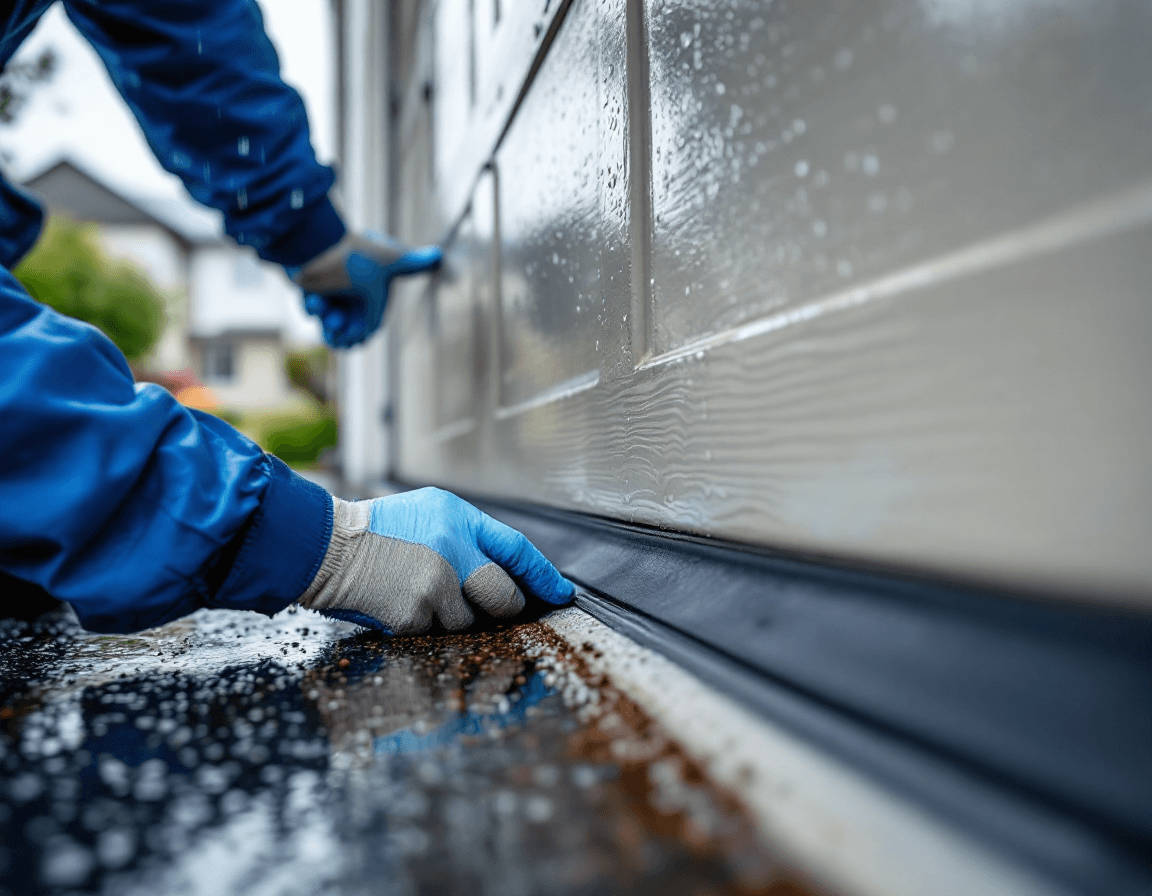
Garage Door Weather Seal Replacement in Mountlake Terrace, WA is one of the most affordable fixes that can make a noticeable difference in how your garage feels, smells, and performs through the year. If you live near the MLT Town Center, along the wooded edges around Lake Ballinger, or in one of the many older split-level and rambler neighborhoods in the 98043 area, your garage door has probably spent years taking a steady beating from wind-driven rain and damp air. A worn bottom seal or tired perimeter weatherstripping lets that moisture, cold air, and a surprising number of small critters straight into the space that often holds your car, tools, and stored boxes. This page explains how seal problems develop locally, how to recognize them, what replacement involves, and what you can reasonably expect to pay.
Most homeowners do not think about their garage door seals until they notice a puddle near the threshold or a cold blast of air when they step inside from the laundry room. By that point the seal has usually been failing for a while, often one bad winter at a time. The good news is that seal replacement is a contained repair. It rarely requires touching the springs, cables, or drive system, which is why it tends to be among the more approachable items on a garage maintenance list. Our team at Seattle Garage Door Fix works on these seals across Snohomish County every week, and the advice below reflects what we see on real doors in real Mountlake Terrace homes.
Our goal is to help you make a clear decision. You will find straightforward ways to check your door at home, a plain explanation of the three main seal types, and an honest look at pricing in the $95 to $250 range. If you find that your problem extends beyond the seal, we will say so, because a good repair begins with an accurate diagnosis. Read on, and then call us at (888) 799-3819 if you would like a technician to look at your specific door.
Why Mountlake Terrace Garages Collect Water at the Threshold
Our part of Western Washington has long, gray stretches where the rain does not fall so much as drift sideways, and the wind shifts direction often enough to push water under a door that looks perfectly closed from the driveway. A garage threshold that sits even slightly below the surrounding apron or slopes toward the house will channel that water inward. Over time, the constant cycle of wet and drying weather takes a real toll on rubber and vinyl seals, making them stiffen, crack, and pull away from the floor.
Many Mountlake Terrace homes were built with concrete slabs poured at grades that were acceptable decades ago but now look marginal given how much rain we get in a typical winter. Driveways in some neighborhoods have settled or been resurfaced at different heights, which can leave a small step or a dip right where the door meets the floor. Even a gap of a quarter inch can admit a remarkable volume of water during a steady February downpour. When a seal is already brittle, that small gap becomes the entry point for everything else.
Moisture also lingers. After a long run of overcast days, the air inside an attached or detached garage can feel heavy, and condensation forms on cold concrete and metal tracks. A seal that has lost its flexibility cannot press firmly against the floor, so the damp air moves freely and the space never fully dries out. That is one reason homeowners in the 98043 area often notice mildew smells or rust spots on hardware before they realize the real culprit is a seal.
The Light Test and Other Quick Checks You Can Do Tonight
Before calling anyone, you can learn a lot about your door with a few minutes and a flashlight. Close the garage door completely, switch off the interior lights, and have someone shine a bright flashlight from the outside along the bottom edge and down each side. If you can see light glowing through in any spot, you have a gap that the seal is not closing. Repeat the test along the top and sides of the door, because perimeter strips can fail independently of the bottom seal.
Next, look at the bottom seal itself with the door closed. Run your fingers along its length and note any sections that feel hard, crumbly, flattened, or sticky. Check for missing pieces, especially at the corners where the seal bends and takes repeated stress. A seal that has pulled loose from its retainer channel will often curl upward at one end, and you may see a dark band of grime where it used to press against the concrete.
Finally, check the threshold outside the door. Look for standing water, leaf piles, or a visible slope that carries runoff toward the opening. Sweep the area and watch what happens during the next rain. If water consistently reaches the threshold but does not appear to come inside, your seal may be doing its job while drainage is the larger issue. If water is coming under the door, the seal is almost always part of the answer. Write down what you find so that when a technician visits, you can point to the exact problem areas.
Bottom Seals, Perimeter Strips, and Threshold Pieces: What Each One Does
Garage door weather protection is not a single part. Bottom seals are the rubber or vinyl strips attached to the lowest panel of the door, and they press onto the floor when the door closes. They handle the largest gaps and the most water, so they tend to wear out first. Most bottom seals are replaceable without removing the entire door, although the exact method depends on how the seal is retained.
Perimeter weatherstripping runs along the top and sides of the door opening, typically attached to the door frame or the edges of the panels. This material keeps wind, drafts, and insects from sneaking around the outer edges. It is usually thinner and more flexible than a bottom seal, and it can compress or tear after years of the door rubbing against it. When perimeter strips fail, you often feel a steady cold draft even when the bottom seal looks fine.
Threshold pieces are the components at the floor level where the door meets the ground, sometimes including a sill or a small flexible strip set into the concrete. Not every door has one, but where it exists it works alongside the bottom seal to block water and pests. A worn threshold can allow a thin stream of water across the floor even when the bottom seal is in reasonable shape. Our technicians look at all three elements together, because replacing only one component sometimes leaves the others to fail within a season.
Pests, Leaves, and the Small Openings Nobody Notices
Pests are a persistent problem in Snohomish County garages, especially in neighborhoods near Lake Ballinger where greenery and damp soil create ideal habitat. Spiders, earwigs, slugs, ants, and mice all look for gaps at ground level, and a torn or missing bottom seal gives them an easy route inside. Once they arrive, they tend to settle near stored cardboard, pet food, and the back corners where nobody goes often.
Leaves and debris deserve attention too. During autumn, wind pushes fir needles, maple leaves, and wet debris against the base of the door, and a compressed seal cannot keep that material out if it has lost its shape. Small amounts of organic matter accumulate in the track area and near the threshold, holding moisture against the bottom panel and speeding up rot in the seal retainer. Regular sweeping helps, but a good seal is what keeps the debris line from creeping under the door in the first place.
Homeowners sometimes overlook the small openings where a seal meets the side jamb or where a corner has separated. These spots are easy to miss because they do not look dramatic, yet they are exactly where pests find their way in. During your inspection, pay special attention to these junctions and look for daylight, dark staining, or a visible gap wide enough for a finger. Sealing these areas as part of a full replacement is far more effective than adding spray or traps after the fact.
Drafts, Energy Bills, and Living Beside an Attached Garage
If your home shares a wall with the garage, every gap in the door matters more than you might expect. Cold air that enters the garage will migrate through the wall and into living spaces, particularly in houses where ductwork runs through or near the garage ceiling. Many homeowners notice this first in the laundry room, a mudroom, or a bedroom above the garage, where a persistent chill suggests that the heating system is working harder than it should.
Garage doors are large surfaces, and a leaky seal can quietly add to your heating load across a long winter. We do not claim a specific savings figure for any household, because every home, climate pattern, and heating system is different. What we can say is that sealing drafts is one of the less expensive ways to reduce wasted heat, and it works best when combined with other measures such as insulating the garage ceiling and checking the door panels themselves. When you feel a steady draft at ankle height near the garage entry door, treat that as a clue worth following.
Moisture and cold air also work together. Warm, humid indoor air that reaches a cold garage can condense on surfaces, and that condensation adds to the damp conditions that slowly degrade weatherstripping. Keeping the seal intact reduces both the draft and the moisture cycle, which helps your garage stay drier and your home feel more comfortable. For households in Mountlake Terrace that use the garage as a workshop or a mudroom, a tight seal is one of the most practical comfort upgrades available.
How Our Technicians Match Seal Profiles to Your Door
Seals are not one-size-fits-all. Garage doors use different panel thicknesses, retainer channels, and bottom brackets, and a seal that looks similar on the shelf may not fit your door correctly. Before replacing anything, our technicians measure the existing profile, note the channel width, and check whether the seal slides in from the end of the panel or attaches with clips or screws. Getting the fit right is what keeps water out for years instead of months.
We also consider the type of door you have. Steel sectional doors, insulated doors, wood carriage-style doors, and older tilt-up models each have their own quirks. Insulated doors may need a seal that accommodates a thicker panel edge, while older doors sometimes have warped bottoms that require a more flexible seal or a minor adjustment before the new material will sit flat. When a door is badly out of square, we will tell you that plainly, because a new seal cannot fix a structural alignment problem.
Material selection matters as well. Rubber, vinyl, and blended compounds respond differently to cold, UV exposure, and repeated compression. We discuss those options with you so the seal you choose fits both your budget and how you actually use the garage. If your door opens and closes many times a day, a more durable profile may be worth the difference. If the door is mostly closed and the main concern is occasional water, a standard profile might be more than enough.
What a Replacement Visit Typically Involves
A typical weather seal visit begins with a walkaround inspection of the door, frame, track area, and threshold. The technician checks the existing seal, tests the door for proper closure, and notes any signs of rot, warping, or pest activity. We then explain what we found and recommend the right replacement, along with any additional work that could prevent future problems. You are never obligated to approve work you do not understand.
Once you agree on the plan, the replacement itself is usually straightforward. The old seal is removed, the retainer channel is cleaned, and the new seal is installed and trimmed to length. On many doors the technician will then test the closure several times to confirm that the seal compresses evenly and does not catch on the floor or tracks. Corners and joints receive extra attention, since they are common failure points.
Here is what homeowners can generally expect during a visit:
- A brief inspection of the bottom seal, perimeter strips, and threshold condition
- A review of seal options, with the pros and cons of each in plain language
- Removal of the old material and cleaning of the retainer channel or track edge
- Installation and trimming of the new seal, with attention to corners and joints
- Closure testing and a light-test check to confirm that gaps have been eliminated
- A walk-through of what you should watch for in the coming months
Some visits uncover issues that go beyond weatherstripping, such as a loose bottom bracket or a misaligned panel. When that happens, we will explain the finding and give you options before doing any additional work.
Pricing Between $95 and $250: What Moves the Number
Our pricing for garage door weather seal replacement generally falls between $95 and $250. The exact figure depends on the type of seal, the length and width of your door, and whether the work involves the bottom seal alone or a combination of bottom, perimeter, and threshold components. A single-car door with a standard bottom seal will usually land near the lower end of that range, while a wide double door with multiple seal types can reach the higher end.
Seal type affects cost in a few ways. Basic rubber or vinyl profiles are typically less expensive than heavier-duty or specialty options designed for insulated doors or high-traffic use. Perimeter strips are often priced separately from bottom seals, since they require measuring and fitting along multiple edges. Threshold pieces can add to the total when they need to be replaced or when the concrete below them requires a small amount of preparation.
We give you a clear estimate before any work begins. If your door needs repairs beyond the seal, such as replacing a damaged bracket or adjusting a panel that has shifted, we will itemize those separately so that you know exactly what you are paying for. Our goal is to keep the process transparent, because a weatherstripping repair should feel like a simple, well-explained solution rather than an unexpected bill.
Seasonal Timing for Western Washington Homes
Timing matters more here than in drier parts of the country. Many homeowners wait until the first heavy rains of fall to notice seal problems, but by then the damp season is already underway and water may have been entering for weeks. Checking your seals in late summer gives you time to schedule a replacement before the wettest months arrive, when technician schedules can fill quickly across Snohomish County.
Spring is another good window. After a wet winter, the seals that survived may be stiff, cracked, or compressed, and a quick inspection helps you catch damage before pests begin their seasonal activity. Warmer weather also makes certain adhesives and seal materials easier to work with, though we always match the method to the material rather than the calendar. If you notice a sudden change in how your door closes after a cold snap, that is worth checking promptly.
Regardless of season, avoid waiting for a visible flood. Small amounts of water that appear once or twice a year are still a sign that the seal has lost its ability to block moisture. Addressing the issue early keeps the repair simple and protects your garage floor, stored items, and any shelving or equipment you keep near the door.
Materials, Maintenance, and Keeping Seals Working Longer
A seal lasts longer when you give it a little attention. Sweep the threshold and track area regularly so that grit does not grind against the material each time the door moves. Rinse the bottom seal with mild soapy water occasionally to remove salt, sand, and road grime that can dry out rubber and vinyl. Avoid petroleum-based products on the seal, since they can soften some materials and cause them to swell or degrade over time.
Seasonal habits also help. Keep the garage door closed when you are not using it, because constant opening and closing exposes the seal to rubbing and weather. Trim back shrubs and branches near the door so that wet foliage does not press against the panels and drip water onto the threshold. If you use the garage for storage, avoid stacking items directly against the door, which can bend the bottom panel and misalign the seal.
Here are some simple maintenance habits that many homeowners find useful:
- Sweep the threshold and track area every few weeks, especially in fall
- Clean the bottom seal with mild soap and water a couple of times a year
- Trim vegetation so it does not contact the door or channel water toward the opening
- Repeat the flashlight test after major storms or at the change of seasons
- Keep stored items away from the door so the panel can close squarely
These habits will not replace a seal that has truly failed, but they can extend the life of a good seal and help you notice problems early.
When Weatherstripping Is Not the Real Problem
Sometimes a homeowner calls about a leaking garage door, and the seal turns out to be only part of the story. If water pools in front of the door rather than entering, the grading or drainage outside may need attention. If the door does not close fully or leaves a gap that changes from one side to the other, the panels or tracks may be out of alignment, and no seal will fully close that space. Persistent gaps at the top can also point to track issues or worn rollers.
Old or damaged door panels can also let in water and air through cracks, dents, or separated sections that a new seal cannot cover. In those cases, replacing the seal alone may provide only temporary relief. We will tell you honestly when the door itself needs a closer look, because it is far better to fix the actual cause than to keep replacing parts that fail for the same reason.
Anything involving the springs, cables, or lifting hardware should be handled only by a licensed professional. Spring tension is stored energy, and it can cause serious injury if mishandled. If your inspection reveals a worn spring, a frayed cable, or a bent track, please do not attempt the repair yourself. Our licensed, bonded, and insured technicians can assess the situation safely and explain your options before any work is performed.
If you are in Mountlake Terrace or nearby communities and your garage door seal is letting in water, drafts, or pests, the team at Seattle Garage Door Fix can help you find out exactly what is happening and what it will take to fix it. Call (888) 799-3819 to schedule an inspection and get a clear, itemized estimate for your weather seal replacement.