
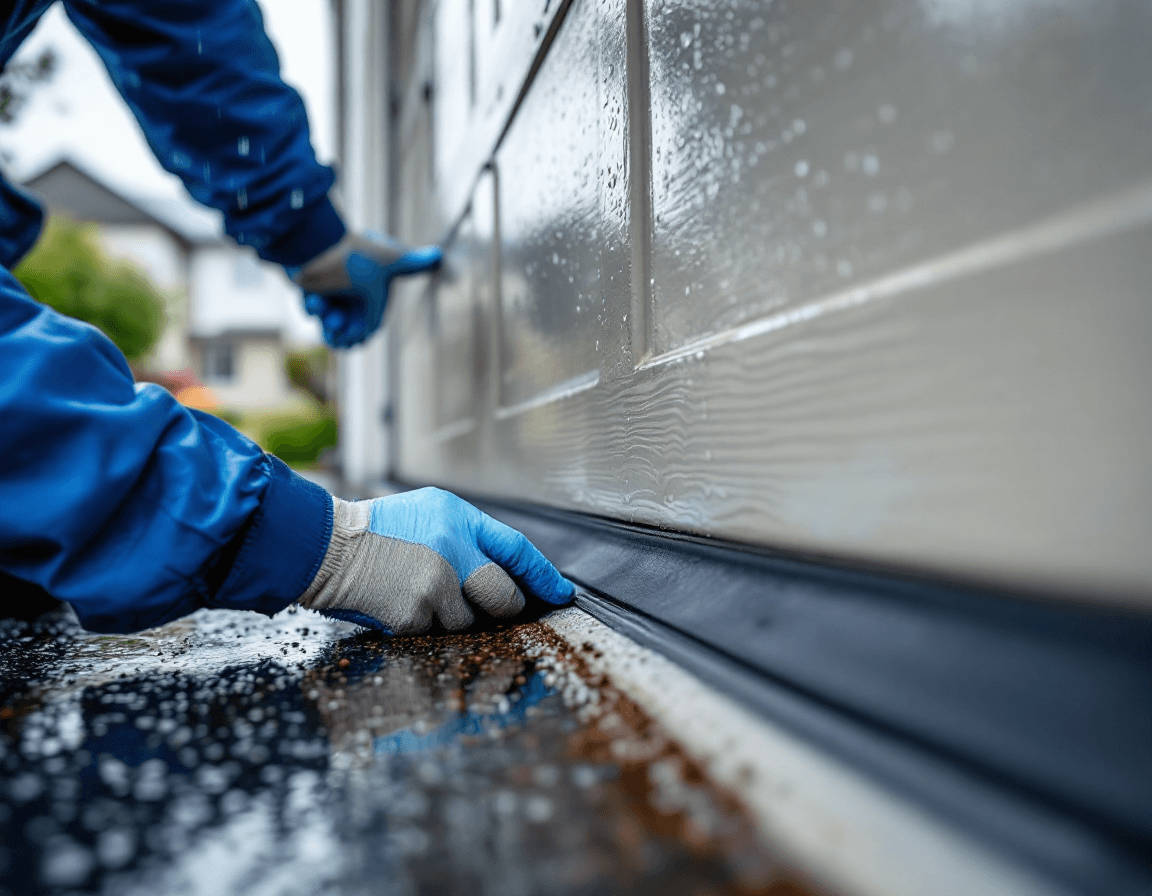
Garage door weather seal replacement in Bothell, WA is one of the most cost-effective fixes a homeowner can make, because a worn bottom seal, a tired side seal, or a cracked threshold can let rain, cold air, leaves, and pests into a space that is often connected to the rest of the house. Bothell sits in the northern part of King County, where long gray stretches and steady drizzle are normal for much of the year. Those conditions test every rubber and vinyl strip on a garage door, and most of them wear out long before the door panels or the opener show any sign of trouble.
This page explains how seals work, what the failures look like, and what a typical replacement involves in our service area. Seal replacement typically runs from $95 to $250, depending on the seal profile, the width of your door, and whether the perimeter strips or the threshold also need attention. We wrote this as a practical guide from the field, the kind of walk-through a technician would give a neighbor standing in the driveway on a rainy Saturday morning. If you would rather have someone look at your door in person, we are glad to help.
How Bothell's Wet Season Finds the Gap Under Your Door
Bothell's weather is mild by national standards, but its moisture is relentless. Autumn and winter bring repeated rounds of rain, and even on days that look dry, the air is heavy and cool. Garage doors take a beating from that combination because they sit at ground level, they open and close many times a week, and they are often the largest moving opening on the house. Each cycle drags the bottom seal across the concrete, and each rainstorm pushes water toward the lowest point it can find.
Many owners only notice a seal problem when water pools on the floor after a storm or when a shop vac suddenly becomes a regular fixture near the door. The problem usually started months earlier, when the seal began to flatten and lose its ability to bridge small bumps in the slab. Once a gap opens, wind-driven rain can creep under the door even when the weather seems calm. The gap also gives cold air an easy route in, which is why garages on the north side of a house often feel frigid long before the rest of the home does.
A simple test helps you judge the situation. On a dim evening, have someone stand inside the garage with a flashlight while you stand outside, or reverse the arrangement if the lights are on. If you can see light along any part of the bottom edge, the seal is no longer doing its job. Check at several points, because a seal can look fine in the middle of the door and still fail near one corner where the floor dips.
Reading the Bottom Seal: Cracks, Curls, and Missing Sections
The bottom seal is the rubber or vinyl strip fastened to the lowest panel of the door. Its job is to compress against the floor when the door closes, forming a barrier that keeps water, dust, and critters out. Over time, UV exposure, temperature swings, and repeated flexing cause that strip to harden, crack, and eventually lose its shape. In our area, the wet-dry cycle can also loosen the fasteners that hold the seal in its channel, so the strip begins to sag or curl away from the floor.
Look for a few specific signs during an inspection. Cracks that run across the seal, pieces that have torn away, and sections where the rubber looks chalky or brittle all point toward replacement. A seal that has pulled out of its track at one end, or one that hangs lower on one side than the other, will leave a noticeable gap even if the rest of the strip is intact. Pay attention to the corners as well, since they take the most stress when the door reaches the bottom of its travel.
- Visible light or daylight along the bottom edge when the door is fully closed
- Cracks, splits, or chunks missing from the rubber or vinyl strip
- A seal that feels stiff, chalky, or flattened when pressed with a thumb
- Sections that have pulled out of the retainer channel or hang unevenly
- Water tracks, salt residue, or debris lines running just inside the threshold
Replacing a bottom seal is one of the more straightforward jobs in garage door maintenance. The old strip is typically slid out of a channel or removed with a few fasteners, and the new one is cut to length and fitted into place. Matching the correct profile matters, because a seal that is too thin will not close the gap and one that is too thick can stress the door when it closes. We always check the panel design and the channel width before recommending a specific product.
Perimeter Weatherstripping and the Side-Jamb Drafts Most Owners Miss
Perimeter weatherstripping runs along the sides and top of the door opening, where the panels meet the frame. Many homeowners focus entirely on the bottom seal and overlook these strips, even though they are a major source of drafts. The side and top seals are usually made of flexible vinyl or foam-backed material that presses against the jamb when the door closes. Over several seasons, that contact surface can compress, tear, or pull loose, leaving a gap that is easy to miss from inside the house.
Drafts from the sides often show up as a whistle when wind picks up, or as a cold streak that you can feel by holding a hand near the top corners. On a windy day in Bothell, you may also notice a faint damp smell in one spot along the jamb, which suggests that moisture is working its way in behind the trim. Worn perimeter strips also let dust and fine debris settle into the garage, which can make a clean space feel neglected even when it is swept regularly.
A thorough inspection includes running a hand or a strip of paper along the jamb while someone closes the door slowly. If the paper slides out without resistance at any point, that spot needs attention. Also check the top seal where the door meets the header, since that gap is often overlooked and can allow rain to be pushed into the upper part of the opening during storms. Replacing perimeter strips is usually a matter of removing the old material from its track and installing new strips with the proper adhesive or fasteners.
Threshold Seals and the Concrete Slope Problem
The threshold is the strip of material at the base of the opening, and it is the part of the system that interacts most directly with the concrete slab. Many garages in the Bothell area were built with driveways that slope toward the door to help drainage, and that slope can create uneven contact along the threshold. When the slab dips, water can collect against the door's lowest edge and find its way inside, even if the bottom seal itself is still in good shape.
Some threshold problems are caused by age, and others come from settling or patching of the concrete over time. Hairline cracks, chipped edges, or a ridge of hardened patching material can prevent the seal from making full contact. In those cases, replacing the threshold seal alone may not solve the problem, and the floor may need a small amount of repair before a new seal can perform properly. A technician will check whether the issue is in the seal, the track, or the surrounding concrete before quoting the job.
Threshold seals also deal with pests. Mice, spiders, and insects can squeeze through openings that look too small to matter, especially where the seal has pulled away from the floor at one corner. If you have noticed droppings near the door, webs along the lower panel, or insects gathering on the floor after dark, the threshold should be part of your inspection. Sealing those entry points is often the most effective step for keeping a garage from becoming a rodent shelter during the cooler months.
Pests, Leaves, and Creek-Side Debris: Keeping the Garage Closed to Visitors
Homes near wooded areas, creeks, and open green space see a steady flow of visitors that most owners never think about. Leaves, moss spores, and small insects are carried by wind and water, and they find their way under a tired door with little effort. Near North Creek and other natural corridors, the wet season brings a lot of organic debris into yards and driveways, and that material can accumulate along the threshold and inside the bottom track. A worn seal can turn that debris into a steady problem.
Rodents are a more serious concern. Mice need only a small gap to enter, and once they are inside a garage they can chew through stored items, insulation, and wiring. Stored bags of pet food, birdseed, or garden supplies make an attractive target. Keeping the bottom seal and threshold in good condition is one of the simplest ways to reduce that risk, and it works far better than setting traps after the fact. Good sealing also limits the entry of wasps and ants that build nests in the lower corners of the door frame.
Good housekeeping supports the seal and does not replace it. Keep the floor near the door clear of clutter, sweep out debris after storms, and avoid stacking materials against the lower panel where moisture can collect. Trim vegetation that touches the door or sits against the frame, because branches and damp plants create a bridge for insects and rodents. When a seal is sound, these habits keep the garage cleaner and reduce the amount of pest activity that reaches the door in the first place.
What the Seal Costs in Bothell: The $95–$250 Range Explained
Seal replacement pricing depends on what is being replaced and how the door is built. Our typical range is $95 to $250, and the spread comes mostly from three variables: the seal profile, the width of the door, and the amount of perimeter or threshold work involved. A single bottom seal on a standard two-car door sits near the lower end of that range, while a full package that includes bottom, perimeter, and threshold material on a larger or more complex door lands higher. Heavier-duty profiles designed for stronger weather exposure may also cost more.
It helps to know what the price usually includes. Quotes generally cover the seal material, the labor to remove and install it, a check of the door's alignment and track condition, and a basic cleanup of the work area. If the concrete needs repair before the threshold can be sealed properly, that work may be quoted separately. We encourage homeowners to ask for a clear breakdown so they know exactly what is being replaced and why.
Replacing seals early is almost always less expensive than waiting for other damage. Water that enters a garage can warp stored wood, rust metal shelving, and create conditions for mold on drywall or insulation. Drafts that are left unaddressed push up heating costs for the rooms above or beside the garage. A modest seal replacement is often the lowest-cost step a homeowner can take to protect the rest of the property.
Matching Seal Profiles to Your Door Panels
Garage door seals are not one-size-fits-all. Panels come in different thicknesses, the track and retainer channels vary by manufacturer, and some doors have a bottom edge designed for a specific seal shape. Installing the wrong profile can leave gaps, cause the door to bind, or wear out the new strip prematurely. Before any replacement, the technician will measure the channel, identify the panel style, and confirm that the seal will close fully without stressing the opener.
Steel doors, insulated sectional doors, and older wood carriage-style doors each present different challenges. Insulated panels often have a rigid bottom bracket that holds the seal, so the replacement must match that bracket's geometry. Older doors may have worn tracks or bent sections that prevent a new seal from sitting flat, which means the door may need minor adjustment before the seal can perform. Wood doors also expand and contract with humidity, so the seal must be flexible enough to handle seasonal movement.
Choosing material is another decision. Vinyl and rubber are the most common options, and each has its own strengths. Rubber tends to remain flexible in cold weather, while vinyl often resists UV and staining well. Foam-backed perimeter strips compress easily and seal gaps that are slightly irregular, but they can wear faster in areas with heavy foot traffic or frequent door cycles. We discuss these trade-offs during the visit so you can choose what suits your door and your habits.
Energy Bills, Drafts, and an Attached Garage Next to Living Space
Many homes in Bothell have an attached garage that shares a wall with a bedroom, laundry room, or kitchen. In those layouts, the garage acts as a buffer, and its temperature strongly influences how the adjoining rooms feel. A leaking door seal allows cold, damp air to flow into the garage, and that air can cool the adjacent walls and floors. Over a long wet season, the effect can show up as a room that never quite warms up or a heating system that runs more than expected.
Sealing the garage door is one piece of a broader approach to reducing drafts. Interior door sweeps, weatherstripping around the entry to the house, and insulation in the garage ceiling all contribute to a more comfortable home. Still, the garage door is one of the largest openings in the structure, so its seals have an outsized effect. A tight bottom seal and sound perimeter strips reduce the amount of outside air that enters the garage, which in turn reduces the load on the heating system.
Homeowners sometimes ask whether a seal replacement will make a noticeable difference. The honest answer is that results vary with the house, the insulation, and the severity of the original gap. A door that had a large visible gap is likely to show a clear improvement in draft and temperature. A door with only minor wear may show a smaller change, but the reduction in moisture and debris is still valuable. We recommend checking the seal every fall, before the heaviest rain arrives, so you can address problems while they are still small.
Service Visits Across Bothell's Neighborhoods and ZIP Codes
We provide garage door seal replacement throughout Bothell and the surrounding communities, including the 98011, 98012, and 98021 ZIP codes. Homes in these areas vary widely, from older ranch houses with single-car doors to newer builds with wide insulated doors and smart openers. Each property has its own mix of exposure, slope, and drainage, so the inspection always starts with the specific door in front of us rather than a generic template.
Local landmarks help describe the range of conditions we see. Homes near Bothell Landing are often close to the waterfront and feel the damp air more directly, while properties in the Canyon Park area frequently include newer construction with wider doors and more complex trim. Along the North Creek corridor, drainage and vegetation can change the way water approaches the garage, and debris can build up quickly after storms. Recognizing these patterns lets the technician focus on the issues most likely to affect your door.
If you are not sure which ZIP code applies to your address, you can still call us and describe your location. We will confirm service availability and help you plan a visit that fits your schedule. Many homeowners find it easiest to schedule a seal inspection on a dry day, so the technician can see exactly where light or water is entering and can check the threshold without rain obscuring the view.
When a Seal Job Turns into a Spring or Cable Job: Why a Licensed Pro Matters
Seal replacement is generally a low-risk task, but garage doors are heavy, and they are controlled by springs and cables under significant tension. If an inspection reveals a worn spring, a frayed cable, a bent track, or a door that does not balance properly, the job moves beyond a simple seal and into territory that should be handled by a licensed professional. Springs store enough energy to cause serious injury if they are adjusted or released incorrectly, and homeowners should never attempt that work with improvised tools.
Our technicians are licensed, bonded, and insured, and they are trained to recognize when a door needs more than a new seal. If we find a spring or cable issue during a visit, we will explain what we see, show you the affected component, and provide a clear recommendation. You are never obligated to proceed with work beyond the seal, and we will make sure you understand the safety considerations before any spring or cable repair begins.
For seal work you can often handle yourself, such as cleaning the channel, removing debris, and checking the seal for cracks, the process is simple and safe as long as the door is disconnected from the opener and held steady. Still, many owners prefer to have a professional handle the replacement so the fit is exact and the door operates smoothly afterward. If you are unsure at any point, call us at (888) 799-3819 and we will walk you through the next step.
Keeping your garage dry, quiet, and comfortable through a Bothell winter usually comes down to a few well-timed inspections and a seal that fits the door it protects. If you have noticed light under the door, water on the floor, cold drafts, or signs of pests, a seal replacement is often the most practical fix available. Call Seattle Garage Door Fix at (888) 799-3819 to schedule an inspection, and we will look at your bottom seal, perimeter strips, and threshold, then give you a straightforward estimate before any work begins.