
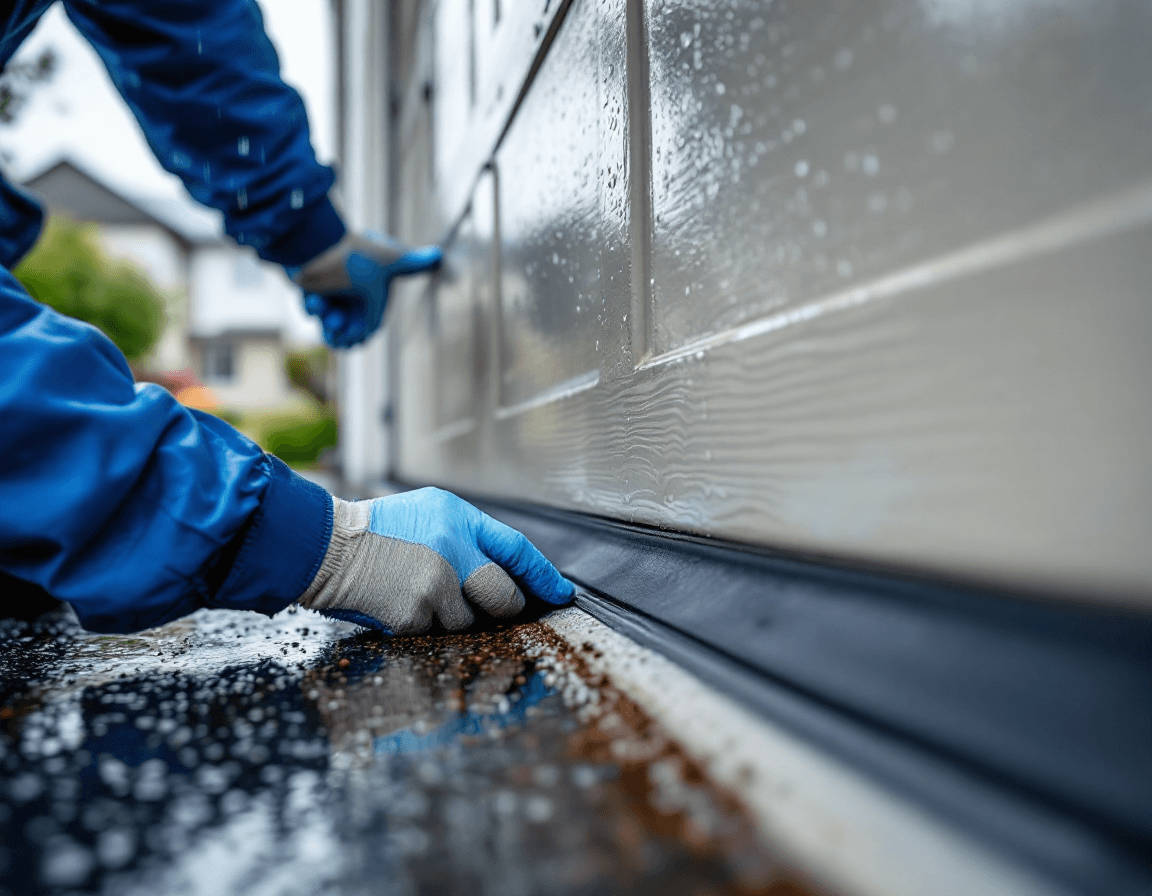
Garage door weather seal replacement in Kenmore, WA is one of the most cost-effective repairs a homeowner can make, and it often delivers noticeable results the same day. A door that sits on a worn or missing seal lets rain, cold air, leaves, and rodents into a space that many Kenmore households use as a workshop, storage room, or laundry area. Because the seal is a thin strip of rubber, vinyl, or foam, it's easy to overlook until water appears on the concrete or a draft starts moving across the floor. Our technicians see this problem often, and it is usually fixable without replacing the door itself.
Kenmore sits on the northeast shore of Lake Washington, where the Sammamish River meets the lake and where the air stays damp for much of the year. Homes near the Kenmore Waterfront and the neighborhoods that climb toward Saint Edward State Park deal with the same weather pattern: long gray stretches, wind funneled off the water, and rain that arrives in steady sheets instead of brief bursts. That combination puts constant stress on the bottom edge of a garage door, which is the part that meets the floor and takes the most abuse. This page explains how to recognize a failing seal, what the repair involves, what drives the price, and when it is time to call a professional.
Whether your garage is attached to the house or stands apart in the back yard, a seal that has lost its shape is letting something through. The good news is that most seal problems are straightforward to diagnose and repair. The sections below walk through the signs to watch for, the three main types of seal, realistic pricing in the $95 to $250 range, and the practical reasons Kenmore homeowners should act before winter moisture and pests settle in. For fast help, you can always reach our team at (888) 799-3819.
Why Kenmore Garages Wear Their Seals Faster Than You'd Expect
Garage door seals are designed to flex every time the door opens and closes, and they are built to press firmly against the concrete, the threshold, and the door jambs. In a region with mild temperatures but very high moisture, that flexing happens against a constant backdrop of damp, and damp accelerates the breakdown of rubber and vinyl. Over several wet seasons, the material can harden, lose its springiness, and begin to crack along the bend where it meets the door panel. Many Kenmore garages also sit in shaded lots under tall conifers, so the concrete at the threshold stays wet longer than it would in a sunnier location.
Temperature swings add another layer of wear. A cold morning can make a seal stiff and brittle, and a sunny afternoon can soften it again, and that repeated expansion and contraction slowly distorts the profile. Lake-influenced winds push rain sideways under the door, which means the bottom seal may leak even when the perimeter strips look fine. Homeowners sometimes assume a leak must come from a roof or gutter problem, but a poorly sealed garage door is often the true source of water on the floor.
Older doors installed a decade or more ago typically had thinner seals to begin with, and some original seals were never designed for the kind of sustained wet weather that the Puget Sound area brings. If your door was installed before the seal was updated, or if the original weatherstripping was a basic foam product, it may have reached the end of its useful life long before the rest of the door showed any wear. A seal inspection is a quick, inexpensive way to find out whether the door is still doing its job.
Reading the Gap: A Homeowner's Visual Check From Inside
The simplest way to test a bottom seal is to close the garage door, turn off the lights, and look for daylight at the bottom edge. A thin glow along the threshold means the seal is not making full contact with the floor, and a wider glow suggests a more significant gap. You can also perform a quick paper test by placing a sheet of standard printer paper under the closed door and trying to pull it out. If it slides free with no resistance, the seal is not compressing enough to block air and moisture.
Walk the perimeter of the door as well, looking at the sides and top where weatherstripping runs along the frame. Gaps at the corners, flattened sections, or strips that have pulled away from the jamb are common signs of wear. Check whether the seal is cracked, peeling, or chewed by animals, since rodents in the Kenmore area occasionally nibble on rubber and foam. A seal that looks flat, shiny, or stiff when you press on it has probably lost the flexibility it needs to recover after the door closes.
Pay attention to what collects near the door as well. Fine dust, pine needles, and leaves that accumulate in a neat line along the threshold show exactly where air and debris are entering. Dampness, a white film of mineral deposit, or a dark stain on the concrete beneath the door tells you that water has been getting in regularly. Use this checklist as a starting point:
- Visible daylight at the bottom of the closed door, especially at the center or one side
- Paper slides out from under the door with little or no resistance
- Cracks, tears, or missing pieces in the bottom rubber or vinyl strip
- Perimeter weatherstripping that is flattened, detached, or pulling away from the frame
- Water stains, puddles, or mineral streaks on the floor near the threshold
- Leaves, dust, spiders, or other pests found on the garage floor after storms
Bottom Seals, Perimeter Strips, and Threshold Seals Explained
Garage door weather seal replacement is not a single repair, and the term covers three components that each play a different role. The bottom seal, sometimes called the bottom weatherstrip, is the rubber or vinyl piece attached to the lowest panel of the door. It compresses against the concrete when the door is closed and is responsible for stopping most water and drafts at floor level. Because it takes direct contact with the floor and gets scraped during every opening and closing cycle, it is usually the first piece to fail.
Perimeter weatherstripping runs along the sides and top of the door frame. It is typically a flexible vinyl or foam strip mounted to the door jamb and headers, and it blocks wind, dust, and insects from slipping around the edges of the door. This seal often lasts longer than the bottom seal, but it can compress, tear, or pull loose after years of use. Replacing perimeter strips is usually quicker and less expensive than redoing the whole door, and it can dramatically reduce drafts you feel near the garage entry door.
A threshold seal is the component that sits on the floor where the door meets the concrete, and on some garages it is a separate strip or a raised threshold that must be sealed to stop water from creeping under the door. In certain installations, the threshold is damaged or uneven, which means a new bottom seal alone will not solve the problem. Our technicians check how these three components work together, since a complete repair often addresses all of them in one visit.
Price Ranges in Kenmore: What Shapes a $95 to $250 Quote
Our typical pricing for garage door weather seal replacement falls between $95 and $250, depending on the seal type and the size of the door. A single-car door with a standard bottom seal sits near the lower end of that range, while a wide double-car door, a door that needs both bottom and perimeter work, or a premium seal designed for heavy moisture will move the quote upward. Seal material matters as well, because vinyl, rubber, and foam products vary considerably in cost and longevity.
Access and condition also affect the final number. If the old seal is glued, stapled, or set into a channel that has deteriorated, the technician may need extra time to remove it cleanly and prepare the surface. A threshold that has rotted, cracked, or sunk may need a separate solution before the new seal can perform properly. We explain these factors before any work begins, so you know exactly what is included and why.
When you call for a quote, mention the approximate width of your door, whether it is insulated or single-layer, and whether you notice water, drafts, or pests in addition to the visible gap. Those details help a technician estimate the correct seal profile and the time required. Please note that these are general price ranges, and the exact cost depends on your door and the work needed on the day of service.
Lake Breeze, Moss, and Winter Rain Around Kenmore Homes
Kenmore properties experience a microclimate shaped by Lake Washington and the surrounding hills. Wind can gust across open lots near the waterfront and push rain against the lower part of a garage door, forcing water under a seal that would hold up fine in a calmer location. Moss and algae also grow readily on shaded driveways and concrete aprons, and a thin slick layer at the threshold can make it harder for a bottom seal to form a tight connection. Keeping the threshold clean and free of debris helps any seal last longer.
Winter is the season when most Kenmore garage leaks show up. Extended periods of rain saturate the ground outside, and water can pool against the door if the driveway slopes toward the garage or if the gutter downspouts discharge too close to the apron. A seal that was adequate in summer may fail under the weight of standing water in January. If you notice water only during heavy storms, check the grading and drainage around the garage as well as the seal, since both may need attention.
Homes near Saint Edward State Park and wooded parts of north King County often have more leaves, needles, and organic debris that gather at the base of the door. That material traps moisture against the seal and can accelerate rot in wooden thresholds. Regular sweeping along the door line, along with an annual seal inspection, is one of the simplest ways to protect your investment.
Pest Entry Points Hiding Behind a Worn Seal
A failing bottom seal is one of the most common reasons Kenmore garages become easy access points for pests. Mice and other small rodents can squeeze through a gap that appears only a few millimeters wide, and once inside they may chew stored items, nest in insulation, or leave droppings that create health concerns. Spiders, earwigs, ants, and slugs slip through similar openings, especially in damp weather when they seek shelter. If you find pest activity in the garage, the bottom seal is often the first place to check.
Pests are also drawn to leaves and debris that accumulate at the threshold, which creates a sheltered path straight under the door. Sealing that path with a fresh bottom strip removes the easiest route and makes the garage far less inviting. Pairing a seal replacement with a thorough cleanup of the door line, the corners, and the floor along the threshold gives the best results. Remember that seals are a deterrent rather than a complete pest-control solution, so store food and pet supplies in sealed containers as well.
If you notice chewed rubber, nests near the door tracks, or droppings along the perimeter weatherstripping, schedule the seal inspection soon. Rodents can damage seals quickly, and a small chewed section can open a wide enough gap to let them in again. Our technicians can identify the entry points and recommend the right seal profile to close them.
Energy Loss From Drafts in an Attached Kenmore Garage
Many Kenmore homes have an attached garage with a shared wall, and a leaky door can change the temperature of the entire lower level of the house. Cold air flowing under the door chills the garage floor, and that chill can migrate through the connecting entry door and into kitchens, mudrooms, and laundry spaces. Homeowners often notice this as cold feet in winter or a heating system that seems to run longer than it should. Sealing the garage door is one of the more affordable steps to reduce that loss.
The effect is especially noticeable when the garage is heated, or when it houses appliances like a freezer, water heater, or workbench that the household uses year-round. A tight bottom seal and sound perimeter weatherstripping help keep conditioned air where it belongs and prevent humid outdoor air from entering the space. Lower drafts also make the garage more comfortable to work in and reduce condensation on tools and stored items.
Energy savings vary by home, insulation level, and how the garage is used, so we avoid promising specific dollar figures. What we can say is that drafts you can feel with your hand are a clear sign that air is escaping, and a seal replacement addresses that leak directly. Pairing the seal with a check of the entry door and its weatherstripping gives you a more complete picture of where heat is going.
Choosing a Seal Material That Holds Up to Puget Sound Weather
Not every seal is suited to a damp, variable climate, so material choice matters. Vinyl seals resist moisture and most household chemicals well, and they hold their shape reasonably well through cool and wet conditions. Rubber seals offer excellent flexibility and recovery, making them a strong option for doors that open and close many times a day. Foam weatherstripping is typically the most economical choice for perimeter applications, though it generally needs more frequent replacement than solid profiles. The right answer depends on your door design, your budget, and how much exposure the door receives.
A technician will usually consider several factors before recommending a product:
- The profile that matches your existing track, panel, or channel so the seal compresses correctly
- The door width and whether the bottom edge is straight or uneven due to settling
- Exposure to wind, standing water, and direct rain at the threshold
- Whether the garage has a history of pests, which may favor a more durable profile
- Compatibility with the existing hardware, including any retainers or brackets
- The expected service life and whether a more robust product makes sense for the household
Asking for a clear explanation of the options is always reasonable. A good seal should fit snugly without binding, close without fighting the opener, and recover its shape after the door lowers. If the door struggles to close after installation, the profile may be too thick for the setup, and that issue should be corrected promptly.
What Happens During a Seal Replacement Visit
A weather seal replacement is one of the more straightforward jobs in garage door service, but it still benefits from careful work. The technician begins by inspecting the door in both the closed and open positions, checking the bottom panel, the perimeter strips, the threshold, and the surrounding floor. They also look for signs of other problems, such as worn rollers, sagging panels, or misalignment that could cause the new seal to wear unevenly. Identifying these issues early prevents a short-lived repair.
Next, the old seal is removed, and the channel or mounting surface is cleaned so the new material can bond or seat properly. The new seal is then fitted, trimmed to length, and secured according to the manufacturer's method, whether that involves a retainer, an adhesive, or a sliding channel. The door is cycled several times to confirm that the seal compresses evenly and that the opener is not straining. Finally, the technician reviews the results with you and explains any maintenance steps that will help the new seal last.
Most homeowners find the visit quick and low-disruption. We aim to leave the work area clean and to make sure the door operates smoothly before we leave. If you have questions about what was done or what to watch for in the coming months, ask before the technician departs.
Why Spring and Cable Work Belong With a Licensed Professional
Weather seals are a practical project for many homeowners, but the same cannot be said for the mechanical systems that lift and balance a garage door. Torsion springs and extension springs store enormous amounts of tension, and mishandling them can cause serious injury. Cables, drums, and brackets can also fail suddenly under load. If your inspection reveals a damaged spring, a frayed cable, or a door that is out of balance, leave that work to a licensed and insured professional rather than attempting it yourself.
Our team is licensed, bonded, and insured, and we recommend that every homeowner use a qualified technician for any spring or cable repair. Even when a seal is the only issue you intend to address, a technician can spot mechanical wear that could become dangerous later. Catching those problems early protects both your household and the door itself. When in doubt, call us before you climb a ladder or start loosening hardware.
Garage door weather seal replacement in Kenmore is a worthwhile repair that protects your garage from water, drafts, and pests while helping your home stay more comfortable through the wet months. If you notice daylight under the door, water on the floor, or signs of rodents, don't wait for the next storm to make the problem worse. Call Seattle Garage Door Fix at (888) 799-3819 to schedule an inspection and get a clear quote for the seal that fits your door.