
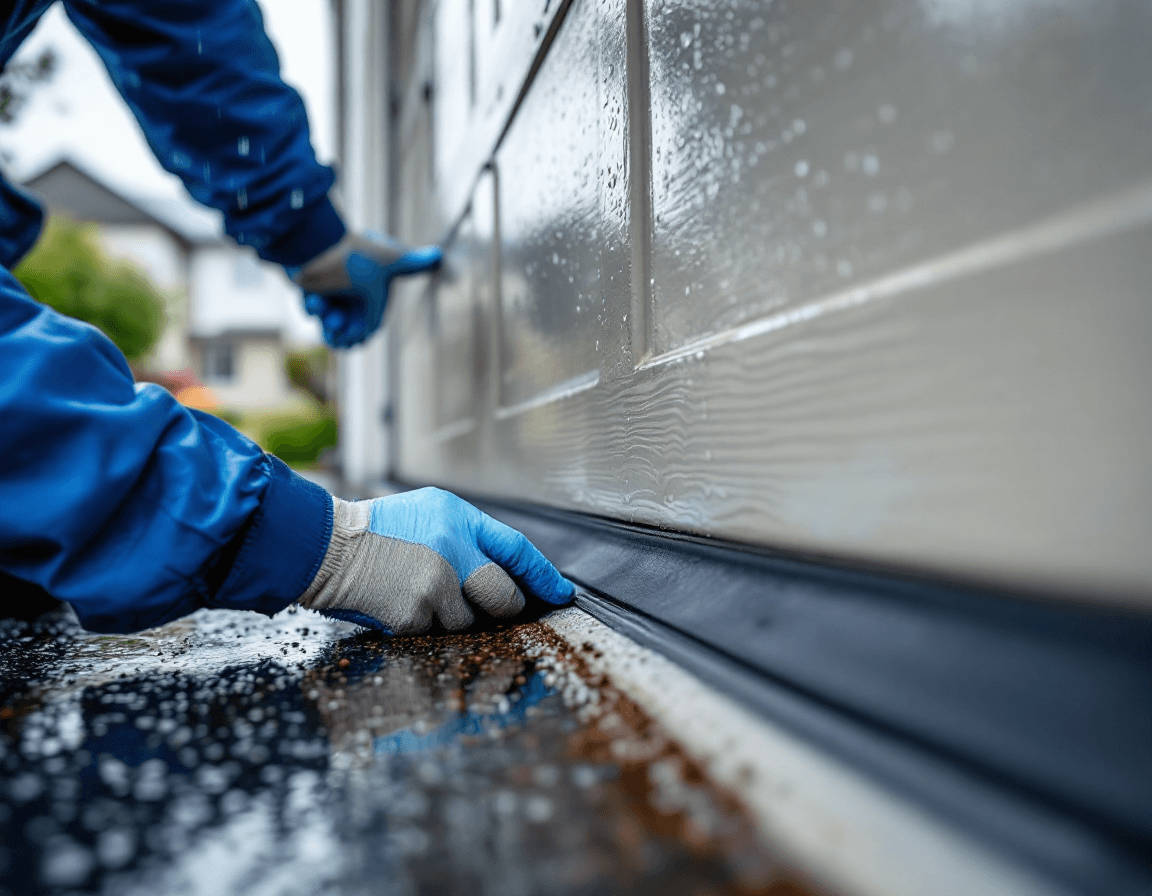
Garage door weather seal replacement in Kirkland, WA is one of the most affordable fixes a homeowner can make, and it often delivers an outsized difference in comfort, moisture control, and energy use. If you can see daylight beneath your closed door, feel a cold breeze when you walk past it, or find damp spots after a windy storm, the seals have likely worn past the point of doing their job. Our technicians work on these seals across the Eastside every week, and the problems tend to look similar whether the house sits near downtown or on a quiet street up the hill. This guide explains what failing seals look like, why Kirkland's climate is so hard on them, and what replacement typically costs.
Most people do not think about the rubber strip along the bottom of the garage door until something goes wrong. The garage is often the largest opening in the house, and it is also the one that opens and closes dozens of times a week. Over time, the seal that keeps the outside out becomes stiff, flattened, cracked, or torn loose from its retainer. Replacing it is usually a straightforward job, but understanding the warning signs first helps you decide whether you need a simple swap or a broader look at the whole door perimeter.
Below you will find a practical walkthrough of the seal system, the materials used in Western Washington, the symptoms to watch for, and the factors that shape a repair quote. We have kept the advice grounded in what we actually see on service calls, and we have noted where a licensed professional should take over. If anything in your garage involves the springs, cables, or door tension, stop there and call us rather than attempting the work yourself.
Reading the Gap Under Your Kirkland Door
The clearest sign that a bottom seal has failed is light showing beneath the closed door. Stand inside the garage with the lights off on a sunny afternoon and look along the threshold line. If you see a bright strip across the full width, or only at one corner, the seal is no longer making contact with the concrete. Some gaps are obvious, while others only show up as a thin line you have to crouch down to notice.
Uneven gaps deserve special attention. A door that is lower on one side, or a floor that slopes toward a driveway, can leave a wedge-shaped opening that a standard seal cannot close. Older Kirkland homes, including many built on sloped lots near Juanita and parts of Rose Hill, sometimes have slabs that have settled unevenly over decades. In those cases the seal may be fine, but the mismatch between the door and the floor is the real issue, and a technician should measure both before recommending a new strip.
Pay attention to how the door behaves when it reaches the floor, too. If the door hits the ground with a dull thud and the seal looks compressed flat, the rubber may have lost its resilience and can no longer spring back to fill small gaps. A seal that bounces back cleanly after the door lowers is generally still working, even if it looks a bit weathered. A seal that stays pressed flat, cracks along its length, or pulls out of its channel needs replacement.
Why Lake Washington Moisture Finds Its Way In
Kirkland sits on the eastern shore of Lake Washington, and that position shapes the weather in ways that reach directly into the garage. Long wet stretches from fall into spring are normal here, and the moisture in the air condenses on cool surfaces overnight. A garage floor that holds dampness, combined with a bottom seal that no longer seals, becomes a steady source of humidity that can reach stored boxes, tools, and the bottom panels of the door itself.
Wind matters just as much as rain. Storms that roll across the lake can push water sideways under a door that would stay dry in a calm downpour. When you see a puddle that appears only after a windy night, the seal has usually lost the ability to hold back water that is being driven at an angle. Wet streaks on the concrete, a faint white mineral line along the threshold, or a musty smell near the door are all signs that water is getting in more often than you might think.
Cold is part of the picture as well. The Eastside rarely sees the extreme freezes of inland regions, but damp cold can be harder on a poorly sealed garage than a dry chill. Warm, humid indoor air that escapes through the perimeter meets cold surfaces and leaves condensation behind. Over a winter, that condensation can dampen insulation in an attached garage wall, encourage mildew, and make the space feel clammy even when the thermostat in the living area reads comfortable.
Bottom Seal Materials and What Kirkland Weather Demands
Bottom seals come in several designs, and the right choice depends on how your door is built and how exposed it is. The most common styles are vinyl bulb seals that slide into a retainer on the bottom panel, rubber T-shaped seals that fit into a metal channel, and heavier rubber strips with a flexible fin that presses against the floor. Each design handles small floor irregularities differently, and each responds differently to repeated cold and warm cycles.
Material choice matters more here than in drier climates. Rubber compounds that remain flexible in cold weather are generally more forgiving on Kirkland mornings when temperatures dip and the seal stiffens. UV exposure from sunlight can slowly chalk and crack lower-grade vinyl, especially on south-facing doors that receive afternoon light. A better-quality seal costs a little more up front but tends to hold its shape for longer, which means fewer trips and fewer drafts through the winter.
- Vinyl bulb seals: affordable, easy to slide into existing retainers, and well suited to standard steel doors with a straight bottom panel.
- Rubber T-seals: fit a metal channel on many sectional doors and handle minor floor unevenness better than basic bulbs.
- Heavy rubber fin seals: useful where the floor is rough or where wind-driven water is a regular problem.
- Threshold-integrated systems: used when the entire floor-to-door interface needs replacing, often alongside a new threshold strip.
Replacement is not always a like-for-like swap. Sometimes the old retainer has bent or corroded and needs to be straightened or replaced before a new seal will hold. When the channel is loose or the bottom panel has cracked, a seal alone will not fix the leak, and the correct repair is a bit more involved. A technician who inspects the door before ordering parts will avoid the frustrating situation of a seal that fits but still lets water through.
Perimeter Weatherstripping: The Quiet Side of the Problem
Bottom seals get most of the attention, but the perimeter weatherstripping along the sides and top of the door is just as important. This strip usually sits in a vertical and horizontal track around the door opening, and it presses against the frame when the door closes. When it wears out, the gap appears at the edges rather than at the floor, and you may feel air moving along the sides even when the bottom looks tight.
Look for signs of compression along the side jambs. Perimeter strips that have flattened, torn, or pulled away from the frame will show visible separation in good light. A cold draft that you can feel on your hand when you hold it near the edge of the door is another clue. In many Kirkland homes, the side strip is the first component to fail because it takes repeated friction each time the door moves up and down.
Replacing perimeter weatherstripping is typically a careful, detail-oriented job. The old material must be removed without damaging the frame paint or the fasteners, and the new strip must be cut to length and seated so it compresses evenly without binding the door. Too much compression can cause the door to stick or strain the opener, while too little leaves the gap open. For that reason, we recommend having the door checked after installation to confirm it still moves freely.
Thresholds, Pests, and the Leaf Litter Problem
The threshold is the strip or plate on the garage floor that the door seals against. It can be aluminum, vinyl, or rubber, and it often gets overlooked until it cracks, rots at the edges, or pulls loose from the concrete. A damaged threshold creates a path for water, leaves, and dust, and it can also give rodents and insects an easy way into the garage. Once they are inside, they can chew through stored items, nest in insulation, or wander into the house through an unsealed door to the kitchen.
Kirkland's tree cover is a major factor. Maples, conifers, and the leafy understory that surrounds many Eastside lots shed debris throughout the year, and wind pushes that material against the bottom of the door. Over time, leaves and grit build up in the gap, which wears the seal faster and makes it harder for the door to compress evenly. If you find a fan of leaves inside the garage after a storm, that is a strong sign that the seal is not doing its job.
Pests are a real concern as well. Mice, spiders, and wasps can squeeze through surprisingly small openings, and a worn perimeter or bottom seal is often the entry point. Sealing the threshold alongside the bottom strip closes the gap that these animals use most. It is also a good moment to clear the garage floor edge, trim back plants that touch the door, and check whether any weep holes or drains near the threshold are clogged.
Pricing From $95 to $250: What Shapes the Quote
Our typical range for garage door weather seal replacement runs from $95 to $250, and the final number depends on what the door needs. A basic bottom seal on a single-car door with a standard retainer will sit near the lower end of that range. A wider double door, a seal that requires new retainer hardware, or a combined bottom and perimeter replacement will generally move the price upward. Seal type also matters, since heavier rubber profiles and specialty designs cost more than basic vinyl.
Door size is one of the simplest factors to understand. More width means more linear feet of seal, more time to fit the material, and often more care to avoid a uniform gap. A tall door with perimeter strips on both sides and across the top will take longer than a short door with only a bottom seal. Access also plays a role, particularly when the opener, lighting, or storage racks make it harder to work at the edges.
- Single or double door width, which determines total seal length.
- Bottom seal only, or bottom plus perimeter and threshold work.
- Condition of the existing retainer, channel, and fasteners.
- Seal material and profile, from basic vinyl to heavy-duty rubber.
Every quote should be based on an actual look at your door. We will tell you what we see, explain whether a simple seal is enough, and flag anything that needs attention before we start. If a repair reveals a larger problem, such as a cracked bottom panel or a damaged track, we will explain the options rather than adding unexpected charges without your agreement.
What Replacement Involves on a Typical Visit
A standard seal replacement visit begins with a walk-around of the door in both the closed and partially open positions. The technician checks the bottom seal, retainer, perimeter strips, and threshold, and notes how the door sits against the floor. We also look for loose hardware, worn rollers, or any sign of structural damage that could affect how the seal performs. This inspection takes place before any old material comes out, so you know what is being addressed.
Once the existing seal is removed, the channel or retainer is cleaned and checked for corrosion or bends. New seal material is cut to fit and installed in a way that allows it to compress evenly across the full width of the door. On many doors this is a fairly quick process, but it still requires patience to avoid stretching the material or leaving a section too loose. After installation, the door is cycled several times to confirm that it closes smoothly and that the seal makes contact along its length.
Most homeowners are surprised by how quickly the job goes when the door is in good mechanical condition. The real value of a professional visit is the check that happens before and after the work. We look for problems that a seal alone cannot fix, and we make sure the door is not placing extra strain on the opener when it closes against the new material. If the door needs spring or cable work to seal properly, that is handled by a licensed technician with the proper tools and training.
Energy Bills, Drafty Garages, and Finished Spaces
Many Kirkland homes have a garage that connects directly to the living space, a laundry room, or a workshop that is used year-round. When the garage door seals poorly, the effect on those rooms is real. Cold air pours in along the floor and up the sides, the heating system works harder to keep the adjoining rooms warm, and the room with the door to the garage often feels chilly near the floor.
The energy impact varies by house, but the logic is consistent. An unsealed garage opening lets conditioned air escape and lets outside air enter, which means the heating system runs longer to maintain comfort. Sealing the bottom, sides, and threshold reduces that exchange and can make the home more consistent from room to room. We avoid promising specific savings because every home is different, but many homeowners notice that the garage feels less drafty and that the cold corner near the door warms up after a seal upgrade.
Finished garages deserve extra attention. If the space holds a home gym, a playroom, or a workshop with a heater, a tight seal helps protect the investment. It keeps dust out of the workspace, limits moisture that can damage flooring or drywall, and makes the area more comfortable during the long gray stretches of the year. For people who use the garage as a living space, weather sealing is one of the most practical improvements available.
Neighborhood Notes: Downtown, Juanita, Totem Lake, Rose Hill
Our crews serve many parts of Kirkland, and the patterns vary a little from one neighborhood to the next. Downtown Kirkland has a mix of older homes with detached garages and newer townhomes with attached units, many of which are close to busy streets and lakefront walkways. In these areas, we often see wear from frequent door cycling and road grit that collects along the threshold. Properties in the 98033 area near the waterfront may also experience stronger wind-driven moisture during storm season.
Juanita is known for its tree-lined streets and hillside lots, and many garages here sit on slopes or uneven driveways. That grade can leave an uneven gap at the bottom of the door, and it can channel rainwater toward the garage opening during heavy rain. Our technicians pay close attention to how the door meets the floor in these homes, since a standard seal may need a different profile to close the gap properly. Leaves from mature trees are also a frequent issue, so the threshold and perimeter often need closer inspection.
Totem Lake and Rose Hill bring their own considerations. Parts of the Totem Lake area include a mix of commercial and residential properties, and many homes there have garages used heavily for vehicles and storage. Rose Hill, which extends into the 98034 area, has a range of home ages, and older garages may have retainers that have corroded or bent over time. In both areas, we often recommend checking the threshold alongside the bottom seal, since worn thresholds are a common entry point for water and pests.
A Quick Self-Check Before You Call
You can learn a good deal about your garage seals with a few simple checks. Choose a bright day, close the door, and go inside with the lights off. Look along the bottom edge and along both sides for light. Then step outside and look at the door from the driveway, noting any visible separation between the seal and the floor or frame. These checks take only a few minutes and give you useful information before you request a visit.
Next, look for moisture and debris. Check the garage floor near the door for water lines, damp concrete, or fine grit. Look at the threshold for cracks, peeling, or places where it has pulled away from the floor. If you see leaves, insects, or droppings near the edge of the door, that is a sign the seal is no longer blocking openings as it should. Take a few photos so you can describe the problem clearly when you call.
- Look for light under the closed door on a sunny day.
- Feel for drafts along the sides and top while the door is closed.
- Check the bottom seal for cracks, flattening, or detachment.
- Inspect the threshold for damage, debris, or pest activity.
- Note any water stains, mildew smell, or wet concrete after storms.
These observations help a technician diagnose the problem faster and more accurately. If you are unsure whether the issue is the seal or the door itself, describe what you noticed and let us check it. We would rather look at a door that turns out to be fine than leave a real problem unaddressed.
Where Safety Work Belongs
Weather seal replacement is a relatively low-risk task, and many homeowners feel comfortable handling the simplest version on their own. However, the garage door is a heavy, spring-loaded system, and that changes the picture quickly. Springs and cables store a great deal of tension, and mishandling them can cause serious injury. If the seal repair requires adjusting the door, removing hardware near the track, or working near the springs, it should be done by a licensed professional.
Our technicians are licensed, bonded, and insured, and they are trained to recognize when a seal problem is actually a sign of a larger mechanical issue. A frayed cable, a worn spring, or a misaligned track can all cause a door to seal poorly, and none of those should be handled casually. When we find one of these conditions, we explain what it is, what it costs to repair, and why it matters before any work begins.
If you are ready to stop the drafts, water, and pests, call Seattle Garage Door Fix at (888) 799-3819. We will inspect your door, explain the options for your Kirkland home, and give you a clear picture of what the repair involves before any work starts.