
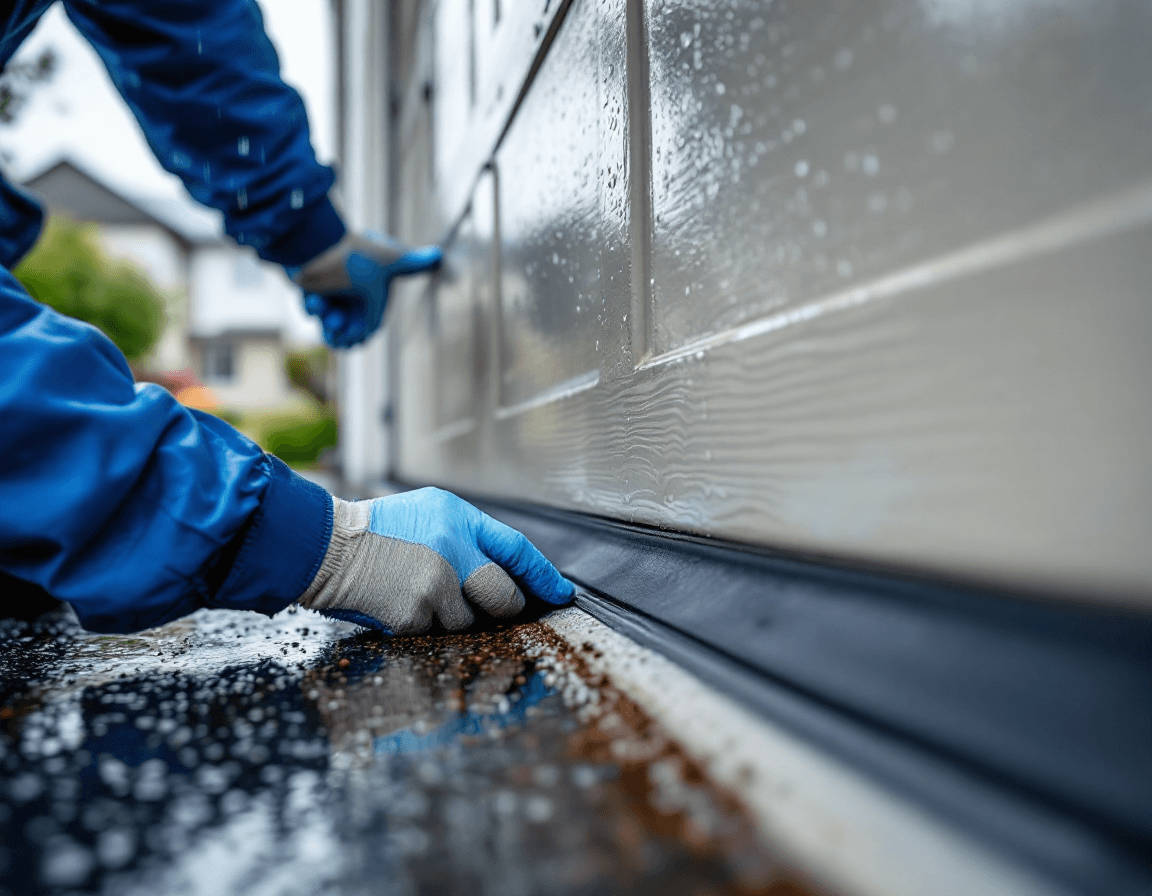
Garage Door Weather Seal Replacement in Lynnwood, WA is one of those repairs many homeowners postpone because the door still opens and closes without complaint. In a region where the sky stays gray for long stretches and storms often arrive sideways off the Sound, though, a worn bottom seal can turn into a real problem quickly. Water finds the smallest gap, cold air settles along the floor, and pests treat the strip of daylight as an open invitation. A seal costs far less to fix than the damage it lets in, which is why it is worth looking at your door closely before the next wet season arrives.
Most Lynnwood homeowners first notice the issue in an ordinary moment. Maybe a line of damp concrete appears after a steady afternoon of rain, or a leaf blower sends a little drift of debris across the floor that seems to come from nowhere. Some people feel a chill near the washer and dryer on a January morning, while others find a trail of sowbugs or a mouse dropping along the back wall. Each of these clues points to the same weak point: the seal system that is supposed to close the space between your door and the floor, sides, and top of the opening. This page explains how that system works, how to read the warning signs, and what a professional replacement involves.
Seal replacement is one of the more affordable garage door repairs, and most jobs fall in the range of $95 to $250 depending on the type of seal and the size of the door. The final figure depends on whether you need only a bottom seal or a full run of perimeter weatherstripping, and on whether a threshold seal also needs attention. Our team serves Lynnwood and surrounding neighborhoods, including homes near Alderwood and the Lynnwood City Center area, as well as nearby ZIP codes 98036, 98037, and 98087. If you would like a clear answer about your door, call (888) 799-3819 and a licensed technician can talk through the options with you.
Why Lynnwood Garages Take the Brunt of Wet Weather
Lynnwood sits in the part of Snohomish County where marine air moves in from the Pacific and meets the Cascade foothills, and that combination keeps the region damp for much of the year. Autumn and winter bring repeated rounds of rain, and many storms arrive with wind that pushes water horizontally into any opening it can reach. A garage door that looked tight in July can show its weakness by November, when the seal has spent months being compressed, dried, and soaked again. Homeowners often assume that water only comes in during heavy downpours, but even a light, steady drizzle can wick under a door with a tired bottom seal over the course of a night.
Local lot conditions matter as well. Many driveways in and around the Alderwood and City Center areas slope toward the garage, and runoff from roofs, gutters, and neighboring properties can gather right at the threshold. When that water sits against a door that does not seal well, it can soak the first few inches of the garage floor, cause efflorescence on the concrete, and encourage a musty smell that lingers long after the weather clears. Downspouts that discharge too close to the door or a driveway apron that has settled slightly can make the problem worse than the seal alone would suggest. Looking at the grade outside the door is part of a sound diagnosis.
Moisture also works on the materials themselves. Rubber and vinyl seals that stay wet for long periods can harden, lose flexibility, and begin to split at the corners. Metal tracks and steel panels exposed to repeated damp conditions may develop surface rust that interferes with how the door meets the seal. A technician who understands how the Pacific Northwest climate affects garage hardware can spot these patterns during an inspection and recommend materials that will hold up through the next several seasons. Choosing a seal that matches your local conditions is just as important as choosing the right size.
Reading the Gap: What Light and Moisture Tell You
The simplest diagnostic tool you own is a flashlight. On a dim evening, close the garage door, turn off the interior lights, and shine a light from inside the garage along the bottom edge and up each side. If you can see light passing through the bottom of the door or at the corners, you have found a gap that a new seal should close. Repeat the test from outside after dark with the interior light on to confirm where the light escapes. Marking the spots with painter's tape makes it easier to describe the problem to a technician over the phone.
Water evidence tells you something different. A dry, clean floor after a rainy week suggests the seal is doing its job, while a damp line, a stain, or a small puddle beside the door points to a failure. Pay attention to whether the water appears only at one section, such as the center of the door where the panels meet the floor, or spreads along the full width. Localized wetness often indicates a damaged or displaced section of seal, while full-width wetness usually means the bottom seal has worn flat or the threshold is no longer level. Note whether the water appears after wind-driven storms or after ordinary rain, because that difference helps narrow the cause.
- Check for visible daylight under the closed door, both at the center and at each corner.
- Look for damp streaks, stains, or efflorescence on the concrete just inside the threshold after a storm.
- Feel for drafts with the back of your hand along the bottom and side edges on a windy day.
- Inspect the bottom seal for cracks, flattened sections, torn ends, or areas where it has pulled away from the door.
- Watch for leaves, dust, spider webs, or insect activity concentrated near the door line.
If several of these signs appear at once, the seal system is likely due for replacement rather than a simple adjustment. A licensed technician can confirm the diagnosis during a visit and explain whether the bottom seal, perimeter weatherstripping, threshold seal, or some combination needs attention.
Bottom Seals: Vinyl, Rubber, and Brittle Ends
The bottom seal is the flexible strip fastened to the lowest panel of a sectional garage door, and it does most of the work of keeping out water, air, and pests. Most bottom seals in Lynnwood garages are made from vinyl, rubber, or a blend designed to stay pliable across temperature changes. Over time, the ends of the seal tend to fail first, because they flex the most each time the door opens and closes and because they are the spots where water collects. A cracked or brittle end will leave a small notch that lets light, air, and moisture pass straight through.
Choosing a replacement seal involves more than matching the length. Seal profiles differ in how deeply they reach into the threshold, how firmly they press against the floor, and how well they accommodate slight unevenness in the concrete. Some garages have a slightly sloped floor or an older slab with minor dips, and a rigid profile may leave gaps in those areas. A technician will measure the door's bottom panel, check the channel that holds the seal, and recommend a profile that fits both the door and the floor. Using the wrong profile can waste money because it will never seal properly, no matter how carefully it is installed.
A bottom seal that has cracked or gone missing should be replaced rather than patched with tape or sealant. Adhesive patches tend to peel in damp conditions and can trap water against the door panel, which may accelerate corrosion. A full replacement uses a seal sized to the door and secured in its retainer channel so it compresses evenly along the entire width. This is generally a straightforward job, typically priced within the $95 to $250 range depending on the seal type and door width. Ask your technician to explain the material options so you understand how each one will handle the damp months ahead.
Perimeter Weatherstripping Along Jambs and Header
Perimeter weatherstripping runs up both sides and across the top of the door opening, where it presses against the frame when the door closes. This component is easy to overlook because it sits out of sight beside the tracks, yet it blocks drafts and wind-driven rain that the bottom seal cannot reach. Worn perimeter strips often look flattened, shrunken, or torn at the corners. A strip that no longer springs back against the frame will leave a narrow gap that becomes noticeable on windy days, when you can feel air moving past the edge of the door.
Replacing perimeter weatherstripping requires careful measurement and clean installation. The old material usually pulls out of a retainer or is attached with fasteners that need to be removed without damaging the door skin or frame. The new strip should be cut to length, fitted snugly, and aligned so it meets the bottom seal and the header seal without leaving spaces at the junctions. Corners deserve special attention, since a poor join at the top corners is one of the most common routes for wind and water to enter. A tidy installation looks neat, but its real value shows up during the first heavy storm of the season.
Perimeter weatherstripping also interacts with the rest of the door's alignment. If one side of the door sits closer to the frame than the other, a seal may compress unevenly and wear faster on one side. Panels that have shifted slightly, tracks that are out of plumb, or hinges that have loosened can all change how the strip meets the frame. A technician should check the overall fit before replacing the strip, because a new seal will not perform well on a door that does not close squarely. When adjustments are needed, they should be handled by a licensed professional who can work with the track and hardware safely.
Threshold Seals and the Concrete Edge
The threshold seal sits on the garage floor beneath the door and creates a barrier between the door's bottom edge and the concrete. On some doors, the threshold is a separate piece of material fastened to the slab, while on others it is a molded or extruded profile that forms part of the door's bottom edge. Either way, it fills in the uneven spots where a bottom seal alone cannot follow the floor. In many Lynnwood homes, the concrete slab has minor surface irregularities from original construction or from years of settling, so a threshold seal is often the key to a complete closure.
Because the threshold meets the outdoors directly, it is exposed to road grime, tracked-in mud, and standing water during storms. Grit can work its way into the seal and cause it to wear faster, while water that sits against the threshold can slowly undermine the adhesive or fasteners holding it in place. If the threshold is loose, lifting at one corner, or chipped away from the slab, the bottom seal will not perform as intended even if it is new. Checking the threshold during a seal inspection helps prevent a repeat visit a few months later.
Replacing a threshold seal is often combined with a bottom seal replacement, since the two components work together. The technician will clean the slab edge, check for cracks or spalling in the concrete, and make sure the new threshold sits flat so the door can close without binding. If the concrete itself has deteriorated significantly, the best solution may involve more than a seal, and your technician should explain the options honestly. A clear conversation at this stage can save you from paying for a seal that is destined to fail on an uneven or damaged edge.
Pests, Leaves, and Pine Needles at the Door Line
The gap under a worn garage door is an open invitation to the wildlife that thrives in Snohomish County's green neighborhoods. Lynnwood homes often sit close to mature trees, shrubs, and landscaping that shelter insects, slugs, rodents, and spiders, and many of these creatures are happy to slip under a door at night. Mice are especially persistent, since they can squeeze through openings that look far too small for an animal to use. Once inside, they may nest in stored boxes, chew through insulation, or leave droppings near the stored items that matter most to you.
Leaves, pine needles, and fine debris also accumulate along the threshold. Each windstorm can push a fresh layer of material against the door, and the gap beneath it acts like a funnel that carries leaves and dust into the garage. Over time, this debris can trap moisture against the bottom of the door, keep the concrete damp, and encourage moss or mildew near the opening. Regular sweeping helps, but a proper seal does more to stop the problem at its source by closing the entry point rather than cleaning up after it.
- Common entry points include gaps at the bottom corners, worn or torn ends of the bottom seal, and open spaces where perimeter strips have pulled away from the frame.
- Signs of pest activity include droppings near the door, shed insect parts, small chew marks on stored bags, and webs in the upper corners of the track area.
- Practical steps while you wait for service include sweeping the threshold weekly, storing pet food and birdseed in sealed containers, and keeping shrubs trimmed back from the door line.
Pest control and seal replacement work best when they are handled together. A new seal blocks the entry point, but existing nests or insect colonies may need separate attention from a pest professional. If you are seeing repeated activity after a seal has been installed, the gap may not be fully closed, and the technician should re-check the installation.
Energy Bills and the Cold Draft Problem
Many Lynnwood garages are attached to the main house or sit directly beneath living space, which means drafts from the garage can affect the rest of the home. When cold air pours in beneath a closed door, it chills the garage floor and the surrounding walls, and the house systems have to work harder to keep nearby rooms comfortable. Homeowners often notice this first near laundry rooms, mudrooms, or kitchens located along the shared wall. The result can be a chilly room that never quite warms up and an energy bill that seems higher than it should be.
It is wise to be realistic about how much a single seal will change your bills, since energy use depends on many factors including insulation, window quality, thermostat habits, and how often the door is opened. What a good seal does reliably is eliminate one clear source of unwanted air movement. When the bottom seal and perimeter strips are working properly, the garage stays calmer, and the air along the shared wall feels less chilled. Many people find this improvement noticeable even without a dramatic change in their monthly totals.
For attached garages, the door seal is one piece of a larger picture. Weatherstripping around interior doors, insulation in the ceiling above the garage, and the condition of the garage's exterior walls all affect comfort. A technician focused on the door can recommend these related upgrades when they are relevant, but you do not need to tackle everything at once. Start with the seal that is letting in the most air, then consider the rest of the envelope as your budget and priorities allow.
What a Seal Replacement Typically Involves
A professional seal replacement begins with a careful inspection. The technician will check the door's alignment, the condition of the tracks and rollers, the existing seal profiles, and the threshold. This evaluation helps determine whether the seal can be replaced on its own or whether another component needs attention first. Because garage doors store significant tension in their springs, any work near the spring system should be left to a licensed professional. A reputable technician will explain each step and will not pressure you into unrelated repairs.
Once the assessment is complete, the old seal is removed from its retainer or channel, and the surfaces are cleaned so the new material seats properly. Dirt, grease, and old adhesive can prevent a seal from compressing evenly, so this preparation matters more than many homeowners expect. The new seal is then cut to length, fitted into the channel or secured with the appropriate fasteners, and tested by opening and closing the door several times. The technician will check the corners, watch for any binding, and confirm that the seal meets the floor and frame without leaving open spaces.
Pricing for this work usually falls between $95 and $250, depending on the seal type, the door width, and whether the job includes only the bottom seal or also the perimeter weatherstripping and threshold. Wider doors require more material, and specialty profiles may cost more than standard options. Ask for a written estimate that lists each component so you know exactly what is being replaced. Clear pricing makes it easier to compare options and avoid surprises once the work is underway.
Choosing Between a Quick Swap and a Full Weatherstrip Upgrade
Not every door needs the same level of attention. A quick bottom seal swap can be the right choice when the rest of the door is in good shape and the only symptom is a cracked or flattened strip along the floor. In that case, replacing the single component may solve the problem for several seasons at a modest cost. Homeowners who want a fast fix before a particular storm window often start with this approach, then plan additional upgrades later if the perimeter strips begin to show wear.
A full weatherstrip upgrade makes more sense when multiple symptoms appear together. If you see daylight at the corners, feel drafts along the sides, notice water on the floor, and find pest activity near the frame, the seal system as a whole has likely reached the end of its useful life. Replacing the bottom seal, perimeter strips, and threshold at the same visit can produce a more consistent seal and reduce the chance of leaks around the edges. It also gives the technician a chance to check the door's alignment while the old material is removed.
Material choice should reflect how the door is used. A garage that is opened several times a day in a family household may need a seal that resists tearing and compression fatigue. A rarely used workshop may be less demanding, although it still needs protection from moisture and pests. Discuss your routine with the technician so the recommendation fits your actual use rather than a generic template. Good advice depends on how your garage really functions day to day.
When a Seal Is Not the Real Problem
Sometimes a homeowner orders a new seal only to find that the gap persists. This usually happens because the door itself is out of alignment, the track is bent or loose, or the floor has settled in a way that creates a low spot the seal cannot bridge. A door that sits crooked in its opening will press harder on one side and leave a visible gap on the other, and no seal will fix that imbalance on its own. Recognizing these situations early saves money and frustration.
Certain signs point to problems beyond the seal. A door that sags, drifts to one side, opens unevenly, or makes grinding or popping noises may have issues with its springs, cables, rollers, or tracks. Spring and cable work carries serious risk because the components are under high tension, and mistakes can cause severe injury. Homeowners should never attempt spring or cable repair themselves. Instead, call a licensed, bonded, and insured technician who can handle the tension safely and restore the door's balance.
If your technician finds an underlying mechanical issue, a good professional will explain what needs attention, what it would cost to repair, and what will happen if it is left alone. Seal replacement is often the first visible sign that something larger is wrong, so it is a good moment to have the whole door checked. Taking care of the mechanical side protects the new seal, too, because a door that closes unevenly will wear seals faster than one that closes squarely.
Scheduling Service Around Lynnwood Weather
Timing a seal replacement can make the job more comfortable and the results more reliable. Many homeowners prefer to schedule work in late spring or early fall, when the weather is more stable and the garage floor is dry enough for a clean inspection. Adhesives and some seal materials also perform better when temperatures are moderate during installation. That said, a damaged seal should not wait for ideal conditions if water is already reaching the floor, so it is worth addressing the problem as soon as you notice it.
Planning around your household schedule helps too. Clear the area around the door, move stored items away from the threshold, and make sure the garage is accessible for the technician. Note the symptoms you have observed, such as drafts, water, or pests, along with the locations and approximate dates. This information helps the technician arrive prepared and can shorten the visit. If you have a pet door, a second entry, or a door that is used only occasionally, m