
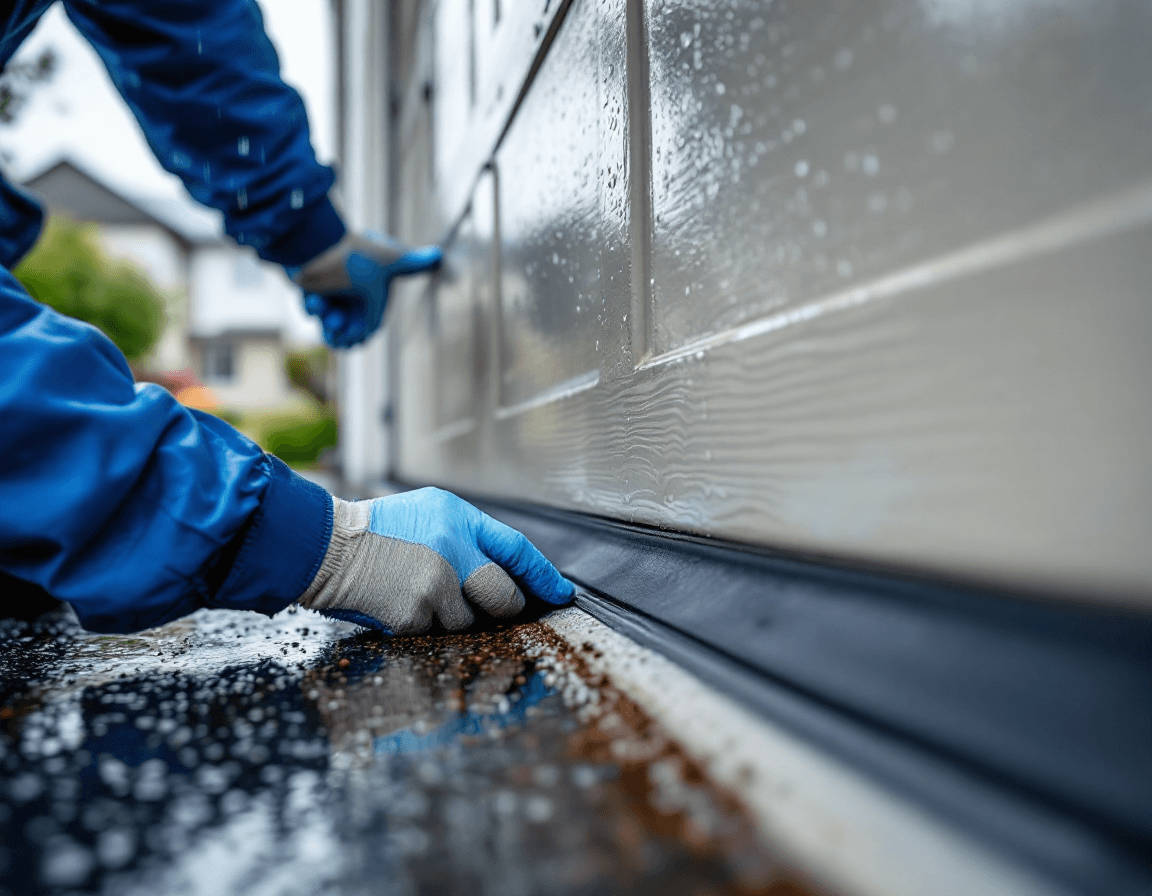
Garage door weather seal replacement in Snohomish, WA is one of the most cost-effective repairs a homeowner can make, and it often gets overlooked until water pools on the garage floor or a cold draft starts settling over the laundry area. The Snohomish area sits in the wet, mild Puget Sound lowlands, where winter storms roll in off the Sound and the Cascade foothills, and where the ground stays damp for long stretches. Those conditions wear down the rubber, vinyl, and foam that keep a garage door sealed against the elements. A worn bottom seal or a brittle threshold strip rarely fails all at once. It usually loses ground a little at a time until one heavy rain shows you the gap.
Homes around Historic Downtown Snohomish range from early twentieth-century houses with detached or converted garages to newer subdivisions with attached two-car bays. Each setup presents its own sealing challenge, and the age of the slab, the grade of the driveway, and the way rainwater runs off the roof all affect how a door meets the floor. Our technicians see the same few patterns repeatedly: a door that seemed fine last winter but now shows daylight at one corner, a threshold that has softened and shifted, or perimeter weatherstripping that has gone stiff and peeled away from the jamb. Catching these problems early keeps the repair simple and keeps water, cold air, and pests out of the space where you store tools, vehicles, and sometimes the water heater.
This page explains what weather seals do, how to tell when they need replacing, which type fits which door, and what to expect from a professional visit in Snohomish and the surrounding Clearview area. Pricing for this service generally falls between $95 and $250, depending on the seal style and the width of the door. We also explain which parts of a garage door should never be touched by a homeowner, because the springs and cables carry serious force. Read through the sections that match your situation, and call us at (888) 799-3819 if you would like an on-site look.
Where Water Actually Gets In Under a Snohomish Garage Door
When people in Snohomish notice water inside the garage, they often assume the leak came through the roof or the wall. In practice, the most common entry point is the bottom of the door, where the panel meets the concrete. Rain blows sideways during our winter storms, and when the bottom seal has lost its springiness, that wind-driven water rides right under the door and spreads across the floor. Standing water often shows up in a fan shape, wider toward the outside edge and narrowing as it runs inward, which is a clue that it came from below the door rather than from above.
Driveway slope matters more than many homeowners realize. Many Snohomish driveways pitch gently toward the garage to shed water, and some older properties have drainage that channels runoff straight toward the door threshold. Even a modest slope can push a steady stream of water against a seal that was never designed to handle standing moisture for long periods. If your garage floor is lower than the surrounding grade, or if a downspout empties near the door, the seal is working harder than its manufacturer intended.
Water intrusion also shows up along the sides and top of the door. Perimeter weatherstripping on the jamb and header is supposed to block wind-driven rain at those edges, but it can dry out, crack, or pull away from the frame after several seasons. Check for water stains on the inside of the door panels, dampness on the wall trim beside the door, or a faint line of mildew along the top of the opening. Those signs suggest that the perimeter seal has failed, even if the bottom seal still looks reasonable.
Reading the Daylight Test and Other Signs of a Failing Seal
The easiest way to evaluate a seal is the daylight test. Close the door fully at night or on an overcast morning, then go inside the garage and look along the bottom edge and the sides. If you can see light leaking through, the gap is large enough to admit water, cold air, and insects. Repeat the test in a few spots, because a door can seal well in the middle and leak badly at one corner where the floor has settled or the track has shifted slightly.
A physical inspection tells you more than the light test alone. Run your hand along the bottom seal and feel for hardening, cracks, flattened sections, or chunks that have torn away. A healthy seal should bend and return to shape when you press it. If it stays flat, feels brittle, or crumbles at the edges, it has reached the end of its useful life. Pay attention to the weatherstripping on the sides as well. Look for sections that have separated from the metal channel or that have compressed so much they no longer touch the door when it closes.
Here are the signs our technicians commonly see in Snohomish homes that point toward a seal replacement rather than a simple adjustment:
- A visible gap under the closed door, especially at one end
- Rainwater or puddles that appear after wind-driven storms
- Cold air noticeably flowing across the floor when the door is shut
- Dust, leaves, spiders, or small rodents finding their way inside
- A bottom seal that is cracked, brittle, peeling, or missing in sections
- Perimeter weatherstripping that is torn, flattened, or pulling away from the frame
If you notice two or more of these, a replacement is probably the right call. A single symptom sometimes has another cause, such as a misaligned door or a worn track, so a technician should confirm the source before any parts are ordered.
Bottom Seals, Perimeter Weatherstripping, and Threshold Seals Explained
Garage door sealing is not one product. It is a system of three parts that work together, and the right fix depends on which part has failed. The bottom seal is the rubber or vinyl strip attached to the lower edge of the door panel. It makes contact with the floor when the door closes and is the first line of defense against water and pests. Bottom seals are usually the most affordable component to replace, and they are often the first thing to wear out because they take the full brunt of foot traffic, tires, and standing moisture.
Perimeter weatherstripping runs up both sides and across the top of the door, pressed against the jamb and header. Its job is to block wind, drafts, and blowing rain at the edges of the opening. Perimeter strips are typically made from vinyl, rubber, or a foam-and-vinyl blend, and they are often installed in a metal retainer channel that holds them in place. They tend to fail from sun exposure, repeated compression, and simple age, and they can usually be replaced without touching the door's springs or track.
The threshold seal sits on the concrete floor just inside the garage, directly beneath the door. Some homeowners call it a threshold strip or floor seal. It creates a second barrier that catches water running under the door and keeps it from spreading into the garage interior. In older Snohomish homes where the slab has settled or cracked, a threshold seal can make a noticeable difference, particularly when paired with a new bottom seal.
Our technicians typically recommend evaluating all three components during a visit, because a worn bottom seal often means the perimeter strips are close behind. Replacing only one part can leave a noticeable gap, and water will find it.
Materials That Stand Up to Damp Pacific Northwest Air
Not every seal material performs equally well in the Snohomish area. Our winters are mild compared with the interior of the state, but the combination of persistent moisture, low sun angles, and occasional freezing temperatures puts real stress on cheap materials. Solid vinyl bottom seals are common and cost-effective, and they handle moisture well, though they can stiffen in cold snaps if the formulation is not rated for low temperatures. Rubber seals tend to stay more flexible through cool weather and resist tearing, but they can degrade faster if they are exposed to strong sunlight on a south-facing door.
Foam-filled perimeter weatherstripping offers good compression and can seal irregular jambs well, which helps in older homes where the framing is not perfectly square. The foam core should be fully enclosed in a durable vinyl or rubber skin, because exposed foam absorbs water and breaks down quickly in our damp climate. Some installers use aluminum retainer channels for perimeter strips, and these resist corrosion better than painted steel when they are kept clean.
Threshold seals come in several forms, including flexible rubber strips, adhesive-backed vinyl, and modular aluminum-and-rubber profiles. For garages with a slightly uneven or sloped floor, a flexible strip that conforms to small dips often works better than a rigid profile. The best choice depends on how much water the door sees and how much foot traffic crosses the threshold. Your technician will usually recommend a material after measuring the gap and inspecting the floor.
Pests, Leaves, and the Gaps You Cannot See From Inside
Many Snohomish homeowners first notice a seal problem not because of water or cold but because of what the garage collects. Fallen leaves and fir needles blow under a loose door in autumn, and they pile up against the back wall or the base of a workbench. Dust and fine debris follow, and in the damper months, that debris can turn into a soft, damp layer that stains the floor and draws insects. Spiders and earwigs are common visitors, and in the Snohomish area, small rodents such as mice and voles are a real concern in properties bordering wooded lots or open fields.
Pests tend to enter through the smallest opening that offers shelter. A gap of a quarter inch or less is enough for many insects, and a mouse can squeeze through a gap roughly the width of a pencil. This is why a seal that looks "mostly intact" may still allow pests in. The compressed strip may have hardened at one end, or it may have pulled away in a short section where the slab dips. A thorough inspection looks for these hidden gaps, not just the obvious ones.
Pest control is not the job of a weather seal alone, but a well-fitted seal removes one of the easiest routes into the garage. Pairing a new seal with a clean-out of leaves and debris along the door's exterior, and keeping stored firewood and yard waste away from the threshold, helps further. Those steps are simple, cost little, and make the seal's work more effective over time.
What Happens During a Professional Seal Replacement Visit
A seal replacement visit usually begins with a full inspection of the door, not just the bottom edge. A licensed technician checks the door panels, tracks, rollers, and hinges to confirm that the door is closing evenly and that no structural issue is contributing to the gap. If the door is sagging, out of square, or binding in the track, a new seal alone will not hold for long, and the technician will explain what needs attention first. This step protects you from paying for a seal that will fail early because the door itself is working against it.
Once the door is confirmed to be in good working order, the technician measures the bottom seal channel, the perimeter jamb, and the threshold area. The old seal is removed carefully, and the retainer channel is cleaned of old adhesive, grit, and debris so the new material seats properly. The replacement is then cut to length, fitted, and secured. Bottom seals are typically attached with a retainer or clip system, while perimeter strips slide into channels or are fixed with fasteners and adhesive depending on the product.
After installation, the technician closes the door several times and checks for daylight, binding, and smooth operation. The goal is a seal that makes firm contact across the full width without making the door hard to open. Many visits take less time than people expect, and the technician will walk you through what was replaced, why, and how to keep the new seal in good condition.
Why the $95 to $250 Range Depends on Seal Type and Door Size
Our pricing for garage door weather seal replacement generally falls between $95 and $250. The spread reflects real differences in materials, labor, and the size of the job. A single-car door with a standard bottom seal and no perimeter work will usually land near the lower end. A wider double-car door, a job that includes both bottom and perimeter weatherstripping, or a project that adds a threshold seal and a custom-fit profile will generally move toward the upper end. The exact figure depends on your door's width, the existing hardware, and the material you choose.
Door width matters because longer seals cost more to produce and take more time to install correctly. A two-car door can require nearly twice the material of a single-car door, and the perimeter strips add length on both sides and across the top. Seal type also matters. A basic vinyl bottom strip is less expensive than a reinforced rubber profile designed for heavy moisture or uneven floors. Foam-filled perimeter strips in aluminum channels cost more than simple vinyl strips but may be the better choice for older frames that need a tighter fit.
When you request an estimate, ask the technician to explain exactly what is included. A good estimate should identify the seal types, the approximate door width, and whether any hardware such as retainer clips or fasteners is part of the job. Transparent pricing helps you compare options and make an informed decision without guessing.
Older Snohomish Homes, Settled Slabs, and Uneven Thresholds
Many homes in and around Historic Downtown Snohomish were built decades ago, and their garages reflect the construction practices of their time. Concrete slabs in older properties may have settled unevenly, cracked along control joints, or developed a slight dip near the door opening. Framing can also be out of square, which makes a standard seal leave gaps at the corners or along the header. These conditions do not make a good seal impossible, but they do mean the installer needs to measure carefully and sometimes choose a more flexible material.
In these situations, a seal that conforms to the floor and jamb often outperforms a rigid one. A technician may recommend a threshold strip that can flex over small irregularities, a bottom seal with a thicker profile, or perimeter weatherstripping with foam backing to fill uneven spaces. Sometimes the best solution includes minor adjustments to the door's alignment, which can help the seal meet the floor more evenly. The aim is a practical seal that works with the house as it actually exists, not with the idealized dimensions on a manufacturer's drawing.
Clearview and other nearby neighborhoods have their own mix of home ages and garage layouts, and the same principle applies. If your garage was added later, converted from another use, or built on a slab with an unusual grade, mention that during scheduling. Those details help the technician arrive prepared with the right materials and avoid a second visit.
Safety Boundaries: What Stays With a Licensed Technician
Weather seal replacement is a manageable task for many homeowners, but the garage door system contains parts that are dangerous to handle without training. Torsion springs and extension springs store enormous amounts of energy, and a spring that releases unexpectedly can cause serious injury. Cables, drums, and lift tracks are under tension as well. Our firm recommends that homeowners never attempt to adjust, wind, remove, or replace springs or cables. Those tasks belong exclusively to licensed professionals who have the right tools and training.
Seal work sits in a different category, because it does not require opening the spring system or loosening the tension components. Even so, if you are inspecting the door yourself, keep your hands clear of the pinch points along the track and panels, and never stand under a door that is unsupported or appears to be moving unevenly. If the door is slow, noisy, crooked, or off track, stop using it and call a technician rather than trying to correct the problem on your own. A door that is out of balance can fall without warning.
Our licensed, bonded, and insured technicians handle the full range of safety checks as part of every visit. If your inspection reveals a worn spring, frayed cable, or damaged track, we will explain the risk clearly and recommend the appropriate repair. Protecting your household means knowing where the limits are, and a professional visit is the safest way to address anything beyond the seal itself.
Simple Habits That Extend Seal Life Between Replacements
A weather seal can last for years when it is cared for properly, and a few simple habits make a noticeable difference in Snohomish's wet climate. Clean the bottom seal and the floor along the threshold every few months, removing grit, leaves, and sand that can abrade the rubber. Wipe the perimeter weatherstripping with a mild soap and water solution, then dry it. Avoid harsh solvents or petroleum-based cleaners, which can soften or swell vinyl and rubber over time. Keeping the door's exterior free of moss and debris also helps the seal sit flat when the door closes.
Periodic inspection is equally valuable. Once or twice a year, perhaps at the start of fall and again in late winter, perform the daylight test and run your hand along the seals. Look for new cracks, flattened sections, or places where the strip has pulled loose. Catching a small problem early often means a simpler, less expensive repair. If you notice a change in how the door closes or a new draft in the garage, schedule a visit rather than waiting for the next big storm.
Finally, pay attention to the surrounding conditions. If water pools in front of the door, improving drainage or adjusting the driveway grade may be worth discussing with a contractor. If the garage is used for storing items that attract pests, reducing clutter along the walls and sealing other entry points in the building will support the new seal's performance. A well-maintained seal and a dry, tidy garage work together to keep the space comfortable year-round.
If your garage is letting in water, cold air, leaves, or pests, a worn seal is often the simplest fix available. Call Seattle Garage Door Fix at (888) 799-3819 to schedule an inspection for garage door weather seal replacement in Snohomish, WA, including the Historic Downtown area and Clearview neighborhoods. Our licensed, bonded, and insured technicians will evaluate the bottom seal, perimeter weatherstripping, and threshold, explain your options clearly, and give you a straightforward estimate in the $95 to $250 range based on your door and seal type.