
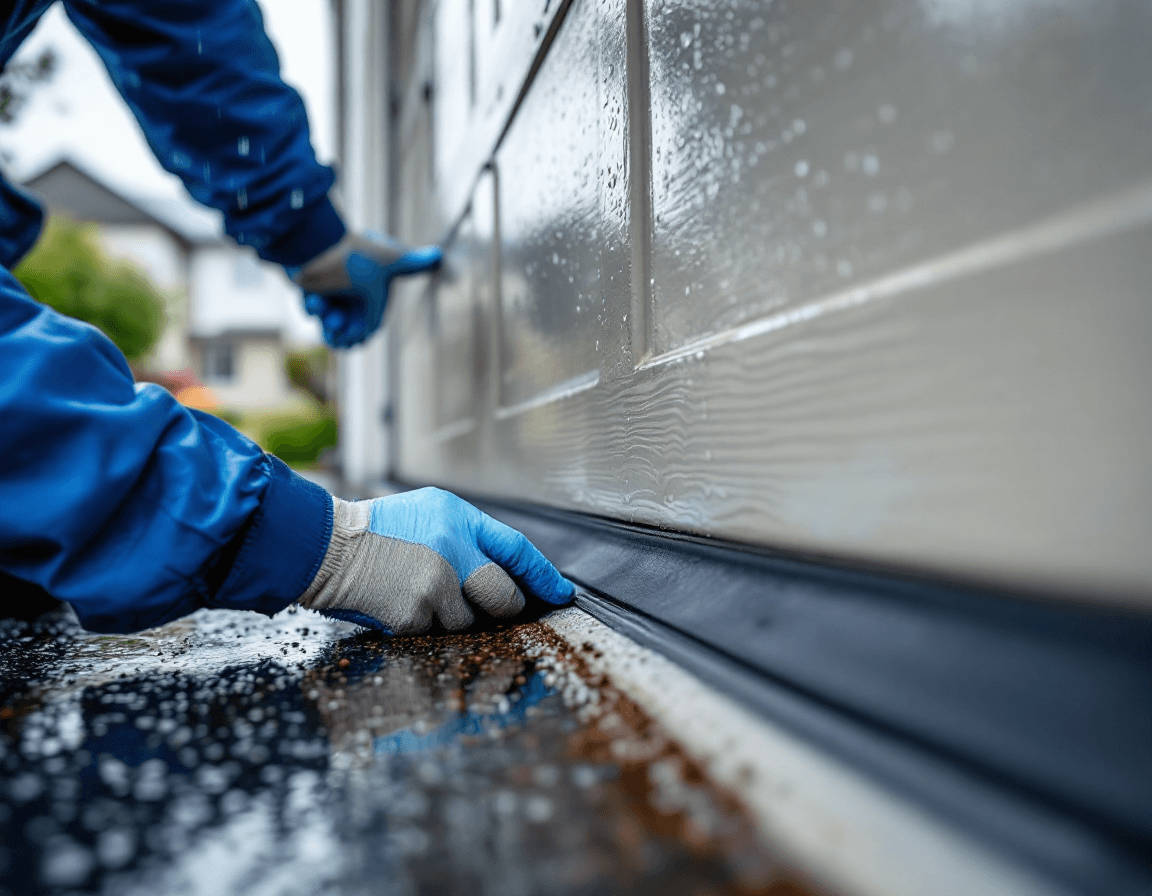
Garage Door Weather Seal Replacement in Monroe, WA is one of the most cost-effective repairs a homeowner can make, and it often produces noticeable results the same day. Monroe sits in the Snohomish River valley, where long wet stretches, cool nights, and stormy winter fronts test every part of a garage door. The rubber and vinyl strips that keep your garage dry, warm, and pest-free are the first line of defense, and they are also the parts that wear out soonest.
At Seattle Garage Door Fix, we see the same pattern across Monroe neighborhoods: a bottom seal that was fine three winters ago has cracked, flattened, or pulled loose, and the homeowner only notices when a puddle appears or the first cold snap arrives. A worn seal rarely fails all at once. It degrades slowly, letting in a little more water, a little more cold air, and a few more leaves each season until the garage starts to feel like an extension of the outdoors.
This page explains what weather seals do, how to recognize when they need attention, what affects the price (which typically falls between $95 and $250 depending on seal type and door size), and where the job fits between a simple homeowner fix and work that belongs with a licensed technician. Read through the sections that match your situation, or use the list of warning signs to decide whether your door is ready for an inspection.
Reading the Gap: What a Strip of Daylight Under the Door Means
The simplest test is also the most revealing. Close your garage door, turn off the interior lights, and look for daylight along the bottom edge. A thin, even line may mean the seal is simply compressed unevenly, but a gap you can slide a few fingers into indicates that the seal has lost its shape or pulled away from the door panel. Repeat the check at each corner, since doors often sag slightly on one side over time and the seal on the lower corner usually takes the worst beating.
Pay attention to where the gap sits when the door is fully closed. If it only appears on one end, the problem may be a seal that has torn free near a track bracket or a section that has been bent by a bumper or a cart. If the light shows along the whole width, the bottom seal has likely hardened and no longer conforms to the concrete. Either way, a daylight test takes less than a minute and gives you a clear starting point before you call anyone.
It is worth doing this check at night from inside the garage with a flashlight held outside. Many homeowners find that a gap is far more visible this way, because the beam shows exactly where air and moisture are slipping through. Make a quick note of any spots that look worse, and keep those notes handy if you do schedule service.
Why Damp Air Finds Its Way Under Monroe Garage Doors
Western Washington's climate is mild in temperature but persistent in moisture, and Monroe's position in the Snohomish River valley adds its own character. Cool air settles in low areas during the cooler months, and homes near the river and fields can feel the effects of that moisture more strongly than homes on higher ground. A garage with a leaking bottom seal becomes a small humid pocket, and the constant dampness works on wood trim, stored cardboard, tools, and the door's own hardware.
Rain driven by southwesterly winds is the real trouble. When a frontal system moves through, water is pushed sideways and upward against the door, and any opening at the base or along the sides becomes an entry point. Even a seal that looks intact in calm weather may let water through when the wind is strong. This is why many Monroe homeowners notice puddles only during a particular kind of storm, while the rest of the year the garage stays dry.
Seasonal temperature swings matter too. A seal that stays flexible during a warm July can become stiff when the thermometer drops in January, and repeated freezing and thawing encourages cracking in older rubber. Dry summer weeks followed by sudden autumn rain can also cause the seal to shrink and then swell, which speeds up wear at the points where it meets the concrete.
Bottom Seals, Perimeter Strips, and Thresholds: Sorting Out the Parts
Homeowners often use the term "weather stripping" to describe several different components, and knowing the difference helps you describe the problem accurately. The bottom seal is the strip attached to the lower edge of the door panel. It makes contact with the garage floor when the door closes and is the component most responsible for blocking water, drafts, and small animals at the base of the door.
Perimeter weatherstripping runs along the sides and top of the door opening. On many garages it is installed on the door frame or the door itself, and it seals the gaps that open up when the door is raised or when the frame settles. Threshold seals, sometimes called floor seals or door sweeps in other contexts, are installed on the garage floor where the door meets the slab. Each part can wear independently, so a complete assessment often covers all three.
- Bottom seals: a rubber or vinyl strip on the lower panel, typically replaced as a single piece matched to the door width.
- Perimeter weatherstripping: flexible strips along the sides and top that close gaps around the opening.
- Threshold seals: a low profile barrier or track fixed to the concrete that meets the bottom seal.
- Replacement hardware: clips, retainers, and fasteners that hold the seal in place and sometimes fail before the seal itself.
Material choice also matters. Standard rubber performs well in many conditions, while higher grade profiles are designed to stay flexible in colder temperatures and resist UV damage on doors that receive afternoon sun. A technician can match the existing profile to the door's channel or recommend a better option when the original design no longer seals properly.
Pricing Between $95 and $250: What Shifts the Number
Seal replacement generally runs from $95 to $250, and the range reflects a few clear factors. The first is the type of seal. A basic bottom seal on a single-car door is usually at the lower end, while a heavier profile, a perimeter kit, or a threshold system adds to the total. The second is door size, since a double-wide garage door needs more material and more time to fit the seal evenly across its width.
The condition of the existing hardware also changes the cost. If the old seal peels off easily and the retainers are intact, the job tends to be quick. If the channel is damaged, the clips are corroded, or the door has an uneven bottom edge that needs adjustment before the seal will sit correctly, the work takes longer and may fall toward the upper end of the range. Access is another variable, especially in older Monroe homes where the garage has been modified or where stored items must be moved before the technician can work.
Pricing is best confirmed after an inspection rather than guessed from a single photo. A technician who looks at the door can tell you whether a seal swap will solve the problem or whether a related issue, such as a misaligned track or a worn roller, is letting water in from another direction. Asking for a clear breakdown of what is included is a reasonable step, and it helps you compare options without surprises.
Doors Near the Fairgrounds and Downtown Blocks
Monroe's character is part small-town and part active community, and that shapes how garage doors are used. Homes close to Downtown Monroe often have shorter driveways and tighter lots, which means garage doors open and close frequently and sometimes take knocks from bikes, strollers, and backing vehicles. Repeated contact can bend the lower edge of the door and gradually pull the bottom seal out of its channel.
Homes in neighborhoods near the Evergreen State Fairgrounds experience a different rhythm. Seasonal events and busy weekends bring extra vehicle traffic and parking pressure in nearby streets, and many households use their garages as workshops, storage space for event equipment, or overflow areas for camping and outdoor gear. Heavier loads and more frequent opening can accelerate wear on seals and on the door's rollers and hinges, so a seal inspection is a practical part of routine maintenance for these properties.
Whatever part of town you live in, consider how your garage is used day to day. A garage that holds lawn equipment, recycling bins, and a vehicle that comes and goes at all hours will show seal wear sooner than a garage used only for occasional storage. Matching your maintenance schedule to real use is one of the simplest ways to avoid water damage.
The Small Invaders: Leaves, Dust, and Pests
Gaps at the bottom of a garage door are an open invitation to more than water. Fallen leaves from nearby trees collect along the threshold during autumn, and a gap of even a quarter inch is enough for them to be pulled inside by wind or dragged in on the wheels of a stroller. Once inside, leaves hold moisture against the concrete and provide shelter for insects that prefer damp, dark corners.
Dust and fine debris are equally persistent. Western Washington's wet seasons often bring mud and fine silt to driveways, and a poor seal lets this material track into the garage and settle on shelves, bikes, and stored boxes. Over time it can build into a layer that is difficult to clean and that holds onto moisture. Homeowners sometimes notice this only when a dusty film appears on freshly cleaned tools.
Rodents and other small animals are the most serious concern. A gap that appears large enough for a mouse to squeeze through is a real risk, especially in neighborhoods with open fields or wooded edges. Replacing a worn seal closes that entry point and makes it easier to keep pests outside. Sealing the door is far more effective than setting traps after animals have already moved in, and it protects stored food, insulation, and wiring that rodents often damage.
Cold Drafts, Higher Bills, and the Garage-to-House Connection
Many homeowners do not think of the garage door as an energy issue, but a leaking door can influence the whole home. If the garage is attached, cold air that enters at the bottom of the door can flow into the house through shared walls and interior doors, especially on windy days. Heated spaces that border the garage may feel colder than expected, and the furnace may run longer to compensate.
The energy effect varies with the size of the gap and the type of heating in the home. A continuous gap along the bottom of a wide door is far more significant than a short section of worn seal near a corner. Still, the cumulative effect of unsealed openings is real, and fixing them is one of the more affordable ways to reduce drafts without major construction. Many households notice a difference in comfort first, before they see any change in utility bills.
When you compare heating costs over a season, it is helpful to consider the garage as part of the thermal envelope. Sealing the garage door, checking the door between the garage and the house, and making sure the perimeter seals are intact all work together. A technician can identify which openings contribute most to drafts so you can prioritize the repairs that give you the best return.
What You Can Safely Check Yourself
Some seal-related tasks are well within reach for a careful homeowner. Visual inspection is the first step: look for cracks, flattening, missing sections, and areas where the seal has pulled away from the door. Clean the bottom seal and the threshold with mild soap and water, remove debris from the track, and make sure the seal is not trapped under the door when it closes. These steps alone sometimes restore a much tighter seal.
Replacing a bottom seal or perimeter strip can be a reasonable DIY project for someone comfortable with simple hardware and careful measuring. The key is to purchase a profile that matches the existing channel, to measure the full door width accurately, and to follow the manufacturer's directions for trimming and fastening. Keep the door in a fully closed position when you are fitting the seal, and do not attempt to adjust tension or cables while doing so.
There is a firm boundary, however. Garage doors are heavy, and the springs and cables that counterbalance them store significant energy. Spring tension, cable repair, drum work, and track realignment should be left to a licensed professional. If a seal problem is connected to a door that is sagging, binding, or sitting unevenly, stop working and call for help. Seal replacement is a maintenance task; spring and cable work is a safety-critical repair that belongs in qualified hands.
What a Professional Seal Visit Typically Involves
A professional visit begins with a full look at the door rather than only the seal. The technician checks how the door closes, whether the bottom edge is level, how the perimeter strips meet the frame, and whether the threshold is in good condition. They also look at the hardware that holds the seal in place, since loose retainers or corroded clips can cause a new seal to fail quickly.
Next comes the matching and fitting step. The technician confirms the correct profile and length, removes the old seal, cleans the channel or the mounting surface, and installs the new piece. Where needed, the bottom panel may be adjusted so the seal makes even contact across the full width. The goal is consistent compression without forcing the door to bind, and the door is cycled several times to confirm it closes cleanly.
Finally, the technician should explain what they found and what was done. A good visit includes a short walkthrough of the results, notes on any other concerns, and a clear discussion of options if further work is recommended. Ask questions about anything you do not understand, and do not feel rushed to approve work you have not had explained.
Keeping Seals Effective Through Monroe's Changing Seasons
Weather seals last longer when they receive basic attention. Clean the bottom seal and threshold a few times a year, especially after autumn leaf fall and winter mud season. Rinse off grit and salt residue where it applies, and avoid petroleum-based products that can soften rubber over time. A quick wipe-down takes minutes and removes the abrasive material that wears seals down.
Look at the seals at the change of seasons. Before the wet months arrive in late autumn, confirm that the bottom edge still meets the floor and that no sections have lifted. In late winter or spring, check for signs of stiffness, cracking, or pest entry, since the seal may have taken a beating during storms. Keeping a simple seasonal habit makes small problems easy to catch before water reaches stored items.
Plan replacement when the seal no longer recovers its shape after you compress it, when light or water appears in more than one area, or when pests or debris are getting through. Early action is usually less expensive than repairing damaged flooring, shelving, or wiring, and it keeps the garage comfortable and dry through another Snohomish County winter.
If you live in Monroe or nearby and notice any of the signs covered on this page, our team can inspect your door and recommend the right seal for its size and use. Call Seattle Garage Door Fix at (888) 799-3819 to schedule a visit. We will walk through what we find, explain your options clearly, and help you decide on the repair that makes the most sense for your garage.