
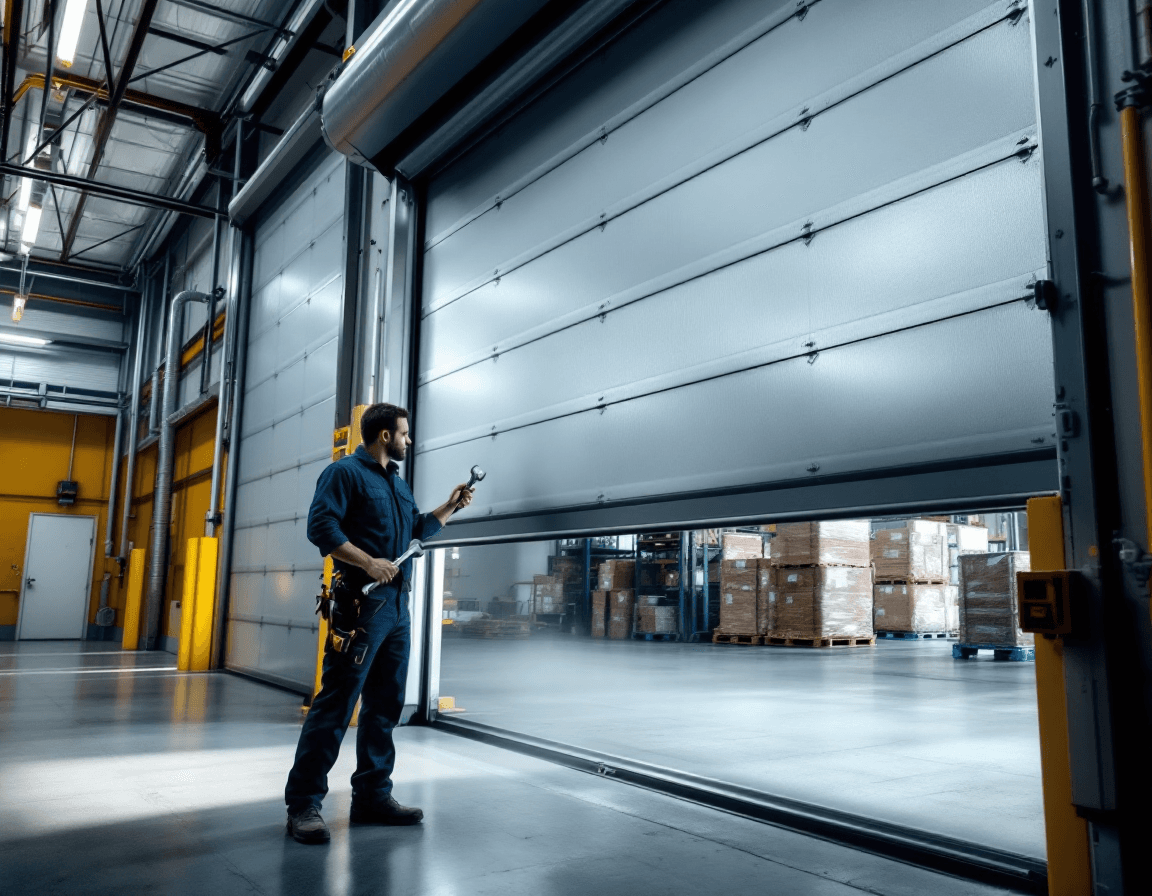
Commercial Overhead Door Repair in Bremerton, WA is the kind of service most business owners don't think about until a loading dock door stops mid-cycle with a delivery truck idling outside. Bremerton businesses run on tight schedules, whether they're warehouses near the waterfront, contractors in the industrial corridors, or retail and service operations that depend on a large opening staying reliable. A commercial door is more than a big garage door, and when it fails, the cost shows up in missed shipments, idle crews, and product sitting on the wrong side of a closed opening. This page explains how we approach those problems in Kitsap County.
We work on sectional overhead doors, rolling steel doors, commercial operators, and the preventive maintenance programs that keep all of them running. Our technicians are licensed, bonded, and insured, and we treat every commercial job as a business problem first and a mechanical problem second. That means asking how the door is used, how many cycles it sees in a shift, and what happens to your operation if it stays down. Every commercial situation is different, so pricing is handled through custom quotes rather than a flat rate on a website. Our aim is to get a clear diagnosis and a practical plan in front of you quickly, so the repair fits your schedule instead of the other way around.
If your door is down right now, or you suspect it will be soon, the phone number to call is (888) 799-3819. You don't need to have the model number or a service history ready before you call. A short description of what the door is doing, along with the approximate size and whether it's sectional or rolling steel, is enough to get started. The sections below cover the most common problems we see at commercial openings in Bremerton and what usually causes them.
Why Bremerton Commercial Doors Wear Faster in Marine Air
Bremerton sits on the western shore of Sinclair Inlet, and that position shapes how commercial doors age. Salt-laden air drifts inland, rain is frequent for much of the year, and moisture settles into hinges, roller bearings, and track joints even when a building looks dry from the outside. Steel that is not properly coated or maintained will begin to show surface rust at contact points, and that rust can progress into seized rollers and stiff bottom brackets. Doors on the water side of town often show these effects sooner than units tucked further inland, though every opening in the area is affected to some degree.
Temperature swings here are usually moderate compared with much of the country, but the damp cool months put a different kind of strain on a door. Metal contracts slightly in cold, damp conditions, panels can bind in their channels, and lubricants that were fine in summer can turn sticky and attract grit. Weather stripping along the bottom seal hardens or tears, which lets water wick into the bottom section and freeze in the occasional cold snap. Over time, these small changes make the door work harder to complete each cycle, and the operator begins to show the strain.
Because of this, we generally recommend that commercial owners think about their doors on a seasonal rhythm. A thorough look in late fall, before the wettest weeks, catches problems while they are still minor. A second look in late winter or early spring helps identify anything that rain and cold exposed. Owners who wait for a complete failure usually pay more in both repair cost and lost operating time than those who schedule attention in advance.
Sectional Overhead Doors at Warehouse and Dock Openings
Sectional overhead doors are the workhorse of most Bremerton warehouses, distribution spaces, and fleet garages. They roll up in segments, track along the sides, and stack overhead when open, which makes them efficient for large openings and frequent cycling. The panels are typically insulated steel or aluminum, and the hardware includes hinges, rollers, track brackets, and a counterbalance system that does most of the lifting work. When one component fails, the entire door often feels the effect, which is why a careful inspection matters more than a quick fix at the first sign of trouble.
On a sectional door, a common early symptom is a noticeable bump or jerk as panels pass through the track curve. This often points to worn or flat-spotted rollers, loose track bolts, or a track that has shifted slightly after a bump. If the door sounds rough or grinds in one area, it may be a roller stem that has worn into an oval shape or a hinge that has lost alignment. We check track plumb and level, verify that the sections are square in the opening, and look at the condition of the bottom roller assembly. Small adjustments made early can prevent the kind of panel damage that eventually requires replacement.
Commercial sectional doors also have to deal with wind load, especially on openings that face open water or wide parking areas. Wind pressure can push panels out of the track during a gust if the side seals or track clearances are off. Our technicians inspect the track system with that in mind, checking that the wind locks, stops, and bracing are secure and that the door can seat correctly when fully closed. Many doors that rattle or shift in a breeze simply need their track hardware retightened and their clearances set to manufacturer specifications.
Rolling Steel Doors That Jam, Drift, or Leave the Track
Rolling steel doors are common on storefronts, service bays, loading areas, and older industrial buildings around Bremerton. Instead of panels, they use interlocking steel slats that coil around a barrel above the opening. Because the curtain is continuous, a problem in one guide track can cause the whole door to bind, and a slat that bends out of shape can jam the curtain against the guide. Rolling steel doors are strong and secure, but they are less forgiving of misalignment than sectional doors, so small problems can escalate quickly.
The most frequent complaint we hear with rolling steel doors is that the curtain has come partly out of one guide. This often happens after a vehicle clips the bottom bar, after a strong wind lifts the curtain at one side, or after years of uneven tension on the barrel. Once a curtain is out of the guide, forcing it can bend slats and damage the guide angle, which turns a simple realignment into a bigger repair. For that reason, we ask owners not to pry or hammer on a jammed rolling door, since the safest option is to stop operation and call for a technician.
Rolling steel doors also depend on consistent tension and a balanced barrel. If one side runs lower than the other, or if the door stops partway and then drops, the spring or the drive system may be out of balance. Adjusting or replacing a spring on any commercial door is high-tension work that should only be performed by a licensed professional with the proper tools and training. We handle these repairs on-site, starting with a careful evaluation of the barrel, guides, and curtain before any tension component is touched.
Commercial Operators and the Electrical Side of Downtime
The operator is the motor and control system that moves a commercial door, and when it fails, the door can look completely dead even if the mechanical parts are fine. Common symptoms include a door that hums but does not move, a motor that stops after a few seconds, a door that opens but refuses to close, or a control panel that shows no response. Each of these can have very different causes, from a worn limit setting or a tripped safety reversing sensor to a failing contactor, a damaged control board, or a power supply problem at the disconnect.
Commercial operators are often wired into a building's broader electrical system, and that means a troubleshooting visit should start with the basics. We verify voltage at the operator, check the disconnect and breakers, and look at the photo eyes and safety edges that tell the operator the opening is clear. Many operator complaints trace back to a sensor that has been knocked out of alignment, a wire that has been pinched, or a safety edge that has been bumped by a pallet jack. A quick check of these items can often restore function without replacing any major component.
When the operator itself needs replacement or a major repair, we discuss the options openly. Some businesses want to keep an existing unit to limit costs, while others use the repair as a chance to upgrade to a faster or more controllable operator. We explain the difference between a repair that restores the original function and an upgrade that changes how the door behaves, and we provide a written quote so you can decide with full information. Commercial work is always priced on a custom basis because operator models, wiring runs, and door sizes vary widely across the city.
When a Door Is Too Slow for the Way Your Crew Moves
Some commercial door problems are not breakdowns at all. The door works, but it takes so long to open or close that it slows the entire operation. A dock door that needs twenty or thirty seconds per cycle can become a real bottleneck when a crew is running forklifts through it dozens of times in a shift. Other owners notice that a door stops too early, reverses unexpectedly, or hesitates at the top of its travel, which forces drivers to wait and creates bottlenecks at the opening.
Throughput issues usually come from a combination of factors. The operator may be undersized for the door weight, the track may have friction points that drag the panels, or the door may have been adjusted for safety in a way that limits its speed. Worn rollers and dry hinges can also add resistance, and a door that was once snappy may slow down gradually without anyone noticing. We measure cycle times, inspect the track for drag, and review the operator settings to identify where time is being lost. Where appropriate, we recommend a speed or controls upgrade that matches how your business actually uses the opening.
The goal is to make the door fit your workflow. A receiving door used for heavy pallet traffic has very different needs from a bay door that opens a few times a day for service vehicles. Describing how often the door cycles, what types of vehicles or equipment pass through, and where delays tend to happen will help us recommend a solution that improves throughput without compromising safety. Faster is not always better if the door cannot stop reliably, so every adjustment is checked against the required safety devices.
Forklift Strikes and Sections That Need Replacing, Not Patching
Forklift impact is one of the most common causes of serious damage on commercial doors across Kitsap County. A moving forklift tine or a loaded pallet can dent a panel, crack a section, bend a track, or knock a bottom bracket out of position in a fraction of a second. Sometimes the damage is obvious, with a visible crease or a gap between panels. Other times the door looks fine but the sections no longer sit square, and the first sign of trouble is a noisy or uneven cycle a few weeks later.
After an impact, the first step is to make the door safe. If a section is bent into the track or a panel is hanging loose, the door should not be operated until a technician has evaluated it. We inspect each damaged section for structural integrity, check whether the track and bracket geometry have shifted, and examine the springs and cables for stress. In many cases, a single damaged panel can be replaced as a unit without changing the rest of the door, but this depends on the manufacturer, the age of the door, and whether the panel profile is still available.
Patching a severely damaged section with tape, temporary brackets, or improvised fasteners is a common temptation, and it usually creates a bigger problem. A panel that is not properly secured can separate under spring load, and a track that has been bent but not corrected will continue to cause binding and wear. We recommend a complete inspection after any significant strike, even if the damage seems minor. Documenting the incident with photos and notes also helps with insurance and internal safety reviews, and we are happy to provide a written summary of our findings for your records.
Spring and Cable Failures Belong to Licensed Technicians
Torsion springs and lift cables carry enormous force on commercial doors, and their failure is among the most dangerous situations a building can face. A torsion spring under high tension can injure someone seriously if it is released improperly, and a broken cable can cause a section to drop without warning. For this reason, we want to be clear with every business owner, property manager, and facility lead: spring and cable work must be performed by licensed professionals with the proper equipment and training. This is not a task for a maintenance crew to attempt with generic tools or online instructions.
Warning signs that a spring or cable needs attention include a loud bang from the header area, a door that sits crooked or sags on one side, a visible gap in the coils, or a door that seems to lift unevenly. Any of these should prompt you to stop using the door and call for service. If a door is hanging partly open or sagging near the floor, keep people and vehicles clear and avoid trying to lift or support it manually. A licensed technician can secure the door, verify the condition of the entire lift system, and replace components in the correct sequence.
We keep spring and cable work separate from routine owner maintenance for good reason. Owners and facility staff can safely do useful things such as keeping the opening clear, reporting unusual noises, cleaning the track of debris, and noting when the door begins to behave differently. Tension adjustments, spring changes, and cable replacement are reserved for trained technicians working under established safety procedures. When you call us, we will always explain what we found and what needs to be done, so you understand the reasoning before any high-tension work begins.
Preventive Maintenance Agreements Built Around Your Schedule
A preventive maintenance agreement is one of the most practical ways to reduce unplanned downtime on commercial doors. Instead of waiting for a failure, a scheduled program checks the door, lubricates moving parts, tightens hardware, and identifies early wear before it becomes an emergency. Many Bremerton businesses choose this approach because it spreads the cost across the year and turns maintenance into a planned event rather than an urgent call during a busy shift. The right schedule depends on how heavily the door is used, its exposure to weather, and the importance of that opening to your operation.
A typical preventive visit includes several checks that help catch problems early. Technicians review the condition of the track, rollers, hinges, and brackets, test the safety reversing devices, and verify that the operator is responding correctly. They also look at weather seals, bottom seals, and any signs of corrosion or moisture intrusion, and they document findings so trends are easy to track over time. Owners appreciate having a written record they can share with facility managers or insurers. We tailor each checklist to the specific doors on your site rather than applying the same list to every opening.
- Inspect track alignment, mounting hardware, and track-to-wall clearances
- Lubricate hinges, rollers, and bearings with the appropriate product for the door type
- Test photo eyes, safety edges, and reversing functions under controlled conditions
- Check weather seals, bottom seals, and drainage paths for wear or moisture damage
- Review operator settings, cycle times, and any recent changes in performance
- Flag potential issues for scheduled repair before they cause a shutdown
- Provide a written summary of findings and recommended next steps
Preventive agreements also make it easier to plan budgets and capital improvements. When we know which doors are approaching the end of their useful life, you can schedule replacement during a slow period rather than during a crisis. We are happy to discuss coverage options, visit frequency, and response priorities so the agreement matches your operation.
Serving East Bremerton, Manette, Kitsap Lake, and Nearby ZIP Codes
Our commercial service area in Bremerton includes the neighborhoods and business corridors across ZIP codes 98310, 98311, 98312, and 98337. East Bremerton has a mix of commercial, light industrial, and service properties, and many of the openings there see steady daily traffic from delivery vehicles, contractor trucks, and staff. Manette, located across the Port Washington Narrows from downtown, is a neighborhood where waterfront exposure and older building stock can affect how doors perform over time. Doors in that area often benefit from close attention to corrosion and seal condition.
Kitsap Lake and the surrounding areas bring a different set of conditions, with a mix of commercial frontage, storage facilities, and businesses that rely on large vehicle access. Openings in these locations may see seasonal changes in use, and doors that sit idle for periods can develop stiffness or corrosion at rest points if they are not cycled regularly. Our technicians are familiar with how these conditions show up on site, and we plan visits with local traffic and access in mind. If your property is in one of these neighborhoods, mention it when you call so we can prepare the right information for the visit.
Because Bremerton is also home to a large federal presence and a busy regional ferry and transit hub, many businesses here operate on tight contractual schedules and security requirements. We understand that access procedures, site rules, and documentation expectations can vary from one property to another. Let us know what your site requires, and we will coordinate with your facility contact so the visit runs smoothly. Clear communication up front is one of the simplest ways to keep a repair on track.
How Custom Commercial Quotes and Fast Turnaround Work
Commercial door work is priced on a custom basis because no two openings are identical. Factors such as door size, panel type, track configuration, operator model, electrical access, and the scope of damage all influence the final number. For that reason, we do not publish a single flat rate for commercial repairs. Instead, we begin with a diagnosis, identify the parts and labor required, and provide a written quote that breaks down the work so you can compare options and make an informed decision.
Fast turnaround is a priority for us because downtime costs commercial owners more than the repair itself in many cases. When you call, we focus first on safety and on whether the door can be secured or temporarily stopped. We then work to schedule a technician as quickly as our availability allows, and we try to bring the parts most likely to be needed based on the symptoms you describe. Where a replacement section or operator must be ordered, we explain the expected lead time up front so you can plan around it, including temporary measures if they are safe to use.
To help us prepare, it is useful to have a few details ready when you call. The more specific you can be, the better we can estimate what the visit will involve. Useful information includes the approximate door size, whether it is sectional or rolling steel, the brand of the operator if you know it, the symptoms you are seeing, and whether the door is currently operational. Photos of the opening, the track, and any visible damage can also help us scope the job before we arrive.
- Door type (sectional, rolling steel, or other) and approximate width and height
- Operator brand or nearby label, if visible
- Specific symptoms, including noises, stopping points, or visible damage
- Whether the door is currently usable, partly open, or completely stuck
- Your facility address, access requirements, and preferred scheduling window
- Any recent impacts, weather events, or changes in use
Once we have that information, we can provide an estimate, identify whether the work can be completed in one visit, and explain what a longer project would involve. Our goal is to give you a clear, honest picture so you can keep your operation moving.
Commercial doors are too important to leave to guesswork. If your Bremerton business has a dock door down, a rolling steel door stuck in its guides, an operator that will not respond, or a door that has slowed to the point of costing you time every shift, call Seattle Garage Door Fix at (888) 799-3819. Our licensed, bonded, and insured team will assess the problem, explain your options in plain language, and provide a custom quote for the work. We serve Bremerton and the surrounding Kitsap County communities, and we are ready to help you get your opening back in service.