
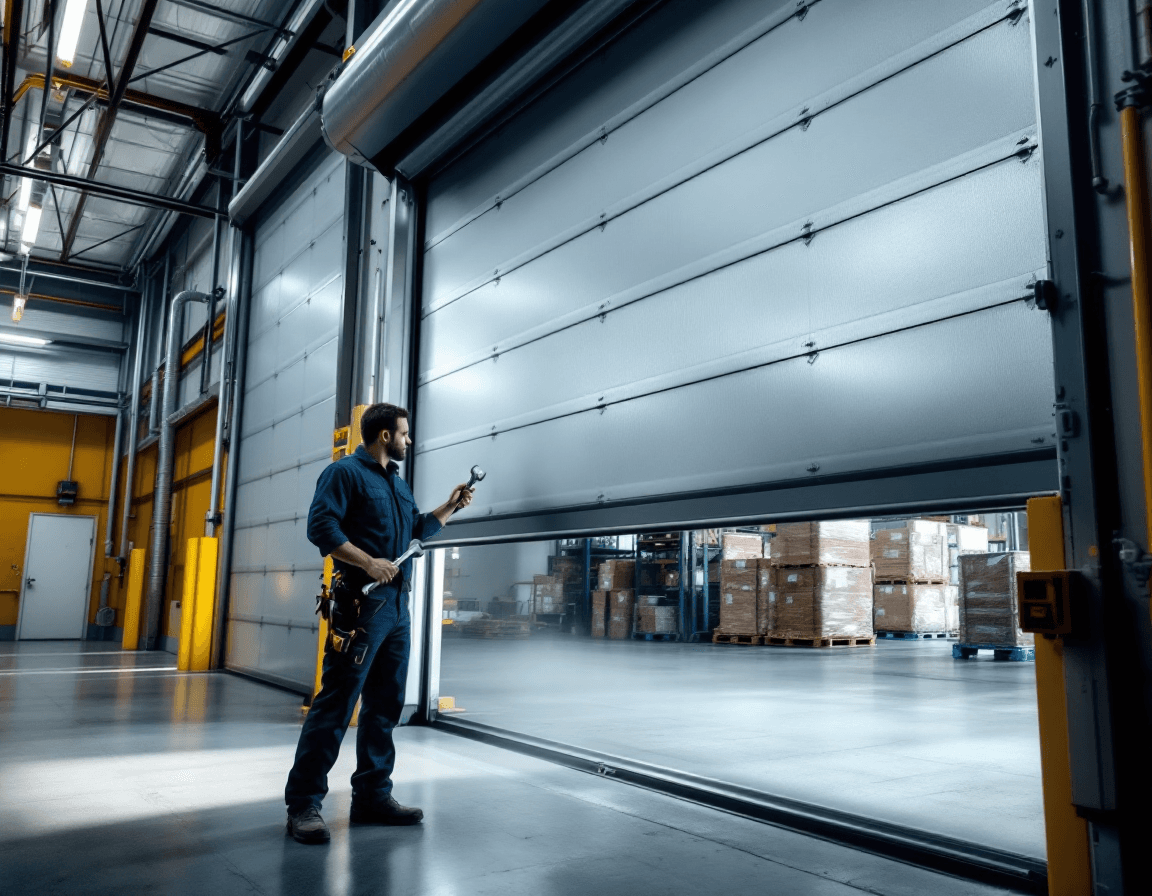
Commercial overhead door repair in Fircrest, WA is a different job from residential garage work. A warehouse, a light-industrial bay, or a loading dock depends on its door to keep product moving, so a door that stops working affects deliveries, staff schedules, and the flow of every truck that comes through. Our technicians come out to Fircrest and the surrounding Tacoma-area businesses with the parts, tools, and training to handle sectional doors, rolling steel doors, and commercial operators on the same visit whenever possible. We know that a business owner rarely has time to wait a week for a part.
Fircrest sits in Pierce County, close enough to Tacoma's industrial and freight corridors that many of the buildings we service see heavy daily use. Dock doors cycle constantly, rolling steel fronts get opened and closed dozens of times in a shift, and many openings take hits from pallet jacks and forklifts. Add the Pacific Northwest weather, with its long wet stretches, cold mornings, and salt-laden air that drifts in from Puget Sound, and it is easy to see why commercial door hardware here needs regular attention. This page explains the most common problems we see, what causes them, how we approach them, and how a preventive maintenance agreement can keep your openings working.
Whether your door is completely down or simply running too slowly to keep up with your operation, the goal is the same: get it safe, get it moving, and keep it from failing at the worst possible time. Below you will find practical information you can use to triage a problem, decide when to call, and plan for the future.
Why a Stalled Dock Door Costs More Than the Repair Bill
When a loading-dock door stops, the financial impact usually starts long before anyone prices the parts. Trucks back up in the yard, drivers wait, staff are reassigned to tasks they did not plan for, and outbound orders slip past their cutoff times. For a business in Fircrest, a single stalled door can turn a routine morning into a scramble to find alternate dock space or reschedule carriers. That is why we treat commercial calls differently from residential ones and aim to restore function first, then complete permanent repairs.
Downtime also hides risk. A door that is held together with a temporary fix, or propped open with a strap while the team waits for parts, can fail again under load. We would rather tell you plainly that a door is safe to run for a few days under specific limits than let you assume everything is fine. Clear communication about what is working, what is not, and what needs to be ordered keeps your operation predictable.
Finally, the cheapest repair is almost always the one done before the failure. Catching a worn roller, a loose bracket, or a sagging bottom seal during a scheduled visit costs far less than an emergency call that happens during peak receiving. Many of the commercial customers we work with plan their service calls around slow periods, which lets them avoid the premium of an after-hours breakdown.
Recognizing Early Warning Signs on Commercial Doors
Most commercial doors give some warning before they fail completely. The trick is knowing which sounds, movements, and visual changes matter. A door that once ran quietly and now grinds, pops, or hesitates at the same point in its travel is telling you something about its rollers, track, or drive. Small changes that get ignored for weeks often become the reason a door is down on a busy Monday.
Facility managers and shift leads are usually the first to notice these signs, so it helps to train the people who use the door every day. Anyone who opens and closes a dock door should know what normal operation sounds and feels like. Anything that deviates from that baseline deserves a note in your maintenance log and a call to a qualified technician before it turns into a breakdown.
Here are the signs we recommend your team report promptly:
- Grinding, squealing, or popping during travel, especially near the top of the door or at the curve of the track
- A door that reverses or stops partway through its cycle without an obvious obstruction
- Visible gaps between sections, or panels that no longer sit flush against each other
- A bottom seal that is torn, flattened, or pulling away from the door, which lets in water, pests, and drafts
- An operator that runs hot, clicks repeatedly before engaging, or takes noticeably longer to open or close than it used to
- Uneven movement, where one side of the door lifts faster or sits lower than the other
Any one of these signs can have a simple cause, but several together often point to a developing problem with the springs, cables, or track alignment. Those components carry significant tension, and they should only be inspected or adjusted by a licensed technician who has the right equipment.
Off-Track Rolling Steel Doors and What Usually Causes Them
Rolling steel doors are common on storefronts, workshops, and secured storage bays in and around Fircrest. Their interlocking steel curtain runs in side guides and wraps around a barrel above the opening. When a rolling steel door jams or comes off track, the cause is often a combination of debris in the guides, a bent or shifted slat, or a barrel that is no longer turning evenly. Forcing the door open or closed in that condition can bend the curtain further and turn a simple realignment into a much larger repair.
Moisture plays a bigger role here than many owners expect. Fine grit and leaf litter blow into guide channels during windy months, and the damp conditions typical of Western Washington winters can cause that debris to pack down and corrode the steel. A guide that is partly clogged or rusting will pinch the curtain on one side, pulling the slats out of alignment. Over time, this uneven load can strain the barrel and the brackets that hold it.
When we respond to a jammed rolling steel door, we first confirm that the door is safe to approach and that no one is trapped or at risk of a sudden drop. Then we inspect the guides, the curtain, the barrel, and the mounting hardware before attempting any adjustment. Many off-track situations can be corrected in a single visit, but if the curtain has taken damage, we will explain what needs replacing and provide a clear quote so you can make a decision quickly.
When the Operator Quits: Diagnosing Commercial Drive Failures
Commercial operators are built for heavy, frequent cycling, but they are not immune to failure. A dead operator can come from a tripped safety circuit, a failed control board, a worn motor, a damaged chain or belt, or a fault in the limit settings that tells the motor where the door should stop. Diagnosing the problem correctly matters, because replacing a motor when the real issue is a sensor misalignment wastes time and money.
Our technicians start with the basics: confirming power at the disconnect, checking the control panel for error indications, and verifying that photo eyes, edge sensors, and emergency stops are clean and aligned. We then check the drive chain or belt, the limit adjustments, and the motor itself. Where a unit is aging or has been running hot for a long time, we will talk through the tradeoffs between repairing the existing operator and replacing it with a newer model that better fits your duty cycle.
Operator problems can also be caused by the door itself. A binding track, a heavy section that has lost balance, or a worn spring system will force the motor to work harder than it was designed to. That strain shows up as overheating, blown fuses, or stalled movement. For this reason, we rarely treat the operator in isolation. We look at the whole system, because a repaired operator attached to a door that is still out of balance will fail again.
Sectional Doors That Move Too Slowly for Your Throughput
Not every commercial door problem is a breakdown. Some businesses find that a sectional door works, but it takes so long to open or close that it slows their receiving or shipping. A door that rises slowly or hesitates during its cycle can cost real time when dozens of trucks or forklifts rely on it each day. Speed complaints are often dismissed as normal wear, but they usually point to a fixable issue with balance, lubrication, drive settings, or hardware.
The first question we ask is what the door is supposed to do at your site. Some commercial operators are set conservatively for safety, and in certain cases the settings can be adjusted to match your usage pattern while still meeting current safety requirements. Other slowdowns come from worn rollers that bind in the track, dry hinges that resist movement, or an imbalanced door that drags on one side. Each of these has a specific fix, and we will explain which one applies before we recommend any upgrade.
If your operation has genuinely outgrown the door, we can discuss faster operator options or a different door configuration. We are careful to present these as choices rather than sales pressure. A business that moves a high volume of trucks may benefit from a faster unit, but a business that only needs an occasional rapid opening may be better served by a tuned existing system. We will help you weigh the cost against the throughput gain you expect.
Forklift Impact Damage and Emergency Triage on the Dock
Forklift strikes are one of the most common causes of damaged commercial doors. A misjudged turn, a pallet that catches the bottom panel, or a load that swings into the opening can crack a section, bend a track, or dislodge a bracket in seconds. The damage may look minor from the floor but can hide problems with the springs, cables, or panel alignment that create serious hazards once the door is moved again.
When a door has been struck, the first priority is safety. Keep people clear of the opening, do not attempt to operate the door until it has been inspected, and check whether any spring or cable has come loose or slipped. A sectional door under spring tension can be dangerous even when it appears stable. If you see a bent track, a split panel, a dangling cable, or a door that sits crooked, leave it alone and call a licensed technician.
Our triage process begins with a careful look at the damaged sections, the track on both sides, the spring system, and the operator connection. We then document the damage, separate what must be fixed before the door runs again from what can wait for a scheduled repair, and provide an estimate. In many cases we can replace a damaged section or realign a track on the same visit, which keeps your dock moving and avoids a second trip for your team to plan around.
Coastal Moisture, Corrosion, and the Seal Care Routine We Recommend
Western Washington's weather is kind to lawns and hard on steel. The region's long wet seasons, frequent condensation on cold mornings, and salt-tinged air moving inland from Puget Sound all accelerate corrosion on hinges, brackets, tracks, and fasteners. For a commercial door that sees daily use, that slow chemical process can weaken hardware long before its moving parts show obvious wear. Protecting the door from moisture is one of the most effective ways to extend its service life.
Seals and weatherstripping deserve special attention. Bottom seals keep rain, puddles, and pests out of the building, and they also reduce drafts that make a warehouse harder to heat in winter. Perimeter seals and threshold strips perform a similar job on the sides and top. A seal that has cracked, hardened, or pulled loose is an easy fix, but ignoring it allows water to reach the tracks and springs, where it speeds up rust and can cause hidden damage.
A practical seal and corrosion routine for a Fircrest facility includes periodic cleaning of tracks and guides, removal of grit and debris from the bottom of the door, inspection of fasteners for rust or looseness, and lubrication with a product suited to the component. We are careful to avoid general-purpose sprays on springs or cables, since those components need specific attention. We are happy to build a seasonal checklist that fits the way your facility uses its doors.
What a Fast Commercial Quote Actually Includes
Commercial customers need numbers they can act on quickly, and we aim to provide them without cutting corners. Every commercial job is priced individually because no two dock doors, rolling steel fronts, or operators are identical. A quote depends on the door type and size, the age and condition of its components, access to the opening, whether the door is currently in service, and whether parts must be ordered or are already available on the truck.
When you request a quote, we typically ask for the door type and approximate dimensions, the make of the operator if you know it, photos or a description of the problem, and whether the door is down or still operating. This information lets us decide whether a site visit is needed or whether we can give a preliminary range by phone while we confirm details. If a site visit is required, we aim to schedule it as soon as the schedule allows, because downtime is expensive.
A complete quote should explain the diagnosis, the recommended repair or replacement, the parts involved, the labor, and any follow-up items. It should also separate urgent work from items that can wait. We would rather present a clear, honest scope than a low number that grows during the job. If an option such as a new operator or section replacement is worth considering, we will lay out the benefits and costs so you can plan the budget.
Preventive Maintenance Agreements Built Around Your Shift Schedule
A preventive maintenance agreement gives a commercial facility a predictable schedule for inspecting and servicing its doors, rather than waiting for a failure to force the issue. For many businesses in Fircrest and across Pierce County, the value lies in fewer emergency calls, better planning around slow periods, and a documented record of what has been checked and when. Preventive work also gives insurers, auditors, and facility managers a clearer picture of the building's equipment condition.
A typical agreement covers a scheduled inspection of each door and operator, lubrication of moving parts, checks of spring and cable condition, verification of safety devices such as photo eyes and edge sensors, adjustment of balance and limit settings, and a written summary of findings. The frequency depends on how heavily the doors are used. A high-traffic dock with constant cycling needs more attention than a rarely used storage bay, and we will recommend an interval that matches your actual operation.
We schedule maintenance visits around your shifts and busy periods so that work does not interrupt receiving or outbound loading. Many customers prefer early morning or late evening appointments, and we are happy to work within those windows. Each visit ends with a clear report, and any recommended repairs are presented as a separate quote, so you can approve the work that fits your budget and timeline.
Safety Standards We Keep on Every Commercial Job
Commercial doors store significant mechanical energy, and that energy can cause serious injuries when a spring releases, a cable snaps, or a heavy section falls without warning. Our technicians are licensed, bonded, and insured, and we treat every spring and cable job as a high-risk task that requires proper tools, training, and lockout procedures. We will never ask a facility employee to adjust tension or work on a door in a way that exposes them to these hazards.
Safety also includes the people who use the door every day. We encourage facility managers to keep the area around each opening clear, post warnings where needed, and ensure that operators are trained to recognize abnormal behavior. When we complete a repair, we explain which safety devices were tested and how the door should be operated, so your team knows what normal looks like going forward.
Our commitment to safety also extends to how we communicate. If a door is not safe to run, we will say so plainly and recommend a course of action, even if that means a temporary shutdown while parts are sourced. We believe the right answer is always the one that protects your people, your equipment, and your ability to do business over the long term.
Ready to Get Your Fircrest Dock or Storefront Door Moving Again
If your commercial overhead door is down, jammed, slow, damaged, or simply due for a professional inspection, we are ready to help. Our team serves Fircrest and the wider Pierce County area, and we prioritize fast response and clear communication because we know your schedule depends on your doors. Call (888) 799-3819 to describe your situation, ask about a custom commercial quote, or set up a preventive maintenance agreement that keeps your openings running through every Pacific Northwest season.