
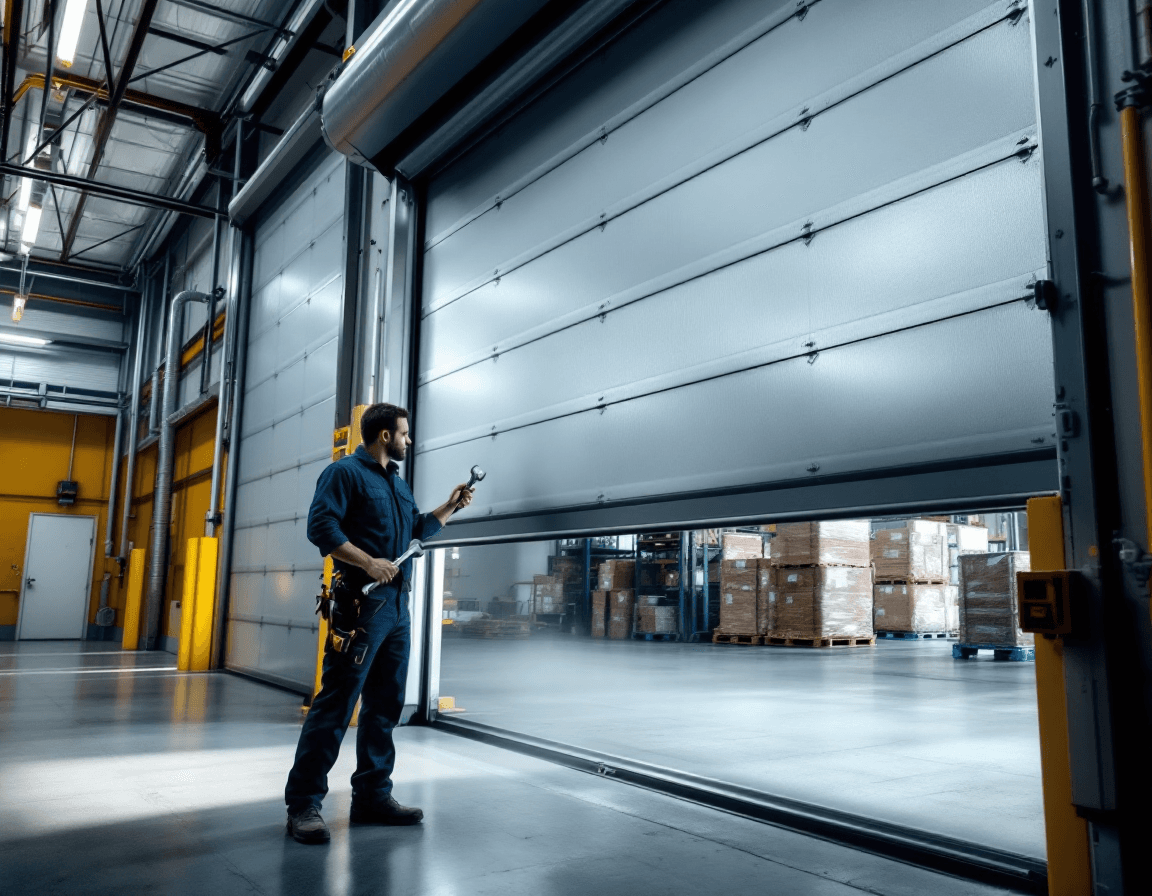
Commercial overhead door repair in University Place, WA is a different job from fixing a residential garage door, and the stakes are higher. When a sectional or rolling steel door at a warehouse, loading dock, or storefront stops working, the problem is rarely just a broken panel or a worn roller. Trucks back up, staff stand around, and shipments sit on the apron while someone waits for the door to close or open again. Our crews work with business owners, facility managers, and property managers throughout University Place and the surrounding Pierce County neighborhoods, and we know that a fast, accurate diagnosis matters as much as the repair itself.
University Place sits along the water between Tacoma and the Chambers Bay area, and that location shapes how commercial doors wear. Salt-laden marine air, long stretches of drizzle, and damp winter mornings work on steel, galvanizing, bearings, and electrical connections year after year. Many of the buildings we service were built to serve steady daily traffic, which means their doors may cycle hundreds of times per shift and never get a break. A door that performs well in a dry climate can start showing strain here much sooner unless it is inspected and maintained on a regular schedule.
Every commercial job starts with a site visit, and we quote custom repairs rather than working from a flat price list. We aim to turn quotes around quickly so that your team can decide on parts, labor, and scheduling without losing a full day of operations. If your door is down right now, call us at (888) 799-3819 and describe what you are seeing, including whether the door is stuck open, stuck closed, or moving but making unusual noises. The sections below explain the most common failures we see on commercial doors in University Place and what we typically do about them.
When a Loading Dock Door Goes Dark Mid-Shift
A dock door that quits during a busy shift creates a chain reaction that most owners feel within minutes. Drivers cannot back in, forklifts reroute through other bays, and receiving schedules slip. The first question we ask is whether the door failed completely or whether it is still moving but not finishing its travel. Those two situations point to very different causes, and getting the answer right saves time on the phone and on site.
A door that is completely unresponsive often has an electrical or control issue. We check power at the disconnect, the status of any safety devices such as photo eyes and edge sensors, and whether a control station or wireless transmitter has lost its signal. A door that lifts partway and stops may have a tripped safety reversal, a binding track, or an obstruction in the opening. In either case, we do not recommend forcing the door or repeatedly cycling it, because doing so can bend a track, strip a gear, or damage a section that could have been repaired with a simpler fix.
Our technicians carry common replacement components for the major commercial door brands, which helps us move from diagnosis to repair in a single visit when the failure is straightforward. When a part must be ordered, we explain the expected lead time and discuss temporary measures, such as securing the opening or operating the door manually under safe conditions, so your operations can continue while we wait.
Warning Signs Your Commercial Door Is Heading for Trouble
Most commercial door failures announce themselves well before the door stops. Facility staff who notice these early signs can schedule a repair during a slow period instead of responding to an emergency. We encourage managers to walk the door during routine checks and to note any changes in how it sounds, moves, or looks. Small problems caught early almost always cost less to fix than the failure that follows.
- Grinding, popping, or squealing during travel, especially in the first few feet of lift
- A door that drifts, sags, or stops at uneven heights when opened or closed
- Visible gaps at the bottom seal or along the side jambs after rain or wind
- Slower than normal travel compared with how the door performed last season
- Operator motors that run hot, hum without moving the door, or trip the breaker
- Panels that look wavy, creased, or out of alignment when viewed from inside
Keep a simple log of these observations. A short note with the date, the time of day, and the weather can be enormously helpful when we arrive, because doors in our region often behave differently on wet mornings than on dry afternoons. That information helps us determine whether moisture, temperature swings, or a mechanical issue is the main contributor.
Sectional Overhead Doors on Warehouse and Industrial Frames
Sectional overhead doors are the workhorse of many University Place warehouses, light industrial buildings, and fleet facilities. Each section is hinged to the next and rides in vertical and horizontal tracks, with torsion or extension springs counterbalancing the weight. Because so many moving parts interact, a problem in one area can show up as a symptom somewhere else, and a careful technician traces the root cause instead of replacing the most obvious part.
Commercial sectional doors are typically larger and heavier than residential units, and their spring systems operate under substantial tension. Working on these springs is dangerous without the proper tools, training, and experience, and we always recommend that spring and cable work be handled by a licensed, trained professional. If you see a spring that has visibly separated, a cable that has frayed or come off its drum, or a door that drops suddenly, stop using it and keep people clear of the opening until a technician can secure it.
When we repair sectional doors, we check track alignment, roller condition, hinge wear, weatherstripping, and the balance of the door. A properly balanced door should stay in place when lifted partway and open smoothly without excessive strain on the operator. Restoring balance often extends the life of the entire system, reduces wear on the motor, and makes the door faster and quieter, which directly supports daily throughput.
Rolling Steel Doors That Bind, Jump, or Refuse to Track
Rolling steel doors are common on storefronts, service bays, and older commercial buildings in the area. They roll up into a tight coil above the opening, which makes them space-efficient but also means that the slats, guides, and barrel must work together precisely. When a rolling steel door jumps out of its guides or jams partway, the cause is often a bent slat, a loose guide bracket, or debris that has settled into the track.
Because these doors are made of interlocking steel slats, a single damaged slat can prevent the whole curtain from running smoothly. We inspect the curtain for kinks, check the guides for alignment and wear, and look at the barrel and brake assembly to make sure the door holds position properly. In coastal air, we also pay close attention to corrosion on bottom bars, brackets, and fasteners, since salt and moisture can weaken components that otherwise look fine from the sidewalk.
If a rolling steel door has jumped its track, do not attempt to force it back into place while it is under tension. The curtain and barrel can release unexpectedly, and the resulting movement can injure people or cause additional damage. Secure the area, shut off power to the operator, and call us so a technician can stabilize the door and restore it safely.
Commercial Operators, Controls, and Safety Sensors
The operator is the motor and control system that moves the door, and on commercial installations it is often more sophisticated than the one in a home garage. Many commercial operators include variable speed settings, multiple control stations, access system integration, and safety devices required to protect people and vehicles in the opening. When an operator fails or behaves erratically, it can look like a door problem even when the door itself is sound.
Common operator complaints include a door that runs too slowly for the work it needs to do, a motor that stops partway through its cycle, a control panel that shows an error code, or a door that reverses for no apparent reason. Many of these issues trace back to misaligned or dirty photo eyes, a worn limit setting, a failing contactor, or a control board that has been exposed to moisture. We test each safety device individually and confirm that the door stops and reverses as designed before we return it to service.
We also review the timing and speed settings with the people who use the door every day. A door that moves too slowly for a busy dock might be functioning exactly as set up, and adjusting the parameters within safe limits can improve throughput without compromising safety. Any change to safety-related settings should be documented, and we are happy to provide that documentation so your team has a clear record.
Forklift Impact Damage and Replacing Individual Sections
Forklift strikes are one of the most frequent reasons commercial doors need repair, and they rarely happen gently. A tine that catches the bottom bar or the lower sections can bend a panel, crack a hinge, pull a track out of plumb, or damage the spring system. Sometimes the visible damage is modest while the hidden damage is considerable, so we inspect the door as a whole rather than patching only what is obvious.
For sectional doors, damaged panels can often be replaced individually instead of swapping the entire door. The replacement section has to match the existing profile, insulation rating if applicable, and hardware pattern, so we measure carefully and confirm specifications before ordering. After the section is installed, we check the alignment of adjacent sections, rollers, and tracks, because a small misalignment can cause noise and premature wear.
Impact damage also raises questions about the safety of the surrounding structure. If a strike has bent the header, damaged the jamb, or compromised a mounting point, we flag those issues in our written assessment so you can make informed decisions about the building. Protective measures such as bollards, curb guards, and clearly marked traffic lanes can reduce future damage, and we are glad to discuss them as part of a broader maintenance plan.
Moisture, Salt Air, and Puget Sound Weather
Living and working near the water in University Place means contending with air that carries moisture and, at times, salt. Over months and years, that combination accelerates corrosion on hinges, brackets, springs, and fasteners, and it can cause electrical components to fail when condensation finds its way into control boxes. Rain that drives sideways during winter storms can also push water under weatherstripping and into the track area, where it freezes or pools during cold snaps.
We recommend a few practical habits for facilities in this climate. Keep drainage paths clear so water does not collect at the bottom of the door opening. Inspect bottom seals and side seals after heavy rain or wind, and replace them when they show cracking or flattening. Look for rust bloom on steel components, especially in areas where the door is shielded from sunlight and rain dries slowly. Lubricate moving parts with products suited to outdoor commercial use, and avoid heavy grease in tracks where it can collect grit.
Seasonal changes also affect how doors perform. A door that runs smoothly in July may feel sluggish during a cold, wet January, when lubricants thicken and metal contracts. Tracking these changes over time helps us separate normal seasonal behavior from genuine mechanical problems that need attention.
Keeping Operations Moving: Speed, Scheduling, and Minimal Downtime
Downtime is the cost that most business owners feel most sharply, which is why we structure our commercial work around getting doors back in service quickly. For urgent failures, we prioritize a same-day assessment whenever our schedule allows, and we work to identify whether a temporary measure can keep your operation running while a permanent repair is completed. For planned repairs, we can often schedule work during early mornings, evenings, or slower shifts to limit disruption.
Speed also depends on preparation. When a facility has a current door inventory, a record of past repairs, and access to the manufacturer or model information for each door and operator, we can usually arrive better equipped and avoid return trips. We encourage property managers to keep that information in a shared location, along with the best contact for after-hours access and any site-specific safety requirements such as dock permits or traffic control rules.
Our custom quotes reflect the actual scope of work, the parts involved, and the timing you need. We do not hide labor or parts inside vague estimates, and we explain which items are required for safe operation and which are recommended improvements that could be scheduled later. That transparency helps you prioritize spending while keeping your doors reliable.
Preventive Maintenance Agreements for Busy Commercial Doors
A preventive maintenance agreement can be one of the most cost-effective decisions a commercial property owner makes. Instead of reacting to breakdowns, the building operator gets scheduled inspections, adjustments, lubrication, and safety testing that catch problems while they are still small. For facilities with heavy dock traffic or critical receiving schedules, that predictability is often worth more than the price of any single repair.
A typical agreement can be tailored to your building and may include some or all of the following:
- Scheduled inspections of sectional and rolling steel doors, including tracks, rollers, hinges, and curtains
- Spring, cable, and drum inspection with recommendations from licensed specialists when work is required
- Operator testing, limit and force adjustments, and review of safety reversal devices
- Photo eye and edge sensor cleaning, alignment, and function testing
- Lubrication with products appropriate for outdoor and coastal commercial environments
- Seal and weatherstripping checks, with replacement recommendations after storms or seasonal changes
- Written reports that document conditions, completed work, and items to monitor
We set maintenance intervals based on how often each door cycles, how hard it is used, and how exposed it is to the weather. A dock door that opens dozens of times per shift may need more frequent attention than a rarely used service door, and we adjust the schedule accordingly. Any agreement should be reviewed periodically so it keeps pace with changes in operations.
What Our Commercial Quote Process Looks Like
When you contact us about a commercial door in University Place, we begin with a few questions that help us plan the visit: the door type, approximate size, operator brand if known, the nature of the failure, and how urgently the door is needed. Photos and short videos of the problem can be useful, especially for intermittent issues, but they never replace an on-site inspection. Our goal is to understand both the mechanical problem and the business impact so that our recommendation fits your situation.
After inspection, we provide a custom quote that outlines the recommended repair, the parts and labor involved, any safety concerns we observed, and options if more than one approach makes sense. If a door needs replacement rather than repair, we explain why and discuss the trade-offs in cost, downtime, and long-term reliability. We never pressure you to approve work on the spot, and we are happy to answer questions before you decide.
Once a quote is approved, we coordinate scheduling around your operations and confirm access, parking, and any site rules in advance. We finish each job with testing, a walkthrough of the door's operation with your staff, and clear notes on maintenance going forward. If you have a door that needs attention in University Place or elsewhere in Pierce County, call (888) 799-3819 today, and our team will help you get your operations moving again with a clear plan, a fair custom quote, and repairs done with safety at the top of the list.