
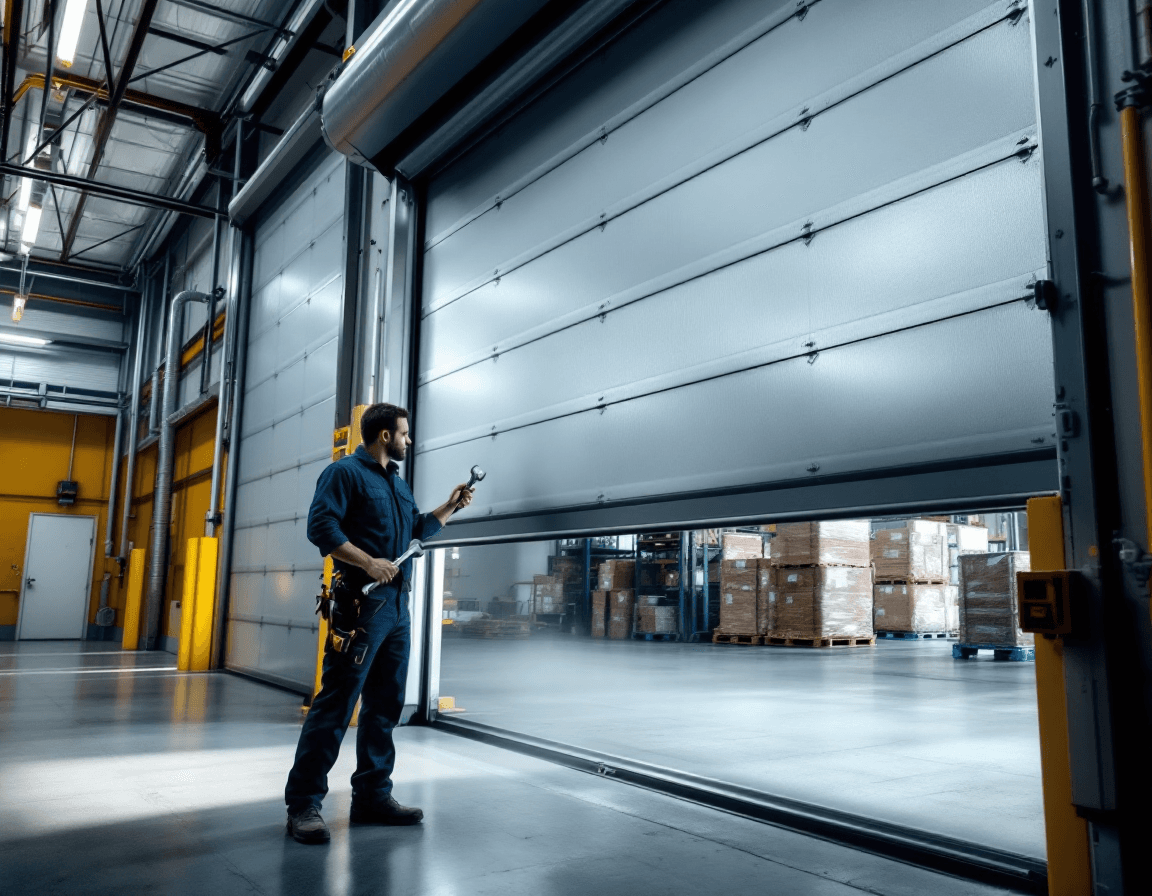
Commercial Overhead Door Repair in Gig Harbor, WA keeps warehouses, contractor yards, and loading docks moving when a single door stops working. A stuck sectional door at a shop on the peninsula can halt deliveries, idle staff, and leave trucks waiting in the lot. Our technicians handle these calls with the urgency a working business needs, and we bring the parts and equipment knowledge that commercial doors demand. This page explains what typically goes wrong, how we approach each job, and how a preventive maintenance plan can keep your openings reliable.
Gig Harbor businesses face a particular set of conditions. Moist marine air drifts in from Carr Inlet and the surrounding waters, winter rain stays on steel for long stretches, and the wind off the Sound can push on tall door faces with real force. Those conditions shape almost every commercial job we see here, from corroded track brackets to bottom seals that have hardened and split. Knowing the local environment helps us diagnose problems faster and recommend repairs that will hold up through the next wet season.
Whether your building sits near Harborview, in the commercial corridors of Gig Harbor North, or out toward Rosedale, the goal is the same: get your opening working safely and get you back to business. We provide custom quotes rather than flat rates because every commercial door is different in size, material, and duty cycle. Our crews aim for fast turnaround so downtime stays short. The sections below walk through the most common situations we encounter.
When a Loading Dock Door Goes Down Mid-Shift
A loading-dock door that refuses to open or close is one of the most disruptive problems a commercial property can face. Trucks back up, drivers wait, and crews are left to work around a single opening that now controls the entire flow of goods. Our first step is always to confirm whether the failure is electrical, mechanical, or related to a safety device that has intentionally stopped the door. Many "dead" doors are simply responding to a photo-eye that is blocked or misaligned, and those are often fixed within the same visit.
When the problem is mechanical, we inspect the drive, the chain or belt, the trolley arms, and the track alignment before replacing anything. Commercial doors take heavy daily cycles, and wear that looks minor on a single component can cascade into larger failures if it is ignored. We document what we find so you understand the scope before work begins. If a replacement part is needed, we will explain the lead time and whether a temporary workaround is safe to use while you wait.
Businesses often ask whether they can keep operating with a door partially functional. That depends on the failure. A door that will open but not close fully creates security and weather exposure, while a door that is stuck open may be acceptable with additional supervision. We will tell you plainly what is safe and what should be taken out of service until repairs are complete.
Sectional Door Repairs for Gig Harbor Warehouses
Sectional overhead doors are common on warehouses, fleet garages, and light industrial buildings throughout Pierce County. Each panel hinges to the next and rides on rollers through vertical and horizontal tracks, which means a problem in one area can show up as noise, misalignment, or binding somewhere else. Local humidity and salt-tinged air can accelerate rust on track angles and hinge hardware, so we pay close attention to fasteners and surface corrosion during every inspection.
Common sectional door complaints include grinding rollers, uneven lifting, sections that pop out of their tracks, and gaps at the bottom that let water and debris in. We check roller condition, track plumb and level, and the tension of the counterbalance system. Where a section has cracked or bent, we can often replace individual panels rather than the entire door, which keeps repair costs more predictable for a business budget. When panel replacement is not practical, we will walk you through options for a full door upgrade.
Sectional doors on busy docks also see plenty of incidental contact from pallet jacks and mirrors on passing vehicles. Small dents may not affect operation, but edges that bend inward can jam the tracks. We look for these issues during service calls so that a minor scrape does not turn into a door that stops moving at the worst possible moment.
Rolling Steel Doors That Jam or Slip Off Track
Rolling steel doors are a popular choice for storefronts, machine shops, and secured bays because they coil into a compact header and offer strong security. Their slats and guide channels, however, are sensitive to debris and misalignment. A rolling steel door that jams often has grit or rust packed into the guides, or a slat that has been pushed out of line and is now catching against the side channel. Left alone, these conditions can warp the curtain and strain the drive.
Our technicians begin by cleaning and inspecting the guide channels, checking the bottom bar for twist, and looking for damaged slats that may need replacement. We check the barrel, brake assembly, and limit settings to make sure the door is loading and unloading evenly. If the door has come off track, we carefully reseat it and verify that the guides are aligned with the curtain so the problem does not recur on the next cycle.
Because rolling steel curtains are heavy and tensioned, we treat any work involving the barrel springs with caution. Spring replacement on a commercial rolling door should always be handled by a licensed, trained professional who understands the stored energy involved. Attempting this work without proper equipment is a serious safety risk, and we will always explain what is involved before recommending it.
Commercial Operators, Controllers, and Safety Sensors
When a commercial operator fails, the entire door may appear dead even though the mechanical components are sound. Commercial operators are built for high cycle counts, and their motors, drive units, limit switches, and control boards each have a service life. Our diagnostic process checks power supply, wiring continuity, control inputs, and limit settings in a logical sequence so we can isolate the failed part rather than guessing.
Safety devices deserve particular attention. Photo-eyes, safety edges, and reversing sensors are designed to stop or reverse the door if something is in the path, and they will prevent operation when they detect a fault. We test each device, clean lenses, check alignment, and verify that the door reverses correctly under safe conditions. Bypassing these devices to keep a door running is never acceptable, and we will not recommend it.
Operators also benefit from periodic programming reviews. Over time, limit settings can drift, or a controller may be replaced with a different configuration that does not match the door's travel. We verify open and close positions, confirm speed settings, and document the final configuration so your facility has a clear record for future service.
Forklift Impact Damage and Panel Replacement
Forklifts and pallet jacks are an unavoidable part of most Gig Harbor warehouse operations, and occasional impact is simply a fact of life. A door section that has been struck by a forklift may look only slightly bent, yet the internal hinge, roller, or track alignment can be compromised. We inspect impacted doors thoroughly rather than assuming cosmetic damage is the whole story.
When damage is isolated to one or two sections, panel replacement is often the most efficient repair. We match panel profile, insulation type where applicable, and hardware so the new section blends with the rest of the door and operates smoothly. For older doors where matching panels is difficult or the surrounding components are worn, we may recommend a discussion about replacing the door assembly instead, and we will lay out those options clearly.
Prevention matters too. Bollards, high-visibility guard rails, and clearly marked traffic lanes reduce the chance of repeated strikes. We are happy to note placement concerns during an inspection, though decisions about site layout and traffic patterns remain with you and your operations team.
Throughput Problems: When Your Door Works but Slows Your Business
Not every service call is about a door that has stopped. Many businesses reach out because a door is technically functioning but takes so long to open or close that it bottlenecks deliveries. Slow doors can result from worn operators, incorrect speed settings, sticking tracks, or counterbalance systems that are out of adjustment. Each of these creates a delay that adds up over a busy shift.
We time the full cycle, listen for unusual sounds, and check how the door behaves under load. Often a combination of minor adjustments, lubrication of approved points, and track cleaning restores the speed you expect. If the operator is near the end of its useful life or the speed cannot be improved without a component upgrade, we will explain what that upgrade would deliver so you can weigh the cost against the throughput gains.
For operations with high door traffic, we can discuss faster-cycle operators or high-speed doors designed for frequent use. Those are significant decisions, so we provide a custom quote that outlines the equipment, installation time, and any electrical requirements before anything is ordered.
Why Spring and Cable Work Belongs With Licensed Professionals
Torsion springs, extension springs, and lift cables store substantial energy, and mishandling them can cause serious injury. Commercial doors often use larger, heavier springs than residential units, which raises the stakes considerably. Even experienced property managers should not attempt spring or cable replacement on their own, and we always recommend a licensed professional for this category of work.
Our technicians use proper winding bars, safety equipment, and verified procedures when addressing these components. We first confirm the door is secured against unexpected movement, then assess the condition of springs, drums, cables, and bearing plates. When a spring is worn or broken, we explain the replacement options and the reasons behind them, so the decision is informed rather than rushed.
Owners and managers can help by reporting unusual noises, visible cable fraying, or uneven door lift as soon as they notice them. Early attention often means a simpler, less costly repair. Please keep people clear of the door area while service is underway and avoid attempting to adjust tension yourself.
Preventive Maintenance Agreements for Pierce County Businesses
A preventive maintenance agreement gives your facility scheduled attention rather than reactive emergency calls. For commercial doors exposed to Gig Harbor's wet winters and salty coastal air, regular service can catch corrosion, lubrication gaps, and alignment drift before they cause a shutdown. Agreements can be tailored to the number of doors, their type, their duty cycle, and the hours your business operates.
A typical preventive plan may include:
- Scheduled inspections of tracks, rollers, hinges, and brackets
- Lubrication of approved points and cleaning of guide channels
- Testing of safety edges, photo-eyes, and reversing functions
- Review of operator settings and limit adjustments
- Written service notes so your team can track condition over time
We structure these agreements around your schedule so visits minimize disruption. Each plan is priced after we review your doors and operating needs, and we will outline exactly what is included before you commit.
Serving Harborview, Gig Harbor North, Rosedale, and Surrounding Areas
Seattle Garage Door Fix serves commercial properties across Gig Harbor and the broader Pierce County region, including businesses in the 98332 and 98335 ZIP codes. Our crews are familiar with the traffic patterns around the SR-16 corridor, the access routes that serve Harborview and surrounding waterfront blocks, the commercial sites of Gig Harbor North, and the properties out toward Rosedale. Knowing how these areas are laid out helps us plan parts runs and arrive ready for the job.
Gig Harbor's mix of marine, light industrial, and service businesses means door needs vary widely. A boat-related shop may need a different door configuration than a distribution bay or a contractor's yard. We take the time to understand how your building operates so our recommendations fit your workflow, not a generic template.
If your business is located elsewhere in Western Washington, we likely serve your area as well. Contact us to confirm coverage for your address and to schedule an assessment.
Your loading dock should not be the reason deliveries stall. For a custom quote on commercial overhead door repair in Gig Harbor, or to set up a preventive maintenance plan, call Seattle Garage Door Fix at (888) 799-3819. Our team will listen to what your door is doing, explain the options clearly, and work to get your operation running again as quickly as safely possible.