
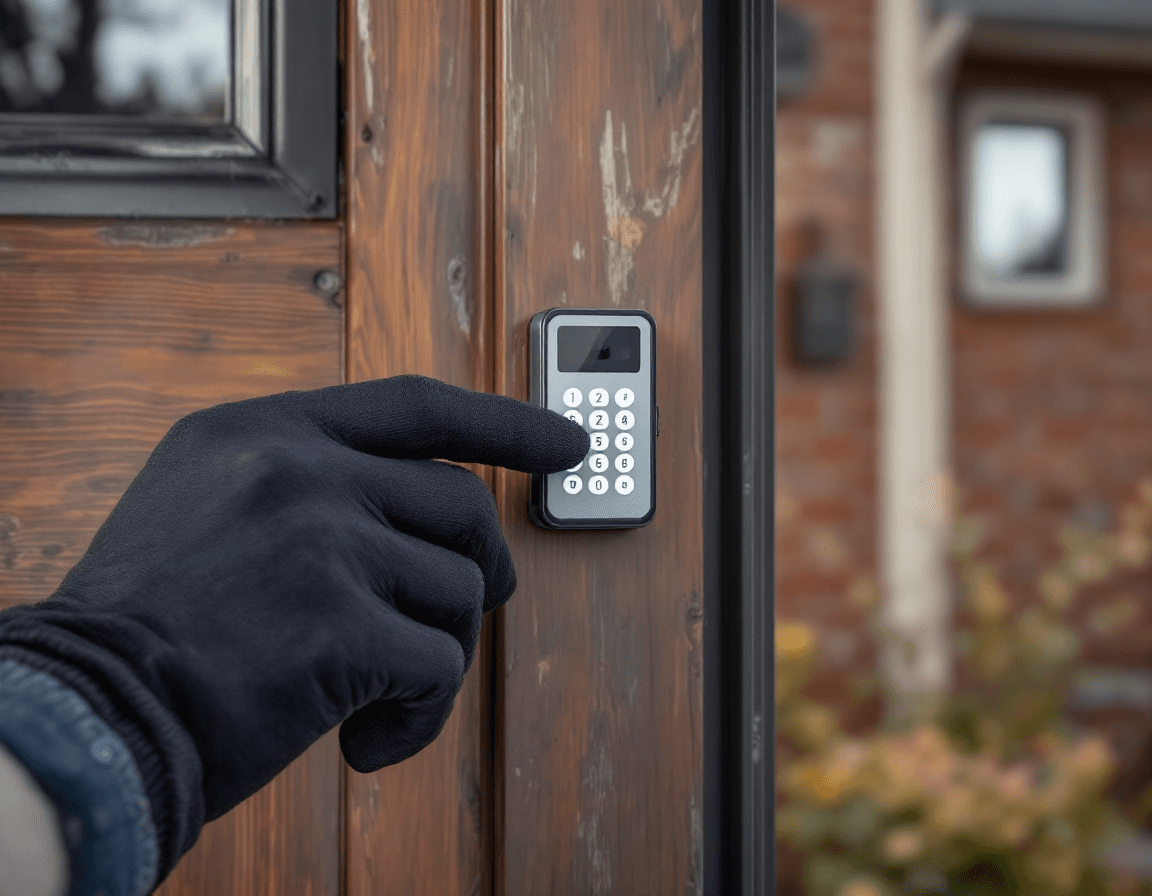
Garage door remotes and keypads are the parts of your opener system you touch every day, so they are also the parts that tend to fail first. In Bremerton, a remote that works fine in Sunnyside or Silverdale can start behaving strangely after a few damp months on the Kitsap Peninsula. Garage Door Remote & Keypad Service in Bremerton, WA covers the full range of these problems, from a clicker that only works when you stand on the left side of the driveway to a keypad that rejects a code you have used for years. Seattle Garage Door Fix handles this work for homeowners across Bremerton and the surrounding Kitsap County neighborhoods, and we are licensed, bonded, and insured for every job.
The good news is that most remote and keypad problems are solvable without replacing the entire opener. A signal problem might come from a weak battery, a worn button contact, a receiver that has lost its memory, or interference from a new device in the house. A keypad problem often comes down to moisture inside the housing, a stuck button, or a code that was changed during a previous repair and never written down. Knowing which category your problem falls into helps you describe it accurately when you call, and it helps our technicians arrive with the right parts and the right diagnostic tools.
This page explains how our technicians approach remote and keypad service in Bremerton, what the typical symptoms look like, and what you can reasonably expect in terms of cost and timing. Pricing for remote programming, keypad installation, keypad troubleshooting, and in-car opener pairing generally falls between $65 and $185, depending on the work involved. A new remote or keypad is priced separately, and we will tell you the cost of the hardware before we install anything. If you have ever wondered whether a repair call is worth it for a simple remote, read on.
Why Remotes Wear Out Faster Along the Kitsap Shoreline
Bremerton sits on the western shore of Sinclair Inlet, and that proximity to saltwater matters more than many homeowners expect. Air near the water carries fine mineral residue and moisture, and those particles settle on exposed electronics over time. A remote kept in a jacket pocket, a center console, or on a shelf near an open garage window will collect grime and humidity that slowly corrodes the battery contacts and the small circuit board inside. Many of the remotes we see in East Bremerton and near Manette show green or white residue on the battery terminals long before the buttons themselves look worn.
Winter rain adds a second challenge. Western Washington's wet season brings long stretches of cool, damp air, and garages in older Bremerton homes often have less insulation and ventilation than newer construction. Condensation can form on the inside of a keypad housing, especially on the side facing the exterior, and that moisture can short the contacts behind the buttons. We frequently find keypads that work perfectly in August and begin rejecting codes every November, which is a classic sign of moisture rather than a programming error.
Temperature swings also play a role. A remote left in a hot car during a summer afternoon can have its battery drained faster, and a keypad mounted in direct sun may have its internal components stressed by repeated heating and cooling. None of this means your equipment is defective. It means that the hardware is working in a demanding environment, and a periodic inspection can catch small problems before they turn into a locked-out morning.
Telling an Intermittent Remote From a Dead One
Homeowners often describe a remote problem in one of two ways: it has stopped working altogether, or it works sometimes and not others. These two symptoms point to different causes, and sorting them out is the first step in any diagnosis. A remote that never responds may have a dead battery, a broken internal connection, or a frequency that no longer matches the receiver on the opener. An intermittent remote is more often dealing with weak signal strength, a failing button contact, or interference from nearby electronics.
When a remote works only some of the time, we usually start by checking the battery and cleaning the contacts. We then test the remote at several distances and in several positions to see whether the problem depends on where you stand. If the remote works fine at the end of the driveway but fails when the car is parked close to the house, the issue may be signal range rather than the remote itself. Metal shelving, a new wireless security system, or a neighbor's device operating on a similar frequency can all weaken the signal reaching the opener.
Here are some of the most common patterns we check during a remote diagnosis:
- The LED on the remote does not light when you press any button, which often points to a dead battery or corroded contacts.
- The LED lights but the door does not respond, which may indicate a programming mismatch or a receiver that has lost its memory.
- The door responds only when you hold the button for several seconds, which can suggest a worn button membrane or a weak battery.
- The door opens from one part of the property but not another, which usually means signal interference or an obstruction between the remote and the opener.
- The remote works for a few weeks after a battery change and then fails again, which often points to moisture or contact corrosion rather than the battery itself.
Programming a Replacement Remote Without the Guesswork
Replacing a lost or broken remote is one of the most common calls we receive, and it is also one of the easiest things to get wrong on your own. Modern garage door openers use rolling code technology, which changes the signal each time the remote is used so that a thief cannot capture and replay it. That security feature is valuable, but it also means the remote and the opener must be synchronized through a specific learn procedure. Each manufacturer uses its own steps, and some older models require a physical learn button on the opener motor unit.
The first thing we confirm is compatibility. A remote designed for one brand may not work with another, and even within the same brand, frequency and encryption standards have changed over the years. Operating frequencies commonly used in residential openers include 315 MHz and 390 MHz, and a remote that looks identical to the one you lost may still operate on a different frequency. We read the model number from the opener motor or the old remote before ordering any replacement, which prevents the frustration of buying a remote that will not program.
Once the correct remote is on hand, programming usually takes a few minutes. We enter the opener into learn mode, press the new remote button while the indicator light on the motor unit is active, and then test the door from the driveway and from inside the garage. If the opener has multiple remotes or a keypad programmed to it, we also verify that the existing devices still work after the new one is added. Programming is part of our remote service fee, and we explain each step so that you understand how your system works going forward.
When a Keypad Will Not Accept Your Code
Keypads add convenience, especially for family members, dog walkers, and contractors who need access without carrying a remote. They also introduce their own set of problems. The most frequent complaint we hear is that the keypad simply will not accept the code, even though it was working before. Sometimes the cause is a forgotten change: someone reprogrammed the keypad during a previous service visit, or a family member set a new code and did not tell anyone else. Other times the keypad has lost its memory after a power outage or a surge.
Before assuming the keypad itself is faulty, we check the basics. We confirm that the number of digits matches the programming requirement, since some keypads expect four digits and others accept six. We look for stuck or partially pressed buttons, which can happen when a button membrane collects moisture or grit. We also check whether the keypad has a backlight or indicator light that fails to illuminate, because that can indicate a power or wiring issue rather than a code problem.
If the keypad has been exposed to rain, a common case on exterior mounts in Bremerton, we inspect the housing for condensation and water intrusion. Water can wick along wiring and collect behind the buttons, causing intermittent failures that seem random. In many cases we can dry the unit, seal the mounting surface, and reset the code. If the internal circuitry has been damaged, we will explain the replacement options and the approximate cost before proceeding, so you can decide what makes sense for your home.
Installing an Exterior Keypad on a Bremerton Driveway
Homeowners who want an exterior keypad usually have a practical reason: they want to avoid carrying a remote on a walk, they want to give access to a babysitter or a teenager, or they want a backup option if a remote is lost. Installation is a reasonable project for a trained technician, but placement matters a great deal in our part of the state. A keypad mounted where it receives direct rain, or where it sits in a shadowed corner that stays damp through the winter, will likely need more frequent attention than one placed under a covered entry or on a sheltered wall.
We also consider wiring. Many modern keypads are wireless, communicating with the opener by radio, while some older or specialized units connect directly through low-voltage wiring. Wireless models are generally faster to install and avoid running new cable along the exterior of the house, but they must be placed within reliable range of the opener. In homes with thick walls, large metal objects, or detached garages, we test signal strength before we finalize the mounting location. A keypad that works from the curb but not from the garage door is a frustrating result that proper placement can prevent.
Before installation, we talk through how the keypad will be used. Some homeowners want a single access code for everyone, while others prefer individual codes that can be changed or removed as circumstances change. Some keypads allow a temporary code for a specific period, which can be useful for a house sitter or a short-term rental arrangement. We set up the system so that you know how to add, change, and delete codes, and we leave you with written instructions specific to your model.
Pairing Your Car's Built-In Opener Buttons
Many newer vehicles include built-in garage door openers, often branded as HomeLink or a similar system. These buttons are convenient because they let you open and close the door without carrying a remote, but they can be surprisingly difficult to pair. The programming process differs by vehicle make and model, and in some cases by the year the car was built. Some vehicles require you to hold a button in the car while pressing the remote on the opener motor, while others use a learning sequence that involves the car's ignition and the garage door's learn button.
A common frustration in Bremerton is a car that pairs successfully but then stops working after a battery change or a software update. Vehicle electronics can reset during service, and the paired code may be lost. We also see cases where a homeowner has moved, bought a used car, or replaced a garage opener, and the car buttons are still trying to communicate with the old system. In those situations, the buttons need to be cleared and paired again with the current opener.
We pair in-car openers as part of our remote and keypad service, and we check each button separately. If one button is paired and the others are not, we identify which ones need programming and confirm that they operate the correct door if you have more than one. We also verify that the opener's safety reversal system is working correctly, since any remote-operated door must reverse when it meets an obstruction. For vehicle-specific questions, bring the owner's manual or the model year to your appointment, which helps us follow the correct procedure without trial and error.
Lost Remote, Lost Peace of Mind: Securing the Door Again
A lost remote is more than an inconvenience. Anyone who finds it may be able to open your garage door, and that is a real security concern for homes in every neighborhood, from the hillside streets above Kitsap Lake to the older blocks in East Bremerton. The good news is that a lost remote can be removed from the opener's memory, which prevents it from operating the door even if someone else has it. Many openers allow you to erase all remotes at once and then reprogram only the ones you still have.
Our approach to a lost remote begins with a conversation about what is still in circulation. We ask whether any keypads, car buttons, or additional remotes are paired to the opener, and we ask who has access to the household. Then we clear the memory, program the remotes that remain, and test the system. This process takes some time, but it gives you a clean slate and a verified list of approved devices. If you have a keypad, we also recommend changing its code at the same visit, so that a lost remote does not lead to a lost code as well.
Here is a simple checklist many homeowners find useful after losing a remote:
- Note which remotes, keypads, and car buttons are currently paired to the opener.
- Gather every device you still have and bring them to the appointment.
- Ask us to clear the opener's memory so that the lost remote no longer works.
- Reprogram the remaining devices and test each one from inside and outside the garage.
- Change any keypad code that may have been shared with the person who had the remote.
Matching Replacement Parts to Your Opener Brand
Garage door openers are made by several manufacturers, and many of them use proprietary remote and keypad designs. A replacement remote from one brand may look similar to another, but the internal frequency, encryption, and learn sequence can differ enough to cause programming failures. For that reason, we prefer to identify the opener brand and model before recommending any replacement hardware. The information is usually printed on a label on the motor unit, often near the light cover or along the rail.
Some homeowners ask whether universal remotes are a good option. Universal remotes can work with certain openers, particularly older models, but they are not a guaranteed fit for every system. They may lack the security features that newer openers use, and they can create confusion if the opener accepts several incompatible signals. We are happy to discuss universal options when they make sense for your situation, but we will be direct about the limitations, and we will recommend factory-compatible replacements when security or reliability matters more than cost.
Our technicians carry common replacement remotes and keypads on service calls, which allows many repairs to be completed in a single visit. When a specific model is needed, we will tell you before ordering so that you can approve the price. We also keep track of the make and model we service, which helps us provide consistent results for families who have relied on the same opener for many years. If you are unsure which parts your system requires, a quick photo of the motor label and the old remote is often enough to get started.
Batteries, Sensors, and the Limits of DIY Work
Replacing a remote battery is one of the few tasks most homeowners can handle themselves, and it is worth trying before you call for service. Use the battery type listed on the remote, usually a small coin cell, and clean the contacts with a dry cloth or a cotton swab. Avoid bending the contacts or forcing the battery into place, since a damaged contact can cause the same symptoms as a dead battery. If the remote still does not respond after a fresh battery, the problem may lie with the programming or the opener receiver.
Keypads and remotes do not operate in isolation, however. The opener depends on safety sensors near the floor, and those sensors must be aligned and clean for the door to close safely. A remote that seems to malfunction may actually be responding correctly to a blocked sensor, which prevents the door from closing even when the signal is good. We check the sensors during every remote and keypad visit, because a faulty sensor can look like a remote problem to the homeowner.
Some tasks should be left to licensed professionals. Garage door springs and cables store a large amount of energy, and adjusting or replacing them without the proper tools can cause serious injury. If your remote problem turns out to involve the door balance, the springs, or the cables, we will stop and explain the safety issue rather than attempting a quick fix. Our licensed technicians handle spring and cable work with the proper equipment, and we recommend that any spring or cable repair be performed by a qualified professional.
Scheduling a Visit and Understanding the Cost
Remote and keypad service in Bremerton generally falls within a price range of $65 to $185, depending on the complexity of the job. A simple remote programming visit typically sits near the lower end, while keypad installation, extensive troubleshooting, or multiple in-car button pairings may fall toward the higher end. Replacement remotes and keypads are priced separately, and we will provide the hardware cost before any installation begins. This approach lets you compare options and make an informed decision without surprises on the invoice.
Most of our Kitsap County calls cover ZIP codes 98310, 98311, 98312, and 98337, along with nearby neighborhoods that our technicians reach regularly. When you call, mention your neighborhood, the make and model of your opener if you know it, and the symptoms you are noticing. If you have a remote, keypad, or car button that is giving trouble, have it nearby so that the technician can test it during the visit. Clear information at the start usually means a faster and more accurate appointment.
If you are dealing with a remote that has stopped working, a keypad that rejects your code, a car that will not pair with the garage door, or a lost remote you want removed from the system, we are ready to help. Call Seattle Garage Door Fix at (888) 799-3819 to schedule your Bremerton remote and keypad service. Our team will confirm the details, explain the likely cost, and get your garage door working reliably again.