
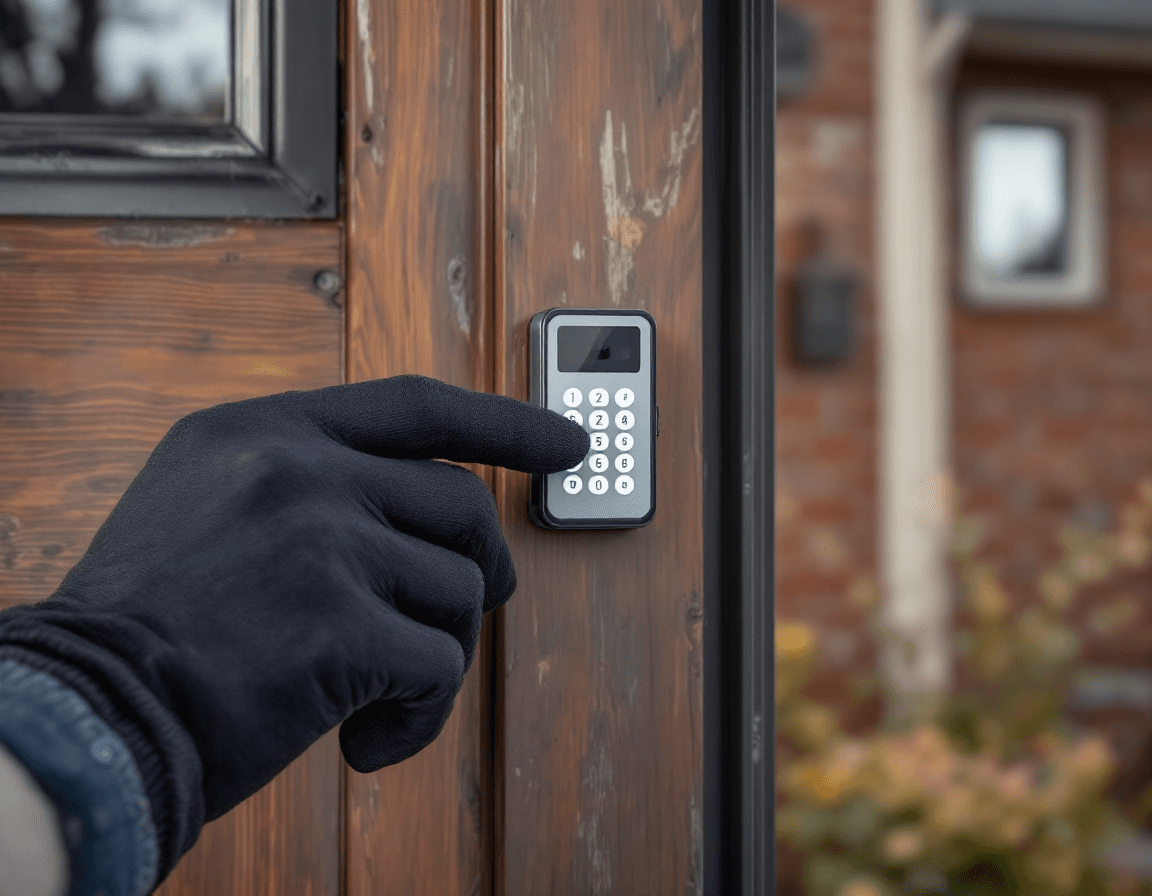
Garage Door Remote & Keypad Service in Port Orchard, WA is one of the most common calls we take from homeowners on the Kitsap Peninsula, and it's often the smallest-looking problem with the biggest daily impact. When a remote fails at the end of a long shift on Bethel Road or a keypad refuses your code while you're juggling groceries in the rain, the garage door feels like it's locking you out of your own home. Most remote and keypad issues are fixable in a single visit, and many don't require replacing the opener at all. Our technicians work across Port Orchard and the surrounding area, including the 98366 and 98367 ZIP codes, and we handle everything from a single stubborn fob to a full set of exterior keypads.
Port Orchard sits on the shore of Sinclair Inlet, with downtown tucked along the water and newer neighborhoods climbing the hills behind it. Homes in Manchester, toward the western side of the county, often sit closer to the water and deal with more salt air, while homes in McCormick Woods tend to have larger garages and more modern openers. Whether your home is near the waterfront or farther inland, the signal between your remote and your opener has to survive the same damp, mossy, rain-soaked conditions that define our winters. This page explains what usually goes wrong, what we check, and how to decide between a simple reprogram and a new remote or keypad.
Why Port Orchard Garages Test Remotes Harder Than Most
Western Washington's wet season is long, and the moisture it brings finds its way into places homeowners rarely think about. Garages in Port Orchard frequently hold humidity from damp driveways, wet bikes, and rain tracked in on boots, and that moisture can settle into the opener's receiver and the sensitive electronics in a remote. Corrosion on the receiver antenna, condensation inside a remote's casing, and swollen button contacts are all more common here than in drier parts of the state. A remote that worked perfectly in August can become unreliable by November without anything obviously broken.
Salt air matters too, particularly for homes closer to the inlet. Salt residue on exterior keypads and wall-mounted push buttons can cause contacts to corrode, and that corrosion often shows up as a keypad that accepts some presses but not others. Wind-driven rain can also push water behind keypad faceplates that aren't sealed well, so the problem may appear only during storms. Understanding that the environment is part of the diagnosis helps us find the real cause instead of simply swapping parts.
Temperature swings are another factor. Port Orchard rarely sees extreme cold, but damp chill and occasional freezing nights can slow battery performance, especially in remotes that already have weak cells. A battery that still shows a light on a bench test may not have enough reserve to send a clean signal on a cold, wet morning. We see this pattern often enough that we include battery and contact testing in nearly every remote service call.
Intermittent Signals: Diagnosing a Remote That Only Works Some Days
An intermittent remote is one of the most frustrating symptoms because it teaches you to press the button twice, then three times, then to walk to the door instead. The door may respond on the first try in the driveway but refuse when you're at the end of the block. Sometimes it works after you move the fob to the other hand. These patterns usually point to signal strength, battery condition, or a receiver that's picking up interference rather than a failed remote.
Start by noticing when the problem happens. If the remote fails only when the car is parked on one side of the garage, the issue may be antenna placement or a nearby source of interference such as a new Wi-Fi mesh node, a metal shelving unit, or a relocated opener. If it fails only in heavy rain, moisture inside the fob or the receiver is a strong suspect. If it fails only after it's been sitting in a jacket pocket or a truck console for a few days, the battery is the likeliest cause.
When we diagnose intermittent remotes, we typically check the battery voltage, inspect the button contacts for corrosion, test the remote at several distances from the door, and confirm the opener's receiver antenna is intact and positioned correctly. Many times the fix is a fresh battery and a cleaned contact. Other times we find that the opener's wall console or receiver has been affected by moisture and needs attention. We'll explain what we found and what it will cost before doing any work beyond the scope of your service call.
Batteries, Button Contacts, and Moisture Inside the Fob
The small coin-cell batteries in most garage remotes are inexpensive, but they're responsible for a surprising share of "broken" remotes. Lithium coin cells slowly lose capacity even when they're not used, and the drain increases when the remote is pressed repeatedly or stored in a warm vehicle. A remote can light its LED and still fail to transmit a reliable code because the voltage drops under load. Replacing the battery with a fresh one of the correct type, and checking the polarity, resolves many of these cases on the spot.
Button contacts are the next place to look. Inside most remotes, a rubber or carbon-pad membrane presses against a circuit board to close each button's connection. Dirt, skin oils, and moisture can leave a film on those contacts, and over time the pads wear down. A button that works only when pressed hard, or only on certain days, usually has a contact problem. Cleaning with isopropyl alcohol and a soft cloth often restores function, though a worn membrane may need replacement.
Moisture deserves special attention in our area. If you find condensation or a fogged window inside a remote, or if the remote has been left in a damp cupholder or dropped in water, the circuitry may be compromised. Corrosion on the battery terminals is another warning sign. In these cases, cleaning may help temporarily, but a replacement remote is usually the more reliable choice. We'll always tell you honestly whether a repair is worth doing or whether a new fob will serve you better.
- Check the battery type printed on the remote and replace it with the same model
- Look for white or green corrosion on the battery contacts and the circuit board
- Clean rubber button pads with isopropyl alcohol and let them dry completely
- Store spare remotes indoors, away from the windshield and the damp garage floor
Rolling Codes, Learn Buttons, and What Reprogramming Actually Involves
Most modern garage door openers use rolling code technology, which means each press of a remote sends a different code that the opener's receiver expects in sequence. This protects your garage from simple code-grabbing attacks, but it also means the opener and remote must stay synchronized and that each remote must be enrolled through the opener's learn process. When a remote stops working after a power outage, a battery change in the opener's backup system, or a firmware update on a Wi-Fi-connected unit, resynchronization or reprogramming is often the answer.
Learn buttons are usually located on the opener motor unit, often on the back of the cover or near the antenna wire. Pressing the learn button and then pressing the remote button enrolls that remote with the opener, and the opener's indicator light usually confirms success. The exact sequence varies by brand and model, so we always check the owner's manual or the labeling on your specific opener before attempting it. Manufacturers differ in how long the learn window stays open and how many remotes can be stored at once.
Reprogramming can involve more than a single remote. Some openers require you to clear all previously stored codes before enrolling new ones, which is a useful step if you're trying to remove a lost fob. Others allow you to add remotes without erasing existing ones. Our technicians confirm which approach fits your opener so you don't accidentally delete remotes you still use. If your opener is connected to a smartphone app, we also check the app account and any Wi-Fi-based access settings, since those can override or duplicate what happens at the motor.
Exterior Keypads for Homes Near Manchester's Woods and Shorelines
Exterior keypads have become popular for good reason. They let family members, dog walkers, contractors, and older children enter the garage without carrying a remote, and they remove the need for a spare fob hidden under a flowerpot. For homes in and around Manchester and other areas where the property may include wooded lots or waterfront access, a keypad can be especially convenient when you're coming back from a boat launch, a trail, or a late evening walk with gear.
Installing an exterior keypad involves choosing a location that's protected from direct rain and splash, mounting the unit at a comfortable height, and running low-voltage wiring back to the opener's control board. Wireless keypads avoid the wiring work but still need a clear line of sight and a fresh battery. In Western Washington, we recommend a keypad with a sealed or gasketed housing and a mounting spot under an eave or a small overhang where water won't pool. Placement away from sprinkler spray and downspout runoff also prevents many early failures.
We set up each code with you so the keypad is ready the day we leave, and we can add multiple user codes depending on the model. Some keypads allow temporary codes or timed access, which can be useful for guests or service providers. We'll walk you through how to change codes, how to reset the keypad if you forget a setting, and how to remove a code if someone no longer needs access. Keeping the code list current is one of the simplest ways to protect your garage.
When a Keypad Refuses Your Code: Lockouts, Wiring, and Weather
A keypad that won't accept your code can be caused by something as simple as a mistyped entry or as involved as a wiring fault. Many keypads lock out for a short period after several incorrect attempts, which is a deliberate security feature. If you've been entering codes in a hurry, the keypad may be temporarily unavailable even though the correct code is still stored. Waiting for the lockout period to pass, or following the reset procedure in the manual, often clears the issue.
If the keypad is responding to button presses but never accepts a valid code, the programming may have been changed, or the keypad may have lost its link to the opener. Wireless keypads can lose pairing after battery replacement or interference, and wired keypads can develop loose connections at the terminal block or damaged conductors where the cable passes through the wall or a weatherproof junction. Rain and temperature cycling can stress connections over time, so these faults often appear in winter.
Weather-related failure is common enough to warrant its own inspection. Water can enter the keypad housing through a cracked seal, a gap around the wall plate, or a cable entry that wasn't properly sealed. Corrosion on internal contacts may cause intermittent behavior, and a keypad that works in the morning but fails in the evening may be reacting to temperature and humidity changes inside the wall. We inspect the housing, the wiring, and the mounting location before deciding whether a repair or replacement makes more sense.
Pairing Your Car's Built-In Opener Without Guesswork
Many vehicles sold in recent years include a built-in garage door opener, often branded as HomeLink or a similar system. These buttons are convenient because they replace the clip-on remote, but pairing them can be tricky, and the process differs between automakers and even between model years. If you've tried pairing your car's buttons and the garage door doesn't respond, the problem may be the pairing sequence, the type of opener in your garage, or the frequency your vehicle transmits.
Begin by confirming that your opener is compatible with the vehicle's system. Some older openers use fixed-code technology that vehicle systems can't learn reliably, and certain newer openers require a specific learning method. Next, confirm that the car's system is powered on and that you're following the correct procedure for your vehicle. Some systems ask you to hold the button for a set time, while others require you to press it while the opener's learn button is active. Our technicians check the manual for your vehicle and opener before attempting the pairing.
When we pair a vehicle system, we also test the result from inside the car at the actual distance you'd normally park from the door. A system that works in the driveway but drops out before you reach the garage can be adjusted or supplemented with a remote. We'll let you know if your opener or vehicle is outside what a standard pairing can handle, so you're not left guessing. Pairing is included within our $65–$185 service range, though it's important to know that any additional hardware is priced separately.
Lost Remote Protocol: Clearing Old Codes and Reclaiming Your Door
A lost remote is more than an inconvenience. Anyone who finds it may be able to open your garage, and that's a real security issue, especially if the remote was left in a car or dropped near the road. The good news is that rolling-code openers let you erase old remotes and keep only the ones you still control. Once the lost fob is removed from the opener's memory, it can no longer open the door, even if someone has it.
The process usually starts by identifying every remote and keypad code your opener currently recognizes. Some openers allow you to erase all stored remotes at once using a learn button and a timed hold, and then you re-enroll the remotes you still have. Others require you to delete individual codes through a menu or app. Because the steps differ by manufacturer, we verify the correct procedure before starting so nothing is erased by accident. After clearing, we re-enroll each remote and test it at the door.
We also recommend reviewing where your remotes and keypad codes have been. If a fob was lost along with a house key, or if a keypad code was shared with someone who no longer needs access, changing those settings is worthwhile. A quick review during the service visit can help you reclaim control without needing to replace the entire opener. If your opener is connected to an app, we'll also review user access so former household members or guests no longer have remote access through a phone.
Choosing Replacement Remotes and Keypads That Match Your Opener
Not every remote works with every opener, and buying the wrong one is an expensive mistake. Remote frequency, encryption type, and button count all matter. Many openers in use today operate on specific frequencies and rolling-code formats, and a remote designed for a different system will not program correctly no matter how many times you try. Before ordering a replacement, we identify your opener's brand, model, and generation so the remote we recommend will actually enroll.
Keypads also need to match the opener's control system. Some keypads are designed for a specific brand's wireless protocol, while others use a universal approach that works with a range of openers. Wired keypads need compatible terminal connections and the correct voltage. We'll help you choose a unit that suits how your household uses the garage, whether you want a simple four-digit keypad or a model with a backlit display, multiple user codes, and weather sealing for exposed locations.
Replacement remotes and keypads are sold separately from our service fee, and the price of the hardware depends on the model you choose. Our service charge of $65–$185 covers the labor to program, install, or troubleshoot the unit, and the final amount depends on the scope of the job. We'll always explain what's included and what's optional so you can decide with confidence, and we'll avoid recommending equipment you don't need.
What Our Visit Covers, What It Costs, and What to Expect Locally
A typical remote or keypad visit in Port Orchard begins with a conversation about the symptom. We ask when the problem started, whether it happens in certain weather, and whether anything has changed recently, such as a battery swap, a power outage, a new Wi-Fi router, or a car purchase. This information helps us narrow down the cause before we open the opener cover or touch the keypad. Clear answers at the start often save time and reduce the cost of the visit.
Next, we test the existing remotes and keypads, check the opener's receiver and learn setup, and inspect wiring or mounting where relevant. If a simple reprogram resolves the issue, we'll complete it and confirm the door responds from the driveway and from inside the car. If a part needs replacing, we'll show you the option and the total cost before proceeding. Our service rate of $65–$185 covers the diagnostic and programming work, and any new remote or keypad is priced separately.
Because we serve many communities across the greater Seattle and Western Washington area, our technicians are familiar with the wide range of openers and keypads found on the Kitsap Peninsula. We bring common replacement parts and programming tools to most calls, which helps us finish in a single visit when possible. If you're unsure whether your problem needs a service call or a simple battery change, call us at (888) 799-3819 and we'll help you decide.
Keeping Remotes Working Through the Rainy Season
Preventive care goes a long way in a region that spends many months under clouds and drizzle. Keep spare remotes and keypad batteries on hand, and replace batteries every year or when the remote's LED becomes noticeably dim. Wipe down exterior keypad faceplates after storms, check that the mounting screws remain snug, and make sure gutters and downspouts direct water away from the keypad area. Small habits like these prevent many of the failures we see in late fall and winter.
It's also smart to test each remote from the driveway once a month, especially before the wettest stretch of the year. If a remote starts to hesitate or requires extra presses, address it early rather than waiting until you're stuck outside in the rain. Keep the garage door's safety features in mind as well. Remotes and keypads control the door, but the auto-reverse sensors and the balance of the door are equally important, and those should be checked periodically.
Please do not attempt spring, cable, or torsion work yourself. Those components store significant energy and can cause serious injury if handled incorrectly. If you notice a broken spring, a frayed cable, or a door that's unbalanced, stop using the opener and contact a licensed professional. Our team handles remote and keypad service safely, and we'll refer you to the appropriate specialist if a spring or cable problem is involved. Keeping your remotes, keypad, and door hardware in good shape will make your daily routine smoother all year long.
Garage door remote and keypad problems are rarely as big as they feel in the moment, and most can be solved quickly with the right diagnosis. If your remote is intermittent, your keypad rejects a code you know is correct, your car's buttons won't pair, or you've lost a fob and need your garage secured again, we're ready to help across Port Orchard and the surrounding Kitsap County communities. Call (888) 799-3819 to schedule service, ask questions about replacement options, or get guidance on the next step, and we'll make sure you're back to opening your garage door the easy way.