
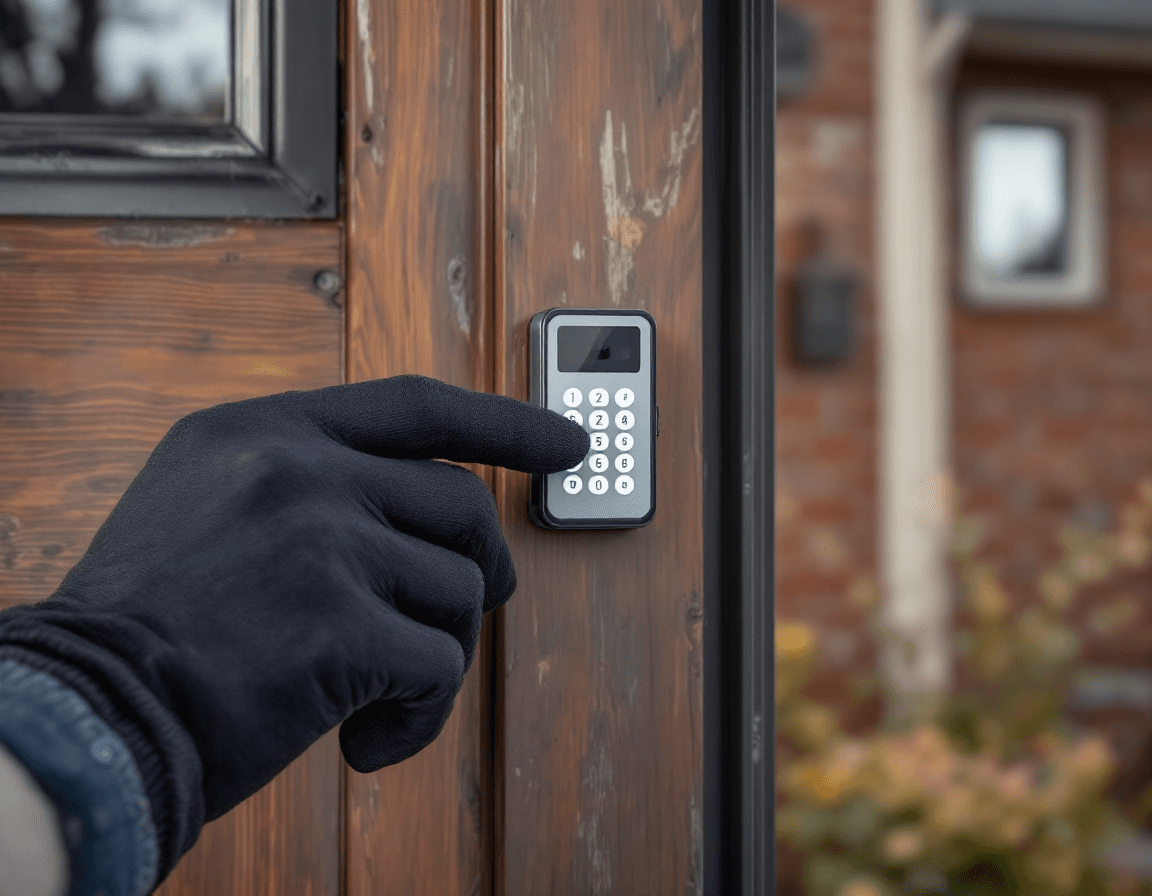
Garage Door Remote & Keypad Service in Gig Harbor, WA covers some of the most frequent calls we get from homeowners on the peninsula, and it's also one of the easiest to put off until it becomes a problem. A remote that works most days but fails on a rainy Tuesday morning, or a keypad that suddenly rejects a code you've used for years, can leave you sitting in the driveway with groceries and a dead battery. Most of these issues have clear causes, and many can be fixed in a single visit without replacing the opener.
Gig Harbor's climate and layout create their own patterns. Homes here range from older craftsman-style houses near the waterfront to newer builds in the hills above Harborview and out toward Gig Harbor North, and each setup puts different stresses on radio signals and keypad hardware. Salt-laden air drifting off the water, long stretches of gray drizzle, and the occasional winter cold snap all affect the electronics that most people never think about. Understanding what is actually happening inside the remote, the keypad, and the opener makes it much easier to tell a quick fix from a bigger repair.
This page explains how our technicians approach remote programming, keypad installation and troubleshooting, and in-car opener pairing for homes in Gig Harbor and the surrounding ZIP codes, 98332 and 98335. It also describes what to expect on pricing, what a typical visit includes, and how to secure your garage if a remote has been lost. If you'd rather talk through your situation first, the phone line is always open.
Why Remotes Lose Their Grip on Peninsula Homes
A garage door remote is a small radio transmitter, and like any radio device it depends on a consistent connection with the receiver mounted on your opener. In Gig Harbor, several local conditions can weaken that connection over time. Many homes sit on sloped lots with tall conifers, and dense foliage and wet branches can absorb or scatter signals, especially during the months when everything is saturated. Metal siding, steel entry doors, and thick concrete garage walls can also reduce range from the driveway or from a car parked on the street.
Humidity and salt air matter more than people expect. Remote circuit boards and battery contacts can develop a thin film of corrosion over several years, particularly for remotes that live in a car door pocket or a wet jacket. That corrosion can make a remote work when you press it squarely on the sidewalk and fail when you press it from the far corner of the driveway. Our technicians often find that cleaning contacts and replacing a battery solves what looked like a major failure.
A common misconception is that a remote which stops working must be broken. In many cases, the remote has simply fallen out of sync with the opener. This can happen after a power outage, after a battery swap on some models, or after the opener has been reset. Rolling-code systems, which are standard on most modern openers, track a sequence of codes, and if the remote and receiver get too far apart in that sequence, the opener may stop responding until the two are resynchronized. Resynchronization is one of the routine tasks we perform during a service call.
Reading the Signs of an Intermittent Remote
An intermittent remote is one of the more frustrating problems to diagnose, because it may work perfectly for a week and then fail for no obvious reason. In most cases, the cause is a combination of weak battery output, a marginal connection, and the environment around the door. Before calling, it helps to notice when the failure happens. Does it fail when you're standing at a particular spot? Does it only fail when the car is parked at a certain angle? Does it happen more often in the early morning, when the air is damp and cool?
Our technicians typically start by checking the remote's battery and contacts, then testing the remote at the opener and at the typical distance you use it from. We also look at the opener's antenna wire, which hangs from the power unit and should be left straight and away from metal. A kinked or tangled antenna can significantly reduce range, and in some installations the wire has been pinched behind a shelf or looped around a light fixture. Moving or straightening the antenna costs nothing and often restores full range.
If the remote still behaves erratically after those checks, the problem may be the remote itself. Remotes do wear out, and a unit that has been dropped repeatedly or exposed to moisture may have a failing button or a cracked solder joint. Replacing a remote is usually more economical than repeatedly troubleshooting one that is near the end of its life. We will tell you plainly when we think that is the case, rather than recommending a part you don't need.
Here are the things homeowners can check on their own before scheduling a visit:
- Replace the remote battery with a fresh one of the correct type, and wipe the contacts with a dry cloth.
- Press the button while standing at the spot where it usually fails, to confirm whether the problem is location-based.
- Check that the opener's antenna wire hangs straight and is not touching metal or tangled with other wires.
- Note whether other remotes or the wall button work normally, since that helps isolate whether the opener or the remote is the issue.
When a Keypad Won't Accept Your Code
A keypad that refuses a code you know is correct is usually either a programming issue, a battery issue, or a sign that the keypad has been reset or damaged. Wireless exterior keypads run on batteries and communicate with the opener, and many newer models use codes that must be entered in a specific sequence or within a time window. If you press the buttons too quickly or too slowly, or if you press the wrong number before the correct code, some keypads will lock out for a short period, which can feel like a malfunction.
Weather plays a role here too. Keypads mounted on the exterior of a Gig Harbor home face direct rain, wind-driven spray in winter storms, and temperature swings that can affect battery performance. A keypad that works well in July may become sluggish in January. Keypad buttons can also become stiff or sticky when water gets behind the faceplate, causing a digit to register inconsistently. Our technicians check the seals, the faceplate, and the mounting screws, because a loose keypad can allow water to reach the circuitry.
When a keypad needs to be reprogrammed or its code reset, the process depends on the manufacturer and model. Some keypads require you to press a learn button on the opener and then enter a new code within a set time. Others have a separate programming mode that is entered through the keypad itself. We do not guess at these procedures. Our technicians follow the correct steps for the specific equipment in your garage, and we will explain the new code setup so you can use it confidently afterward.
Adding an Exterior Keypad Without Creating a Mess
Many Gig Harbor homeowners want an exterior keypad for convenience, especially for family members who come and go, dog walkers, or contractors who need access while the homeowner is away. A keypad is also useful when you don't want to carry a remote on a boat trip or a hike. The main considerations are where to mount the keypad, how to power it, and how to make sure it communicates reliably with your opener.
Wireless keypads are the most common choice for retrofits because they avoid running new low-voltage wire through exterior walls. Mounting location matters a great deal. The keypad should be placed where it can be reached easily without standing in the driveway traffic, out of direct spray from the downspout, and away from large metal objects that might block its signal. On many properties in the hills above Harborview, the best location ends up being on a side wall of the garage or on a post near the walkway, where the signal path to the opener is clear.
We also talk with homeowners about security. A keypad with a simple four-digit code can be easier to guess than a rolling-code remote, so we recommend choosing a code that is not tied to an address, birthday, or phone number. If your model supports multiple codes, we can set one for each person who needs access and remove codes when they are no longer needed. This is one of the simplest ways to keep control of who enters your home through the garage.
Pairing Your Car's HomeLink Buttons
Many vehicles sold in the Pacific Northwest include a built-in garage door opener, often labeled HomeLink or a similar name, which is integrated into the rearview mirror or overhead console. These systems let you open and close your garage door without carrying a separate remote. Pairing them with your opener is a common request, but it is one area where results depend heavily on the vehicle and the opener brand. Our technicians can help, but we also recommend keeping your owner's manual handy, since button sequences and learning modes differ from one make and model to another.
In general, the pairing process involves putting the opener into learn mode, then pressing and holding the programmed button in the vehicle while the opener's indicator responds. Some systems also require the vehicle's engine to be running, or the ignition set to a particular position, while the pairing takes place. Certain newer vehicles use rolling-code systems that require a more involved process, and some older opener models cannot accept a newer in-car system without an add-on device. We will tell you if your combination is one that requires a different solution.
If your car's buttons stopped working after a battery replacement, a software update, or a change in the opener, the pairing may simply need to be re-learned. In other cases, the vehicle's receiver may have been reset during a repair. We check the vehicle's programming mode, confirm the opener is compatible, and test the connection from the driveway and from the street. We recommend keeping at least one standalone remote in the car or at home as a backup, so you are never locked out if the in-car system fails.
Replacing or Adding Remotes: Compatibility Matters
When a remote is lost, damaged beyond repair, or simply too old to work reliably, a replacement is the next step. Remotes are not universal. The frequency, the coding system, and the number of buttons all need to match the opener. Most residential openers in this region use either 315 MHz or 390 MHz frequencies, and replacement remotes must match the frequency that your opener was built to receive. Using the wrong frequency will not work, no matter how similar the remote looks.
Adding an extra remote is often more affordable than replacing a lost one, because you can keep the existing remotes working while programming a new one. Many openers can hold several remote codes, although the exact number varies by model. Our technicians can determine how many codes your opener supports, program the new remote, and erase any codes that no longer belong to someone in your household. This is an important part of security, and we recommend reviewing your remote list whenever a household member moves out or a remote goes missing.
Replacement remotes come in several styles, including basic single-button models, multi-button units that can control more than one door, and models with built-in visor clips. Some homeowners prefer a remote that fits on a keychain, while others want a larger unit that is easier to find in a purse or glove box. We will explain the options that fit your opener and your daily routine, and we will make sure the remote is programmed before we leave the driveway.
Lost Remote or Forgotten Keypad Code: Securing the Door
A lost remote is more than an inconvenience. Anyone who finds it may be able to open your garage, and if the opener is connected to the house, that can create a real entry point. The right response is to clear the lost remote's code from the opener, rather than hoping nobody tries it. Our technicians can erase specific remote codes or reset the memory entirely, depending on the opener, and then program new remotes for the people who still need access.
Forgotten keypad codes are handled in a similar way. If you cannot remember the code, or if you suspect someone else has learned it, we can reset the keypad and set a new code. We often recommend changing the code after a house sale, after a contractor finishes work, or after a family member moves out. These are simple steps that cost little and make a real difference in how secure the garage remains over time.
Security also includes the physical condition of the door and opener. A worn lock, a misaligned safety sensor, or an opener with an outdated security feature can leave the garage more vulnerable than it should be. During a remote or keypad visit, we check whether the door's manual release is in good working order, whether the safety sensors are aligned, and whether the opener's firmware or hardware is due for an upgrade. We will point out anything that deserves attention, without pressuring you into unnecessary work.
What a Service Visit Covers and What It Costs
Our remote and keypad service typically falls within a range of $65 to $185, depending on the work involved. A simple remote programming visit or a basic keypad code reset will generally sit at the lower end of that range. Adding an exterior keypad, troubleshooting a more complex keypad issue, or pairing a vehicle's built-in opener system may fall toward the higher end. The price does not include a new remote or keypad, which is charged separately. We give you a clear estimate before beginning work, so there are no surprises when the job is complete.
A standard visit usually includes an inspection of the remote or keypad, a check of the opener's receiver and antenna, battery and contact cleaning where applicable, and programming or pairing as needed. We test every function before we leave, including the wall button, each remote, and the keypad. If we find a problem that goes beyond the remote or keypad, such as a failing circuit board, a worn drive belt, or a spring or cable issue, we will explain what we found and what it would take to fix it. We do not perform spring or cable repairs as part of a remote service call, because those components carry high tension and require specialized tools and training. Any spring or cable work should be handled by a licensed, insured technician.
Pricing for replacement remotes and keypads depends on the model and the opener brand. We will quote the hardware before ordering, so you can decide whether to proceed. In many cases, an additional remote is significantly less expensive than a full replacement system, and we can often make a practical recommendation based on how many people need access and how the current equipment is holding up.
Neighborhood Notes: Harborview, Gig Harbor North, and Rosedale
Our technicians work throughout Gig Harbor, and each part of town has its own character. Homes near Harborview tend to be closer to the water, which means more salt exposure and more humidity. Keypads and remotes in these areas benefit from regular inspection, and we often recommend checking seals and mounting hardware more frequently than we would for a home farther inland. Garages on the slopes above the waterfront may also have longer driveways or steeper approaches, which can affect where a remote works best.
Gig Harbor North includes a mix of newer residential developments and homes built along the main roads, many with attached garages that face the street or a shared drive. In these areas, signal interference from neighboring homes, nearby commercial buildings, and utility infrastructure is occasionally a factor. We take that into account when placing an exterior keypad or testing remote range, and we will adjust antenna placement or recommend a different mounting spot if the signal is weak. Newer homes sometimes come with an opener already installed, so we also check whether the existing system supports the features you want.
Rosedale and the surrounding neighborhoods include a mix of older homes and newer infill construction, along with properties that have detached garages or workshops. Detached structures can present unique challenges, including longer runs from the opener to the door and more exposure to wind and rain. We often find that these garages benefit from a sturdier keypad housing or a remote with a more durable enclosure. Whatever your neighborhood, we aim to match the solution to the building and the way you use it.
When a Remote Problem Is Really a Door Problem
Sometimes a remote or keypad that seems to be failing is actually reacting to a problem with the door itself. A door that binds in its tracks, a worn roller, or an unbalanced panel can cause the opener to stop or reverse, and the homeowner may assume the remote is at fault. Similarly, a misaligned safety sensor will prevent the door from closing, which can look like a remote problem when the door simply refuses to move. Before replacing any electronics, it makes sense to watch how the door behaves when it operates.
Other warning signs include grinding or popping sounds, a door that opens unevenly, or a door that reverses when it touches a light obstruction. These symptoms usually point to mechanical wear, not to a faulty remote. Springs and cables in particular store a great deal of energy, and they should never be adjusted or replaced by a homeowner. If your door shows any of these signs, we recommend a professional inspection by a licensed, insured technician, who can determine whether the problem is electronic, mechanical, or both.
We are happy to help you sort out the difference during a remote service call. If we notice something that needs attention beyond the remote or keypad, we will tell you what we see and suggest the appropriate next step. Our goal is to make sure your garage works safely and reliably, whether that means a quick programming session or a broader repair plan.
Garage Door Remote & Keypad Service in Gig Harbor, WA is available for remote programming, keypad installation and troubleshooting, in-car opener pairing, and securing a lost remote. If your remote is acting up, your keypad won't accept your code, or you want to add a convenient exterior keypad, call Seattle Garage Door Fix at (888) 799-3819. We serve Gig Harbor and the surrounding Pierce County communities, and we will walk you through your options before any work begins.