
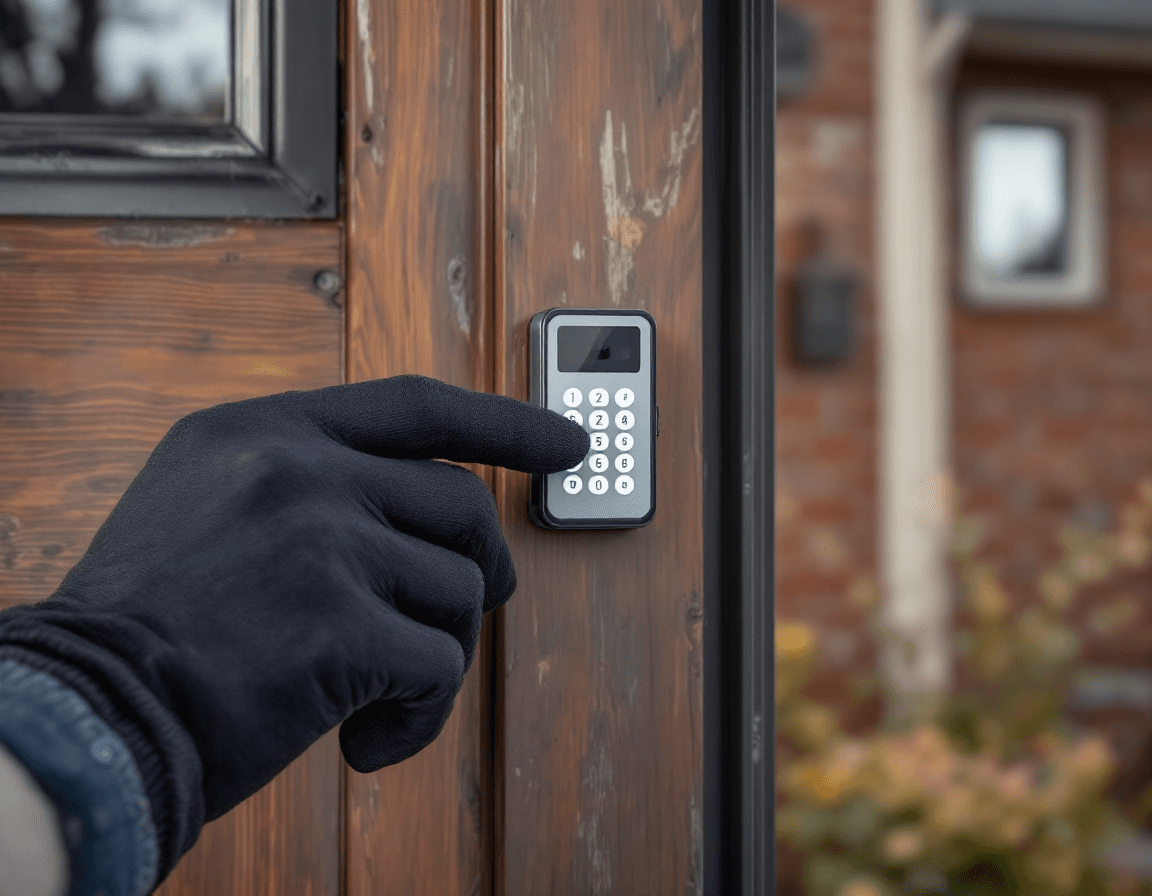
Garage Door Remote & Keypad Service in Tacoma, WA covers one of the most common reasons homeowners call for garage door help: the button in the car stops working, the keypad by the back door rejects a code that worked last month, or a remote ends up in a lost-and-found bin with no one sure where it went. Tacoma's mix of older craftsman bungalows, hillside lots, and newer infill homes means the setups we see vary widely. Some garages sit off an alley in the North End, others are detached structures behind a Hilltop duplex, and still others are attached to townhomes near the Stadium District. Each arrangement shapes how a remote or keypad behaves over time.
Remote and keypad problems rarely look the same from one home to the next, and that is why a short phone call or a visit from a technician is often more efficient than guessing. A remote that works from the driveway but fails at the curb may simply need a battery or a fresh learn cycle. A keypad that worked for years and then started rejecting codes may be signaling a failing component, a worn contact, or a moisture problem at the exterior housing. We approach each job by first identifying what kind of opener you have, what generation of remote it uses, and whether the fault lies with the handheld, the wall unit, or the motor itself.
Our service covers remote programming, keypad installation and troubleshooting, and in-car opener pairing. Pricing for the labor typically falls between $65 and $185, depending on what the visit involves, and that range does not include the cost of a new remote or keypad if one is needed. Throughout this page, we explain what affects that range, what you can check yourself safely, and when it makes more sense to schedule a licensed technician. Our crews are licensed, bonded, and insured, and they work on the full range of residential openers found across Pierce County.
Why Tacoma's Damp Climate Quietly Wears Down Remotes and Keypads
Tacoma sits in one of the wettest corners of the Pacific Northwest, and the constant drizzle, fog off Commencement Bay, and long stretches of gray winter weather take a toll on small electronics. Moisture finds its way into battery compartments, creating corrosion on the contacts that a homeowner may not notice until the remote begins to fail intermittently. A remote kept on a damp dashboard, a wet jacket pocket, or a shelf near an unheated garage window can lose range long before the battery itself is depleted. Keypads mounted on exterior walls face even more direct exposure, especially on west-facing walls that take the brunt of wind-driven rain.
Temperature swings matter too. Cold mornings can thicken the lubricant in the opener and slow the motor, which sometimes makes a remote seem unreliable when the real issue is the door's balance or the opener's travel settings. Summer heat inside a parked car can drain a battery faster than expected, and a remote left on a sunny windowsill can warp or crack its housing over time. Many Tacoma homes also have garages with limited ventilation, so condensation can collect on the wall-mounted control panel and interfere with its buttons or display.
Recognizing these patterns helps you decide where to start. If a remote works well in dry weather but struggles during a week of rain, a moisture-related problem with the battery contacts is a reasonable suspect. If the keypad stops responding only in the mornings, condensation or a loose wire at the exterior unit may be involved. We look at these conditions during every visit, because a fix that ignores the environment often leads to a repeat call within a season.
Telling a Failing Remote Apart from a Failing Opener
Before replacing anything, it helps to separate a remote problem from an opener problem. A remote that works at close range but not from the street often has a weak battery or a worn internal antenna, while a remote that fails in every location might be out of sync with the receiver on the opener. If the wall button inside the garage also fails to open the door, the issue is almost certainly with the motor unit, its control board, or the wiring, not the handheld. Testing from several positions inside and outside the garage gives a useful picture before any parts are ordered.
Intermittent behavior is especially tricky. Some homeowners notice that the remote works in the morning and fails in the evening, or that it opens the door on the first press but needs several tries after that. These symptoms can point to a battery that is near the end of its life, a button membrane that has started to wear, or interference from nearby devices such as a new Wi-Fi router, a neighbor's wireless system, or a garage LED fixture with a poor power supply. We ask about recent changes around the home because a new appliance installed near the opener can sometimes explain a problem that appeared out of nowhere.
Another common sign is a remote that seems to lose its programming. This often happens after a power outage or when a different remote has been added to the system without clearing the older ones. It can also occur when an opener has been reset to factory settings, which erases every stored code. Knowing whether your system has rolling-code security, which most modern openers use, helps explain why a remote that was once reliable may now need to be learned again. Rolling-code systems change the transmitted code every time you press the button, which is a major reason older universal remotes stopped working on newer equipment.
Reprogramming a Remote Step by Step (And When Not to Try)
Reprogramming a remote is one of the more approachable tasks a homeowner can attempt, but the exact steps depend on the brand and the age of the opener. Most units have a "Learn" or "Smart" button on the motor housing, usually near the antenna wire, along with a light that flashes when the system is ready to accept a new code. Pressing that button, then pressing the button on the remote you want to program, typically completes the process within a few seconds. Some systems require you to press the learn button and then the remote within a set time window, so it helps to have the remote in hand before you start.
Because instructions differ, we recommend checking the label on the opener or the owner's manual before beginning. A few of the most common steps look like this:
- Locate the learn button on the motor unit and confirm its color or label, since different manufacturers use different indicators.
- Replace the remote battery with a fresh one of the correct type, and make sure the contacts are clean and dry before closing the case.
- Stand within sight of the garage door opener so the signal is strong and any status light is visible during programming.
- Press the learn button, then press the remote button you want to assign, and watch for the light or a brief motor response confirming the code was stored.
- Test the remote from the driveway and from the street before deciding the job is finished.
Some situations are better left to a technician. If the learn button is hard to reach, if the opener lacks a visible light, or if you cannot confirm the system type, attempting repeated programming cycles can create more confusion, not less. Erasing all codes is also something to plan carefully, because it removes every remote and keypad code at once. We recommend making a list of every device that needs to be restored before clearing anything, so that a household member is not locked out of the garage after the reset.
Keypad Codes That Refuse to Work
A keypad that rejects a code it accepted last year is frustrating, especially when you are standing in the rain with groceries. The most frequent cause is simple: the code was changed, partially entered, or entered with a delay that caused the keypad to time out. Some keypads require a specific sequence, and a single misplaced digit will look like a failure. Before assuming a hardware fault, try the code slowly, pressing each digit firmly, and confirm that the keypad is not stuck in a temporary lockout after several incorrect attempts.
If the code still fails, look at the keypad itself. Water intrusion around the buttons is common on exterior units, particularly those mounted without a drip edge or installed beneath a gutter that overflows during heavy storms. Corrosion on the membrane or contacts can cause some numbers to register while others do not. A keypad that flickers, displays erratic characters, or responds only when pressed in a certain spot usually needs cleaning, drying, or replacement rather than another attempt at reentering the code.
Wiring and power issues can also cause code rejection. A loose connection at the back of the keypad, a damaged low-voltage wire run through an older Tacoma wall, or a weakened power supply can produce symptoms that look like a bad code. Because many keypads share the same low-voltage control circuit as the opener, a problem at one point in the system can affect the other. A technician can test voltage, check continuity, and confirm whether the keypad or the opener is the source of the trouble.
Adding an Exterior Keypad Near a Tacoma Front Walk or Alley Gate
Many homeowners decide to add an exterior keypad after realizing how often they need access without a remote in hand. This makes sense for families with teenagers, household helpers, or contractors who come and go during the day. In Tacoma, an exterior keypad is often mounted near the side entry, a covered porch, or a gate that leads from an alley into a backyard garage. The location should be sheltered from direct rain if possible, placed at a comfortable height, and close enough to the entry point that a user is not forced to stand in a puddle while entering a code.
Installing a keypad involves more than screwing a plate to a wall. The unit has to be wired to the opener's control terminals, the wire run must be protected from weather and physical damage, and the device needs to be configured with a code that works with the existing system. Some openers support multiple keypads, while others have limits on how many codes can be stored. A proper install also includes sealing the mounting area so water cannot track behind the housing and into the wiring. These details matter in a region where weekly rain is normal rather than occasional.
Security is another consideration. An exterior keypad is convenient, but it also reveals to passersby that a garage door can be opened with a code. We recommend choosing a code that is not a birthdate, address, or simple sequence, and changing it when a household member or service provider no longer needs access. Some homeowners prefer a keypad installed out of direct view of the street, particularly in Downtown Tacoma or the Stadium District where properties sit close together and alleys see foot traffic at all hours.
Pairing Your Car's HomeLink Buttons Without the Guesswork
Built-in garage door openers in vehicles, commonly known by the HomeLink name, can be a real convenience, but pairing them with a home opener is not always intuitive. The process generally involves holding the car's programmed button, then pressing and holding the learn button on the garage motor, and finally pressing the car button again at the correct interval. Timing varies, and some newer openers use rolling-code systems that require a specific sequence or a brief wait before the car's signal is accepted. A car that was sold, leased, or moved to a new household may still have the old settings stored, which can make the pairing look like a failure.
Vehicle manufacturers and opener brands sometimes change their procedures, so the most reliable approach is to consult the car's manual and the opener's labels together. When the process fails, check whether the garage door opener is compatible with the car's system and whether the buttons were erased or reassigned during a previous attempt. Some vehicles allow you to clear a button and begin again, which can resolve issues caused by a prior pairing. Others require a dealer tool or a specific reset sequence.
Pairing can also be complicated by location. A garage that is far from the street, a detached structure behind a North End home, or a structure surrounded by thick trees on a Hilltop lot may weaken the signal enough to cause inconsistent behavior. In these cases, a technician can check the antenna placement and confirm that the car's signal reaches the opener reliably from the driveway. We can also help you determine whether a separate universal remote would serve you better than trying to force a difficult in-car pairing.
Lost Remote in a Shared Downtown Lot or Duplex: Locking Down Access
A lost remote is more than an inconvenience. Anyone who finds it may be able to open your garage, and if the door is attached to your home, that can create a serious security gap. Homeowners in Downtown Tacoma, townhome communities near the Stadium District, and multi-unit properties in Proctor sometimes share parking areas or detached garages, which makes lost or shared remotes a particular concern. The right response is to act quickly, even if you think the remote may turn up later.
The first step is to erase or reset the codes stored in the opener, which removes every remote and keypad code at once. Afterward, you can reprogram only the devices you still trust. Write down the people who should keep access, and confirm that their remotes are programmed one at a time so you know exactly which devices are active. If you are unsure whether a remote was ever programmed to a neighbor or former tenant, it is smarter to reset the whole system than to assume it is safe.
We also recommend reviewing the rest of the access points. If the lost remote came with a keypad code that is easy to guess, change that code at the same time. If the garage door is linked to a smart home app or a Wi-Fi hub, check the account permissions and remove any device that no longer belongs to your household. Small steps like these close the gaps that a single lost remote can expose.
Choosing Between a Replacement Remote, a Keypad, or a Newer Opener Setup
Not every remote problem needs the same solution. Some homeowners simply want a replacement remote that matches the opener they already have. Others want a keypad for convenience, a hands-free sensor for the car, or a smart accessory that connects to a phone app. The right choice depends on the age of the opener, the type of security system it uses, and how the garage is used day to day. A quick assessment at the start of a service visit helps avoid paying for features that do not match your setup.
Replacement remotes are usually the simplest option when the opener is still in good condition and supports the same signal format. A keypad is a practical addition for households that need occasional access without carrying a remote, while a phone-connected accessory can be useful for families who want to check door status from work. Some of these upgrades require compatible hardware, so it is worth confirming before purchase. We can explain which options work with your opener and which would require a more significant update.
Common choices we discuss with Tacoma homeowners include:
- A direct replacement remote that matches your opener's frequency and rolling-code type, ideal when only the handheld is lost or damaged.
- A wall-mounted keypad for side-door or alley access, useful when remotes are frequently misplaced or shared among several people.
- A vehicle-compatible remote or in-car pairing setup, helpful for households that rely on the car's built-in opener.
- A smart accessory that adds app-based control and activity alerts, practical for households with irregular schedules.
- A full opener upgrade when the existing unit is aging, repeatedly loses programming, or cannot support the access options you need.
What a Typical Visit Covers and What It Costs
A remote or keypad service visit usually begins with a short inspection of the opener, the wall control, and the devices you want to program or repair. The technician checks power, confirms the opener type, tests the remote or keypad, and identifies whether the fault is in the handheld, the wiring, or the motor unit. If programming is needed, the technician stores the new codes and verifies that each device works from the places you use most, such as the driveway, the sidewalk, or the side entry. The visit ends with a clear explanation of what was done and what, if anything, still needs attention.
Labor for these services generally falls between $65 and $185, depending on how much time the job requires and whether additional troubleshooting is involved. Simple programming for a single remote typically sits near the lower end of that range, while keypad installation, multi-device setup, or an intermittent fault that takes time to isolate can move the total higher. The cost of any new remote, keypad, or accessory is separate from the labor charge and is discussed before any parts are installed. We believe you should know the price structure before work begins, so we explain each line item on the spot.
If you are weighing whether a repair is worth the cost, consider the age of the opener, how often the remote or keypad is used, and whether similar problems have appeared recently. A small fix can extend the life of a working system, while repeated failures may signal that a larger component is nearing the end of its service life. A technician can help you make that call without pressure.
Serving Tacoma's Neighborhoods and Surrounding ZIP Codes
Our remote and keypad work reaches across Tacoma and the surrounding Pierce County communities, including the neighborhoods where garages look and function very differently. In the North End, many homes have older detached garages accessed from alleys, which can make keypads and remote signals behave differently than they do in newer attached garages. Proctor's walkable blocks often feature compact driveways and garages set close to the street, while Hilltop properties may sit on steep grades with garages that have limited turning room. Downtown Tacoma and the Stadium District include townhomes, condos with shared parking, and historic houses converted into multi-unit living, where access control matters even more.
We provide service across the following ZIP codes: 98402, 98404, 98405, 98406, 98407, 98408, 98409, 98418, 98421, 98422, 98444, 98445, 98465, 98466, 98467. Homes in these areas can present different challenges, from older wiring and detached garage layouts to newer systems with rolling-code security and app connectivity. Our technicians are familiar with the typical setups in Tacoma, which helps them diagnose problems faster and recommend options that fit the way you live.
If you are unsure whether your address falls within our service area, call and ask. We can confirm coverage and talk through the problem before arranging a visit. Many of the questions we hear, from a remote that quit after a windstorm to a keypad that stopped working after a rain-soaked week, can be answered quickly over the phone.
When to Call a Licensed Professional Instead
Remote programming and keypad troubleshooting are often safe tasks for a homeowner who is comfortable with basic steps. However, anything involving the springs, cables, drums, bearings, or the mechanical tension of the door should be left to a licensed professional. Garage door springs carry significant force, and improper handling can cause serious injury even when the door appears to be lightly used. If a remote problem turns out to be connected to a door that is out of balance, binding, or slow to move, stop and call for help rather than adjusting the hardware yourself.
Signs that the issue has moved beyond a simple remote fix include a door that jerks, crooked movement, visible cable fraying, a snapping sound, or a door that will not stay open at the halfway point. Electrical concerns such as scorched wiring, a burning smell, or a control panel that sparks should also prompt a service call. Our licensed and insured technicians can inspect the full system, confirm what is safe to repair, and explain what needs attention before the door is used again.
Because Tacoma's wet winters can accelerate wear on hardware, it is wise to have the opener and door checked periodically rather than waiting for a failure. A professional inspection can catch small problems before they become emergencies, and it gives you a clear record of what was tested and adjusted. If you are unsure whether a symptom is a remote issue or a mechanical issue, call us at (888) 799-3819 and describe what you are seeing. We will tell you what can be handled with a quick programming visit and what needs a more thorough evaluation.
Whether your remote has quit in the rain, your keypad keeps rejecting a code you know is right, or you need to lock down access after a lost device, Seattle Garage Door Fix can help you regain control of your garage. Call (888) 799-3819 to schedule remote programming, keypad installation or troubleshooting, or in-car opener pairing for your Tacoma home.