
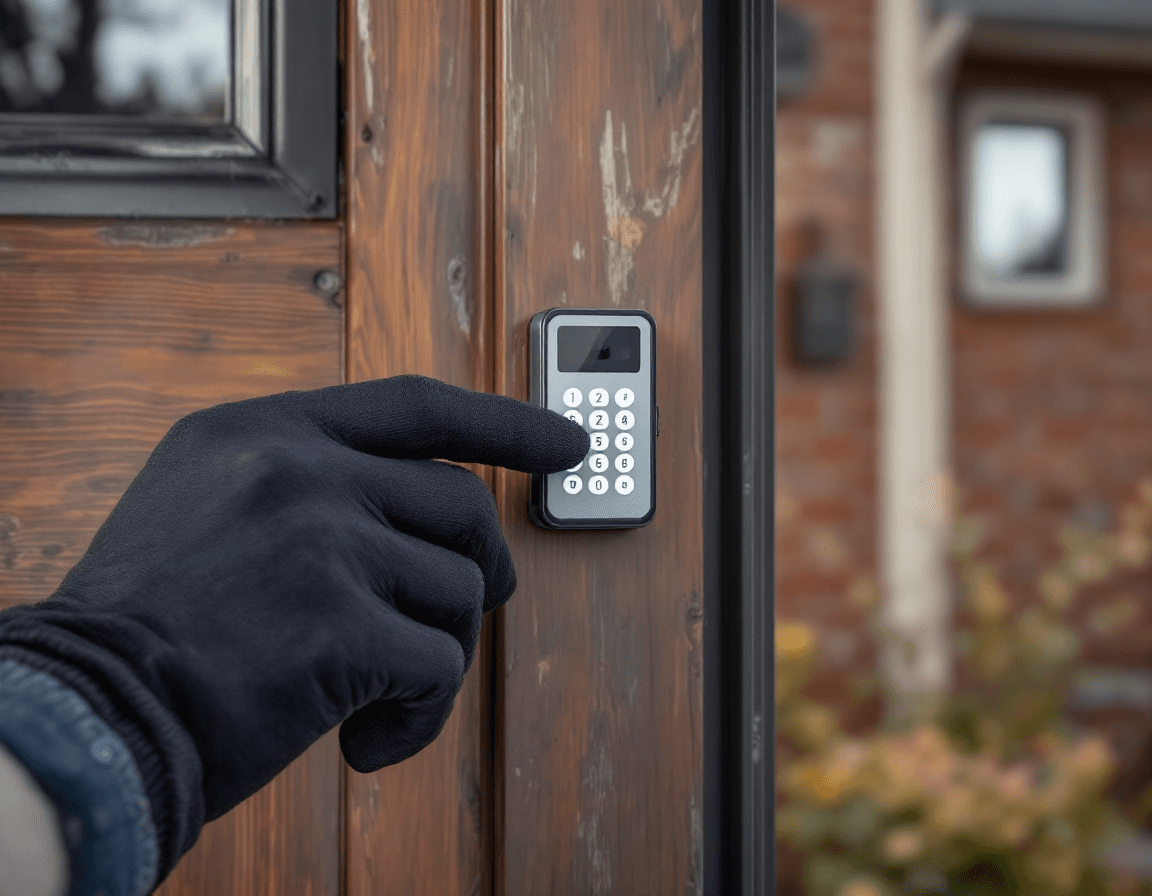
Garage Door Remote & Keypad Service in Fircrest, WA covers the everyday access problems that leave homeowners stuck in the driveway, from a remote that works only when you stand in one spot to a keypad that rejects a code you know is correct. Fircrest is a compact residential community tucked between Tacoma and University Place, and many of the homes here have attached or detached garages that have been in place for decades. Those older openers and the access hardware that came with them often need a fresh look when the batteries fade, the receiver drifts out of sync, or a new device has to be added to the system.
Most access trouble is less dramatic than people expect. A remote with a dying battery, a keypad with moisture in its contacts, or a car's built-in opener that lost its memory can all look like a failed opener, even when the motor and rail are running fine. A careful technician starts by separating the access device from the opener itself, then checks signal strength, programming, and wiring before recommending any replacement. That approach saves money and avoids replacing parts that still have plenty of life left.
Our team handles remote programming, keypad installation and troubleshooting, and in-car opener pairing for Fircrest homeowners. Service typically falls in the range of $65 to $185 depending on what the visit involves, and any new remote or keypad is priced separately. The sections below explain what tends to go wrong in this part of Pierce County, how we work through each symptom, and when it makes more sense to call us for a broader inspection.
Why Remotes Quit During Fircrest's Damp, Mild Winters
The Pacific Northwest does not get the bitter freezes that wreck garage electronics in colder states, but it does deliver long stretches of wet, grey weather that work their way into small devices. Condensation forms inside a remote's battery compartment when humid air cycles through a cool garage overnight, and that moisture can corrode the battery contacts over a season or two. A remote that worked fine in August may start cutting out in January, and many homeowners blame the opener when the real culprit is a crusty coin cell.
Fircrest homes also tend to have garages that double as storage, workshops, and laundry areas, which means more humidity and more temperature swings. Keypads mounted on exterior walls face direct rain and wind-driven moisture, particularly on the side of the house that catches southwest weather off the Sound. Seals around the keypad face can fail, and a small amount of water behind the buttons can cause sticky keys or false presses. These problems usually develop gradually, which is why a quick annual look at your access devices pays off.
Dust and pollen add another layer. Spring in the area brings a yellow film across cars, sidewalks, and any surface left open to the air, and that residue can work its way into keypad seams. A gentle cleaning with a dry cloth and a little isopropyl alcohol on a swab often restores responsiveness without any parts replacement at all. We always recommend letting a dedicated technician do the cleaning on an exterior keypad so the internal circuitry stays protected.
Diagnosing an Intermittent Remote Before You Buy a Replacement
An intermittent remote is one of the most frustrating symptoms, because it works sometimes and fails at random moments. The first step is to rule out the battery, even if the remote seemed fine last month. Replacing a standard coin cell with a fresh one of the correct size and orientation resolves a surprising share of these calls, and it costs very little. Cleaning the contacts with a pencil eraser or a dry cotton swab should follow, since oxidation creates an invisible barrier that weakens the signal.
If the battery and contacts check out, distance and obstruction become the next suspects. Metal shelving, a parked vehicle with a steel frame, or a thick wall between the remote and the opener can absorb enough signal that the door responds only from the driveway apron. Try pressing the button from several spots on your property, including the spot where you usually stop your car. If the signal fails only at one angle, the opener's antenna may need repositioning, and we check that wire during the visit.
Finally, consider whether the receiver has lost synchronization with the remote. Modern rolling-code systems change their access code every time you press the button, and a remote that has been pressed many times outside the receiver's range can fall out of step. Reprogramming the remote to the opener resets that relationship. We always test the remote several times after programming, both close to the door and from the street, so you know the fix holds before we leave.
Choosing a Replacement Remote That Matches Your Opener
Buying a replacement remote without checking the opener model is a common mistake that leads to wasted money and a second trip. Garage openers operate on specific radio frequencies, and in the United States you will commonly encounter remotes built for 315 MHz or 390 MHz systems, while some newer or imported equipment uses 433 MHz. A remote that matches the frequency and encoding scheme of the receiver is the only kind that will pair, regardless of how similar the buttons look on the shelf.
Your opener's manufacturer, model number, and the year it was installed usually appear on a label on the motor housing or a plate near the light lens. Those details narrow the field considerably. Some brands sell universal remotes that cover multiple systems, but universal does not always mean compatible with every model, so we confirm compatibility before recommending a purchase. We also look at whether your existing remote is a visor clip style, a keychain unit, or a multi-button model that controls a second door or a gate.
Multi-button remotes are worth considering in Fircrest homes with two-car garages or a separate RV or workshop door. A three-button unit can program two garage doors and a gate with a single device, which reduces clutter in the car and makes it easier to keep track of access hardware. When a remote is lost, replacing it with the same button layout and frequency keeps your household routine intact and avoids reprogramming every other device.
Keypad Codes That Refuse to Accept Your Entry
A keypad that will not accept your code can be caused by several different issues, and they do not all require the same fix. The most common cause is a simple entry error, such as pressing the wrong sequence, holding a button too long, or waiting too many seconds between presses. Many keypads lock out for a short period after several failed attempts, which can make a correct code look like it has stopped working. Waiting the full lockout time, then entering the code slowly and deliberately, often clears the problem.
If the keypad still rejects the code, the keypad may have been reset, the programmed code may have been overwritten during a previous setup, or the receiver may not be recognizing the keypad's signal. Wired keypads depend on a clean connection to the opener's control board, and a loose screw terminal or a damaged low-voltage wire can produce erratic behavior. Wireless keypads rely on a radio link and a battery, and both need attention on a regular schedule. We test each button, verify the code memory, and check the connection before deciding whether the unit can be repaired or should be replaced.
Keypad codes deserve a little thought too. Choose a sequence you can remember without writing it down near the door, and avoid codes built from your house number or birthdate, since those are easy for others to guess. If you share the code with family members, a keypad that supports individual user codes lets you revoke access later without changing the code for everyone else. We can set up or update those user codes during a service visit.
Adding an Exterior Keypad Where Your Wiring Allows
Many Fircrest homeowners want an exterior keypad so that children, relatives, or service providers can enter without carrying a remote. Adding one is a practical upgrade, but the location and wiring of the installation matter a great deal. A wired keypad needs a run of low-voltage cable from the opener to the wall, and the route must avoid areas where the cable could be pinched by a door, damaged by yard equipment, or exposed to standing water. A wireless keypad avoids the cable run but requires a clear line of sight and a stable mounting surface.
Placement should consider both convenience and protection. Mounting the keypad on a wall that faces away from prevailing wind-driven rain, and keeping it under a small overhang where possible, extends its life considerably. The keypad should also sit at a height that a person can comfortably reach from the driveway without leaning, and where the buttons will not be blocked by a parked car door or a mailbox. We walk the property with you before drilling, so the final position works for daily use.
Before installing, consider whether a keypad will actually add security or simply create a new entry point to manage. A keypad with a changeable code is a good match for a household that wants to allow visitors without giving out remotes. Pairing it with a monitored alarm or a motion light near the door can improve safety, though we make no guarantees about how a keypad affects insurance or security ratings. Installation includes testing the keypad from the driveway, the walkway, and inside the garage to confirm it responds reliably in each location.
Pairing Your Car's HomeLink Buttons Without the Guesswork
Many vehicles built in the last decade include a built-in universal opener system, commonly marketed as HomeLink, that can be programmed to operate a garage door. Drivers often find the process confusing because the steps vary by vehicle make and by opener type, and a mistake can leave the car buttons unresponsive or cause the door to open at unexpected times. Pairing works best when the opener and the car are both in good condition and the instructions for your specific model are followed carefully.
The general process involves putting the opener's learn button into programming mode, then pressing and holding the car's button while the opener's indicator light flashes or the motor sounds a click. Some systems require you to press the car button a second time to confirm, and some newer rolling-code openers need a few extra steps to accept the signal. If you have an older opener, the learn button may be behind the light lens or in a separate panel, and it is easy to confuse it with the light switch. We can locate it quickly and verify the pairing with the car in the driveway and again from the street.
Pairing problems often trace back to the car's own settings. Some vehicles ask you to confirm which frequency to use, and the wrong choice will leave the buttons working intermittently or not at all. The car's battery voltage can also affect the transmitter during programming, so a weak battery should be addressed first. If your car's display shows an error code, write it down before the visit so the technician can check it against the programming chart for your make and model.
Securing the Door After a Lost Remote or Keypad Compromise
A lost remote creates an immediate concern, because anyone who finds it could open your garage and potentially access the rest of your home. The safest response is to erase the lost remote from the opener's memory so it can no longer operate the door. Most openers can clear all remote codes through a learn-button sequence, after which you reprogram the remotes you still have. This process takes a few minutes and does not require removing the opener or replacing hardware.
If a keypad code may have been seen by someone it should not be shared with, changing the code promptly is the right move. Many keypads allow you to set a new code without any tools, but the exact steps vary by model, so we confirm the procedure during the visit. If your keypad supports individual user codes, we can delete the one that was compromised and leave the rest alone. Writing down the date of the change and keeping the new code somewhere private helps prevent future confusion.
Lost access devices are also a good reason to review your entire garage setup. Check whether the door has a manual release that is easily reached from the car, since a neighbor or visitor might discover it. Confirm that the side door to the house locks properly and that any garage-to-house door has a working deadbolt. A short inspection of these points often reveals small gaps that deserve attention before the next incident.
What a Remote and Keypad Visit Usually Includes in Fircrest
Every visit begins with a short conversation about the symptom, the opener's age and model, and any recent changes to the system. We ask whether the remote has been dropped, whether the keypad has been exposed to standing water, and whether any family members have recently been added or removed from access. These details help us decide whether the issue is a simple programming step or something that needs deeper testing. Clear answers at this stage often shorten the visit and reduce the cost.
Next we test the existing hardware. That includes the remote's battery and contacts, the keypad's buttons and wiring, the opener's receiver and antenna, and the learn-button function. We then perform the programming or repair needed, followed by a series of test cycles from the driveway, the street, and inside the garage. Each test confirms that the door responds consistently, and we explain what we found before any new part is installed.
If new hardware is needed, we discuss options before ordering. Replacement remotes, keypads, and in-car pairing supplies are billed separately from the service visit, and we will tell you the expected cost up front. Our visit fee falls within the $65 to $185 range for the work described here, and the final amount depends on how much programming or installation is required. You are never obligated to approve parts or additional work until you have heard the details.
When a Remote Symptom Points to a Bigger Opener Problem
Sometimes what looks like a remote issue is really a sign that the opener itself needs attention. If the door reverses unexpectedly, makes grinding sounds, or moves unevenly even when triggered by a working remote, the problem may involve the springs, cables, tracks, or safety sensors. These components store significant mechanical energy and can cause serious injury if handled incorrectly. We recommend that homeowners never attempt spring or cable work themselves, and that any such repair be performed by a licensed, insured professional.
Warning signs that call for a broader inspection include a door that stops partway through its travel, a motor that runs without moving the door, or a light that flickers whenever the opener is activated. Safety sensors near the floor should align and respond when a object passes between them, and a sensor that fails this test needs immediate attention. Ignoring these signs can lead to a door that closes on a person, a vehicle, or a pet, so a prompt call is the right response.
When the remote is working fine but the door behaves poorly, the access device is not the cause. Our technicians will check the balance, travel limits, and sensor alignment as part of a complete inspection, and we will explain the repair options clearly. Many issues can be corrected with simple adjustments, while others call for parts that take more time to source. Being honest about what is and is not the remote helps you make informed decisions about your home.
Keeping Your Access Devices Reliable Through Wet Seasons
A few habits go a long way toward keeping remotes and keypads working through Fircrest's wet months. Replace remote batteries once a year, even if they still seem to work, and store spare batteries in a dry drawer rather than in the garage. Keep remotes out of the rain on your car's dashboard and avoid leaving them in a pocket that gets soaked during walks. When you clean a keypad, use a barely damp cloth and avoid spraying liquid directly onto the face.
Pay attention to the area around exterior keypads. Clear leaves, moss, and debris from the wall and any small ledge beneath the keypad, since trapped moisture encourages rot and corrosion over time. If you notice water inside a keypad housing or a keypad that responds only after a long press, schedule a visit before the problem spreads to the wiring. Early attention is almost always less expensive than replacing an entire keypad after the circuitry fails.
Finally, keep a simple record of your access devices. Note the opener brand, the remote frequency, the keypad model, the date of the last battery change, and any codes you have assigned to family members. A written record makes future service faster and helps you spot patterns, such as a remote that consistently fails in one season. Fircrest homeowners who keep these details on hand usually find that their garage access stays dependable with very little effort.
For reliable remote programming, keypad installation and troubleshooting, and in-car opener pairing in Fircrest and throughout the 98466 area, call Seattle Garage Door Fix at (888) 799-3819. Our licensed, bonded, and insured technicians will diagnose the problem, explain your options clearly, and keep your garage access working smoothly. Service typically runs $65 to $185 plus the cost of any new remote or keypad, and spring or cable work is always handled by a licensed professional for your safety.