
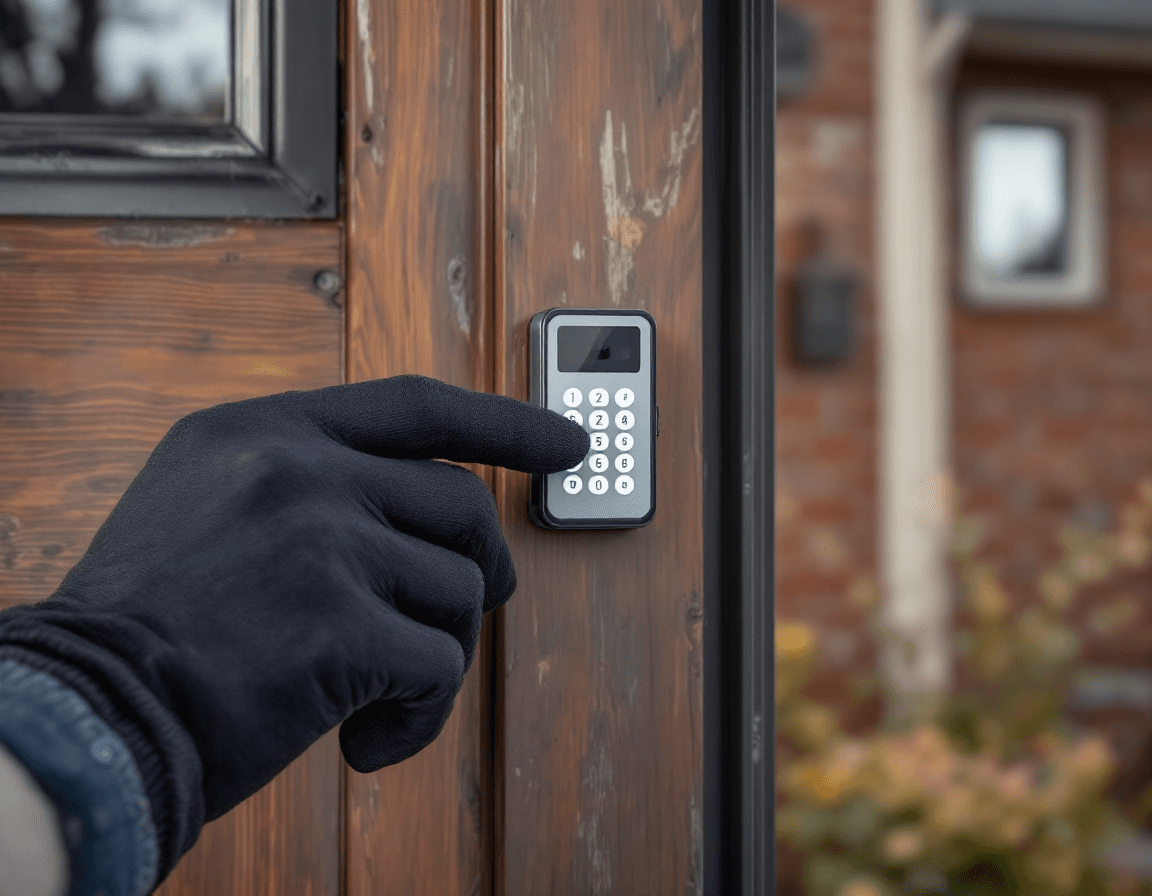
Garage Door Remote & Keypad Service in University Place, WA is one of the most common calls we handle, because the handheld clicker and wall keypad are the parts of your system you touch every day. When a remote stops responding or a keypad rejects a code you've used for years, the door stays shut and the whole household gets rerouted through the side entrance. Most of these problems are small, and they're usually fixable without replacing the opener itself. This page explains what tends to go wrong in University Place homes, how we approach each situation, and what you can check yourself before calling.
University Place sits on the Pierce County side of the Tacoma area, and its housing stock is a mix of older ranch-style homes, split-levels, and newer infill construction. Many garages here face the street with short driveways, which means the remote often lives clipped to a visor and gets exposed to rain, road spray, and temperature swings every single day. Homes closer to the water and near Chambers Bay also deal with damp coastal air that can speed up corrosion on exterior keypads and contact points. We bring that local knowledge into every visit, because a remote that fails in a dry inland climate often fails for different reasons here.
Whether you need one more remote for a teenager, a replacement after a lost fob, or a keypad on the side of the house for guests and contractors, the work follows a predictable path. We confirm what your opener is, test the existing controls, program or replace what needs attention, and then verify that the door reverses safely and closes correctly. The sections below walk through each common scenario in the order most homeowners encounter them.
Why Remotes Quit During Wet Pacific Northwest Weather
Remote failures in Western Washington rarely come from one dramatic cause. More often, a slow combination of moisture, cold snaps, and aging batteries wears the device down until it only works on certain days. Rain gets into battery compartments through worn gaskets, and condensation forms on the circuit board when a remote moves from a cold car into a warm kitchen on a gray January morning. Over time, that moisture oxidizes the battery contacts, which creates a weak connection that works when you press the button firmly and fails when you don't.
Batteries also lose strength faster in cold weather, and many University Place drivers keep their remotes in cars that sit outside overnight through the winter. A battery that still reads as "fine" on a shelf may not deliver enough power at 35 degrees to send a clean signal across the driveway. Our technicians see this pattern constantly: the remote works in the afternoon, fails at dawn, and then works again once the car has warmed up. That symptom points toward power and contact condition rather than a faulty opener.
Physical damage plays a role too, especially when remotes are dropped on concrete or run through the wash in a jacket pocket. A cracked housing lets water in, and a button that has been pressed thousands of times can develop a dead spot where the contact pad no longer reaches the circuit. Before assuming the remote is finished, it helps to look at it closely and note whether the problem follows the device or the door.
Diagnosing an Intermittent Remote Before You Replace Anything
An intermittent remote is different from one that is completely dead, and the difference matters when you're deciding whether to repair or replace. If the remote lights up and the door sometimes responds, the most likely culprits are battery contacts, a weak battery, or interference from something nearby. If the indicator light never turns on, the battery or internal circuit has failed, and replacement is usually more practical than repair.
You can run a simple check at home before we arrive. Start by replacing the battery with a fresh one of the correct type, and wipe the contacts with a dry cloth or a cotton swab lightly dampened with isopropyl alcohol. Stand at the door you normally use and press the button several times while watching the opener's light. If the door responds reliably from the driveway but not from the street, the issue is more likely range or signal interference than the remote itself.
- Replace the battery with a fresh one of the exact type printed inside the remote, and do not mix old and new cells.
- Clean the battery contacts and the inside of the compartment, then let everything dry fully before reassembling.
- Test the remote from several spots, including the far end of the driveway, to see whether the range is shrinking.
- Check whether the opener's wall-mounted control or any keypad responds, which helps separate a remote problem from a receiver problem.
- Note whether the failures happen in the morning, after rain, or when the car has been parked outside overnight.
If those steps don't restore reliable operation, the next question is whether the remote and opener still use compatible technology. Some older openers and remotes operate on a different radio frequency than newer models, and a mismatch will cause a remote to fail even when it's in perfect condition. Our technicians check the opener label and the remote's frequency marking before recommending a replacement, so you aren't buying a device that won't talk to your system.
Choosing a Replacement Remote Without Buying the Wrong One
A replacement remote needs to match your opener's brand, generation, and radio frequency, and the mismatch problem catches many homeowners off guard. Many openers use rolling code technology, which changes the signal every time the button is pressed so that a copied code cannot be reused. That security feature is good for your home, but it means the remote must be programmed to the specific receiver in your garage. A generic remote from an unknown source may look identical and still refuse to pair.
The frequency is usually printed on the remote or on the opener's label, and common values include 315 MHz and 390 MHz, depending on the manufacturer and year. Some remotes are universal, meaning they can be set to multiple codes, while others are locked to one brand. We stock replacement options that match the openers we service most often in University Place, and we will tell you plainly when the cheapest route is to keep the existing remote and just swap the battery.
If you need a remote for a new household member, consider how many you actually want to keep active. Each additional remote is another potential point of failure, and some homeowners prefer a smaller, sturdier model clipped inside the car instead of a keychain fob. Our programming service covers the work of pairing a new remote to the opener, and the price range is listed in the pricing section below. Any new hardware you choose is priced separately, so you can compare options before committing.
Keypad Codes That Refuse to Accept Your Entry
A keypad that won't accept your code is one of the most frustrating problems for households that depend on it, especially when a family member is locked out at night. The first thing to check is whether you're entering the code correctly, because many keypads require a specific press pattern and a short delay between digits. Some models also disable entry for a period of time after several wrong attempts, which protects the opener but can feel like a malfunction if you don't know it's happening.
Moisture is a frequent cause on exterior keypads in Pierce County. Water can seep past a worn seal, and the keypad's internal contacts may corrode or short, causing some buttons to respond and others to ignore presses. Dirt, leaves, and salty residue from road spray also gather around the buttons, especially on keypads mounted near driveways and walkways. A keypad that works after you wipe it down is usually a sign of contamination rather than a failed unit.
Battery-powered wireless keypads have their own failure pattern. As the battery weakens, the keypad may respond slowly, skip digits, or fail to transmit at all, while the opener's wired wall button continues to work normally. Replacing the batteries, cleaning the keypad face, and confirming that the code has not been changed or erased are the first steps we take. If the keypad still rejects a valid code, we check whether the opener has enough stored code slots and whether the keypad has been paired correctly to the receiver.
Adding an Exterior Keypad Near Your Front Walk
Many University Place homeowners add an exterior keypad so that family, housekeepers, or contractors can enter the garage without carrying a remote. This is a practical upgrade, especially for households with teenagers who frequently forget their clickers or for homes where a dog walker needs access on weekdays. A well-placed keypad also means you can leave the remote in the car without worrying about a lost or stolen fob.
Placement matters more than most people expect. A keypad should sit within easy reach, be shielded from direct spray from the driveway, and be installed where the wiring or wireless signal can reach the opener reliably. On many properties in the area, the best spot is on a post or wall near the walkway, away from the sprinkler line and out of the path of downspouts. We look at the sun exposure and drainage around the spot before drilling anything, because a keypad that fades or fills with water within a year is a poor investment.
Wired keypads offer steady performance but require running low-voltage wire from the opener to the mounting location, which adds time and cost. Wireless keypads are simpler to install and do not require trenching or long runs, although they depend on battery life and signal strength. Either option can work well in a University Place home, and we explain the trade-offs during the visit so you can choose what fits your layout and your comfort level with routine battery changes.
Pairing Your Car's Built-In Opener Buttons
Many newer vehicles include a built-in garage door opener, often labeled HomeLink or with a similar name depending on the manufacturer, and homeowners frequently want to retire their separate clickers. Pairing the car's buttons with your opener is possible on many systems, but it does not always go smoothly. The car must be parked in the garage or close enough for the signal to reach, the opener must be in learning mode, and the vehicle's button sequence must match the opener's instructions.
The most common problem we see is an opener that uses a newer rolling code standard that the vehicle cannot learn, or a system where the car's buttons are programmed but respond inconsistently. Some vehicle systems also require you to press and hold the button for a set time, and releasing too early can cancel the process. If the car has an aftermarket or subscription-based system, the pairing steps may differ, and the vehicle manufacturer's manual is worth checking before we arrive.
Pairing a car is also a reminder to think about security. Once the vehicle is programmed, the car's door opener becomes as important as a house key, so it is worth confirming that the correct button is assigned, that the programming is complete, and that the door responds reliably. We take the time to test the paired button with the door in view and with the car parked in its usual spot, because a pairing that works in the driveway can behave differently after you've pulled in at an angle.
Locking Out a Lost Remote and Re-Securing the Door
A lost remote is more than an inconvenience. Anyone who finds or steals it may be able to open the garage, which is why we recommend acting quickly. The safest approach is to erase the remote's code from the opener so the lost device no longer works, then program any remaining remotes and keypads as needed. Many openers have a dedicated learn button on the motor unit, and clearing all codes typically involves holding that button until its indicator light goes out. The exact sequence varies by model, so we confirm the procedure against your opener before we start.
Once the old codes are cleared, we verify each remaining control individually. This step catches the common mistake of erasing the codes and then forgetting that one family member's remote was never reprogrammed, leaving that person outside in the rain. We also check the keypad codes, because a lost remote is a good moment to change any shared entry code that may have been seen by someone outside the household.
If the lost remote came with a car or a building access system, it is worth thinking about whether anything else needs changing. A garage code shared with a neighbor, a babysitter, or a former contractor should be retired if the relationship has ended. Our technicians will walk you through the options, but the decisions about who should have access remain yours.
Pricing, Scope, and What the Visit Includes
Remote and keypad service in University Place is generally priced between $65 and $185, depending on the work involved. Simple reprogramming of an existing remote tends toward the lower end, while adding a keypad, pairing a vehicle, or troubleshooting a multi-control system usually falls in the middle or upper part of the range. Any new remote, keypad, or replacement hardware is priced separately, so you will always know what you are paying for before the work begins.
A typical visit includes checking the opener's current learning and receiving functions, testing each existing control, and programming or replacing the requested device. We also run a basic safety check on the door, including confirming that the auto-reverse feature responds when the door meets resistance and that the photo-eye sensors near the floor are aligned and clear. These checks matter because a remote or keypad problem is sometimes a symptom of a larger issue, such as a worn sensor or a damaged wire.
We do not perform spring or cable repairs as part of remote service, and we always recommend a licensed professional for that kind of work. Torsion springs and lift cables store significant energy, and attempting repairs without the right tools and training is dangerous. If your troubleshooting reveals that the door is binding, unbalanced, or making unusual noises, we will explain what we see and recommend the appropriate next step.
Seasonal Habits That Keep Controls Reliable
A few simple habits can prevent most remote and keypad problems in a Western Washington climate. Keep spare batteries on hand and replace them on a schedule rather than waiting for failure, especially before the wet season sets in and again before the first cold snap. Store remotes indoors when possible, and avoid leaving them in a car that sits in the rain for days at a time. A small zip-top bag or a remote holder with a cover can keep moisture away from the buttons during commutes.
Exterior keypads benefit from a quick wipe every few weeks, especially in areas where salt, pollen, or road grime collects. Look for loose or cracked seals around the housing, and note any discoloration on the keypad face, since those signs often appear before a keypad starts rejecting codes. Trim plants and branches that brush against the keypad or the door sensors, because moss and damp foliage can interfere with signal paths and keep the surface wet longer than it should be.
It also helps to keep a written list of who has remotes and keypad codes, and to update it when people move, return keys, or change vehicles. Many lockouts and security worries trace back to forgotten access rather than hardware failure. A short list tacked inside a kitchen cabinet is enough, and it makes it much easier to clear codes and reprogram controls efficiently when something changes.
When a Remote Problem Points to a Bigger Door Issue
Sometimes a remote or keypad complaint is the first visible sign of a more serious problem. If the door opens slowly, reverses unexpectedly, stops halfway, or makes grinding or popping sounds, the remote may be working perfectly while the door itself is struggling. Repeated resets, flickering lights on the opener, or a remote that works only when the door is already partly open can also signal wiring or sensor faults that deserve a closer look.
Our technicians are trained to separate control problems from mechanical ones, and we will tell you plainly which is which. A remote that works intermittently because of a dead battery is a quick fix, while a door that binds at the same point every time needs a different kind of attention. In cases involving springs, cables, rollers, or track alignment, we recommend a licensed professional, and we will explain the safety concerns in plain language so you can make an informed decision.
If you're not sure whether your problem is with the remote or the door, describe what you see and hear when you call. Note whether the failure happens from every control or just one, whether the door moves at all, and whether the opener light responds. That information helps us prepare for the visit, and in many cases we can resolve the question in a single trip. For questions or to schedule a visit, call (888) 799-3819 and a member of our team will help you figure out the next step for your University Place garage.