
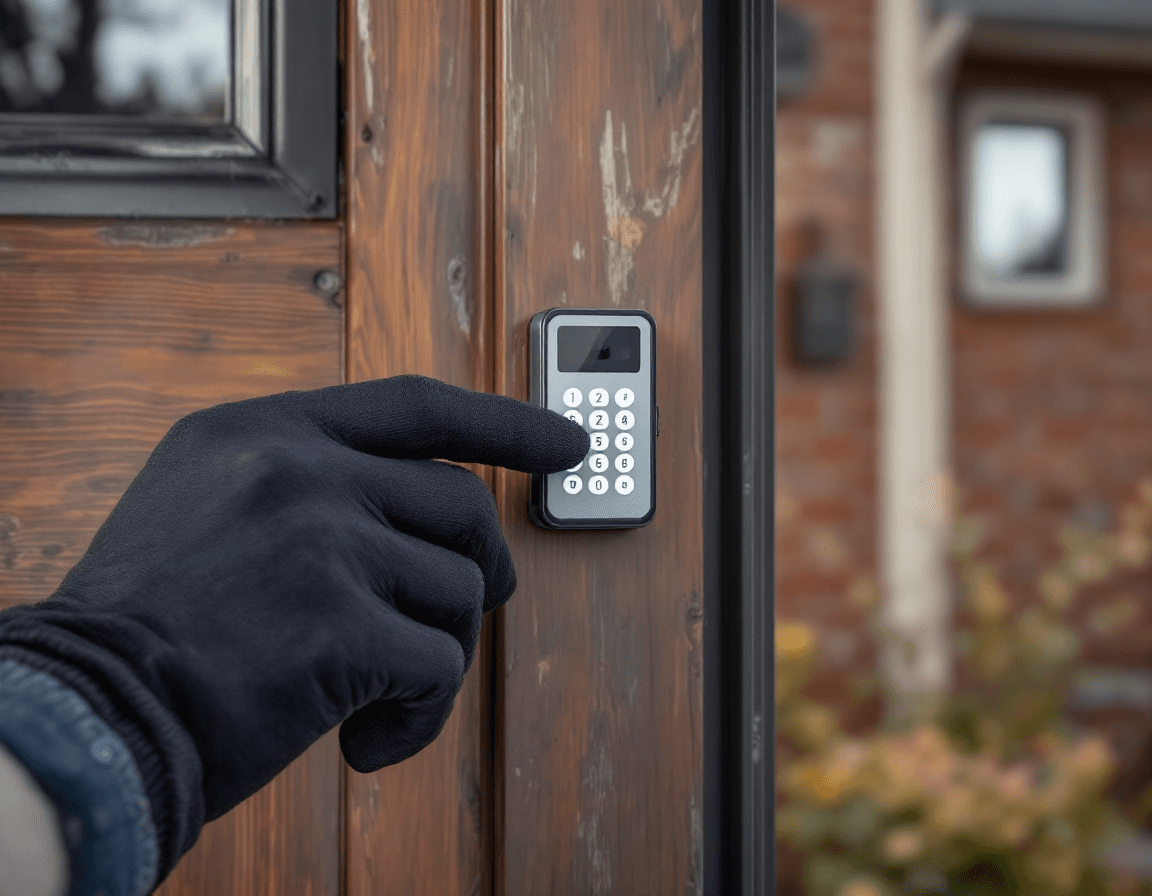
Garage door remote and keypad service in Fife, WA covers the everyday problems that leave Pierce County homeowners stuck outside or fumbling in the dark: a remote that works only when you stand in one spot, a keypad that rejects a code you've used for years, or a car that won't open the garage after a battery swap. Fife sits in the middle of a busy corridor between Tacoma's port district, the industrial blocks along Pacific Highway East, and the residential streets that climb toward Milton and the Puyallup River bottomland. Many homes here were built with a single-car or two-car attached garage, and a lot of them have accumulated a mix of remotes, wall controls, and keypads over the years. When one of those controls fails, the whole system can feel unreliable, even when the opener itself is fine.
Our technicians handle remote programming, keypad installation and troubleshooting, and in-car opener pairing for Fife homeowners and small business owners with garages in the area. Service typically runs $65 to $185 depending on what the visit involves, and the price does not include a new remote or keypad if one needs to be purchased. We bring the programming equipment that matches common opener brands, and we will tell you before any work starts if the problem is actually a sensor, a logic board, or a worn gear rather than a simple sync issue. You will always get a clear answer about what is wrong and what it will take to fix it.
This page explains how these problems usually happen in Fife, what a technician checks during a visit, and where the job stops being a remote-level repair and becomes something that needs a licensed professional to handle safely. If you have already tried the obvious steps, you are in the right place to figure out the next one.
Why Remotes in Fife Tend to Fail Sooner Than Expected
Fife's combination of moisture, nearby industrial traffic, and temperature swings puts more stress on small electronics than many homeowners realize. Western Washington winters bring long stretches of damp air, and garage interiors often collect condensation on cold mornings, especially in homes where the garage is not fully insulated. That moisture can work its way into the button contacts and circuit board of a standard remote, leading to sticky buttons, weak transmission, or a remote that works only after you press it several times. Summer heat in the Puget Sound lowland is milder than inland Washington, but a remote left on a dashboard or near a sunny garage window can still lose performance over time.
Proximity to the Port of Tacoma and the industrial corridor also brings a different kind of interference. Commercial radio traffic, large metal structures, and dense wiring in nearby buildings can contribute to signal noise in some neighborhoods, though in most Fife homes the bigger culprit is simply a weak battery or a remote that has been dropped one too many times. We do not assume interference is the cause without checking, because it is far less common than a dying coin cell. Still, when a remote works fine in the driveway but fails at the end of the block, environment and distance deserve a look.
Houses in older Fife neighborhoods often have garage door openers that have been running for more than a decade. As the opener ages, its receiver becomes less sensitive, and a remote that once worked from across the street may now need to be right at the door. A new remote helps only so much in that situation, which is why a good visit always includes checking the receiver and antenna wire along with the remote itself.
Telling a Failing Remote Apart From a Failing Opener
Homeowners often blame the remote for every problem, but the symptoms of a remote issue and an opener issue can look similar from the driveway. The easiest way to narrow it down is to watch what the door does. If the light on the opener flashes when you press the remote, the signal is reaching the unit, and the problem may be a sync issue or a battery. If nothing happens at all, the remote may be dead, the receiver may be damaged, or the wall control may be interfering with the signal. Taking a moment to note exactly what happens before you call can speed up the visit considerably.
Intermittent operation deserves special attention. A remote that works three times out of five is rarely a cosmetic problem, and it often points to one of three causes: a battery that is losing voltage under load, a button membrane that is wearing through, or an antenna on the opener that has come loose or been damaged. In Fife's damp garages, a loose antenna connection behind a wall-mounted motor unit is more common than people expect, particularly where the wire was stapled too tightly during a previous installation. We check these connections during every remote visit so that a new remote does not hide a problem that will return in a month.
Some homeowners also notice that one button works while the others do not. That usually means the individual button has failed, and a replacement remote is the most cost-effective fix. If several buttons are dead at once, the remote's internal board is the likely problem. In either case, the technician can test the remote against the opener and confirm whether the remote or the opener is the source before anything gets replaced.
Programming a Replacement Remote Correctly the First Time
Programming a new remote sounds simple, but the process varies by opener brand and by the year the unit was manufactured. Some openers have a dedicated learn button on the motor housing that must be pressed and then followed by a button press on the new remote within a set window. Others use a series of DIP switches that must match the remote's internal code. Many newer openers use rolling codes, which means the remote and receiver must stay synchronized, and a remote that is programmed incorrectly may work once and then fail after the opener's code advances.
A good visit starts by identifying the opener's make and model, which is usually printed on the motor housing or on a label inside the garage. We confirm that the replacement remote is compatible with that system and that it operates on the frequency the opener uses. Remotes most commonly use 315 MHz or 390 MHz, and buying the wrong frequency is one of the most frequent reasons a new remote never works. Once the frequency is confirmed, the technician programs the remote, tests every button, and verifies that the door responds from the normal driveway distance.
Programming multiple remotes at once is also common in Fife households with teenage drivers, roommates, or a second car. We can program additional remotes during the same visit so that you are not scheduling a second trip when the first one is done. If you have a remote that you no longer trust, we will also show you how to clear old codes so that a lost or retired remote cannot operate the door.
Why Your Keypad Rejects a Code That Used to Work
A keypad that refuses a code is one of the most frustrating problems for Fife families, especially when children, guests, or house-sitters are trying to get inside. The first thing to understand is that keypads often store codes independently of the opener's memory, and a power interruption, a battery change, or a firmware quirk can cause the keypad to reset or lock out. Many keypads also have a lockout feature that disables input after several incorrect attempts, and that lockout may last for a set period before it resets on its own.
Wiring and battery problems are the next most common causes. Wireless keypads run on batteries that drain faster in cold, damp conditions, and a keypad that accepts the code only sometimes may simply be running low. Wired keypads mounted on exterior walls can suffer from corroded terminals, especially where the wiring passes through a poorly sealed penetration in the siding. Water intrusion is a real concern in Pierce County's wet months, and we inspect the keypad's mounting and seal as part of every troubleshooting visit.
Some keypads also struggle when they are mounted too far from the opener's receiver. Wireless keypads communicate with the opener over a short radio link, and a keypad installed on a detached garage or at the far end of a long driveway may need a stronger signal or a repositioned receiver. If the keypad is working but the code is not accepted, we will check whether the code itself was reset and whether the keypad needs to be reprogrammed to the opener.
Adding an Exterior Keypad Without Creating New Problems
Many Fife homeowners want an exterior keypad so that family members can enter without a remote, or so that a delivery driver or contractor can get into a side garage without a key. This is a practical upgrade, but it deserves thought before installation. The location should be protected from direct rain where possible, mounted at a comfortable height, and close enough to the opener that the signal is reliable. A keypad placed under a covered entry or on a wall that does not take direct weather exposure will last longer than one hanging in the open.
Wiring is the other consideration. Wireless keypads avoid running cable through the exterior wall, which is a benefit in older Fife homes where wall cavities can be difficult to access. Wired keypads offer a more stable connection but require careful routing, proper weatherproofing at the entry point, and a secure connection at the opener's control terminals. We recommend wired installation only when the homeowner is comfortable with the work or when the technician can complete it during the visit.
Code management matters as much as hardware. Choose a code that is not your birthday, address number, or phone number, and change it periodically. If you have guests or service workers who need access, consider a temporary code or a separate user code if your keypad model supports it. We can show you how to set up and remove codes so that access stays under your control.
Pairing Your Car's Built-In Opener
In-car openers, including HomeLink and similar systems, make it possible to open the garage without carrying a remote. These systems are convenient, but they are also one of the more confusing parts of garage door service. Pairing usually requires holding the car's built-in button while pressing the garage opener's learn button, then watching the car's indicator light to confirm the code has been accepted. The exact sequence depends on both the vehicle and the opener, and a process that worked for a neighbor's car may not work for yours.
Many pairing failures come from timing. Some openers require the car button to be pressed within a short window after the learn button is pressed, and some vehicles require the button to be held for several seconds. Rolling-code systems also need the opener and car to stay in sync, so a failed attempt can sometimes leave the system in a state that requires resetting before pairing will succeed. We carry the equipment needed to test the connection and confirm that the car can operate the door reliably.
If your vehicle's built-in opener stops working after a battery change, a dealer reset, or a new remote programming session, the car may simply need to be re-paired. Some newer vehicles also use a separate module that is not compatible with every opener, and in that case we will tell you honestly if a universal solution is not the right fit. Our goal is to give you a working system you can trust, not an attempt that works once and fails in the rain.
Securing the Garage After a Lost Remote
A lost remote is more than an inconvenience. Anyone who finds it may be able to open your garage, and the garage often contains tools, bikes, and other items that are worth protecting. The right response is to clear the lost remote's code from the opener so that it can no longer operate the door, then program a replacement. Many openers allow you to erase all remote codes at once, which means any remaining remotes will need to be reprogrammed as well. That is a small price for knowing the door is secure.
Here is what we typically do during a lost-remote visit:
- Confirm the opener make and model and identify the code-clearing procedure.
- Erase all previously stored remote codes so the lost remote is disabled.
- Program replacement remotes for each person who needs access.
- Check the keypad, if installed, and update or reset its code.
- Test the door from the driveway and from the inside to confirm everything responds correctly.
Homeowners sometimes ask whether it is worth replacing the entire opener after a lost remote. In most cases it is not necessary. Clearing codes and reprogramming is faster and far less expensive. If the opener is very old or has other failing components, we will tell you so during the visit and give you an honest comparison of repair versus replacement.
What a Remote or Keypad Visit Covers in Fife
A typical service call in Fife begins with a short conversation about the symptoms and the history of the system. We ask when the problem started, whether the battery was recently changed, whether the door was struck or bumped, and whether the problem happens from every location or only from certain spots. That information helps us focus the inspection and avoid unnecessary parts. Then we check the remote or keypad, the opener's receiver, the antenna wiring, and the sensors that tell the door it is safe to close.
The service fee generally falls between $65 and $185, depending on the scope of work. A simple reprogramming visit usually lands at the lower end, while a visit that includes keypad installation, multiple remote programming, or in-car pairing may fall higher. Replacement remotes and keypads are billed separately, and we will quote those parts before installing them so there are no surprises. If the root cause turns out to be a failed circuit board or a damaged receiver, we will explain the options and the cost before any additional work begins.
We also check the safety features of your opener during every visit. The auto-reverse function and photo-eye sensors must work properly, and if they do not, the door is not safe to operate until the problem is corrected. Keeping the door protected is part of the same responsibility as making the remote work.
Battery, Antenna, and Weather Checks for Western Washington Garages
Because Fife garages deal with damp winters and occasional salt-tinged air drifting in from the port direction, we pay attention to details that might be overlooked in drier climates. Remote batteries in this region can corrode if left in a damp garage for a long time, so we inspect the battery compartment and contacts for green or white buildup. Keypad housings can collect moisture behind the faceplate, and we check the gasket and mounting screws to make sure water is not getting in during heavy rain. A small amount of attention to these details prevents repeat failures.
Antenna wiring deserves particular care in older garages. Opener antennas are often a simple length of wire that hangs from the motor unit, and it can be pinched, chewed by pests, or damaged during shelving or storage work. We check that the antenna is intact, routed away from metal surfaces when possible, and secured properly. Moving a stored item that rests against the antenna is a simple fix that can restore range immediately.
Temperature changes also matter. Remotes and keypads may behave differently on cold mornings than on warm afternoons, and that variation can be mistaken for a fault. If a remote works reliably after it has warmed up in your pocket but struggles on a frosty morning, the battery may be the real issue. We test under the conditions you actually experience so the fix holds up through the season.
When Remote Work Turns Into a Spring or Cable Job
Most remote and keypad problems are safe for a technician to address quickly and without heavy tools. However, some symptoms that look like remote problems actually point to mechanical issues that require professional attention. If the door moves unevenly, makes grinding or popping sounds, or hangs partway open or closed, the problem may be a worn spring, a frayed cable, or a damaged drum. Those components store significant tension, and attempting to adjust or replace them without training can cause serious injury.
Homeowners should never try to wind springs, release tension, or handle cables on their own. Spring and cable work must be performed by a licensed, bonded, and insured professional who has the proper tools and experience. If a remote visit reveals that the door itself needs spring or cable service, our technician will explain what is involved, what the repair would cost, and why it should not be attempted by a homeowner. We will never pressure you into work you do not need, and we will not leave a door in an unsafe state.
Sometimes the solution is simply a combination of a remote fix and a mechanical repair scheduled at the same time. If that is the case for your Fife home, we can often coordinate both so that you deal with one service call instead of two. Clear communication about what is failing and why is part of our commitment to every visit.
Whether your remote has stopped responding, your keypad has locked you out, or your car will no longer open the garage, a licensed technician can usually sort out the cause on the first visit. Call Seattle Garage Door Fix at (888) 799-3819 to schedule service for your Fife home, and we will walk you through what to expect before we arrive.